February 11, 2013
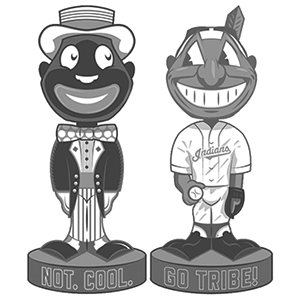
Commodification (or commoditization) is the transformation of goods, ideas, or other entities that may not normally be regarded as goods into a commodity. American author and feminist bell hooks refers to cultural commodification [kuh-mod-uh-fi-key-shuhn] as ‘eating the other.’ By this she means that cultural expressions, revolutionary, or post modern, can be sold to the dominant culture. Any messages of social change are not marketed for their messages but used as a mechanism to acquire a piece of the ‘primitive.’ Any interests in past historical culture almost always have a modern twist.
According to Mariana Torgovnick, ‘What is clear now is that the West’s fascination with the primitive has to do with its own crises in identity, with its own need to clearly demarcate subject and object even while flirting with other ways of experiencing the universe.’ Hooks states that marginalized groups are seduced by this concept because of ‘the promise of recognition and reconciliation.’ ‘When the dominant culture demands that the Other be offered as sign that progressive political change is taking place, that the American Dream can indeed be inclusive of difference, it invites a resurgence of essentialist cultural nationalism.’
read more »
Posted in Money, Politics, World |
1 Comment »
February 10, 2013

Naked Lunch is a novel by William S. Burroughs originally published in 1959. The book is structured as a series of loosely-connected vignettes. Burroughs stated that the chapters are intended to be read in any order.
The reader follows the narration of junkie William Lee, who takes on various aliases, from the US to Mexico, eventually to Tangier and the dreamlike Interzone (international zone, a type of extraterritoriality governed by international law). The vignettes (called ‘routines’) are drawn from Burroughs’ own experience in these places, and his addiction to drugs (heroin, morphine, and while in Tangier, ‘Majoun’—a strong marijuana confection—as well as a German opioid, brand name Eukodol, of which he wrote frequently).
read more »
Posted in Drugs, Language, Politics |
Leave a Comment »
February 8, 2013

‘A Study of History‘ is the 12-volume magnum opus of British historian Arnold J. Toynbee, finished in 1961, in which the author traces the development and decay of all of the major world civilizations in the historical record. Toynbee applies his model to each of these civilizations, detailing the stages through which they all pass: genesis, growth, time of troubles, universal state, and disintegration.
The major civilizations, as Toynbee sees them, are: Egyptian, Andean, Sinic, Minoan, Sumerian, Mayan, Indic, Hittite, Hellenic, Western, Orthodox Christian (Russia), Far Eastern, Orthodox Christian (main body), Persian, Arabic, Hindu, Mexican, Yucatec, and Babylonic. There are four ‘abortive civilizations’ (Abortive Far Western Christian, Abortive Far Eastern Christian, Abortive Scandinavian, Abortive Syriac) and five ‘arrested civilizations’ (Polynesian, Eskimo, Nomadic, Ottoman, Spartan).
read more »
Posted in Language, Politics, World |
1 Comment »
February 7, 2013

‘Dark Age Ahead‘ is a 2004 book by Jane Jacobs describing what she sees as the decay of five key ‘pillars’ in North America: community and family, higher education, science and technology, taxes and government responsive to citizen’s needs, and self-policing by the learned professions. She argues that this decay threatens to create a dark age unless the trends are reversed. Jacobs characterizes a dark age as a ‘mass amnesia’ where even the memory of what was lost is lost.
People are increasingly choosing consumerism over family welfare, that is: consumption over fertility; debt over family budget discipline; fiscal advantage to oneself at the expense of community welfare. Universities are more interested in credentials than providing high quality education. Economics has become as the main ‘science’ to consider in making major political decisions. Governments are more interested in deep-pocket interest groups than the welfare of the population. She describes, a culture that prevents people from understanding/realizing the deterioration of fundamental physical resources which the entire community depends on.
read more »
Posted in Language, Politics |
1 Comment »
February 7, 2013

In the summer of 2008 conceptual artist Steve Powers presented a work that came to be known as the Coney Island waterboarding thrill ride. As originally conceived Powers saw the public watching volunteers undergoing actual waterboarding.
‘The Washington Post’ reported that Powers brought in Mike Ritz, a former US official experienced in administering waterboarding, for a one time demonstration of waterboarding on volunteers. This demonstration was not open to the general public, but rather for an invited audience. Powers himself was one of the volunteers.
read more »
Posted in Art, Games, Politics |
Leave a Comment »
February 7, 2013
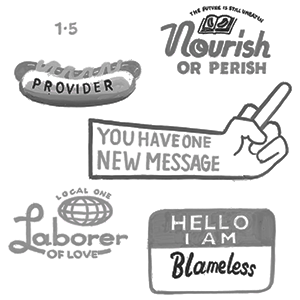
Steve Powers (b. 1968) is a New York City artist who at one time wrote graffiti in Philadelphia and New York under the name ESPO (‘Exterior Surface Painting Outreach’). Powers is from Philadelphia’s Overbrook neighborhood; he graduated from Robert E. Lamberton High School in 1987 and took classes at The Art Institute of Philadelphia and the University of the Arts. In 1994, he moved to New York with fellow writer and designer Ari Forman, in order to expand the reach of his magazine, ‘On the Go.’
ESPO’s work often blurred the lines of legality. For example, pieces like ‘Greetings from ESPOLand’ utilized the style of the Asbury Park Billboards and appeared to be a legitimate billboard. In 1997 ESPO began his most ambitious non-commissioned art. He painted on storefront grates in Fort Greene, Bedford-Stuyvesant, TriBeCa, and the South Bronx, covering the entire grate with white or silver paint and then using black to make each grate into a letter in his name.
read more »
Posted in Art, Politics |
Leave a Comment »
February 7, 2013
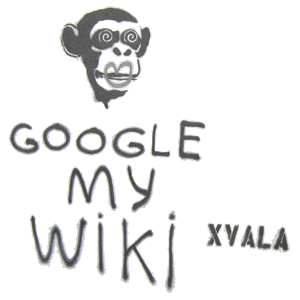
XVALA is an art project created by Jeff Hamilton (b. 1970). XVALA typically focuses on pieces that address celebrity and popular culture and he refers to this as ‘Tabloid Art.’ XVALA collaborated with sculptor Daniel Edwards on ‘The Brangelina,’ a house located in Oklahoma. In 2010, Jeff Hamilton walked away from his art and the name XVALA. Hamilton passed the name on to unnamed, upcoming artist.
‘Fear Google’ is the first street art sticker designed for the Post-PC era and was launched in 2010, the same year as Apple’s iPad and other Post-PC devices. The stickers fear message shows society’s growing inability to disconnect from the internet. First distributed by friends of the artist and some Apple Store employees the first stickers appeared on the California city streets.
read more »
Posted in Art, Money, Politics |
Leave a Comment »
February 7, 2013
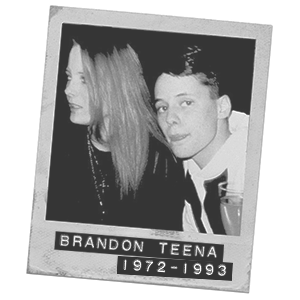
Transphobia (or less commonly cissexism, transprejudice, trans-misogyny, referring to transphobia directed toward trans women and trans-misandry, referring to transphobia directed toward trans men) is a range of negative attitudes and feelings towards transsexualism and transsexual or transgender people, based on the expression of their internal gender identity.
Attacking someone on the basis of a perception of their gender identity rather the perception of their sexual orientation is known as ‘trans bashing,’ as opposed to ‘gay bashing.’ Transphobia need not be a phobia as defined in clinical psychology (i.e., an anxiety disorder). Its meaning and use typically parallel those of xenophobia (fear of foreigners).
read more »
Posted in Politics, Sex |
Leave a Comment »
February 7, 2013

Transsexualism describes the condition in which an individual identifies with a gender inconsistent or not culturally associated with their assigned sex, i.e. in which a person’s assigned sex at birth conflicts with their psychological gender. A medical diagnosis can be made if a person experiences discomfort as a result of a desire to be a member of the opposite sex, or if a person experiences impaired functioning or distress as a result of that gender identification.
Transsexualism is stigmatized in many parts of the world but has become more widely known in Western culture in the mid to late 20th century, concurrently with the sexual revolution and the development of sex reassignment surgery (SRS). Discrimination or negative attitudes towards transsexualism often accompany certain religious beliefs or cultural values. However, some cultures have less difficulty integrating people who change gender roles, often holding them with high regard, such as the traditional role for ‘two-spirit’ people found among certain native American tribes.
read more »
Posted in Health, Politics, Sex |
Leave a Comment »
February 6, 2013
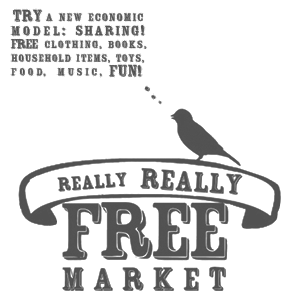
Give-away shops, swap shops, freeshops, or free stores are stores where all goods are free. They are similar to charity shops, with mostly second-hand items—only everything is available at no cost. Whether it is a book, a piece of furniture, a garment or a household item, it is all freely given away, although some operate a one-in, one-out–type policy (swap shops).
The free store is a form of constructive direct action that provides a shopping alternative to a monetary framework, allowing people to exchange goods and services outside of a money-based economy.
read more »
Posted in Money, Politics |
Leave a Comment »
February 6, 2013

‘Help at Any Cost: How the Troubled-Teen Industry Cons Parents and Hurts Kids’ is a 2006 non-fiction book by science journalist Maia Szalavitz analyzing the controversy surrounding the tough love behavior modification industry. Szalavitz focuses on four programs: Straight, Incorporated, a copy of the Straight Inc. program called KIDS, North Star wilderness boot camp, and the World Wide Association of Specialty Programs and Schools.
She discusses the background, history and methodology of the troubled teen industry, including techniques drawn from attack therapy, Erhard Seminars Training (est), and Synanon, all of which are highly controversial. She uses first-person accounts and court testimony in her research, and states that no evidence exists proving that these programs are effective. The book also includes advice for parents and an appendix with additional resources on how to get responsible help for teenagers.
read more »
Posted in Health, Money, Politics |
Leave a Comment »
February 5, 2013

Democratic peace theory posits that democracies are hesitant to engage in armed conflict with other identified democracies. In contrast to theories explaining war engagement, it is a ‘Theory Of Peace’ outlining motives that dissuade state-sponsored violence. Some theorists prefer terms such as ‘mutual democratic pacifism’ or ‘inter-democracy nonaggression hypothesis’ so as to clarify that a state of peace is not singular to democracies, but rather that it is easily sustained between democratic nations. Several factors are held as motivating peace between liberal states:
Democratic leaders are forced to accept culpability for war losses to a voting public; Publicly accountable statesmen are more inclined to establish diplomatic institutions for resolving international tensions; Democracies are less inclined to view countries with adjacent policy and governing doctrine as hostile; and Democracies tend to possess greater public wealth than other states, and therefore eschew war to preserve infrastructure and resources.
read more »
Posted in Politics, War, World |
Leave a Comment »


 The Daily Omnivore