October 8, 2012
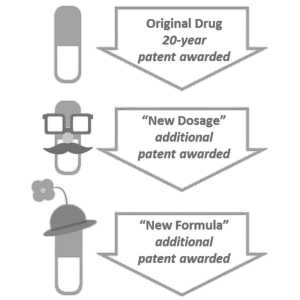
Evergreening refers to a variety of legal and business strategies by which technology producers with patents over products that are about to expire retain rent from them by either taking out new patents or by buying out or frustrating competitors, for longer periods of time than would normally be permissible under the law.
Evergreening is not a formal concept of patent law; it is best understood as a social idea used to refer to the myriad ways in which pharmaceutical patent owners use the law and related regulatory processes to extend their high rent-earning intellectual property rights, otherwise known as intellectual monopoly privileges, particularly over highly profitable ‘blockbuster’ drugs.
read more »
Posted in Drugs, Money, Politics |
Leave a Comment »
October 8, 2012

Patent troll is a pejorative term used for a person or company who enforces patents against one or more alleged infringers in a manner considered aggressive or opportunistic with no intention to manufacture or market the patented invention.
The Patent Troll was originally depicted in ‘The Patents Video,’ which was released in 1994 and sold to corporations, universities, and governmental entities. The metaphor was popularized in 2001 by Peter Detkin, former assistant general counsel of Intel, who chose the term from among a number of suggestions during a discussion with Anne Gundelfinger, Vice President and Associate General Counsel at Intel.
read more »
Posted in Money, Politics, Technology |
Leave a Comment »
October 8, 2012
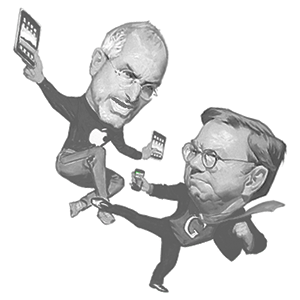
A patent war is a ‘battle’ between corporations or individuals to secure patents for litigation, whether offensively or defensively. There are ongoing patent wars between the world’s largest technology and software corporations. Patent wars are not a new phenomenon. The Wright brothers, attributed with the invention of the airplane, sought to prevent competitors from manufacturing airplanes through litigation, stifling the development of the American airline industry. Alexander Graham Bell, credited with inventing the telephone, was dragged into a patent war against his rivals, which involved, in just 11 years, 600 lawsuits.
One notable case was Bell’s lawsuit against Western Union, a telegraph company backed by Elisha Gray (also credited with inventing the telephone). In the digital age, the rapid pace of innovation makes much of the patent system obsolete. In the 1980s, technology corporations in the United States and Japan engaged in a patent war, creating a scenario where companies were forced to ‘fight patent with patent.’ This bilateral patent war, partly exaggerated by the media, subsided by the mid 1990s.
read more »
Posted in Money, Politics, Technology |
3 Comments »
October 7, 2012
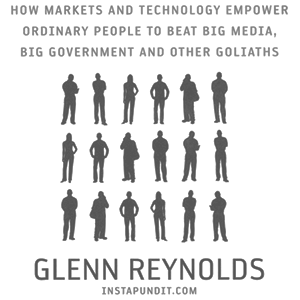
‘An Army of Davids: How Markets and Technology Empower Ordinary People to Beat Big Media, Big Government, and Other Goliaths’ is a2006 book by Glenn Reynolds, a law professor at the University of Tennessee also known as the blogger ‘Instapundit’.
The book looks at modern American society through the lens of individuals versus social institutions, and Reynolds concludes that technological change has allowed more freedom of action for people in contrast to the ‘big’ establishment organizations that used to function as gatekeepers. Thus, he argues that the balance of power between individuals and institutions is ‘flatting out,’ which involves numerous decentralized networks rising up. Reynolds divides the book into two distinct sections. The first focuses on trends currently taking place. The latter describes upcoming trends.
read more »
Posted in Money, Politics, Technology |
Leave a Comment »
October 7, 2012


Deletionism and inclusionism are opposing philosophies that largely developed and came to public notice within the context of the community of editors of the online encyclopedia Wikipedia. The terms are connected to views on the appropriate scope of the encyclopedia, and the appropriate point for a topic to be allowed to ‘include’ an encyclopedia article (i.e., ‘inclusion’) or ‘delete’ the article (i.e., ‘deletion’).
Inclusionism and deletionism are broad terms falling within a spectrum of views. The concepts are closely related to the concept of notability, with deletionists and inclusionists taking a strong or relaxed stance on ‘notability’ accordingly. Many users do not identify strongly with either position. ‘Deletionists’ are proponents of selective coverage and removal of articles seen as unnecessary or highly substandard. Deletionist viewpoints are commonly motivated by a desire that Wikipedia be focused on and cover significant topics – along with the desire to place a firm cap upon proliferation of promotional use (seen as abuse of the website), trivia, and articles which are of no general interest, lack suitable source material for high quality coverage, or are too short or otherwise unacceptably poor in quality.
read more »
Posted in Language, Politics, Technology |
Leave a Comment »
October 7, 2012

Project A119, also known as ‘A Study of Lunar Research Flights,’ was a top-secret plan developed in the late 1950s by the United States Air Force. The aim of the project was to detonate a nuclear bomb on the Moon to boost public morale in the United States after the Soviet Union took an early lead in the Space Race. The existence of the project was revealed in 2000 by a former NASA executive, Leonard Reiffel, who led the project in 1958.
A young Carl Sagan was part of the team responsible for predicting the effects of a nuclear explosion in low gravity. Project A119 was never carried out, primarily because a moon landing would be a much more acceptable achievement in the eyes of the American public. The project documents remained secret for nearly 45 years, and despite Reiffel’s revelations, the US government has never officially recognized its involvement in the study.
read more »
Posted in Politics, Science, War |
Leave a Comment »
October 4, 2012

In the United States, clean coal is any technology that may reduce emissions of carbon dioxide and other greenhouse gasses that arise from the burning of coal for electrical power. Typically, the term clean coal is used by coal companies in reference to carbon capture and storage (CCS), which pumps and stores emissions underground, and to plants using an Integrated gasification combined cycle (IGCC), which is technology that turns coal and other carbon based fuels into synthesis gas (‘syngas,’ which can be used to produce diesel, or converted into methane or other fuels).
Historically, the term has been used to refer to technologies for reducing emissions of ash, sulfur, and heavy metals from coal combustion. Carbon capture and storage technologies are being developed primarily in response to regulations by the EPA—most notably the ‘Clean Air Act’—and in anticipation of legislation that seeks to mitigate climate change. Currently, the electricity sector of the United States is responsible for about 41% of the nation’s carbon dioxide emissions, and half of the sector’s production comes from coal-fired power plants.
read more »
Posted in Money, Politics, Technology |
Leave a Comment »
October 1, 2012

Chimerica is a neologism and portmanteau coined in 2006 by historian Niall Ferguson and economist Moritz Schularick describing the symbiotic relationship between China and the United States, with incidental reference to the legendary chimera. In 2010, anticipating the risk of tensions between the two nations escalating into a currency war, Ferguson published a paper forecasting that Chimerica would soon unravel.
They argue that saving by the Chinese and overspending by Americans led to an incredible period of wealth creation that contributed to the global financial crisis of 2008–2009. For years, China accumulated large currency reserves and channeled them into U.S. government securities, which kept nominal and real long-term interest rates artificially low in the United States.
read more »
Posted in Money, Politics, World |
1 Comment »
September 29, 2012
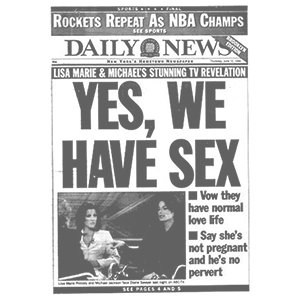
A marriage of convenience (plural marriages of convenience) is a marriage contracted for reasons other than the reasons of relationship, family, or love. Instead, such a marriage is orchestrated for personal gain or some other sort of strategic purpose, such as political marriage.
In the cases when it represents a fraud, it is called ‘sham marriage.’ Marriages of convenience are often contracted to exploit legal loopholes of various sorts. A couple may wed for reasons of citizenship or right of abode, for example, as many countries around the world will grant such rights to any wedded resident.
read more »
Posted in Money, Politics, Sex |
Leave a Comment »
September 27, 2012

An Internet kill switch is the cybercrime and countermeasures concept of activating a single shut off mechanism for all Internet traffic. The theory behind a kill switch is creation of a single point of control for one authority or another to control in order to ‘shut down the internet to protect it’ from unspecified assailants. The prospect of cyberwarfare over the 2000s has prompted the drafting of legislation by US officials, but worldwide the implications of actually of ‘killing’ the Internet has prompted criticism of the idea in the United States.
During the 2010–2011 Middle East and North Africa protests in Tunisia, Egypt, and Libya access to the Internet was denied in an effort to limit peer networking to facilitate organization. The Communications Act of 1934 established the United States’ Federal regulation of electronic communications. In this act, created by the Franklin D. Roosevelt Administration enabled the president powers of control over the media under certain circumstances such as during wartime or a national emergency.
read more »
Posted in Politics, Technology, War |
Leave a Comment »
September 26, 2012

Lafayette Ronald Hubbard (1911 – 1986), better known as L. Ron Hubbard and often referred to by his initials, LRH, was an American pulp fiction author and the founder of the Church of Scientology. After establishing a career as a writer, becoming best known for his science fiction and fantasy stories, he developed a self-help system called ‘Dianetics’ which was first published in 1950. He subsequently developed his ideas into a wide-ranging set of doctrines and rituals as part of a new religious movement that he called Scientology. His writings became the guiding texts for the Church of Scientology and a number of affiliated organizations that address such diverse topics as business administration, literacy, and drug rehabilitation.
The Church of Scientology describes Hubbard in hagiographic terms, and he portrayed himself as a pioneering explorer, world traveler, and nuclear physicist, with expertise in a wide range of disciplines, including photography, art, poetry, and philosophy. His critics have characterized him as a liar, a charlatan, and mentally unstable. Though many of his autobiographical statements have been proven to be fictitious, the Church rejects any suggestion that its account of Hubbard’s life is not historical fact.
read more »
Posted in Philosophy, Politics, World |
Leave a Comment »
September 25, 2012


Deaf culture describes the communities that are affected by deafness and which use sign languages as the main means of communication. When used as a cultural label, the word deaf is often written with a capital ‘D,’ and referred to as ‘big D Deaf’ in speech and sign. When used as a label for the audiological condition, it is written with a lower case ‘d.’ Members of the Deaf community tend to view deafness as a difference in human experience rather than a disability, preferring to be called ‘Deaf’ or ‘Hard of Hearing’ than ‘Hearing Impaired,’ which most people think is the most acceptable term today.
The community may include family members of deaf people and sign-language interpreters who identify with Deaf culture and does not automatically include all people who are hard of hearing. According to sign-language interpreter Anna Mindess, ‘it is not the extent of hearing loss that defines a member of the Deaf community but the individual’s own sense of identity and resultant actions.’ As with all social groups that a person chooses to belong to, a person is a member of the Deaf community if he or she ‘identifies him/herself as a member of the Deaf community, and other members accept that person as a part of the community.’
read more »
Posted in Health, Language, Politics |
Leave a Comment »



