September 18, 2012

Discrimination against atheists (sometimes called atheophobia) includes the persecution and discrimination faced by atheists and those labeled as atheists in the past and in the current era. Differing definitions of atheism historically and culturally mean those discriminated against might not be considered truly atheist by modern Western standards. In constitutional democracies, legal discrimination against atheists is uncommon, but some atheists and atheist groups, particularly those in the United States, have protested laws, regulations and institutions they view as being discriminatory.
In some Islamic countries, atheists face discrimination including lack of legal status or even a death sentence in the case of apostasy. Atheism in its modern sense did not exist before the end of the seventeenth century. However, as governmental authority rested on the notion of divine right, it was threatened by those who denied the existence of the local god. Philosophers such as Plato argued that atheism (as we understand it today) was a danger to society and should be punished as a crime. Those labeled as atheist, which included early Christians and Muslims, were as a result targeted for legal persecution.
read more »
Posted in Philosophy, Politics, World |
Leave a Comment »
September 18, 2012

Cultural bias is the phenomenon of interpreting and judging phenomena by standards inherent to one’s own culture. The phenomenon is sometimes considered a problem central to social and human sciences, such as economics, psychology, anthropology, and sociology.
Some practitioners of the aforementioned fields have attempted to develop methods and theories to compensate for or a culture make assumptions about conventions, including conventions of language, notation, proof and evidence. They are then accused of mistaking these assumptions for laws of logic or nature. Numerous such biases exist, concerning cultural norms for color, location of body parts, mate selection, concepts of justice, linguistic and logical validity, acceptability of evidence, and taboos.
read more »
Posted in Philosophy, Politics, World |
Leave a Comment »
September 18, 2012
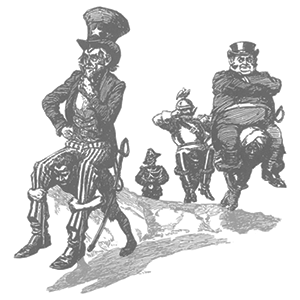
Supremacism [suh-prem-uh-siz-uhm] is the belief that a particular race, species, ethnic group, religion, gender, sexual orientation, class, belief system or culture is superior to others and entitles those who identify with it to dominate, control or rule those who do not. Many anthropologists consider male supremacism, also known as ‘male dominance’ or ‘patriarchy,’ to exist in all cultures throughout human history. Under it special rights or status is granted to men, i.e. ‘male privilege.’
Such supremacy is enforced through a variety of cultural, political and interpersonal strategies. Others note that this often has been balanced by various forms of female authority. Since the 19th century there have been a number of feminist movements opposed to male supremacism and working for equal legal rights and protections for women in all cultural, political and interpersonal relations.
read more »
Posted in Philosophy, Politics, World |
Leave a Comment »
September 17, 2012


Opportunity cost is the value of the next best thing after making a decision; the utility of the decision has to outweigh the opportunity cost for it to be a good choice.
For example, opportunity cost describes leisure time given up to work, because leisure and income are both valued. Going to work implies more income but less leisure.
read more »
Posted in Money, Politics |
Leave a Comment »
September 16, 2012

Puffery [puhf-uh-ree] as a legal term refers to promotional statements and claims that express subjective rather than objective views, which no ‘reasonable person’ would take literally. Puffery serves to ‘puff up’ an exaggerated image of what is being described and is especially featured in testimonials. In a legal context, the term originated in the English Court of Appeal case, which centered on whether a monetary reimbursement should be paid when an influenza preventive device failed to work.
The manufacturers had paid for advertising stating that £100 would be paid in such circumstances then failed to follow through. Part of their defense was that such a statement was ‘mere puff’ and not meant to be taken seriously. While the defense ultimately lost the case the principle was confirmed that certain statements made by advertisers, that were obviously not made in a serious manner, could be exempt from usual rules relating to promises in open contracts.
read more »
Posted in Language, Money, Politics |
Leave a Comment »
September 15, 2012


A knowledge market is a mechanism for distributing knowledge resources. There are two views on knowledge and how knowledge markets can function. One view uses a legal construct of intellectual property to make knowledge a typical scarce resource, so the traditional commodity market mechanism can be applied directly to distribute it.
An alternative model is based on treating knowledge as a public good and hence encouraging free sharing of knowledge. This is often referred to as attention economy. Currently there is no consensus among researchers on relative merits of these two approaches.
read more »
Posted in Money, Politics, Technology |
Leave a Comment »
September 15, 2012

Innocence of Muslims is an anti-Muslim amateur 2012 film produced by Nakoula Basseley Nakoula. Months after it was shown one time in a Hollywood theater, two film trailers were released on YouTube, in 2012. The trailers were dubbed into Arabic, and then spread by Egyptian American blogger and Coptic Christian Morris Sadek.
A two-minute excerpt from the film was broadcast an Egyptian Islamist television station. Violent protests against the film broke out on September 11. The protests spread to Libya, Yemen, and other Arab and Muslim nations over the following days, included the 2012 diplomatic missions attacks, incorporating an attack on the U.S. consulate in Libya, that resulted the deaths of U.S. Ambassador Christopher Stevens and three other Americans.
read more »
Posted in Philosophy, Politics, World |
1 Comment »
September 15, 2012

Blasphemy Day International is a holiday in which individuals and groups are encouraged to openly express their criticism of, or even disdain for, religion.
It was founded in 2009 by the Center for Inquiry (CFI, a US non-profit educational organization whose primary mission is to encourage evidence-based inquiry into paranormal and fringe science claims, alternative medicine and mental health practices, religion, secular ethics, and society).
read more »
Posted in Philosophy, Politics, World |
Leave a Comment »
September 14, 2012

A Millwall brick is an improvised weapon made of a manipulated newspaper. It was named for supporters of Millwall F.C., who had a stereotyped reputation for football hooliganism.
The Millwall brick was allegedly used as a stealth weapon at football matches in England during the 1960s and 1970s.
read more »
Posted in Games, Politics, World |
Leave a Comment »
September 14, 2012
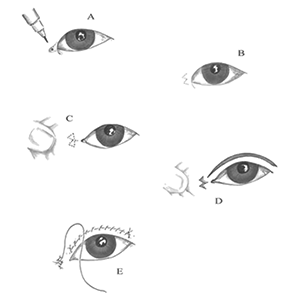
Asian blepharoplasty [blef-er-uh-plas-tee], also known as ‘double eyelid surgery,’ is a type of cosmetic surgery where the skin around the eye is reshaped. The purpose of the procedure is to create an upper eyelid with a crease (‘double eyelid’) from an eyelid that is naturally without a crease. The procedure has been a subject of controversy, and was described by opponents, such as author David Mura, as being ‘indoctrinated by white standards of beauty.’ New York based cosmetic surgeon Dr. Edward Kwak states that many patients who get the procedure done are ‘not trying to look white,’ but look like the many north and eastern Asians who naturally have an eyelid fold.
While there are some Asians with a double eyelid and some without, there is also a large variation in the crease position (double eyelid size) of the East Asian upper eyelid. The upper lid fold can range from 1 mm above the eyelash line to about 10 mm. Asian blepharoplasties have been reported to be the most common aesthetic procedure in Taiwan, South Korea, and other parts of East Asia. The procedure has been reported to have some risk of complications, but is generally quite safe if done by an expert plastic surgeon. A procedure to remove the epicanthal fold (near the tear duct) (i.e. an epicanthoplasty) is often performed in conjunction.
Posted in Health, Politics, World |
Leave a Comment »
September 14, 2012
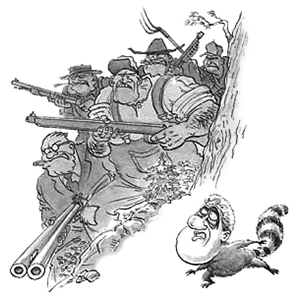
‘Vast right-wing conspiracy‘ was a theory advanced by then First Lady of the United States Hillary Rodham Clinton in 1998 in defense of her husband, President Bill Clinton, and his administration during the Lewinsky scandal, characterizing the Lewinsky charges as the latest in a long, organized, collaborative series of charges by Clinton’s political enemies. While popularized by Mrs. Clinton in her 1998 interview, the phrase did not originate with her.
In 1991 the ‘Detroit News’ wrote: ‘Thatcher-era Britain produced its own crop of paranoid left-liberal films. … All posited a vast right-wing conspiracy propping up a reactionary government ruthlessly crushing all efforts at opposition under the guise of parliamentary democracy.’ An AP story in 1995 also used the phrase, relating an official’s guess that the Oklahoma City bombing was the work of ‘maybe five malcontents’ and not ‘some kind of vast right-wing conspiracy.’
read more »
Posted in Language, Politics |
2 Comments »
September 14, 2012

Trademark dilution is a legal concept giving the owner of a famous trademark standing to forbid others from using that mark in a way that would lessen its uniqueness.
In most cases, trademark dilution involves an unauthorized use of another’s trademark on products that do not compete with, and have little connection with, those of the trademark owner. For example, a famous trademark used by one company to refer to hair care products might be diluted if another company began using a similar mark to refer to breakfast cereals.
read more »
Posted in Money, Politics |
Leave a Comment »




