September 10, 2012

The Korean wave refers to the significant increase in the popularity of South Korean entertainment and culture starting in the 1990s, in Asia, and more recently in other parts of the world. It represents a surge in the international visibility of Korean culture.
The term was coined in mid 1999 by Beijing journalists surprised at the fast growing popularity of Korean entertainment and culture in China. The wave has had considerable impact on the South Korean economy, as well as on the political and cultural influence of South Korea. For example, in 2011 based on international activity the Korean wave added approximately USD$3.8 billion dollars of revenue to the South Korean economy.
read more »
Posted in Money, Politics, World |
1 Comment »
September 10, 2012
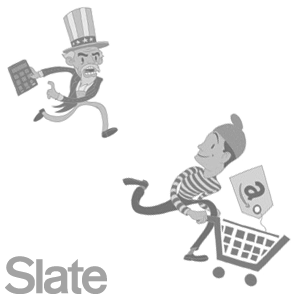
Amazon.com has been criticized for collecting sales taxes from customers in only the five states it has a major presence in. Several states have passed or are considering ‘Amazon tax‘ laws designed to compel Amazon to collect local sales and use taxes from customers. The U.S. has no federal sales tax. In most countries where Amazon operates, a sales tax or value added (consumption) tax is uniform throughout the country, and Amazon is obliged to collect it from all customers.
Proponents argue that Amazon has a comparative advantage over brick-and-mortar retailers, and the online company is under increasing legal and political pressure from state governments, traditional retailers and other groups because of its refusal to collect sales tax in 40 of the 45 states with a statewide sales tax. Those 40 states include at least 12 where Amazon has a clear physical presence via distribution centers and wholly owned subsidiaries.
read more »
Posted in Money, Politics, Technology |
Leave a Comment »
September 10, 2012

LifeLock Inc., founded in 2005, is an American identity theft protection company based in Arizona. The company charges $10 a month for the LifeLock identity theft protection system intended to detect fraudulent applications for some forms of credit and non-credit related services.
LifeLock’s CEO Todd Davis was the victim of identity theft 13 times during 2007 and 2008, after he publicly posted his Social Security number on billboards and in TV commercials as part of a campaign to promote the company’s identity theft protection services.
read more »
Posted in Money, Politics, Technology |
Leave a Comment »
September 9, 2012

Uber (formerly UberCab) is a venture-funded startup company based in San Francisco that makes a mobile application that connects passengers with drivers of luxury vehicles (e.g. Lincoln, Cadillac, BMW) for hire.
The company arranges pickups in the San Francisco Bay Area, New York City, Los Angeles, Seattle, Chicago, Boston, Washington, D.C., Vancouver, Toronto, Paris, and Philadelphia. Cars are reserved by sending a text message or by using a mobile app. Using the apps, customers can track their reserved car’s location.
read more »
Posted in Money, Politics, Technology |
Leave a Comment »
September 7, 2012

The Thin Ideal is the concept of the idyllically slim female body. The common perception of this ideal is that of a slender, feminine physique with a small waist and little body fat. The size of the thin ideal is decreasing while the rate of female obesity is simultaneously increasing, making this iconic body difficult for women to maintain. This creates a gap between the actual appearance of an average woman’s body and its expected appearance which, depending on the extent to which the ideal is internalized, may have serious psychological effects.
The degree to which women are psychologically affected by the thin ideal depends to what extent the ideal is internalized. An article from the ‘Eating Disorders Journal’ states that ‘thin ideal internalization is the extent to which an individual ‘buys into’ socially defined ideals of attractiveness and engages in behaviors designed to approximate these ideals.’ Women generally relate the ideally thin body to positive life outcomes such as happiness, confidence, and romantic success, and consequently a majority of women value the thin ideal to some extent.
read more »
Posted in Health, Money, Politics |
1 Comment »
September 7, 2012
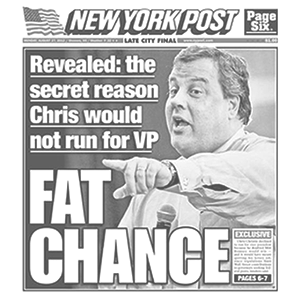
Anti-fat bias refers to the prejudicial assumption of personality characteristics based on a visual assessment of a person as suffering from obesity based on physical characteristics. Anti-fat bias can be found in many facets of society, and the media’s portrayal of obese individuals has often been blamed for the pervasiveness of this phenomenon.
Anti-fat bias leads individuals to label obese members of society with negative personality traits such as ‘lazy,’ ‘greedy,’ ‘stupid,’ ‘smelly,’ ‘slow,’ or ‘unmotivated.’ This bias is not restricted only to clinically obese individuals, but also encompasses those whose body shape is in some way found unacceptable (although still within the normal or overweight BMI range).
read more »
Posted in Food, Health, Politics |
Leave a Comment »
September 7, 2012

Glutamic [glew-tam-ick] acid is a flavor-enhancing compound which provides an umami (savory) taste to food. Glutamic acid is a natural constituent of many fermented or aged foods, including soy sauce, fermented bean paste (a component of miso), and cheese, and is also a component of hydrolyzed protein such as yeast extract (e.g. Vegemite).
The sodium salt of glutamic acid, monosodium glutamate (MSG), is a widely used additive in the food industry. Although they occur naturally in many foods, the flavor contributions made by glutamic acid and other amino acids were only scientifically identified early in the twentieth century.
read more »
Posted in Food, Health, Politics |
Leave a Comment »
September 4, 2012

Daggering is a form of dance originating from the Caribbean. The dance incorporates sexual and other forms of frantic movement. The activity of ‘daggering’ has been present in Jamaica’s dancehalls for many years, but only recently has the name of daggering become acceptable. Some argue that it’s roughly the equivalent of the Caribbean’s ‘cabin stabbing,’ another style of music and dance.
‘Mojo’ magazine journalist and reggae historian David Katz attributes the recently gained popularity of daggering to a series of dancehall music videos and artists that promoted the style. Later on, controversial YouTube videos of people performing daggering would spread the trend worldwide. Daggering is performed on Dancehall-music, although some artists have specifically created ‘daggering’ music, such as Mr. Vegas, Aidonia, and Major Lazer.
read more »
Posted in Politics, Sex, World |
1 Comment »
August 31, 2012

Make It Right, or Make It Right Foundation New Orleans, is a foundation dedicated to rebuilding New Orleans in the aftermath of 2005’s Hurricane Katrina, which flooded the city. In late 2006, Brad Pitt founded Make It Right to rebuild 150 safe, energy-efficient and affordable homes for families from New Orleans Lower 9th Ward who lost everything to Hurricane Katrina.
By 2011, Make It Right completed 75 homes. The homes are inspired by Cradle to Cradle Design (models human industry on nature’s processes in which materials are viewed as nutrients circulating in healthy, safe metabolisms), with an emphasis on high-quality design, while preserving the spirit of the community’s culture.
Posted in Money, Politics |
Leave a Comment »
August 29, 2012
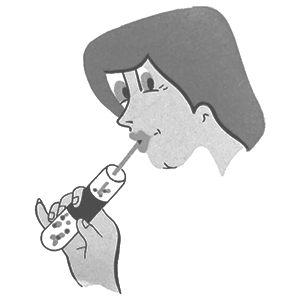
Hippy Sippy was a candy introduced in the late 1960s. It derived its name from its packaging: small multi-colored pellets contained in a toy package syringe. The intent was to mimick drug usage in the hippie culture, primarily through the toy syringe being a reminder of heroin, and secondarily through the multi-colored candy being a reminder of uppers and downers.
Included was a button with the phrase ‘Hippy Sippy says I’ll try anything!’ printed on it. Hippy Sippy was immediately controversial, and outraged many people. It was promptly removed from the market, but is still remembered due to its cultural shock value. The name was adopted by saxophonist Hank Mobley for his song ‘Hippy Sippy Blues.’
Posted in Drugs, Food, Politics |
1 Comment »
August 29, 2012

Candy cigarettes are a candy introduced in the early 20th century made out of chalky sugar, bubblegum, or chocolate, wrapped in paper as to resemble cigarettes. Their place on the market has long been controversial because many critics believe the candy desensitizes children, leading them to become smokers later in life. Because of this, the selling of candy cigarettes has been banned in several countries such as Finland, Norway, the Republic of Ireland, Turkey, and Saudi Arabia. In Canada, federal law prohibits candy cigarette branding that resembles real cigarettes.
The US state of North Dakota enacted a ban on candy cigarettes from 1953 until 1967. The Family Smoking and Prevention Control Act was misquoted as banning candy cigarettes in the US. However, the act bans any form of added flavoring in tobacco cigarettes other than menthol. It does not regulate the candy industry.
Posted in Drugs, Food, Politics |
Leave a Comment »
August 27, 2012

The term free love has been used to describe a social movement that rejects marriage, which is seen as a form of social bondage. The Free Love movement’s initial goal was to separate the state from sexual matters such as marriage, birth control, and adultery. It claimed that such issues were the concern of the people involved, and no one else. Much of the free-love tradition is an offshoot of anarchism, and reflects a libertarian philosophy that seeks freedom from state regulation and church interference in personal relationships.
According to this concept, the free unions of adults are legitimate relations which should be respected by all third parties whether they are emotional or sexual relations. In addition, some free-love writing has argued that both men and women have the right to sexual pleasure. In the Victorian era, this was a radical notion. Later, a new theme developed, linking free love with radical social change, and depicting it as a harbinger of a new anti-authoritarian, anti-repressive sensibility.
read more »
Posted in Love, Philosophy, Politics |
Leave a Comment »


 The Daily Omnivore