May 30, 2012

‘Judge Dredd’ is a comics character whose strip in the British science fiction anthology ‘2000 AD’ is the magazine’s longest running, having been featured there since its second issue in 1977.
Dredd is an American law enforcement officer in a violent city of the future where uniformed Judges combine the powers of police, judge, jury, and executioner. Dredd and his fellow Judges are empowered to arrest, sentence, and even execute criminals on the spot. The character was created by writer John Wagner and artist Carlos Ezquerra, although editor Pat Mills also deserves some credit for early development. The series explores issues such as the police state, authoritarianism and the rule of law.
read more »
Posted in Art, Humor, Politics |
Leave a Comment »
May 22, 2012

Post-Postmodernism is a general term used to describe new developments emerging from Postmodernism. It is a positive idea that faith, sincerity, and trust can be better for society than Postmodern irony.
The term ‘Post-Postmodernism’ was initially coined by seminal cultural theorist Alice Sanders in her magnum opus ‘The Shadow of the Rainbow.’
read more »
Posted in Language, Philosophy, Politics |
1 Comment »
May 22, 2012
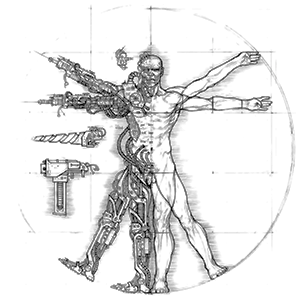
Hypermodernity is a type, mode, or stage of society that reflects a deepening or intensification of modernity. Characteristics include a deep faith in humanity’s ability to understand, control, and manipulate every aspect of human experience. This typically is manifested in a forward-looking commitment to science and knowledge, particularly with regard to the convergence of technology and biology.
The emphasis on the value of new technology to overcome natural limitations lends itself to a diminution or outright repudiation of the past, since yesterday’s knowledge can be considered ‘less’ than today’s. There can be a profound lack of integration between the past and the present since: what happened necessarily took place under ‘lesser’ circumstances than now, which generates a fundamentally separate context; and artifacts from the past superabundantly clutter the cultural landscape and are seamlessly reused to generate an even greater superabundance from which individuals are unable to discern original intent or meaning.
read more »
Posted in Philosophy, Politics, Technology |
Leave a Comment »
May 21, 2012

Jorge Luis Borges [bawr-hes] (1899 – 1986) was an Argentine writer whose work embraces the ‘character of unreality in all literature’; his most famous books, ‘Ficciones’ (1944) and ‘The Aleph’ (1949), are compilations of short stories interconnected by common themes such as dreams, labyrinths, libraries, mirrors, animals, fictional writers, religion, and God.
His works have contributed to the genre of science fiction and magic realism (a reaction against the realism/naturalism of the nineteenth century). In fact, critic Angel Flores, the first to use the term, set the beginning of this movement with Borges’s ‘Historia universal de la infamia’ (‘A Universal History of Infamy’) (1935). Scholars have also suggested that Borges’s progressive blindness helped him to create innovative literary symbols through imagination. His late poems dialogue with such cultural figures as Spinoza, Camões, and Virgil.
read more »
Posted in Art, Language, Politics |
Leave a Comment »
May 17, 2012

The silent majority is an unspecified large majority of people in a country or group who do not express their opinions publicly. The term was popularized (though not first used) by U.S. President Richard Nixon in a 1969, speech in which he said, ‘And so tonight—to you, the great silent majority of my fellow Americans—I ask for your support.’
In this usage it referred to those Americans who did not join in the large demonstrations against the Vietnam War at the time, who did not join in the counterculture, and who did not participate in public discourse. Nixon along with many others saw this group of Middle Americans as being overshadowed in the media by the more vocal minority. The phrase was used in the 19th century as a euphemism referring to all the people who have died, and others have used it before and after Nixon to refer to groups of voters in various nations of the world.
read more »
Posted in Language, Politics, World |
Leave a Comment »
May 17, 2012

Social desirability bias is the tendency of respondents to answer questions in a manner that will be viewed favorably by others. It can take the form of over-reporting good behavior or under-reporting bad behavior. The tendency poses a serious problem with conducting research with self-reports, especially questionnaires. Topics of special concern are self-reports of abilities, personality, sexual behavior, and drug use.
When confronted with the question ‘How often do you masturbate?,’ for example, respondents may be pressured by the societal taboo against masturbation, and either under-report the frequency or avoid answering the question. Therefore the mean rates of masturbation derived from self-report surveys are likely to be severe underestimates.
read more »
Posted in Politics, Science, Sex |
Leave a Comment »
May 17, 2012
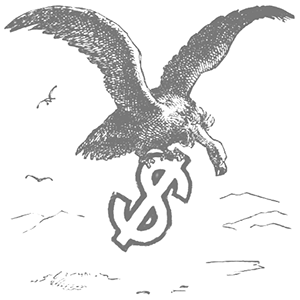
A vulture fund is a private equity or hedge fund that invests in debt issued by an entity that is considered to be very weak or dying, or whose debt is in imminent default. The name is a metaphor comparing these investors to vultures patiently circling, waiting to pick over the remains of a rapidly weakening company or, in the case of sovereign debt, debtor country. Market practitioners refer to them as distressed debt or special situations funds.
Vulture funds have sometimes had success in bringing actions against sovereign debtor governments, usually settling with them before forced sales. Settlements typically are made at a discount in hard or local currency or in the form of new debt issuance. A related term is ‘vulture investing,’ where certain stocks in near bankrupt companies are purchased upon anticipation of asset divestiture or successful reorganization. A prime example in the US is K-Mart, where the real estate held by the company was the anticipated payout for investors who bought stock during their bankruptcy proceedings.
Posted in Money, Politics, World |
Leave a Comment »
May 16, 2012
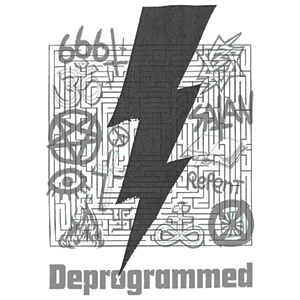
The anti-cult movement (ACM) refers to groups and individuals who oppose cults and new religious movements (NRM). Sociologists David G. Bromley and Anson Shupe initially defined the ACM in 1981 as a collection of groups embracing brainwashing-theory, but later observed a significant shift in ideology towards a ‘medicalization’ of the memberships of new religious movements.
This countermovement has reportedly recruited from family members of ‘cultists’; former cult members, (or apostates); church groups; and associations of health professionals. A significant minority opinion suggests that analysis should treat the secular anti-cult movement separately from the religiously motivated (mainly Christian) groups. The anti-cult movement might be divided into four classes: secular counter-cult groups; Christian evangelical counter-cult groups; groups formed to counter a specific cult; and organizations that offer some form of exit counseling.
read more »
Posted in Philosophy, Politics |
Leave a Comment »
May 14, 2012

Thief in law, a ‘thief who operates within the law’ or ‘a criminal who obeys The Thieves’ Code”) is a criminal who is respected, has authority and a high ranking status within the criminal underworld in the old Soviet Union, Russia and the republics that formed the former Soviet Union. Thieves in law are the elite of the Russian world of organized crime.
According to various Russian news sources there exist hundreds of organized units which retain independence in their actions. Estimates concerning the number of ‘Vory’ throughout the world range from several hundred to over 10,000. Many of thieves in law are no longer exclusively ethnic Russians but are drawn from other nationalities, including those living in other former Soviet states or former Warsaw pact nations such as Poland, the Czech Republic, and Bulgaria.
read more »
Posted in Death, Politics, World |
Leave a Comment »
May 14, 2012

Tattoos are commonly used among criminals to show gang membership and record the wearer’s personal history—such as his or her skills, specialties, accomplishments, and convictions. They are also used as a means of personal expression. Certain designs have developed recognized coded meanings. The code systems can be quite complex and because of the nature of what they encode, the tattoos are not widely recognized.
Tattooing is forbidden in most prisons. It is therefore done in secret, with makeshift equipment. For example, tattoos done in a Russian prison often have a distinct bluish color (due to being made with ink from a ballpoint pen) and usually appear somewhat blurred because of the lack of instruments to draw fine lines. The ink is often created from burning the heel of a shoe and mixing the soot with urine (for sterilization), and injected into the skin utilizing a sharpened guitar string attached to an electric shaver.
read more »
Posted in Art, Politics, World |
2 Comments »
May 14, 2012

Prison tattoos often signal gang membership, form a code, or have hidden meanings. However, due to the lack of proper equipment and sterile environments in prison, the practice poses health risks.
Tattooing in prison is illegal in the U.S., but inmates find ways to create their own tattooing devices out of their belongings. Improvised equipment is assembled from mechanical pencils, magnets, radio transistors, staples, paper clips, guitar strings, and other common items.
read more »
Posted in Art, Health, Politics |
6 Comments »
May 14, 2012
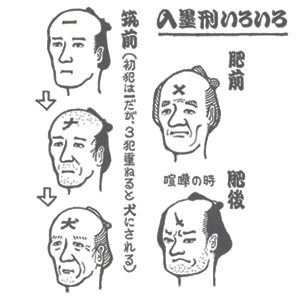
Irezumi [ee-reh-zoo-mee] (literally ‘insert ink’) refers to the insertion of ink under the skin to leave a permanent, usually decorative mark; a form of Japanese tattooing. Tattooing for spiritual and decorative purposes in Japan is thought to extend back to the paleolithic period (approximately 10,000 BCE). Some scholars have suggested that the distinctive cord-marked patterns observed on the faces and bodies of figures dated to that period represent tattoos, but this claim is controversial. There are similarities, however, between such markings and the tattoo traditions observed in other contemporaneous cultures.
In the following Yayoi period (c. 300 BCE–300) tattoo designs were observed and remarked upon by Chinese visitors. Such designs were thought to have spiritual significance as well as functioning as a status symbol. Starting in the Kofun period (300–600) tattoos began to assume negative connotations. Instead of being used for ritual or status purposes, tattooed marks began to be placed on criminals as a punishment (this was mirrored in ancient Rome, where slaves were known to have been tattooed with mottoes such as ‘I am a slave who has run away from his master’). The Ainu people, the indigenous people of Japan, are known to have used tattoos for decorative and social purposes, but there is no known relation to the development of irezumi.
read more »
Posted in Art, Politics, World |
Leave a Comment »



