May 4, 2012

The cute cat theory of digital activism is a theory concerning Internet activism, Web censorship, and ‘cute cats’ (a term used for any low-value, but popular online activity) developed in 2008 by Ethan Zuckerman, director of the MIT Center for Civic Media. It posits that most people are not interested in activism; instead, they want to use the web for mundane activities, including surfing for pornography and lolcats (‘cute cats’).
The tools that they develop for that, however, are very useful to social movement activists, who often lack resources to develop dedicated tools themselves, but instead, use the tools developed by others (such as Facebook, Flickr, Blogger, Twitter, and similar platforms), even though such tools were not originally intended for activism.
read more »
Posted in Humor, Politics, Technology |
Leave a Comment »
May 4, 2012

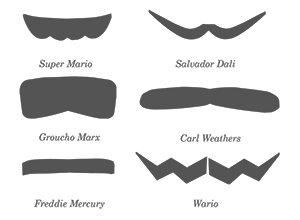
The American Mustache Institute (AMI) is an advocacy organization and registered not-for-profit based in St. Louis, Missouri. When founded in 1965, AMI was the only organization in the world working towards facial hair advocacy. AMI’s full-time staff supports a more than 700 global chapters which advocate for greater acceptance of mustaches in the workplace and throughout modern culture.
Efforts by AMI have included a 2007 campaign against ‘widespread and unacceptable discrimination in the workplace and society,’ as chronicled by media including the ‘Daily Telegraph.’
read more »
Posted in Humor, Politics |
1 Comment »
May 3, 2012

The Culture is a fictional interstellar anarchist, socialist, and utopian society created by the Scottish writer Iain M. Banks which features in a number of science fiction novels and works of short fiction by him, collectively called the Culture series.
The Culture is characterized by being a post-scarcity society (meaning that its advanced technologies provide practically limitless material wealth and comforts for everyone for free, having all but abolished the concept of possessions), by having overcome almost all physical constraints on life (including disease and death) and by being an almost totally egalitarian, stable society without the use of any form of force or compulsion, except where necessary to protect others.
read more »
Posted in Money, Politics, Technology |
Leave a Comment »
May 3, 2012
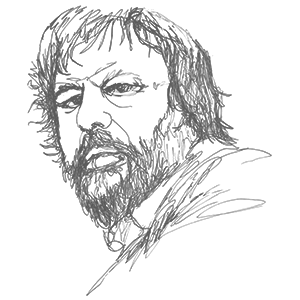
Slavoj Žižek [slah-voy zhee-zhek] (b. 1949) is a Slovenian philosopher and cultural critic working. He has made contributions to political theory, film theory and theoretical psychoanalysis. Žižek is a senior researcher at the Institute of Sociology University of Ljubljana.
Žižek uses examples from popular culture to explain the theory of Jacques Lacan and uses Lacanian psychoanalysis, Hegelian philosophy, and Marxist economic criticism to interpret and speak extensively on immediately current social phenomena, including the current ongoing global financial crisis.
read more »
Posted in Money, Philosophy, Politics |
1 Comment »
May 2, 2012

Unknown knowns are the things that we know, but are unaware of knowing. The coining of the term is attributed to Slovenian Philosopher Slavoj Žižek and it refers to the unconscious beliefs and prejudices that determine how we perceive reality and intervene in it. It is the Freudian unconscious, the ‘knowledge which doesn’t know itself,’ as French psychoanalyst Jacques Lacan said.
Žižek first used the term as a response to former US Defense Secretary Donald Rumsfeld’s statement at a press briefing given in, 2002: ‘There are known knowns; there are things we know we know. We also know there are known unknowns; that is to say we know there are some things we do not know. But there are also unknown unknowns – the ones we don’t know we don’t know.’
read more »
Posted in Language, Philosophy, Politics |
1 Comment »
April 30, 2012
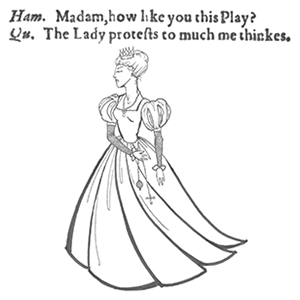
Projection is a psychological defense mechanism where a person subconsciously denies his or her own attributes, thoughts, and emotions, which are then ascribed to the outside world, usually to other people. Thus, projection involves imagining or projecting the belief that others originate those feelings. Projection reduces anxiety by allowing the expression of the unwanted unconscious impulses or desires without letting the conscious mind recognize them.
An example of this behavior might be blaming another for self failure. The mind may avoid the discomfort of consciously admitting personal faults by keeping those feelings unconscious, and by redirecting libidinal satisfaction by attaching, or ‘projecting,’ those same faults onto another person or object. The theory was developed by Sigmund Freud.
read more »
Posted in Health, Philosophy, Politics |
2 Comments »
April 30, 2012

Simon Reynolds (b. 1963) is an English music critic who is well known for his writings on electronic dance music and for coining the term ‘post-rock.’ Besides electronic dance music, Reynolds has written about a wide range of artists and musical genres, and has written books on post-punk and rock. He has contributed to ‘Melody Maker’ (where he first made his name), ‘Spin,’ ‘Rolling Stone,’ ‘Mojo,’ and others. He currently resides in the East Village in NY.
Reynolds’ first experience writing about music was with ‘Monitor,’ a fanzine he helped to found in 1984 while he was studying history at Oxford. The publication only lasted for six issues. When it was discontinued in 1986, Reynolds was already making his name writing for ‘Melody Maker,’ one of the three major British music magazines of the time (the other two being the ‘New Musical Express’ (NME) and ‘Sounds’).
read more »
Posted in Art, Language, Politics |
Leave a Comment »
April 29, 2012

Methaqualone is a sedative-hypnotic drug that is similar in effect to barbiturates, a general central nervous system depressant. The sedative-hypnotic activity was first noted by Indian researchers in the 1950s and in 1962 methaqualone itself was patented in the US by Wallace and Tiernan. Its use peaked in the early 1970s as a hypnotic, for the treatment of insomnia, and as a sedative and muscle relaxant.
It has also been used illegally as a recreational drug, commonly known as Quaaludes [kwey-lood], Sopors, Ludes, or Mandrax (particularly in the 1970s in North America) depending on the manufacturer. At that time ‘luding out’ was a popular college pastime. This is the similar effect of an alcoholic blackout with no recollection of events. Since at least 2001, it has been widely used in South Africa, where it is commonly referred to as ‘smarties’ or ‘geluk-tablette’ (meaning ‘happy tablets’). Clandestinely produced methaqualone is still seized by government agencies and police forces around the world.
Posted in Drugs, Health, Politics |
Leave a Comment »
April 29, 2012

In marketing terminology, a killer application (commonly shortened to killer app) is any computer program that is so necessary or desirable that it proves the core value of some larger technology, such as computer hardware, gaming console, software, or an operating system. One of the first examples of a killer application is generally agreed to be the ‘VisiCalc’ spreadsheet for the Apple II. The machine was purchased in the thousands by finance workers on the strength of this program.
The definition of ‘killer app’ came up during Bill Gates’s questioning in the ‘United States v. Microsoft’ antitrust suit. Gates had written an email in which he described ‘Internet Explorer’ as a killer app. In the questioning, he said that the term meant ‘a very popular application,’ and did not connote an application that would fuel sales of a larger product or one that would supplant its competition.
Posted in Money, Politics, Technology |
2 Comments »
April 26, 2012

Lee Shelton(1865 – 1912) was a black carriage driver and pimp convicted of murdering William ‘Billy’ Lyons on Christmas night, 1895 in St. Louis. The crime was immortalized in a popular song that has been recorded by numerous artists. Stagger Lee (also ‘Stackalee,’ ‘Stackolee,’ and ‘Stagolee’) ultimately becomes a folk figure of the trickster type as numerous legends accumulated around him.
Lee Shelton was not a common pimp, he belonged to a group of pimps known in St. Louis as the ‘Macks.’ The Macks were not just ‘urban strollers’; they presented themselves as objects to be observed. Shelton died in prison in 1912, of tuberculosis. Stagger Lee has become an archetype, the embodiment of a tough black man;one who is sly, streetwise, cool, lawless, amoral, potentially violent, and who defies white authority.
read more »
Posted in Art, Politics |
2 Comments »
April 26, 2012

Clay Shirky (b. 1964) is an American writer, consultant, and teacher on the social and economic effects of Internet technologies. He has a joint appointment at NYU as a Distinguished Writer in Residence at the Arthur L. Carter Journalism Institute and Assistant Arts Professor in the New Media focused graduate Interactive Telecommunications Program (ITP). His courses address, among other things, the interrelated effects of the topology of social networks and technological networks, how our networks shape culture and vice-versa.
Shirky divides his time between consulting, teaching, and writing on the social and economic effects of Internet technologies. His consulting practice is focused on the rise of decentralized technologies such as peer-to-peer, web services, and wireless networks that provide alternatives to the wired client–server infrastructure that characterizes the World Wide Web. He is a member of the Wikimedia Foundation’s Advisory Board. In 2010, Kevin Kelly (founding executive editor of ‘Wired’ magazine) cited the phrase ‘Institutions will try to preserve the problem to which they are the solution,’ and called it the ‘Shirky Principle,’ as the phrasing reminded him of the clarity of the Peter Principle.
read more »
Posted in Language, Politics, Technology |
Leave a Comment »
April 23, 2012

Élan vital [ey-lahn vee-tal] was coined by French philosopher Henri Bergson in his 1907 book ‘Creative Evolution,’ in which he addresses the question of self-organization and spontaneous morphogenesis of things in an increasingly complex manner. Elan vital was translated in the English edition as ‘vital impetus,’ but is usually translated by his detractors as ‘vital force.’ It is a hypothetical explanation for evolution and development of organisms, which Bergson linked closely with consciousness.
It was believed by others that this essence (élan vital) could be harvested and embedded into an inanimate substance and activated with electricity, perhaps taking literally another of Bergson’s metaphorical descriptions, the ‘current of life.’ British biologist Julian Huxley remarked that Bergson’s élan vital is no better an explanation of life than is explaining the operation of a railway engine by its ‘élan locomotif’ (‘locomotive driving force’). The same epistemological fallacy is parodied in Molière’s ‘Le Malade imaginaire,’ where a quack ‘answers’ the question of ‘Why does opium cause sleep?’ with ‘Because of its soporific [sleep-inducing] power.’
read more »
Posted in Language, Politics |
Leave a Comment »



