April 3, 2012
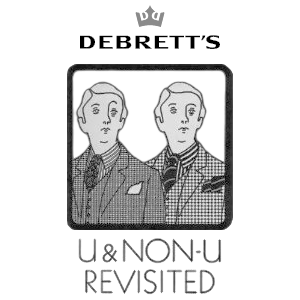
U and non-U English usage, with U standing for upper class, and non-U representing the aspiring middle classes, were part of the terminology of popular discourse of social dialects (sociolects) in 1950s Britain and New England. The debate did not concern itself with the speech of the working classes, which in many instances used the same words as the upper class.
For this reason, the vocabulary list can often appear quite counter-intuitive: the middle class prefers ‘fancy’ or fashionable words (even neologisms), often euphemisms, in an attempt to make themselves sound more refined, while the upper class in many cases sticks to the same plain and traditional words that the working classes also use, as they have no need to make themselves sound more refined, conscious of their status.
read more »
Posted in Language, Money, Politics |
Leave a Comment »
April 2, 2012

Seven generation sustainability is an ecological concept that urges the current generation of humans to live sustainably and work for the benefit of the seventh generation into the future.
It originated with the Iroquois – Great Law of the Iroquois – which holds appropriate to think seven generations ahead (a couple hundred years into the future) and decide whether the decisions they make today would benefit their children seven generations into the future. ‘In every deliberation, we must consider the impact on the seventh generation… even if it requires having skin as thick as the bark of a pine.’
Posted in Money, Politics, World |
Leave a Comment »
March 31, 2012
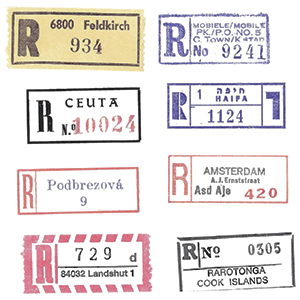
Poor mans copyright is a method of using registered dating by the postal service, a notary public or other highly trusted source to date intellectual property, thereby helping to establish that the material has been in one’s possession since a particular time. The concept is based on the notion that, in the event that such intellectual property were to be misused by a third party, the poor-man’s copyright would at least establish a legally recognized date of possession before any proof which a third party may possess.
The PMC was originally used by authors who sent copies of their own work to themselves through the mail without opening the envelopes in the hope that it would grant them legal protection by establishing a date at which the work was created. Use of this method may not hold up in a court as it is simple for individuals to pre-send envelopes which can then be used later by placing the materials inside.
Posted in Money, Politics, World |
Leave a Comment »
March 30, 2012
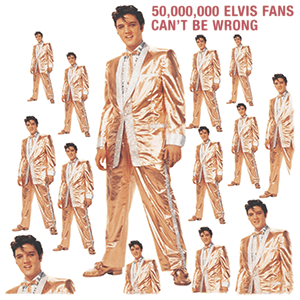
Communal reinforcement is a social phenomenon in which a concept or idea is repeatedly asserted in a community, regardless of whether sufficient empirical evidence has been presented to support it. Over time, the concept or idea is reinforced to become a strong belief in many people’s minds, and may be regarded by the members of the community as fact. Often, the concept or idea may be further reinforced by publications in the mass media, books, or other means of communication. The phrase ‘millions of people can’t all be wrong’ is indicative of the common tendency to accept a communally reinforced idea without question, which often aids in the widespread acceptance of urban legends, myths, and rumors.
Communal reinforcement works both for true and false concepts or ideas, making the communal reinforcement of an idea independent of its truth value. Therefore, the statement that many persons in a given communities share in a common belief is not indicative of it being valid or false information’s. An idea can be accepted and spread throughout a community regardless of the validity of the claim.
read more »
Posted in Health, Politics, Science |
Leave a Comment »
March 29, 2012


A debate exists within the United States government, and American society at large, over whether the one-cent coin, commonly known as the penny, should be eliminated as a unit of currency in the United States. Two bills introduced in the U.S. Congress would have ceased production of pennies, but neither bill was approved. Such a bill would leave the nickel, at five cents, as the lowest-value coin. The chief argument for its elimination is the fact that pennies are produced at a loss. In 2012, it costs about 2.4 cents to mint a penny. By 2007, even the price of the raw materials it is made of exceeded the face value, so there is a risk that coins are illegally melted down for raw materials.
Additionally, pennies are of limited utility; they are not accepted by all vending machines or many toll booths, and pennies are generally not accepted in bulk. In addition, people often do not use cents to pay at all; they may simply use larger denominations and get pennies in return. Pennies end up sitting in jars or are thrown away and are not in circulation. The purpose of the monetary system is to facilitate exchange, but… the penny no longer serves that purpose. Many countries outside the United States have chosen to remove low-value coins from circulation including Canada, Sweden, New Zealand, and Australia.
Posted in Money, Politics, World |
2 Comments »
March 28, 2012

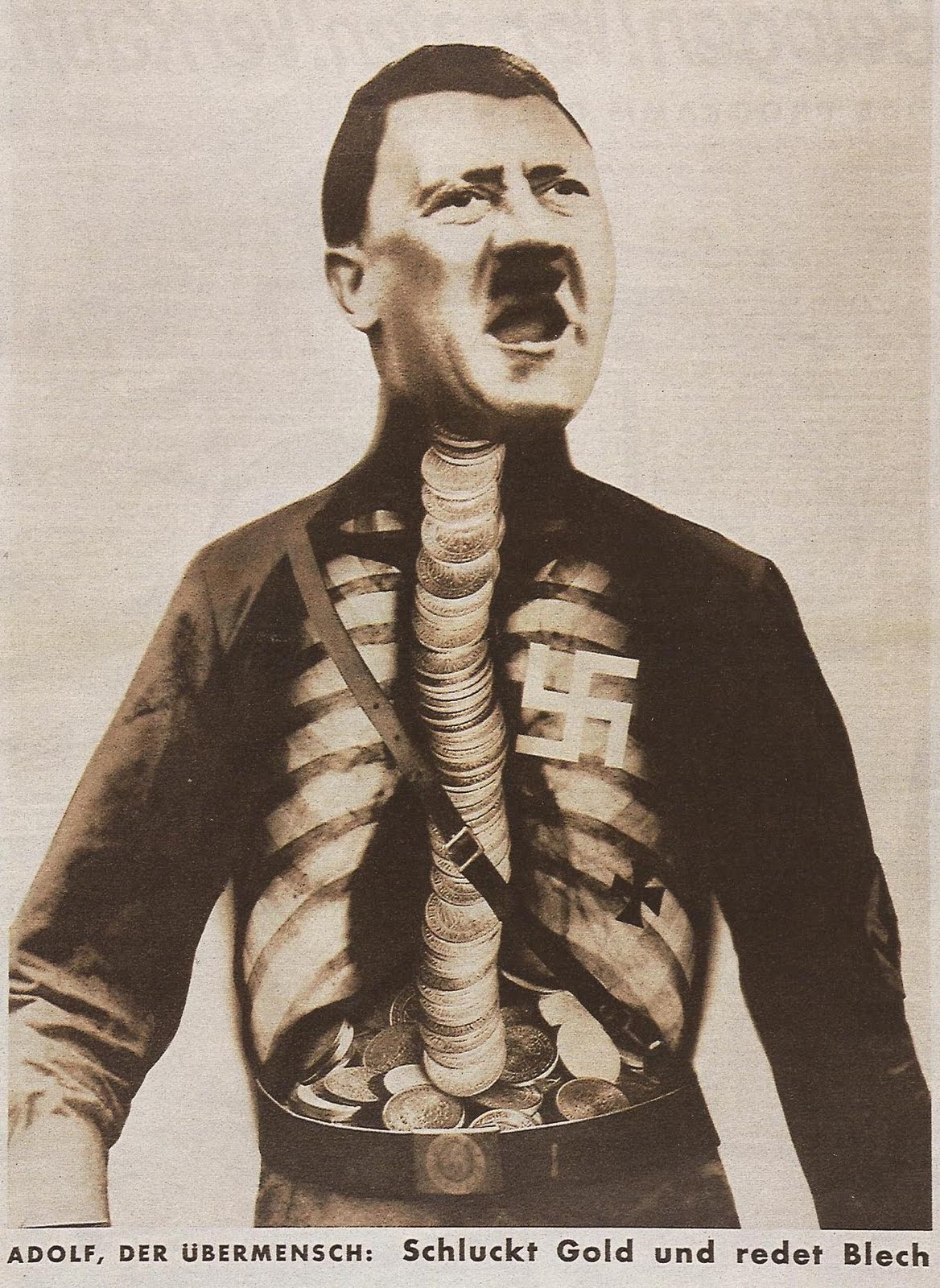
John Heartfield (1891 – 1968) born Helmut Herzfeld, was a pioneer in the use of art as a political weapon. His photomontages were anti-Nazi anti-Fascist statements.
Heartfield also created book jackets for authors such as Upton Sinclair, as well as stage sets for such noted playwrights as Bertold Brecht and Erwin Piscator.
read more »
Posted in Art, Politics, War |
Leave a Comment »
March 28, 2012

Kenneth Tin-Kin Hung (b. 1976) is a Chinese-American new media artist who lives and works in New York. He earned his Bachelor of Arts in Arts degree from San Francisco State University. Hung’s works are digital collages of popular culture and current events.
His media includes hi-definition video animation, video games, net.art, digital graphics and mixed-media installations. Hung has been called the ‘John Heartfield of Digital Era.’ He loans 5 percent of his art earnings to low-income entrepreneurs listed on Kiva Microfunds.
Posted in Art, Money, Politics |
Leave a Comment »
March 27, 2012

Ai Weiwei (b. 1957) is a Chinese contemporary artist, active in sculpture, installation, architecture, curating, photography, film, and social, political and cultural criticism. Ai collaborated with Swiss architects Herzog & de Meuron as the artistic consultant on the Beijing National Stadium for the 2008 Olympics.
As a political activist, he has been highly and openly critical of the Chinese Government’s stance on democracy and human rights. He has investigated government corruption and cover-ups, in particular the Sichuan schools corruption scandal following the collapse of so-called ‘tofu-skin schools’ in the 2008 Sichuan earthquake. In 2011, following his arrest at Beijing airport, he was held for over two months without any official charges being filed; officials alluded to their allegations of ‘economic crimes’ (tax evasion).
read more »
Posted in Politics, World |
Leave a Comment »
March 27, 2012

The Baidu 10 Mythical Creatures was initially a humorous hoax from the interactive encyclopedia ‘Baidu Baike’ which became a popular and widespread Internet meme in China in early 2009. These hoaxes, ten in number, originated in response to increasingly pervasive and draconian online censorship in China, and have become an icon of citizens’ resistance to censorship. The meme initially began as a series of vandalized contributions to ‘Baidu Baike,’ through the creation of humorous articles describing a series of fictional creatures, each with names vaguely referring to Chinese profanities (utilizing homophones and characters using different tones). Eventually, images, videos (such as faux-documentaries) and even a song regarding aspects of the meme were released.
It was thought that the Baidu hoaxes were written in response to recent strict enforcements of keyword filters in China, introduced in 2009, which attempted to eliminate all forms of profanity. The ‘Baidu Baike’ ‘articles’ initially began with ‘Four Mythical Creatures’ (‘Grass Mud Horse,’ ‘French-Croatian Squid,’ ‘Small Elegant Butterfly,’ and ‘Chrysanthemum Silkworms’), and were later extended to ten. The memes became widely discussed on Chinese Internet forums, and most netizens concluded that the initial aim of the hoaxes were to satirize and ridicule the pointlessness of the new keyword filters. The meme is interpreted by most Chinese online as a form of direct protest rather than motiveless intentional disruption to ‘Baidu’ services. After the hoaxes were posted, news of the articles spread quickly online on joke websites, popular web portals and forums.
Posted in Humor, Politics |
Leave a Comment »
March 27, 2012

The Grass Mud Horse or Caoníma, is a Chinese Internet meme widely used as a form of symbolic defiance of the widespread Internet censorship in China. It is a play on the Mandarin language words which translate literally to, ‘fuck your mother,’ and is one of the so-called ’10 mythical creatures’ created in a hoax article on ‘Baidu Baike’ (a collaborative encyclopedia) in early 2009 whose names form obscene puns. Official ‘cleanup’ of the internet, which threatens the Caonima, has led Chinese internet users to create other ‘Mud Horse’ variants, such as the ‘Rolling Mud Horse’ and ‘Working Mud Horse,’ which are also puns for ‘fuck your mother.’
The ‘China Digital Times’ sees Caonima as the ‘de facto mascot of netizens in China fighting for free expression, inspiring poetry, photos and videos, artwork, lines of clothing, and more.’ It is an illustration of the ‘resistance discourse’ of Chinese internet users with ‘increasingly dynamic and sometimes surprising presence of an alternative political discourse: images, frames, metaphors and narratives that have been generated from Internet memes [that] undermine the values and ideology that reproduce compliance with the Chinese Communist Party’s authoritarian regime, and, as such, force an opening for free expression and civil society in China.’
read more »
Posted in Humor, Language, Politics |
1 Comment »
March 27, 2012

Very erotic very violent is a Chinese internet meme that originated from a news report on China Central Television’s flagship ‘Xinwen Lianbo’ program (a daily news show) allegedly quoting a schoolgirl describing a web page. On the Chinese Internet, this incident was widely parodied and weakened the credibility of the state broadcaster’s newscasts. This Chinese phrase follows the form of ‘very good very mighty,’ a snowclone (cliché template) for Internet slang popularized earlier that year.
In late 2007, ‘Xinwen Lianbo’ aired a report about the wide and easy availability of explicit content on the internet. The report appealed to juristic institutions and those seeking legislation in order to purify the internet environment. In the report, a young student described a pop-up advertisement she saw as being ‘very erotic, [and] very violent.’ After the airing of the report, internet users began to ridicule and parody the quote and question the program’s credibility, believing that it would be unlikely for a person of that age to find a web page to be both erotic and violent at the same time.
Posted in Humor, Politics, Sex |
Leave a Comment »
March 27, 2012

Vagina dentata is Latin for ‘toothed vagina.’ Various cultures have folk tales about women with toothed vaginas, frequently told as cautionary tales warning of the dangers of sex with strange women and to discourage the act of rape. Jung disciple Erich Neumann relays one such myth in which ‘a fish inhabits the vagina of the Terrible Mother; the hero is the man who overcomes the Terrible Mother, breaks the teeth out of her vagina, and so makes her into a woman.’ The legend also appears in the mythology of the Chaco and Guiana tribes.
In some versions, the hero leaves one tooth. An Ainu language (of Japan and Russia) tale containing this element was published as ‘The Island of Women’ by Basil Hall Chamberlain, where it was described as a well known Japanese tale by E. B. Tylor. In his book, ‘The Wimp Factor,’ Stephen J. Ducat expresses the view that these myths express the threat sexual intercourse poses for men who, although entering triumphantly, always leave diminished. The grain of truth in these stories is that dermoid cysts, which can occur anywhere in the body, often contain teeth. Although there are no documented sightings, it is theoretically possible for a tooth-containing dermoid cyst to develop in a woman’s vagina.
Posted in Politics, Sex, World |
Leave a Comment »


 The Daily Omnivore