March 15, 2012

Boy racers is a UK term referring to those who ‘cruise’ around in vehicles modified with loud exhausts and stereos, or modified body kits. This behavior is frowned upon by members of the public irritated by the noise and the criminal behavior associated with it, including violence by skinhead and Neo-Nazi ‘boy racers.’ Responses to the boy racer problem range from laws prohibiting the antisocial activities they engage in to vigilante actions such as spraying expander foam, a common building supply, into their exhausts.
In Australia, the terms ‘hoon’ and ‘revhead’ are used for people who drive in an anti-social or dangerous manner. However, ‘revhead’ may refer to any motor enthusiast, while ‘hoon’ is always pejorative. Americans often use the term ‘rice burner,’ ‘rice rocket,’ or ‘ricer’ to describe the boy racer concept, since most of the vehicles are of Asian manufacture. There’s also the less popular term ‘wheat burner,’ which is the same thing, but with a domestic American model such as a Ford Focus, or Chevrolet Cavalier. A ‘krauter’ is a German model, usually a Volkswagen Jetta or Volkswagen Golf. The latter two categories are also sometimes referred to as ‘rice eaters,’ since their competition in the tuner scene is usually the more popular Asian models.
Posted in Language, Politics, World |
Leave a Comment »
March 14, 2012

The term Sloane Ranger refers to a stereotype in the UK of young, upper class or upper-middle-class women, or men who share distinctive and common lifestyle traits. The term is a punning combination of ‘Sloane Square,’ a location in Chelsea, London famed for the wealth of residents and frequenters, and the television Westerns character ‘The Lone Ranger.’
Initially the term was used mostly in reference to women, a particular archetype being Lady Diana Spencer before marrying The Prince of Wales, when she was an aristocrat from the Spencer family. However, the term now usually includes men. Male Sloanes have also been referred to as ‘Ra Ra Ruperts’ (or, simply, ‘Rah’ for short) and ‘Hooray Henrys.’ The term Sloane Ranger has similar related terms in other countries: in France they are called ‘BCBG’ (‘bon chic, bon genre’ – ‘good style’ ‘good attitude’). The Preppy of the United States can appear similar to the Sloane Ranger at first glance, but in fact they are different in their ideologies and aspirations.
read more »
Posted in Money, Politics, World |
Leave a Comment »
March 12, 2012
Oxfam is the largest retailer of second hand books in Europe, selling around 12 million per year. Most of Oxfam’s 750 charity shops around the UK sell books, and around 100 are specialist bookshops or book and music shops. A typical Oxfam bookshop will have around 50 volunteers, as well as a small number of full-time staff. Books are donated directly to shops by the public, or through Oxfam ‘book banks’ in convenient locations around the country. The profits of the book sales support the work of Oxfam.
Oxfam has been trying to shake off the dusty image of its shops, and the rapid expansion of specialist bookshops has formed part of that strategy. Modern Oxfam bookshops typically boast professional fittings and a wide range of stock, including recent novels, specialist textbooks and out-of-print curios. However, charity bookshops, particularly those belonging to Oxfam, have been criticized for forcing traditional bookshops out of business. Small bookshops have complained that Oxfam receives unfair advantages in the form of favorable tax rates and cheaper waste disposal, amongst other things. In response to these criticisms, Oxfam has said that much of the damage to small book retailers has come from supermarkets and online retailers, particularly Tesco and Amazon.
Posted in Money, Politics, World |
Leave a Comment »
March 11, 2012


Gotcha journalism is a term used to describe methods of interviewing which are designed to entrap interviewees into making statements which are damaging or discreditable to their cause, character, integrity, or reputation. The aim is to make film or sound recordings of the interview which can be selectively edited, compiled, and broadcast or published to show the subject in an unfavourable light.
Methods include misrepresenting the topic of the interview, then switching to an embarrassing subject, leading the interviewee to commit to a certain answer, and confronting them with prepared material designed to contradict or discredit that position, repeatedly baiting the interviewee to befuddle them and get their guard down to elicit an embarrassing response. Another technique is for the interviewer to remain silent after something the subject has said, which often leads the subject to say something to fill the silence. Gotcha journalism is often designed to keep the interviewee on the defensive by, for example, being required to explain some of their own statements taken out of context thus effectively preventing the interviewee from discussing their own agenda for the interview.
Posted in Language, Politics |
Leave a Comment »
March 9, 2012

Low Orbit Ion Cannon (LOIC) is an open source network stress testing and denial-of-service attack application. LOIC was initially developed by Praetox Technologies, but was later released into the public domain, and now is hosted on several open source platforms. It’s named after a fictitious weapon from the ‘Command & Conquer’ series of video games.
The software has inspired the creation of an independent JavaScript version, enabling a DoS from a web browser. LOIC performs a DoS attack (or when used by multiple individuals, a DDoS attack) on a target site by flooding the server with TCP packets or UDP packets with the intention of disrupting the service of a particular host. People have used LOIC to join voluntary botnets. LOIC attacks are easily identified in system logs, and the attack can be tracked down to the individual users IP address.
Posted in Money, Politics, Technology |
Leave a Comment »
March 9, 2012

Topiary, real name Jake Davis, is a hacker and self-described ‘Simple prankster turned swank garden hedge. Worked with Anonymous, LulzSec, and other such paragons of intense cyber victory.’ He is an associate of the Internet group Anonymous, which have publicly claimed various online attacks, including hacking HBGary, Westboro Baptist Church, and Gawker. They have also claimed responsibility for the defacing of government websites in countries such as Zimbabwe, Syria, Tunisia, Ireland, and Egypt. 18-year Jake Davis was arrested in Scotland in 2011.
Police confiscated a Dell laptop and a 100-gigabyte hard drive that had 16 different virtual machines. The hard drive also contained details relating to an attack on Sony and hundreds of thousands of email addresses and passwords were found on the computer. A London court released Davis on bail under the conditions that he live under curfew with his mother and have no access to the Internet. His lawyer stated that, while his client did help publicize LulzSec and Anonymous attacks, he lacks the technical skills to have been anything but a sympathizer. After his arrest, Anonymous launched a ‘Free Topiary’ campaign.
Posted in Money, Politics, Technology |
Leave a Comment »
March 9, 2012

The Jester (th3j35t3r) is a computer vigilante who describes himself as a grey hat ‘hacktivist.’ He claimed responsibility for attacks on WikiLeaks, 4chan, Iranian President Mahmoud Ahmadinejad, and Islamist websites. He claims to be acting out of American patriotism. The Jester uses a denial-of-service (DoS) tool known as ‘XerXeS,’ that he claims to have developed.
One of The Jester’s habits is to tweet ‘TANGO DOWN’ on Twitter whenever he successfully takes down a website. The Jester had stated that he was a former soldier and had served in Afghanistan and elsewhere.The Jester claims to have originally developed his DoS script as a means to test and harden servers. After learning from an article that Jihadists were using the Internet to recruit and coordinate terror cells, The Jester resolved to disrupting online communications between Jihadists. He weaponized his script and created a front-end known as ‘XerXeS’ in order to solve the script’s usability problems.
read more »
Posted in Politics, Technology, War |
Leave a Comment »
March 9, 2012

Sabu, real name Hector Xavier Monsegur (b. 1983), is an American computer hacker and the founder of the hacking group LulzSec. LulzSec intervened in the affairs of organizations such as News Corporation, Stratfor, British and American law enforcement bodies, and Irish political party Fine Gael.
Sabu later turned informant for the FBI, working with the agency for over ten months to aid them in identifying other hackers from Lulzsec and related groups. His online handle is a reference to a professional wrestler. Monsegur was based out of a housing project on the lower east side of Manhattan while operating as Sabu; he is currently in a witness protection program.
Posted in Money, Politics, Technology |
Leave a Comment »
March 8, 2012

Utne Reader [ut-nee] is an American bimonthly magazine, which collects and reprints articles on politics, culture, and the environment from generally alternative media sources, including journals, newsletters, weeklies, zines, music, and DVDs. In addition, the magazine’s writers and editors contribute books, film, and music reviews and original articles which tend to focus on emerging cultural trends. The magazine’s website produces ten blogs covering politics, environment, media, spirituality, science and technology, great writing, and the arts.
The magazine was founded in 1984 by Eric Utne and Nina Rothschild Utne. Utne Reader was part of the salon movement of the 1980s, devoted to debate on the issues of the day, and was an early source of coverage of the mythopoetic men’s movement when it surfaced in the early 1990s. Every year, the magazine gives out its Utne Independent Press Awards, which honor alternative and independent magazines from around the world. Past winners include the ‘Wilson Quarterly,’ ‘In These Times,’ ‘Virginia Quarterly Review,’ and ‘High Country News.’
Posted in Language, Politics |
Leave a Comment »
March 7, 2012

Joseph Kony (b.1964) is a Ugandan guerrilla group leader, head of the Lord’s Resistance Army (LRA), a group engaged in a violent campaign to establish theocratic government based on the Ten Commandments throughout Uganda. The LRA say that spirits have been sent to communicate this mission directly to Kony. Directed by Kony, the LRA have also spread to parts of the Democratic Republic of Congo and Sudan. It has abducted and forced an estimated 66,000 children to fight for them, and has also forced the internal displacement of over 2,000,000 people since its rebellion began in 1986.
Kony received a surge of attention in early March 2012 with the release of ‘Kony 2012,’ a thirty minute documentary, was made by filmaker Jason Russell for the campaign group Invisible Children Inc.
read more »
Posted in Philosophy, Politics, War |
Leave a Comment »
March 6, 2012

In political jargon, a self-licking ice cream cone is a self-perpetuating system that has no purpose other than to sustain itself. The phrase appears to have been first used in 1992, in ‘On Self-Licking Ice Cream Cones,’ a paper by Pete Worden about NASA’s bureaucracy.
It has come to be used as a metaphor for any similar system, particularly in contexts such as the War on Terror and the military-industrial complex.
Posted in Money, Politics |
1 Comment »
March 6, 2012
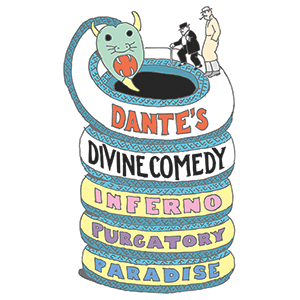
Poetic justice is a literary device in which virtue is ultimately rewarded or vice punished, often in modern literature by an ironic twist of fate intimately related to the character’s own conduct. English drama critic Thomas Rymer coined the phrase in ‘The Tragedies of the Last Age Considere’d’ (1678) to describe how a work should inspire proper moral behavior in its audience by illustrating the triumph of good over evil.
The demand for poetic justice is consistent in Classical authorities and shows up in Horace, Plutarch, and Quintillian, so Rymer’s phrasing is a reflection of a commonplace. Philip Sidney, in ‘Defense of Poetry,’ argued that poetic justice was, in fact, the reason that fiction should be allowed in a civilized nation.
read more »
Posted in Art, Language, Politics |
Leave a Comment »



 The Daily Omnivore