March 1, 2012
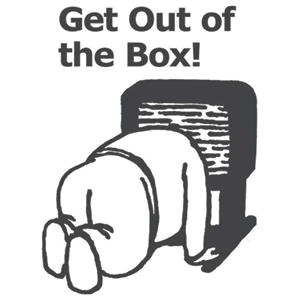
White Dot is an anti-television organization based in the UK. It encourages people to not watch television, and also to switch off televisions in cafés and pubs with devices such as the TV-B-Gone. It also organizes what it calls zocalo (a Mexican term for a town square) events where people are requested to turn off their televisions, go outside and talk to their neighbors.
The organization is named after the white dot that appeared in the middle of old CRT television screens when switched off—as the capacitors discharged, the cathode ray would continue to emit electrons although no longer being controlled horizontally or vertically.
Posted in Politics, Technology, World |
1 Comment »
March 1, 2012

Structuring, also known as smurfing in banking industry jargon, is the practice of parceling what would otherwise be a large financial transaction into a series of smaller transactions to avoid scrutiny by regulators or law enforcement. Structuring often appears in federal indictments related to money laundering, fraud, and other financial crimes. The term ‘smurfing’ is derived from the image of the cartoon characters, the ‘Smurfs,’ having a large group of many small entities. Miami-based lawyer Gregory Baldwin is said to have coined the term in the 1980s.
Typically each of the smaller transactions is executed in an amount below some statutory limit that normally does not require a financial institution to file a report with a government agency. Criminal enterprises often employ several agents (smurfs) to make the transaction. The term is also applied to activity associated with controlled substances such as pseudoephedrine. In this context the agent will make purchases of small, legal amounts from several drug and grocery stores, with the intent to aggregate the lot for use in the illegal production of methamphetamine.
Posted in Money, Politics |
Leave a Comment »
March 1, 2012


Salami slicing is a series of many minor actions, often performed by clandestine means, that together results in a larger action that would be difficult or illegal to perform at once. The term is typically used pejoratively. An example of salami slicing, also known as penny shaving, is the fraudulent practice of stealing money repeatedly in extremely small quantities, usually by taking advantage of rounding to the nearest cent in financial transactions. It would be done by always rounding down, and putting the fractions of a cent into another account. The idea is to make the change small enough that any single transaction will go undetected.
In politics, the term salami tactics has been used since the 1940s to refer to a divide and conquer process of threats and alliances used to overcome opposition. In academia, salami slicing refers to the practice of creating several publications out of material that could have been published in a single journal or review. Historically, actual physical ‘penny shaving’ may be considered a form of salami slicing. The edges of coins made of precious metals have been clipped or shaved by individuals in order to procure small quantities of said metals with the intention that the coin would still retain its nominal value.
Posted in Money, Politics, Technology |
Leave a Comment »
March 1, 2012
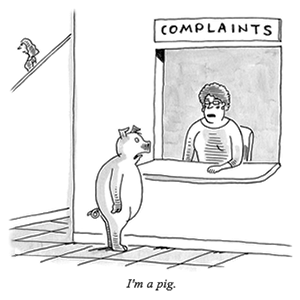
Cryptomnesia [krip-tam-nee-zha] occurs when a forgotten memory returns without it being recognized as such by the subject, who believes it is something new and original. It is a memory bias whereby a person may falsely recall generating a thought, not deliberately engaging in plagiarism but rather experiencing a memory as if it were a new inspiration.
The word was first used by the psychiatrist Théodore Flournoy, in reference to the case of a psychic medium, to suggest a high incidence of ‘latent memories on the part of the medium that come out, sometimes greatly disfigured by a subliminal work of imagination or reasoning, as so often happens in our ordinary dreams.’ Jung suggested the phenomenon in Nietzsche’s ‘Also Sprach Zarathustra.’
read more »
Posted in Language, Philosophy, Politics |
Leave a Comment »
February 29, 2012
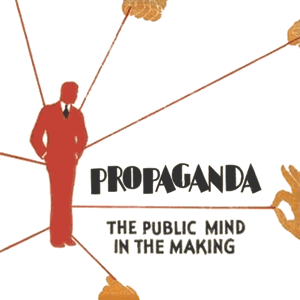
Edward Bernays (1891 – 1995) was a pioneer in the field of public relations and propaganda, referred to in his obituary as ‘the father of public relations.’
He combined the ideas of Gustave Le Bon and Wilfred Trotter on crowd psychology with the psychoanalytical ideas of his uncle, Sigmund Freud. He felt manipulation was necessary in society, which he regarded as irrational and dangerous as a result of the ‘herd instinct’ that Trotter had described.
read more »
Posted in Language, Money, Politics |
Leave a Comment »
February 29, 2012
Propaganda is a 1928 book by public relations pioneer Edward Bernays. It argued that the scientific manipulation of public opinion was necessary to overcome chaos and conflict in society: ‘The conscious and intelligent manipulation of the organized habits and opinions of the masses is an important element in democratic society. Those who manipulate this unseen mechanism of society constitute an invisible government which is the true ruling power of our country. We are governed, our minds are molded, our tastes formed, our ideas suggested, largely by men we have never heard of.’
‘This is a logical result of the way in which our democratic society is organized. Vast numbers of human beings must cooperate in this manner if they are to live together as a smoothly functioning society. […] In almost every act of our daily lives, whether in the sphere of politics or business, in our social conduct or our ethical thinking, we are dominated by the relatively small number of persons […] who understand the mental processes and social patterns of the masses. It is they who pull the wires which control the public mind.’
Posted in Language, Money, Politics |
Leave a Comment »
February 29, 2012
The Century of the Self is a British television documentary film; it focuses on how Sigmund Freud, Anna Freud, and Edward Bernays influenced the way corporations and governments have analyzed, dealt with, and controlled people.
Director Adam Curtis said: ”This series is about how those in power have used Freud’s theories to try and control the dangerous crowd in an age of mass democracy.’
read more »
Posted in Money, Politics |
Leave a Comment »
February 29, 2012

The Edelweiss Pirates (Edelweißpiraten) were a loose group of youth culture in Nazi Germany. They emerged in western Germany out of the German Youth Movement of the late 1930s in response to the strict regimentation of the Hitler Youth.
Similar in many ways to the Leipzig Meuten (anti-Nazi, pro-communist gangs of young adults in Germany), they consisted of young people, mainly between the ages of 14 and 17, who had evaded the Hitler Youth by leaving school (which was allowed at 14.) and were also young enough to avoid military conscription, which was only compulsory from the age of 17 onward.
read more »
Posted in Politics, War, World |
Leave a Comment »
February 27, 2012


‘…the terrorists have won‘ is a rhetorical phrase which was widely used in the United States in the wake of the September 11 attacks. The phrase takes the form of ‘if we pursue some particular course of action, then, the terrorists have won.’ One of the most famous instances was on November 4, 2001 by Ellen DeGeneres, who was hosting the Emmy Awards, which had been postponed twice that year for worries that a showy celebration would seem inappropriate in the wake of the attacks. To lighten the mood, she quipped: ‘We’re told to go on living our lives as usual, because to do otherwise is to let the terrorists win, and really, what would upset the Taliban more than a gay woman wearing a suit in front of a room full of Jews?’
In December 2001, humorist Steve Symanovich commented on the overuse of the expression, writing in the ‘Washington Business Journal’: ‘In recent months I had heard about any number of things that would allow the terrorists to win. Early on, I learned that if America plays fast and loose with the Bill of Rights, the terrorists will have won. I couldn’t agree more, but that was just the start. Later, I found out that if we stop working/shopping/eating out, the terrorists will have won. I took the message to heart. I’m not opposed to work; I don’t mind shopping; and, although I’m on a diet, I can still eat out and order light. But there was more. Finally, I ran into this headline: ‘If you don’t read this article, the terrorists will have won.”
Posted in Politics, War, World |
1 Comment »
February 27, 2012

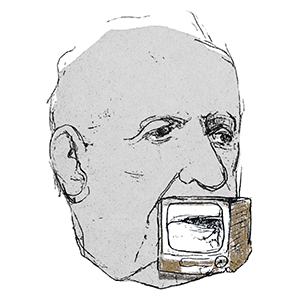
‘Mean world syndrome‘ is a term coined by professor of communications George Gerbner to describe a phenomenon whereby violence-related content of mass media makes viewers believe that the world is more dangerous than it actually is. Mean world syndrome is one of the main conclusions of cultivation theory (which states that those who spend more time watching TV are more likely to perceive the real world in ways that reflect the most common messages of the TV world). Gerbner, a pioneer researcher on the effects of television on society, argued that people who watched a large amount of television tended to think of the world as an intimidating and unforgiving place.
The number of opinions, images, and attitudes that viewers tend to make when watching television will have a direct influence on what the viewer perceives the real world as. They will reflect and refer to the most common images or recurrent messages thought to impact on their own real life. Gerbner once said ‘You know, who tells the stories of a culture really governs human behavior,’ he said. ‘It used to be the parent, the school, the church, the community. Now it’s a handful of global conglomerates that have nothing to tell, but a great deal to sell.’ Individuals who watch television infrequently and adolescents who talk to their parents about reality are claimed to have a more accurate view of the real world than those who do not, and they may be able to more accurately assess their vulnerability to violence.
Posted in Politics, Technology, World |
1 Comment »
February 25, 2012
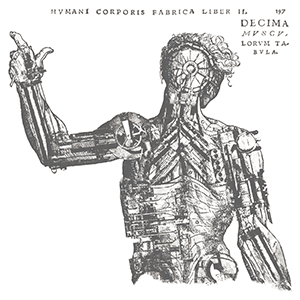
‘One-Dimensional Man: Studies in the Ideology of Advanced Industrial Society’ is a 1964 book by philosopher Herbert Marcuse. The work offers a wide-ranging critique of both contemporary capitalism and the society in the Soviet Union, documenting the parallel rise of new forms of social repression in both these societies, as well as the decline of revolutionary potential in the West.
Marcuse argues that ‘advanced industrial society’ created false needs, which integrated individuals into the existing system of production and consumption via mass media, advertising, industrial management, and contemporary modes of thought.
read more »
Posted in Language, Money, Politics |
Leave a Comment »
February 25, 2012

Radical chic is a term coined by journalist Tom Wolfe in his 1970 essay ‘Radical Chic: That Party at Lenny’s,’ to describe the adoption and promotion of radical political causes by celebrities, socialites, and high society. The concept has been described as ‘an exercise in double-tracking one’s public image: on the one hand, defining oneself through committed allegiance to a radical cause, but on the other, vitally, demonstrating this allegiance because it is the fashionable, au courant way to be seen in moneyed, name-conscious Society.’
Unlike dedicated activists, revolutionaries, or dissenters, those who engage in radical chic remain frivolous political agitators. They are ideologically invested in their cause of choice only so far as it advances their social standing. ‘Terrorist chic’ is a modern expression with similar connotations. This derivative, however, de-emphasizes the class satire of Wolfe’s original term, instead accentuating concerns over the semiotics of radicalism (such as the aestheticization of violence).
read more »
Posted in Money, Politics |
Leave a Comment »



