January 16, 2012

Paragraph 175 was a provision of the German Criminal Code from 1871 to 1994 that criminalizing homosexuality Around 140,000 men were convicted under the law. The statute was amended several times. The Nazis broadened the law in 1935; in the prosecutions that followed, thousands died in concentration camps. East Germany reverted to the old version of the law in 1950, limited its scope to sex with youths under 18 in 1968, and abolished it entirely in 1988. West Germany retained the Nazi-era statute until 1969, when it was limited to ‘qualified cases’; it was further attenuated in 1973, and finally revoked entirely in 1994 after German reunification.
Under the Third Reich, 5,000 and 15,000 homosexual men were forced into concentration camps, where they were identified by the pink triangle. The majority of them died there. While the Nazi persecution of homosexuals is reasonably well-known today, far less attention had been given to the continuation of this persecution in post-war Germany. In 1945, when camps were being liberated, some homosexual prisoners were forced to serve out their sentence under Paragraph 175. About 100,000 men were implicated in legal proceedings from 1945 to 1969, and about 50,000 were convicted (if they had not committed suicide before, as many did).
Posted in Politics, Sex, War |
Leave a Comment »
January 15, 2012

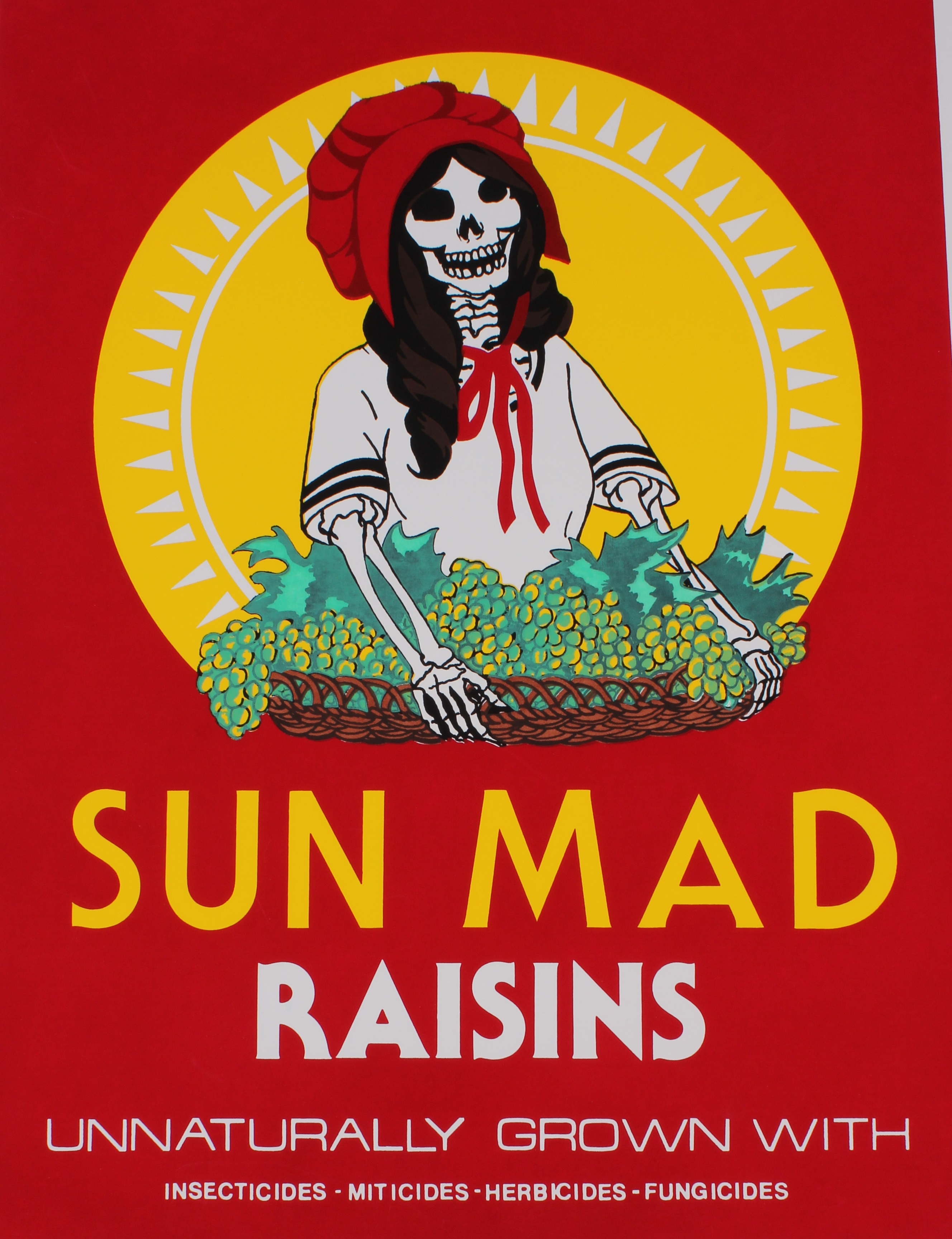
Ester Hernandez (b. 1944) is a Chicana visual artist known for her pastels, paintings and prints primarily depicting Chicanas/Latinas. Her artwork captures time, and makes sense of the complex world we live in. She aspires to create a visual dialogue for women’s role in this new multi-cultural millennium. Her work reflects the political, social, ecological, and spiritual themes born from community pride, a commitment to political action, and an abiding sense of humor.
As a solo artist and member of Las Mujeres Muralistas, an influential San Francisco Mission district Latina women mural group in the early seventies, her career has marked her as a pioneer in the Chicana/Chicano civil rights art movement.
read more »
Posted in Art, Money, Politics |
1 Comment »
January 15, 2012

Plutocracy [ploo-tok-ruh-see] is rule by the wealthy, or power provided by wealth. The combination of both plutocracy and oligarchy is called plutarchy. The word ‘plutocracy’ is derived from the Ancient Greek root ‘ploutos,’ meaning ‘wealth’ and ‘kratos,’ meaning ‘to rule’ or ‘to govern.’
The term is generally used to describe these two distinct concepts: one of a historical nature and one of a modern political nature. The former indicates the political control of the state by an oligarchy of the wealthy. Examples of such plutocracies include the Roman Republic, some city-states in Ancient Greece, the civilization of Carthage, the Italian city-states/merchant republics of Venice, Florence, Genoa, and pre-WWII Empire of Japan zaibatsus.
read more »
Posted in Language, Money, Politics |
1 Comment »
January 15, 2012

A hoodie is a sweatshirt with a hood. They often include a muff sewn onto the lower front, and a drawstring to adjust the hood opening, and may have a vertical zipper down the center similar to a windbreaker style jacket.
The garment’s style and form can be traced back to Medieval Europe when the formal wear for monks included a long, decorative hood called cowl worn a tunic or robes. The modern clothing style was first produced by Champion in the 1930s and marketed to laborers who endured freezing temperatures in upstate New York.
read more »
Posted in Money, Politics, World |
Leave a Comment »
January 12, 2012


Generation X, commonly abbreviated to Gen X, is the generation born after the baby boom ended. While there is no universally agreed upon time frame, the term generally includes people born from the early 1960s through the early 1980s, usually no later than 1981 or 1982. The term had also been used in different times and places for various subcultures or countercultures since the 1950s.
The term Generation X was coined by the Magnum photographer Robert Capa in the early 1950s. He would use it later as a title for a photo-essay about young men and women growing up immediately after the Second World War. The project first appeared in ‘Picture Post’ (UK) and ‘Holiday’ (US) in 1953. Describing his intention, Capa said ‘We named this unknown generation, The Generation X, and even in our first enthusiasm we realized that we had something far bigger than our talents and pockets could cope with.’
read more »
Posted in Language, Politics, World |
Leave a Comment »
January 12, 2012

Generation Y, also known as Millennials, describes the demographic cohort following Generation X. While there is no universally agreed upon time frame, the term generally includes people born in the late 1980s, early to middle 1990s, or as late as the early 2000s. One segment of this age-group is often called the ‘eighties babies’ generation. Members of this generation are called Echo Boomers because many of them are children of baby boomers. The 20th century trend toward smaller families in developed countries continued, so the relative impact of the ‘baby boom echo’ was generally less pronounced than the original boom.
Characteristics of the generation vary by region, depending on social and economic conditions. However, it is generally marked by an increased use and familiarity with communications, media, and digital technologies. In most parts of the world its upbringing was marked by an increase in a neoliberal approach to politics and economics; the effects of this environment are disputed. Today, there are approximately 80 million Echo Boomers.
read more »
Posted in Politics, World |
Leave a Comment »
January 12, 2012
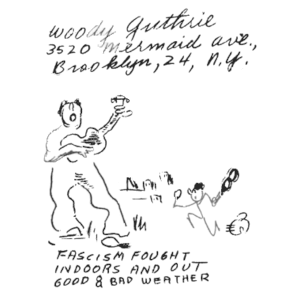
‘This Machine Kills Fascists‘ is a sticker on Woody Guthrie’s guitar, that has inspired many artists. It is based on inscriptions painted on the sides of airplanes used in the Spanish Civil War.
Guitar manufacturer Gibson has replicated Guthrie’s 1945 Southern Jumbo complete with sticker.
Posted in Art, Politics, War |
Leave a Comment »
January 12, 2012
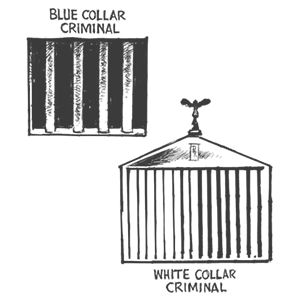
Gold collar worker is a neologism which has been used to describe either young, low-wage workers who invest in conspicuous luxury, or highly-skilled knowledge workers, traditionally classified as white collar, but who have recently become essential enough to business operations as to warrant a new classification.
The term was coined by management consultant Robert Earl Kelley in 1985.
read more »
Posted in Money, Politics |
1 Comment »
January 12, 2012

‘The End of The Line: How Overfishing Is Changing the World And What We Eat is a 2004 book by journalist Charles Clover about overfishing. Clover, an environment editor of the ‘Daily Telegraph,’ describes how modern fishing is destroying ocean ecosystems. He concludes that current worldwide fish consumption is unsustainable. The book provides details about overfishing in many of the world’s critical ocean habitats, such as the New England fishing grounds, west African coastlines, the European North Atlantic fishing grounds, and the ocean around Japan.
The book was made into a documentary film of the same name in 2009, featuring Clover, along with tuna farmer turned whistle blower Roberto Mielgo, top scientists from around the world, indigenous fishermen and fisheries enforcement officials, who predict that seafood could potentially extinct in 2048. The film also challenges the notion that farmed fish is a solution. Furthermore, it advocates consumer responsibility to purchase sustainable seafood and for no-take zones in the sea to protect marine life.
Posted in Food, Money, Politics |
Leave a Comment »
January 12, 2012

The term ‘winders‘ was originally coined in 2008 by the sociologist John W. Leigh, in his article ‘Moving towards new forms of social success.’
The term (a contraction of the expression ‘windy winners’) goes back to the original way of experiencing social success by individuals uninhibited with regards to their own success, not looking as much to reconcile rival existential expectations (such as the bobos – bohemian bourgeois, for example) but rather to juxtapose them in a way which is not seeking to constitute a system.
Posted in Language, Money, Politics |
Leave a Comment »
January 11, 2012

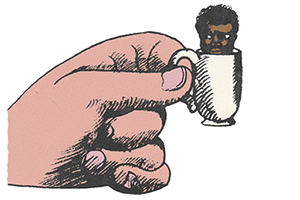
Limousine liberal is a pejorative American political term used to illustrate perceived hypocrisy by a political liberal of upper class or upper middle class status; including calls for the use of mass transit while frequently using limousines or private jets, claiming environmental consciousness but driving low MPG sports cars or SUVs, or ostensibly supporting public education while actually sending their children to private schools.
Democratic New York City mayoral hopeful Mario Procaccino coined the term to describe incumbent Republican Mayor John Lindsay and his wealthy Manhattan backers during a heated 1969 campaign.
read more »
Posted in Language, Money, Politics |
Leave a Comment »
January 11, 2012


‘Bobos in Paradise: The New Upper Class and How They Got There’ is a book by David Brooks, first published in 2000. The word ‘bobo,’ Brooks’s most famous coinage, is a portmanteau of the words bourgeois and bohemian.
The term is used by Brooks to describe the 1990s descendants of the yuppies. Often of the corporate upper class, they claim highly tolerant views of others, purchase expensive and exotic items, and believe American society to be meritocratic.
read more »
Posted in Language, Money, Politics |
Leave a Comment »