January 11, 2012
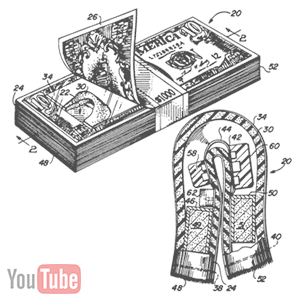
A dye pack is a radio-controlled incendiary device used by some banks to preemptively foil a bank robbery by causing stolen cash to be permanently marked with red dye shortly after a robbery. In most cases, a dye pack is placed in a hollowed-out space within a stack of banknotes, usually $10 or $20 bills. This stack of bills looks and feels similar to a real one, with new technology allowing for the manufacturing of flexible dye packs which are difficult to detect by handling the stack.
When the marked stack of bills is not used, it is stored next to a magnetic plate near a bank cashier, in standby or safe mode, ready to be handed over to a potential robber by a bank employee. When it is removed from the magnetic plate, the pack is armed, and once it leaves the building and passes through the door frame, a radio transmitter located at the door will trigger a timer (typically 10 seconds), after which the dye pack will explode and release an aerosol (sometimes tear gas, but usually of Disperse Red 9, a dye used in smoke grenades) intended to permanently stain and destroy the stolen money and mark the robber’s body with a bright red color. The chemical reaction causing the explosion of the pack and the release of the dye creates high temperatures of about 400 degrees Fahrenheit which further discourages a criminal from touching the pack or removing it from the bag or getaway vehicle.
Posted in Money, Politics, Technology |
Leave a Comment »
January 10, 2012
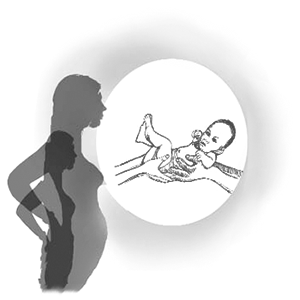
Fertility tourism or reproductive tourism is the practice of traveling to another country for fertility treatments. It may be regarded as a form of medical tourism. The main reasons for fertility tourism are legal regulation of the sought procedure in the home country, or lower price. In-vitro fertilization and donor insemination are major procedures involved. It has been proposed to be termed ‘reproductive exile’ to emphasis the difficulties and constraints faced by infertile patients, who are ‘forced’ to travel globally for reproductive procedures.
There is generally a demand for sperm donors who have no genetic problems in their family, 20/20 eyesight, a college degree, and sometimes a value on a certain height, age, eye color, hair texture, blood type and ethnicity. Anecdotal evidence suggests that the inventory of taller men who are blonde and blue eyed is most popular.
read more »
Posted in Politics, Sex, World |
Leave a Comment »
January 10, 2012
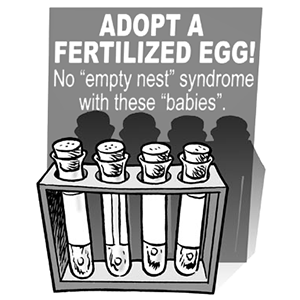
Snowflake children is a term used by organizations that promote the adoption of embryos left over from in vitro fertilization to describe children that result, where the children’s parents were not the original cell donors. These embryos are transferred to infertile couples via embryo adoption, although the legal process of taking ownership of an embryo differs from that of traditional adoption. The term was coined by the first agency to provide the transfer service, Nightlight Christian Adoptions. Proponents also use the term for the frozen embryos themselves.
The term ‘Snowflake babies’ was first used to describe babies born in this manner, but the first snowflake children are no longer babies. The first snowflake baby, Hannah, was born in 1998 to Marlene and John Strege. Former president George W. Bush has made public appearances together with snowflake children while speaking about his support for adult stem cell research and his opposition to embryonic stem cell research.
Posted in Politics, Sex, Technology |
Leave a Comment »
January 10, 2012


A donor offspring, or donor conceived person, is conceived via the donation of sperm (sperm donation) or ova (egg donation), or both, either from two separate donors or from a couple. In the case of embryo donation, the conceiving parents are a couple.
Donor conceived people may never learn of their true birth origins as information about their true biological parent(s) is not recorded on the birth certificate. This is compounded by the fact that only a small proportion (av. 10%) of donor conceived people will ever be informed of the nature of their conception by the recipient parent(s).
read more »
Posted in Health, Politics, Sex |
Leave a Comment »
January 10, 2012

Surrogacy [sur-uh-guh-see] is an arrangement in which a woman carries and delivers a child for another couple or person. This woman, the surrogate mother, may be the child’s genetic mother (called traditional surrogacy), or she may be biologically unrelated to the child (called gestational surrogacy).
If the surrogate receives compensation beyond the reimbursement of medical and other reasonable expenses, the arrangement is called commercial surrogacy, otherwise it is often referred to as altruistic surrogacy.
read more »
Posted in Money, Politics, Sex |
Leave a Comment »
January 5, 2012
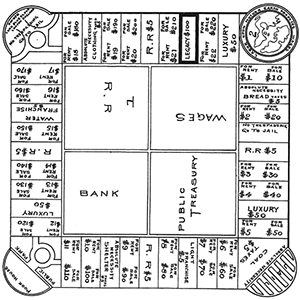
The Landlord’s Game is a board game patented in 1904 by Elizabeth Magie. It is a realty and taxation game, which is considered to be a direct inspiration for the board game ‘Monopoly.’
Though many similar home-made games were played at the beginning of the 20th century, it is the first of its kind to have an attested patent. Magie designed the game to be a ‘practical demonstration of the present system of land grabbing with all its usual outcomes and consequences.’
read more »
Posted in Games, Money, Politics |
Leave a Comment »
January 5, 2012

Wardrobing [wawr-droh-bing] is the practice of purchasing an item, using it, and then returning it to the store for a refund. It is most often done with expensive clothing – hence the name – but the practice is also common with tools, electronics, and even computers.
Perhaps one of the most notorious examples of wardrobing comes from the film ‘My Date With Drew,’ which was filmed entirely on a wardrobed video camera. The filmmaker purchased the camera from Circuit City, used it for 30 days to film his movie, and then returned the camera for a full refund.
Posted in Money, Politics |
Leave a Comment »
January 4, 2012
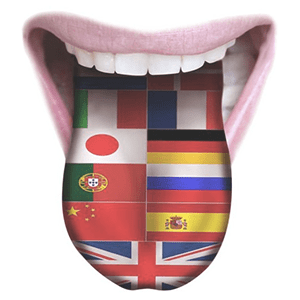
Harold Williams (1876 – 1928) was a New Zealand journalist, foreign editor of ‘The Times’ and is considered one of the most accomplished polyglots in history, said to have known over 58 languages and other related dialects. Like most youngsters his age, Harold wasn’t possessed by a voracious appetite for learning, but he recalled that, when he was about seven, ‘an explosion in his brain’ occurred and from that time his capacity to learn, in particular languages, grew to an extraordinary degree. He began with the study of Latin, one of the great root languages, and hungrily acquired others.
As a schoolboy he constructed a grammar and vocabulary of the New Guinea language Dobuan from a copy of St. Mark’s Gospel written in that language. Next he compiled a vocabulary of the dialect of Niue Island, again from the Gospel written in that language, and was published in the ‘Polynesian Journal.’
read more »
Posted in Language, Politics, World |
Leave a Comment »
January 2, 2012
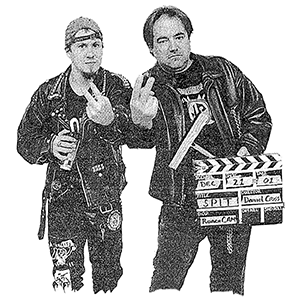
A squeegee [skwee-jee] man is a person who, washcloth and squeegee in hand, wipes windshields of cars stopped in traffic and then solicits money from drivers. While squeegee men are a feature of life in many cities around the world, the phenomenon first became prevalent in New York City in the 1980s.
Although some merely provided a service, in other cases the windshield-washing would be carried out without asking, often perfunctorily, and with subsequent demands for payment, sometimes with added threats of smashing the car’s windshield if their demands were not met. Upon his election, mayor Rudy Giuliani famously embarked on a crusade against squeegee men as part of his quality-of-life campaign, claiming that their near-ubiquitous presence created an environment of disorder that encouraged more serious crime to flourish.
Posted in Money, Politics, World |
Leave a Comment »
December 31, 2011

Poverty pimp is a pejorative label used to convey that an individual or group is benefiting unduly by acting as an intermediary on behalf of the poor, the disadvantaged, or some other ‘victimized’ groups. Those who use this appellation suggest that those so labeled profit unduly from the misfortune of others, and therefore do not really wish the societal problems that they appear to work on to be eliminated permanently, as it is not in their own interest for this to happen.
The most frequent targets of this accusation are those receiving government funding or that solicit private charity to work on issues on behalf of various disadvantaged individuals or groups, but who never seem to be able to show any amelioration of the problems experienced by their target population. Some even suggest that that if profit were eliminated as a factor, greater steps in the alleviation of the oppressive situations could begin to truly occur.
Posted in Money, Politics |
Leave a Comment »
December 31, 2011

A welfare queen is a pejorative phrase used in the United States to describe people who are accused of collecting excessive welfare payments through fraud or manipulation. Reporting on welfare fraud began during the early 1960s, appearing in general interest magazines such as ‘Readers Digest.’
The term entered the American lexicon during Ronald Reagan’s 1976 presidential campaign when he described a ‘welfare queen’ from Chicago’s South Side. Since then, it has become a stigmatizing label placed on recidivist poor mothers, with studies showing that it often carries gendered and racial connotations. Although American women can no longer stay on welfare indefinitely due to the Personal Responsibility and Work Opportunity Act, the term continues to shape American dialogue on poverty.
read more »
Posted in Language, Money, Politics |
Leave a Comment »
December 31, 2011
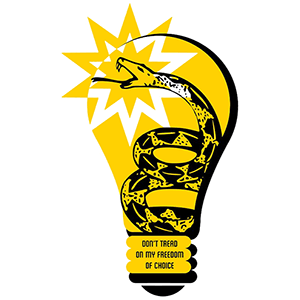
Some governments around the world have passed measures to phase out incandescent light bulbs for general lighting. The aim is to encourage the use and technological development of more energy-efficient lighting alternatives, such as compact fluorescent lamp (CFLs) and LED lamps. Brazil and Venezuela started to phase them out in 2005, and the European Union, Switzerland, and Australia started to phase them out in 2009. Likewise, other nations are planning scheduled phase-outs: Argentina, Russia, and Canada in 2012, and the United States and Malaysia in 2014.
There has been consumer resistance to phasing out of incandescent lamps, preferring the quality of light produced from incandescents, the libertarian political theory of free markets as trumping ‘national interest’ as a reason for regulation, and environmental concerns about mercury contamination with CFLs. Formerly, instant availability of light was an issue for CFLs, but newer CFLs have an Instant On feature, as well as a wide variety of correlated color temperatures. CFLs and LEDs labeled for dimmer control are also becoming available, although typically at higher cost. The phase out has been referred to as ‘light bulb socialism.’ The consumer preference for light bulbs in the EU is for incandescent bulbs, with many complaining about what was described as the ugliness or the cold, flat, unnatural, dull light emanating from CFLs. Bulk purchasing of incandescent bulbs was reported ahead of the EU lightbulb ban.
Posted in Politics, Technology, World |
Leave a Comment »



