December 20, 2011

‘Series of tubes‘ is a phrase coined originally as an analogy by then Senator Ted Stevens (R-Alaska) to describe the Internet in the context of opposing network neutrality.
In 2006, he used this metaphor to criticize a proposed amendment to a committee bill that would have prohibited Internet service providers such as AT&T and Verizon Communications from charging fees to give some companies higher priority access to their networks or their customers. This metaphor has been widely ridiculed as demonstrating Stevens’s poor understanding of the Internet, despite the fact that he was in charge of regulating it.
read more »
Posted in Humor, Politics, Technology |
1 Comment »
December 20, 2011

In 2010, a new rule for the next NCAA football season, dubbed ‘The Tebow Rule‘ by media because it would have affected him, banned messages on eye paint. During his college football career, Tebow frequently wore references to biblical verses on his eye black. In the 2009 BCS Championship Game, he wore John 3:16 on his eye paint, and as a result, 92 million people searched ‘John 3:16’ on Google during or shortly after the game. Tebow stated of the searches ‘It just goes to show you the influence and the platform that you have as a student-athlete and as a quarterback at Florida.’
The NFL already has a rule prohibiting players from wearing messages on eye black; so, Tebow is not able to continue the practice in the NFL. Despite the media label, the NCAA denies the rule was influenced by Tebow particularly, since many other notable players (Reggie Bush and Terrelle Pryor for example) wear or have worn messages on eye black. An NCAA spokesman said ‘When this rule was proposed the committee did not focus on any one team or student athlete. That measure reinforces what the intended use of eye black is, which is to shade the eyes from the sun.’
Posted in Games, Philosophy, Politics |
Leave a Comment »
December 19, 2011
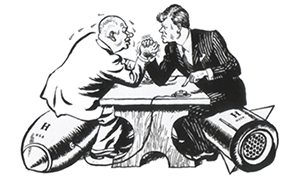

The game of chicken, also known as the hawk-dove or snowdrift game, is an influential model of conflict for two players in game theory. The principle of the game is that while each player prefers not to yield to the other, the worst possible outcome occurs when both players do not yield.
The name ‘chicken’ has its origins in a game in which two drivers drive towards each other on a collision course: one must swerve, or both may die in the crash, but if one driver swerves and the other does not, the one who swerved will be called a ‘chicken,’ meaning a coward; this terminology is most prevalent in political science and economics.
read more »
Posted in Games, Politics, Science |
Leave a Comment »
December 19, 2011

Taubman Sucks is an award-winning short documentary about a precedent-setting intellectual property lawsuit. The documentary was written and directed by filmmaker Theo Lipfert. The six-minute film explores Taubman v. WebFeats, a lawsuit that involved the complex relationships between domain names, trademarks, and free speech.
As the first ‘sucks.com’ case to reach the level of the United States Court of Appeals, the decision in Taubman v. WebFeats established precedents concerning the non-commercial use of trademarks in domain names.
Posted in Money, Politics, Technology |
Leave a Comment »
December 19, 2011

Article spinning is a search engine optimization technique by which blog or website owners post a unique version of relevant content on their sites by rewriting and replacing elements to provide a slightly different perspective on the topic. Many article marketers believe that article spinning helps avoid the feared penalties in the Search Engine Results pages (SERP) for using duplicate content. If the original articles are plagiarized from other websites or if the original article was used without the copyright owner’s permission, such copyright infringements may result in the writer facing a legal challenge, while writers producing multiple versions of their own original writing need not worry about such things.
Website owners may pay writers to perform spinning manually, rewriting all or parts of articles. Writers also spin their own articles, manually or automatically, allowing them to sell the same articles with slight variations to a number of clients or to use the article for multiple purposes (e.g. content and marketing). There are also a number of software applications which will automatically replace words or phrases in articles.
Posted in Money, Politics, Technology |
Leave a Comment »
December 19, 2011

Brandjacking is an activity whereby someone acquires or otherwise assumes the online identity of another entity for the purposes of acquiring that person’s or business’s brand equity. The term combines the notions of ‘branding’ and ‘hijacking’, and has been used since at least 2007 when it appeared in a Business Week article. The tactic is often associated with use of individual and corporate identities on social media or Web 2.0 sites.
While similar to cybersquatting, identity theft, and phishing, brandjacking is usually particular to a politician, celebrity or business and more indirect in its nature. A brandjacker may attempt to use the reputation of its target for selfish reasons or seek to damage the reputation of its target for malicious or for political reasons. These reasons may not be directly financial, but the effects on the original brand-holder may often include financial loss – for example, negative publicity may result in the termination of a celebrity’s sponsorship deal, or, for a corporation, potentially lead to lost sales or a reduced share price.
Posted in Money, Politics, Technology |
1 Comment »
December 19, 2011

Cybersquatting (also known as domain squatting) is registering, trafficking in, or using a domain name with bad faith intent to profit from the goodwill of a trademark belonging to someone else. Some cybersquatter offer to sell the domain to the person or company who owns a trademark at an inflated price.
Some put up derogatory remarks about the person or company the domain is meant to represent to encourage the subject to buy the domain from them. Others post paid links via Google and other advertising networks. The term is derived from ‘squatting,’ which is the act of occupying an abandoned or unoccupied space or building that the squatter does not own, rent or otherwise have permission to use.
read more »
Posted in Money, Politics, Technology |
Leave a Comment »
December 17, 2011
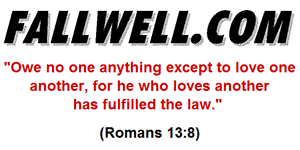

Typosquatting (URL hijacking), is a form of cybersquatting, and possibly brandjacking which relies on mistakes such as typographical errors made by Internet users when inputting a website address into a web browser. Should a user accidentally enter an incorrect website address, they may be led to an alternative website owned by a cybersquatter. Once in the typosquatter’s site, the user may also be tricked into thinking that they are in fact in the real site; through the use of copied or similar logos, website layouts or content.
In 2006, controversial evangelist Jerry Falwell failed to get the U.S. Supreme Court to review a decision allowing Christopher Lamparello to use ‘www.fallwell.com.’ Relying on a plausible misspelling of Falwell’s name, Lamparello’s gripe site presents misdirected visitors with scriptural references that counter the fundamentalist preacher’s scathing rebukes against homosexuality. In Lamparello v. Falwell, the high court let stand a 2005 lower court finding that ‘the use of a mark in a domain name for a gripe site criticizing the markholder does not constitute cybersquatting.’
Posted in Money, Politics, Technology |
1 Comment »
December 17, 2011

Mousetrapping is a technique used by websites (usually pornographic) to keep visitors from leaving their website, either by launching an endless series of pop-up ads—known colloquially as a ‘circle jerk’—or by re-launching their website in a window that cannot be closed. Many websites that do this also employ browser hijackers to reset the user’s default homepage. The Federal Trade Commission has brought suits against mousetrappers, charging that the practice is a deceptive and unfair competitive practice.
Typically, mousetrappers register URLs with misspelled names of celebrities (e.g. BrittnaySpears.com) or companies (WallStreetJournel.com). Once the viewer is at the site, a Javascript or a click induced by promises of free samples redirects the viewer to a URL and regular site of the mousetrapper’s client-advertiser, who pays him 10 to 25 cents for capturing and redirecting each potential customer. An FTC press release explaining states: ‘Schemes that capture consumers and hold them at sites against their will while exposing Internet users, including children, to solicitations for gambling, psychics, lotteries, and pornography must be stopped.’
Posted in Money, Politics, Technology |
Leave a Comment »
December 15, 2011

Cheese is a heroin-based recreational drug that came to the attention of the media after a string of deaths among adolescents in Dallas beginning in 2005. It is made by combining heroin with crushed tablets of over-the-counter cold medication containing acetaminophen, the active ingredient in Tylenol, and the antihistamine diphenhydramine, the active ingredient in Benadryl.
Cheese samples obtained in north Dallas contained between 2% and 8% heroin, in contrast to the 30% commonly found in black tar heroin. Users commonly take the powder by insufflation (‘snorting’) rather than by intravenous injection. This mixture is also known as ‘Tylenol With Smack,’ by analogy to the Tylenol With Codeine series. When it appeared in several public middle schools police dubbed the mixture ‘starter heroin.’
Posted in Drugs, Politics |
1 Comment »
December 14, 2011
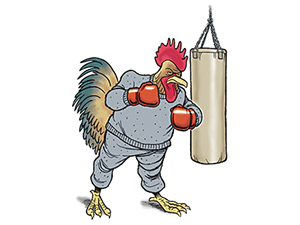

An illegal sport are activities banned because they are violent or dangerous. Some illegal sports, such as BASE jumping or elevator surfing, is argued to be purely adventurous. A counterargument is that the possibility of loss of life, rescues, and medical care that may be required for participants of these sports can end up costing the general public.
Other more well-known illegal sports, such as cockfighting and dogfighting, are barred on the basis of animal abuse. Some of these sports are often a gateway to other crimes, such as illegal gambling, illegal gun trading, and crimes against people such as assault and murder. Illegal sports are controversial due to the dangerous aspects attributed to them and the pain they can inflict on humans and/or animals. They also are controversial due to the perceived nature of some of them, notably of cockfighting and dogfighting, as being savage sports.
read more »
Posted in Games, Politics |
Leave a Comment »
December 14, 2011


Blood sport is any sport or entertainment that involves violence against animals, such as coursing or beagling (the pursuit of game by dogs), and combat sports such as cockfighting and dogfighting. The earliest use of the term is in reference to mounted hunting, where the quarry would be actively chased, as in fox hunting or hare coursing. Before firearms a hunter using arrows or a spear might also wound an animal, which would then be chased and perhaps killed at close range, as in medieval boar hunting. Later, the term seems to have been applied to various kinds of baiting and forced combat: bull-baiting, bear-baiting, cockfighting and later developments such as rat-baiting. The animals were specially bred, confined and forced to fight.
In the Victorian era, social reformers began a vocal opposition to such activities, claiming grounds of ethics, morality and animal welfare. Limitations on blood sports have been enacted in much of the world, through sports remain legal under varying degrees of control in certain locations (e.g., bullfighting and cockfighting) but have declined in popularity almost everywhere else. Proponents of blood sports are widely cited to believe that they are traditional within the culture. Bullfighting aficionados, for example, do not regard bullfighting as a sport but as a cultural activity. It is sometimes called a tragic spectacle, because in many forms of the sport the bull is invariably killed, and the bullfighter is always at risk of death.
Posted in Death, Games, Politics |
Leave a Comment »


 The Daily Omnivore