November 25, 2011

Deviancy amplification spiral is a media hype phenomenon defined by media critics as a cycle of increasing numbers of reports on a category of antisocial behavior or some other ‘undesirable’ event, leading to a moral panic. The term was coined in 1972 by Stanley Cohen in his book, ‘Folk Devils and Moral Panics.’ According to Cohen the spiral starts with some ‘deviant’ act. Usually the deviance is criminal, but it can also involve lawful acts considered morally repugnant by a large segment of society.
With the new focus on the issue, hidden or borderline examples that would not themselves have been newsworthy are reported, confirming the ‘pattern.’ Reported cases of such ‘deviance’ are often presented as just ‘the ones we know about’ or the ‘tip of the iceberg,’ an assertion that is nearly impossible to disprove immediately. For a variety of reasons, the less sensational aspects of the spiraling story that would help the public keep a rational perspective (such as statistics showing that the behavior or event is actually less common or less harmful than generally believed) tends to be ignored by the press.
read more »
Posted in Language, Money, Politics |
Leave a Comment »
November 24, 2011
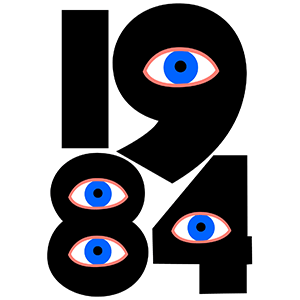
A dystopia [dis-toh-pee-uh] is the idea of a society in a repressive and controlled state, often under the guise of being utopian, as characterized in books like ‘Brave New World’ and ‘Nineteen Eighty-Four.’
Dystopian societies feature different kinds of repressive social control systems, various forms of active and passive coercion. Ideas and works about dystopian societies often explore the concept of humans abusing technology and humans individually and collectively coping, or not being able to properly cope with technology that has progressed far more rapidly than humanity’s spiritual evolution. Dystopian societies are often imagined as police states, with unlimited power over the citizens.
read more »
Posted in Language, Politics, Technology |
Leave a Comment »
November 24, 2011
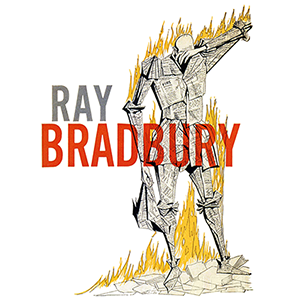
Fahrenheit 451 is a 1953 dystopian novel by Ray Bradbury. The novel presents a future American society where reading is outlawed and firemen start fires to burn books. Written in the early years of the Cold War, the novel is a critique of what Bradbury saw as issues in American society of the era. In 1947, Bradbury wrote a short story titled ‘Bright Phoenix’ (later revised for publication in a 1963 issue of ‘The Magazine of Fantasy & Science Fiction’). Bradbury expanded the basic premise of “Bright Phoenix” into ‘The Fireman,’ a novella published in a 1951 issue of ‘Galaxy Science Fiction.’ First published in 1953 by Ballantine Books, Fahrenheit 451 is twice as long as ‘The Fireman.’ A few months later, the novel was serialized in the March, April, and May 1954 issues of Playboy. Bradbury wrote the entire novel on a pay typewriter in the basement of UCLA’s Powell Library.
The novel has been the subject of various interpretations, primarily focusing on the historical role of book burning in suppressing dissenting ideas. Bradbury has stated that the novel is not about censorship, but a story about how television destroys interest in reading literature, which leads to a perception of knowledge as being composed of factoids, partial information devoid of context.
read more »
Posted in Language, Politics, Technology |
Leave a Comment »
November 24, 2011

Nineteen Eighty-Four (first published in 1949) by George Orwell is a dystopian novel about Oceania, a society ruled by the oligarchical dictatorship of the Party. Life in the Oceanian province of Airstrip One is a world of perpetual war, pervasive government surveillance, and incessant public mind control, accomplished with a political system euphemistically named English Socialism (Ingsoc), which is administrated by a privileged Inner Party elite. Yet they too are subordinated to the totalitarian cult of personality of Big Brother, the deified Party leader who rules with a philosophy that decries individuality and reason as thoughtcrimes; thus the people of Oceania are subordinated to a supposed collective greater good.
The protagonist, Winston Smith, is a member of the Outer Party who works for the Ministry of Truth (Minitrue), which is responsible for propaganda and historical revisionism. His job is to re-write past newspaper articles so that the historical record is congruent with the current party ideology. Because of the childhood trauma of the destruction of his family — the disappearances of his parents and sister — Winston Smith secretly hates the Party, and dreams of rebellion against Big Brother.
read more »
Posted in Language, Politics, Technology |
Leave a Comment »
November 24, 2011

‘We‘ is a dystopian novel by Yevgeny Zamyatin completed in 1921. It was written in response to the author’s personal experiences during the Russian revolution of 1905, the Russian revolution of 1917, his life in the Newcastle suburb of Jesmond, and his work in the Tyne shipyards during the First World War. It was on Tyneside that he observed the rationalization of labor on a large scale. Zamyatin was a trained marine engineer, hence his dispatch to Newcastle to oversee ice-breaker construction for the Imperial Russian navy. The novel was first published in 1924 by E.P. Dutton in New York in an English translation.
‘We’ is set in the future. D-503 lives in the One State, an urban nation constructed almost entirely of glass, which allows the secret police/spies to inform on and supervise the public more easily. The structure of the state is analogous to the prison design concept developed by Jeremy Bentham commonly referred to as the Panopticon. Furthermore, life is organized to promote maximum productive efficiency along the lines of the system advocated by the hugely influential F.W. Taylor. People march in step with each other and wear identical clothing. There is no way of referring to people save by their given numbers. Males have odd numbers prefixed by consonants, females have even numbers prefixed by vowels.
read more »
Posted in Language, Politics, Technology |
Leave a Comment »
November 24, 2011


Brave New World is Aldous Huxley’s fifth novel, written in 1931 and published in 1932. Set in London of CE 2540 (632 A.F. in the book), the novel anticipates developments in reproductive technology and sleep-learning that combine to change society.
The future society is an embodiment of the ideals that form the basis of futurology (the study of postulating possible futures). Huxley answered this book with a reassessment in an essay, ‘Brave New World Revisited (1958),’ and with his final work, a novel titled ‘Island’ (1962), a utopian counterpart to ‘Brave New World’s dystopian setting.
read more »
Posted in Language, Politics, Technology |
Leave a Comment »
November 22, 2011
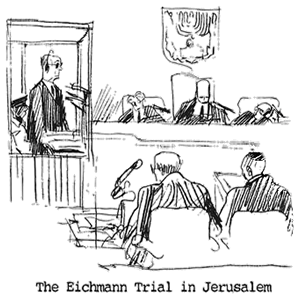
Banality [buh-nal-i-tee] of evil is a phrase coined by Hannah Arendt and incorporated in the title of her 1963 work ‘Eichmann in Jerusalem.’ It describes the thesis that the great evils in history generally, and the Holocaust in particular, were not executed by fanatics or sociopaths, but rather by ordinary people who accepted the premises of their state and therefore participated with the view that their actions were normal.
Explaining this phenomenon, media analyst Edward S. Herman has emphasized the importance of ‘normalizing the unthinkable.’ According to him, ‘doing terrible things in an organized and systematic way rests on ‘normalization.’ This is the process whereby ugly, degrading, murderous, and unspeakable acts become routine and are accepted as ‘the way things are done.’
read more »
Posted in Language, Politics, War |
Leave a Comment »
November 22, 2011
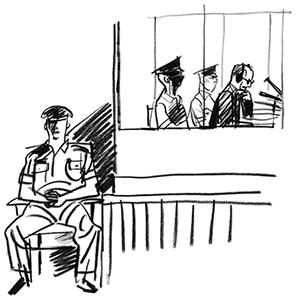
Little Eichmanns [ahyk-muhn] is a phrase used to describe the complicity of those who participate in destructive and immoral systems in a way that, although on an individual scale may seem indirect, when taken collectively would have an effect comparable to Nazi official Adolf Eichmann’s role in The Holocaust. Anarcho-primitivist John Zerzan used the phrase in his essay ‘Whose Unabomber?’ in 1995. The phrase gained prominence in American political culture four years after 9/11, when an essay written by Ward Churchill shortly after the attacks received renewed media scrutiny. In the essay, ‘On the Justice of Roosting Chickens,’ Churchill reiterated the phrase to describe technocrats working at the World Trade Center; his statement caused much controversy.
The use of ‘Eichmann’ as an archetype stems from Hannah Arendt’s 1963 book ‘Eichmann in Jerusalem.’ Arendt wrote that aside from a desire for improving his career, Eichmann showed no trace of anti-Semitism or psychological damage. She called him the embodiment of the ‘banality of evil’ as he appeared at his trial to have an ordinary and common personality and displayed neither guilt nor hatred. She suggested that this most strikingly discredits the idea that the Nazi criminals were manifestly psychopathic and fundamentally different from ordinary people. Lewis Mumford collectively refers to people willing to placidly carry out the extreme goals of megamachines as ‘Eichmanns.’
Posted in Language, Politics, War |
1 Comment »
November 22, 2011

The Asch conformity experiments were a series of studies published in the 1950s that demonstrated the power of conformity in groups. These are also known as the Asch Paradigm.
Experiments led by Solomon Asch of Swarthmore College asked groups of students to participate in a ‘vision test.’ In reality, all but one of the participants were confederates of the experimenter, and the study was really about how the remaining student would react to the confederates’ behavior.
read more »
Posted in Health, Politics, Science |
Leave a Comment »
November 21, 2011


Ilona Staller (b. 1951), also known by her stage name la Cicciolina, is a Hungarian-born Italian porn star, politician, and singer. She continued to make hardcore pornographic films while in office. She is famous for delivering political speeches with one breast exposed. In 1964 she began working for a Hungarian modeling agency; in her memoirs she claimed that she had provided Hungarian authorities with information on American diplomats staying at a Budapest luxury hotel where she worked as a maid in the late 1960s.
Staller married American sculptor Jeff Koons in 1991. Koons produced a series of sculptures and photographs of them having sex in many positions, settings and costumes, which were exhibited under the title ‘Made In Heaven.’ The marriage broke up in 1992, and their son Ludwig Maximillian was born shortly afterwards. Staller left the US with the child, and a lengthy custody battle ensued. Koons won custody in 1998 but Ludwig remains with Staller in Italy.
read more »
Posted in Politics, Sex, World |
Leave a Comment »
November 21, 2011

Let’s trim our hair in accordance with the socialist lifestyle was part of a North Korean government propaganda campaign promulgating grooming and dress standards in 2004. It was broadcast on state-run Korean Central Television in the capital of Pyongyang and clips from the program were later rebroadcast on the BBC. The television program claimed that hair length can affect human intelligence, in part because of the deprivation to the rest of the body of nutrients required for hair to grow. It was one part of longstanding North Korean government restrictions on haircuts and fashions deemed at odds with ‘Socialist values.’
Such dress and hair standards have long been a fixture of North Korean society. Kim Jong-Il was known for his so called ‘Speed Battle Cut’ crew cut when he first came to prominence in the early 1980s, though he later reverted to the short sided bouffant favored by his father. After Kim Jong-Il succeeded his father, some of the state’s restrictions on Western fashion were relaxed. Women were allowed permanent waves, men could grow slightly longer hair, and even public dancing was allowed. Despite such slight concessions during the early years of Kim Jong-Il’s rule, obvious emblems of Western fashion such as jeans continued to be entirely banned, and long hair on men could lead to arrest and forced haircuts.
read more »
Posted in Humor, Politics, World |
Leave a Comment »
November 19, 2011

Truck nuts, also known as truck balls, BumperNuts, BumperBalls, or Trucksticles, are accessories for pickup trucks and other vehicles. This trend began in the United States in 1998 and first sold on the internet in 1999. Truck nuts are used as a statement by the car, truck, ATV, and/or motorcycle owner to boast/amuse/shock him/her self and others. Truck nuts are installed to hang under the bumper area of the vehicle so they are conspicuous to those viewing the vehicle from the rear. Manufacturers use HDPE, ABS, and PVC plastics to create truck nuts, though hollow aluminum and solid brass can also be found. They can be many different colors, as well as metallic chrome coating and a brass-colored reflective metallic coating.
In 2007, a proposal was made in Maryland to ‘prohibit motorists from displaying anything resembling or depicting ‘anatomically correct’ or ‘less than completely and opaquely covered’ human or animal genitals, human buttocks or female breasts.’ The bill’s sponsor, delegate LeRoy E. Myers Jr., referred to the testicles as ‘vulgar and immoral,’ and stated that his proposal was made at the request of a constituent who was offended by the accessories. Similar legislature is being advocated in several other states including Virginia, South Carolina, and Florida.
Posted in Humor, Politics, Sex |
Leave a Comment »



 The Daily Omnivore