June 12, 2013
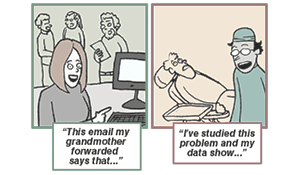

Today, false balance is used to describe a perceived or real media bias, where journalists present an issue as being more balanced between opposing viewpoints than the evidence actually supports.
Journalists may present evidence and arguments out of proportion to the actual evidence for each side, or may even actually suppress information which would establish one side’s claims as baseless. False balance is also often found in political reports, company press releases, and general information from organizations with special interest groups in promoting their respective agendas.
read more »
Posted in Language, Politics, Science |
Leave a Comment »
June 10, 2013

Ice-nine is a fictional material appearing in Kurt Vonnegut’s novel ‘Cat’s Cradle.’ Ice-nine is supposedly a polymorph of water more stable than common ice; instead of melting at 0 °C (32 °F), it melts at 45.8 °C (114.4 °F). When ice-nine comes into contact with liquid water below 45.8 °C (thus effectively becoming supercooled), it acts as a seed crystal and causes the solidification of the entire body of water, which quickly crystallizes as more ice-nine.
In the story, it is developed by the Manhattan Project for use as a weapon, but abandoned when it becomes clear that any quantity of it would have the power to destroy all life on earth. As people are mostly water, ice-nine kills nearly instantly when ingested or brought into contact with soft tissues exposed to the bloodstream, such as the eyes. A global catastrophe involving freezing the world’s oceans with ice-nine is used as a plot device in Vonnegut’s novel.
read more »
Posted in Science, War |
Leave a Comment »
June 6, 2013


In economics and decision theory, loss aversion refers to people’s tendency to strongly prefer avoiding losses to acquiring gains. Most studies suggest that losses are twice as powerful, psychologically, as gains. The concept was first demonstrated by psychologists Amos Tversky and Daniel Kahneman. John List, Chairman of the University of Chicagos’ department of economics has said: ‘It’s a deeply ingrained behavioral trait. .. that all human beings have — this underlying phenomenon that ‘I really, really dislike losses, and I will do all I can to avoid losing something.’
Loss aversion leads to risk aversion when people evaluate an outcome comprising similar gains and losses; since people prefer avoiding losses to making gains. Loss aversion may also explain sunk cost effects, where people justify increased investment in a decision, based on the cumulative prior investment, despite new evidence suggesting that the cost, starting today, of continuing the decision outweighs the expected benefit.
read more »
Posted in Money, Science |
Leave a Comment »
June 6, 2013
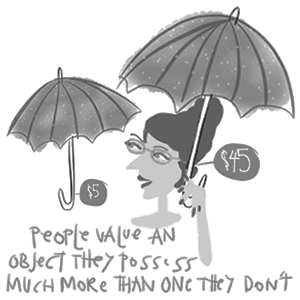
In behavioral economics, the endowment effect (also known as divestiture aversion) is the hypothesis that a person’s willingness to accept (WTA) compensation for a good is greater than their willingness to pay (WTP) for it once their property right to it has been established. People will pay more to retain something they own than to obtain something owned by someone else—even when there is no cause for attachment, or even if the item was only obtained minutes ago. This is due to the fact that once you own the item, foregoing it feels like a loss, and humans are loss-averse.
The endowment effect contradicts the Coase theorem (a theory of economic efficiency), and was described as inconsistent with standard economic theory which asserts that a person’s willingness to pay (WTP) for a good should be equal to their willingness to accept (WTA) compensation to be deprived of the good, a hypothesis which underlies consumer theory and indifference curves.
read more »
Posted in Money, Politics, Science |
1 Comment »
May 22, 2013
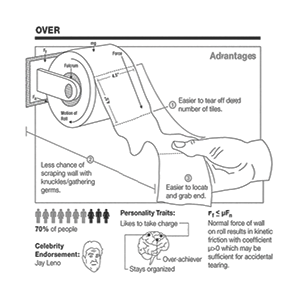
Toilet paper when used with a toilet roll holder with a horizontal axle parallel to the wall has two possible orientations: the toilet paper may hang over (in front of) or under (behind) the roll. The choice is largely a matter of personal preference, dictated by habit. In surveys of American consumers and of bath and kitchen specialists, 60–70% of respondents prefer over.
Despite its being an apparently trivial topic, some people hold strong opinions on the matter. Advice columnist Ann Landers said that the subject was the most controversial issue in her column’s history. Defenders of either position cite advantages ranging from aesthetics, hospitality, and cleanliness to paper conservation, the ease of detaching individual squares, and compatibility with a recreational vehicle or a cat. Celebrities and experts are found on both sides. Some writers have proposed connections to age, sex, or political philosophy; and survey evidence has shown a correlation with socioeconomic status.
read more »
Posted in Humor, Science |
Leave a Comment »
May 20, 2013

Mind-Blindness can be described as a cognitive disorder where an individual is unable to attribute mental states to the self and other. As a result of this disorder the individual is unaware of others’ mental states. The individual is also not capable of attributing beliefs and desires to others. This ability to develop a mental awareness of what is in the mind of an individual is known as the ‘Theory of Mind’ (ToM).
This allows one to attribute our behavior and actions to various mental states such as emotions and intentions. Mind-blindness is associated with autism and Asperger’s syndrome (AS) patients who tend to show deficits in social insight. It is also associated with schizophrenia, dementia, bi-polar disorders, and antisocial personality disorders.
read more »
Posted in Health, Science |
2 Comments »
May 13, 2013
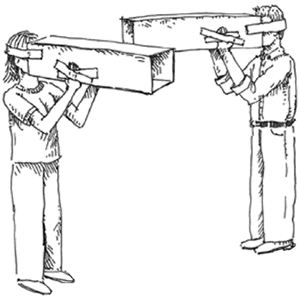
The selective exposure theory is a concept in media and communication research that refers to individuals’ tendency to favor information that reinforces pre-existing views while avoiding contradictory information. In this theory people tend to select specific aspects of exposed information based on their perspective, beliefs, attitudes and decisions.
People can determine the information exposed to them and select favorable evidence, while ignoring the unfavorable. This theory has been explored using the cognitive dissonance theory, which suggests information consumers strive for results of cognitive equilibrium (consistent rather than conflicting thoughts). In order to attain this equilibrium, individuals may either reinterpret the information they are exposed to or select information that are consonant with their view.
read more »
Posted in Language, Money, Science |
1 Comment »
May 13, 2013

Countersignaling is the behavior where agents with the highest level of a given property invest less into proving it than individuals with a medium level of the same property. This concept is primarily useful for analyzing human behavior and thus relevant to economics, sociology and psychology; there is no known animal behavior which conforms to the predictions of the countersignaling model.
Many of the things – such as toughness, cooperativeness or fertility – that people and animals want to know about each other are not directly observable. Instead, observable indicators of these unobservable properties must be used to communicate them to others. These are signals. Signaling theory deals with predicting the level of effort that individuals, the signalers, should invest to communicate their properties to other individuals, the receivers, and how these receivers interpret the signals.
read more »
Posted in Language, Money, Science |
Leave a Comment »
May 13, 2013
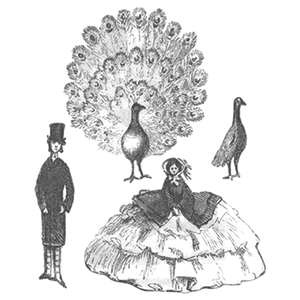
Within evolutionary biology, signalling theory is a body of theoretical work examining communication between individuals. The central question is when organisms with conflicting interests should be expected to communicate honestly (no presumption being made of conscious intention) rather than cheating. Mathematical models in which organisms signal their condition to other individuals as part of an evolutionarily stable strategy are important for research in this field.
Signals are given in contexts such as mate selection by females, which subjects the males’ signals to selective pressure. Signals thus evolve because they modify the behaviour of the receiver to benefit the signaller. Signals may be honest, on average conveying information that is actually useful to the receiver, increasing its fitness, or dishonest. A cheat can give a dishonest signal, gaining an advantage, but potentially undermining the signalling system for all.
read more »
Posted in Language, Science, Sex |
Leave a Comment »
May 10, 2013
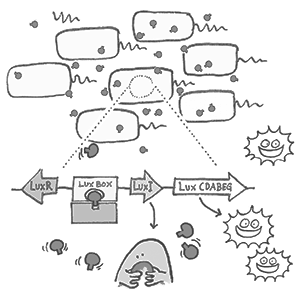
Quorum [kwawr-uhm] sensing is a chemical messaging system employed by bacteria to determine the presence of other bacteria. It is part of a system of stimulus and response correlated to population density (e.g. some bioluminescent bacteria will not produce light unless in sufficient concentration).
Many species of bacteria use quorum sensing to coordinate gene expression according to the density of their local population. In similar fashion, some social insects use a form of quorum sensing to determine where to nest. In addition to its function in biological systems, quorum sensing has several useful applications for computing and robotics.
read more »
Posted in Health, Science, Technology |
Leave a Comment »
May 9, 2013
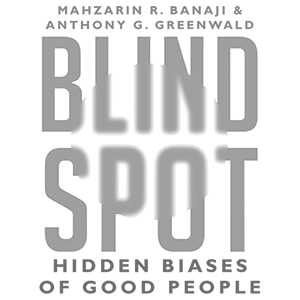
The bias blind spot is the cognitive bias of failing to compensate for one’s own cognitive biases. The term was created by Emily Pronin, a social psychologist from Princeton University’s Department of Psychology, with colleagues Daniel Lin and Lee Ross. Pronin and her co-authors explained to subjects the better-than-average effect (illusory superiority), the halo effect, self-serving bias, and many other cognitive biases.
According to the better-than-average bias, specifically, people are likely to see themselves as inaccurately ‘better than average’ for possible positive traits and ‘less than average’ for negative traits. When subsequently asked how biased they themselves were, subjects rated themselves as being much less vulnerable to those biases than the average person.
read more »
Posted in Health, Science |
Leave a Comment »
May 9, 2013

The introspection illusion is a cognitive bias in which people wrongly think they have direct insight into the origins of their mental states, while treating others’ introspections as unreliable. In certain situations, this illusion leads people to make confident but false explanations of their own behavior (Causal theories’) or inaccurate predictions of their future mental states.
The illusion has been examined in psychological experiments, and suggested as a basis for biases in how people compare themselves to others. These experiments have been interpreted as suggesting that, rather than offering direct access to the processes underlying mental states, introspection is a process of construction and inference, much as people indirectly infer others’ mental states from their behavior.
read more »
Posted in Health, Science |
1 Comment »



