May 7, 2013
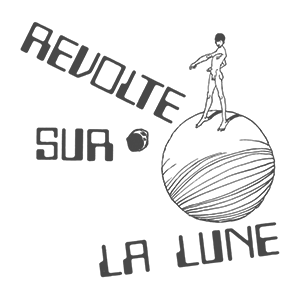
Libertarian science fiction is a sub-genre of science fiction that focuses on the politics and social order implied by libertarian philosophies with an emphasis on individualism and a limited state—and in some cases, no state whatsoever.
As a category, libertarian fiction is unusual because the vast majority of its authors are self-identified as science fiction authors. This contrasts with the authors of much other social criticism who are largely academic or mainstream novelists who tend to dismiss any genre classification.
read more »
Posted in Language, Politics, Science |
Leave a Comment »
May 7, 2013

Social science fiction is a subgenre of science fiction concerned less with technology and space opera and more with sociological speculation about human society. In other words, it ‘absorbs and discusses anthropology,’ and speculates about human behavior and interactions.
Exploration of fictional societies is a significant aspect of science fiction, allowing it to perform predictive (H. G. Wells, ‘The Final Circle of Paradise’) and precautionary (Ray Bradbury, ‘Fahrenheit 451’) functions, to criticize the contemporary world (Russian author Alexander Gromov’s ‘Antarctica-online’ ) and to present solutions (B.F. Skinner’s ‘Walden Two’), to portray alternative societies (World of the Noon, a fictional future setting for a number of hard science fiction novels written by Arkady and Boris Strugatsky) and to examine the implications of ethical principles (the works of Russian science fiction author Sergei Lukyanenko).
read more »
Posted in Politics, Science |
1 Comment »
May 7, 2013

Walden Two is a utopian novel written by behavioral psychologist B. F. Skinner, first published in 1948. In its time, it could have been considered to be science fiction, since science-based methods for altering people’s behavior did not yet exist. (Such methods exist now and are known as applied behavior analysis, formerly behavior modification).
‘Walden Two’ is controversial because it includes a rejection of free will, the proposition that human behavior is controlled by a non-corporeal entity, such as a spirit or a soul. The book embraces the proposition that the behavior of organisms, including humans, is determined by genetic and environmental variables, and that systematically altering environmental variables can generate a sociocultural system that very closely approximates utopia.
read more »
Posted in Language, Politics, Science |
Leave a Comment »
May 7, 2013
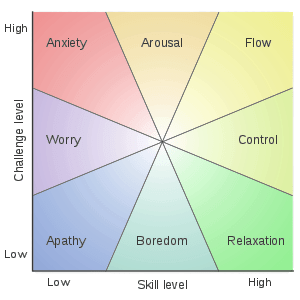
Flow is the mental state of operation in which a person performing an activity is fully immersed in a feeling of energized focus, full involvement, and enjoyment in the process of the activity. In essence, flow is characterized by complete absorption in what one does.
Proposed by Hungarian psychologist Mihály Csíkszentmihályi, the positive psychology concept has been widely referenced across a variety of fields including sports, arts, and science. Popular terms for this or similar mental states include: ‘to be in the moment,’ ‘present,’ ‘in the zone,’ ‘on a roll,’ ‘wired in,’ ‘in the groove,’ ‘on fire,’ ‘in tune,’ ‘centered,’ or ‘singularly focused.’
read more »
Posted in Health, Philosophy, Science |
Leave a Comment »
May 6, 2013

Deception in animals is the giving of information by one animal to another, of the same or different species, in a way that propagates beliefs that are not true. Deception in animals does not automatically imply conscious mind, but can occur at different levels. Mimicry and camouflage enable animals to appear to be other than they are.
Prey animals may appear as predators, or vice versa; both predators and prey may be hard to see (crypsis), or may be mistaken for other objects (mimesis). In Batesian mimicry, harmless animals may appear to be distasteful or poisonous. In automimicry, animals may have eyespots in less important parts of the body than the head, helping to distract attack and increase the chance of survival.
read more »
Posted in Science |
1 Comment »
May 3, 2013
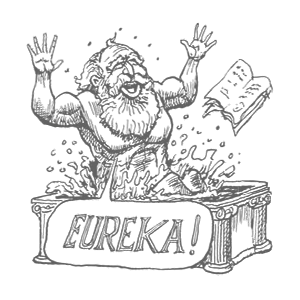
The Eureka effect, also known as the ‘aha! effect,’ refers to the common human experience of suddenly understanding a previously incomprehensible problem or concept. The Eureka effect is named after the myth that the Greek polymath Archimedes, having discovered how to measure the volume of an irregular object, leaped out of a public bath, and ran home naked shouting ‘eureka’ (‘I found it’). Archimedes was asked by the local king to detect whether a crown was pure gold, or if the goldsmith had added silver.
During his trip to the public bath, he noticed that water is displaced when his body sinks into the bath, and that the volume of water displaced equals the volume of the body immersed in the water. This means that he can measure the density of the crown, and compare it to a bar of pure gold. This story is thought to be a myth, because it was first mentioned by the Roman writer Vitruvius nearly 200 years later, and because the method described by Vitruvius would have been inaccurate.
read more »
Posted in Science |
2 Comments »
May 1, 2013
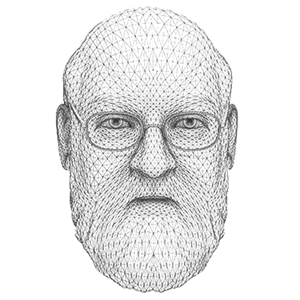
An intuition pump is a thought experiment structured to elicit intuitive answers about a problem. The term was coined by Daniel Dennett. In ‘Consciousness Explained,’ he uses the term pejoratively to describe John Searle’s ‘Chinese room’ thought experiment, characterizing it as designed to elicit intuitive but incorrect answers by formulating the description in such a way that important implications of the experiment would be difficult to imagine and tend to be ignored.
Searle’s experiment supposes that there is a program that gives a computer the ability to carry on an intelligent conversation in written Chinese. If the program is given to someone who speaks only English to execute the instructions of the program by hand, then in theory, the English speaker would also be able to carry on a conversation in written Chinese. However, the English speaker would not be able to understand the conversation.
read more »
Posted in Language, Philosophy, Science |
Leave a Comment »
April 29, 2013

The Red Delicious is a clone of apple cultigen, now comprising more than 50 cultivars, that was recognized in Madison County, Iowa in 1880. As new cultivars with improved color and earlier harvestability have replaced the original cultivar in commercial orchards, the taste and texture of the harvested commodity have deteriorated, and many customers have begun to reject the Red Delicious at markets.
Apple expert, Roger Yepsen notes some of the Red’s less desirable qualities: ‘The skin is thick and bitter and has to be chewed vigorously… this apple ranks close to the bottom when cooked… sold year round, so shop with skepticism. Delicious retains its cheerful good looks long after its flavor has departed.’
read more »
Posted in Food, Money, Science |
Leave a Comment »
April 25, 2013
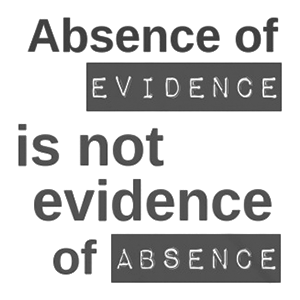
Evidence of absence is evidence of any kind that suggests something is missing or that it does not exist. For example, suppose a baker never fails to put newly finished pies on her windowsill; therefore, if there is no pie on the windowsill, no newly finished pies exist.
Per the traditional aphorism, ‘absence of evidence is not evidence of absence,’ positive evidence of this kind is distinct from a lack of evidence or ignorance of that which should have been found already, had it existed. In this regard American philosopher Irving Copi writes: ‘In some circumstances it can be safely assumed that if a certain event had occurred, evidence of it could be discovered by qualified investigators. In such circumstances it is perfectly reasonable to take the absence of proof of its occurrence as positive proof of its non-occurrence.
read more »
Posted in Language, Philosophy, Science |
Leave a Comment »
April 25, 2013
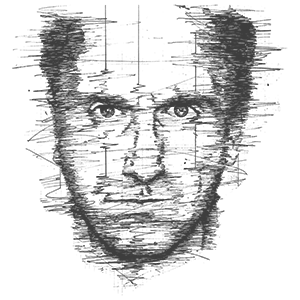
The Wizards Project was a research project at the University of California, San Francisco led by psychologists Paul Ekman and Maureen O’Sullivan that studied the ability of people to detect lies. O’Sullivan spent more than 20 years studying the science of lying and deceit.
The project was originally named the ‘Diogenes Project,’ after the Diogenes, the Greek philosopher who would look into people’s faces using a lamp, claiming to be looking for an honest man. The project defined a ‘Truth Wizard’ as a person identified who can identify deception with accuracy of at least 80%, whereas the average person rates around 50%. No Truth Wizard was 100% accurate.
read more »
Posted in Language, Science |
Leave a Comment »
April 24, 2013

The Relativity of Wrong is a 1988 essay collection by Isaac Asimov, which takes its title from the most ambitious essay it contains. Like most of the essays Asimov wrote for ‘F&SF Magazine,’ each one in ‘The Relativity of Wrong’ begins with an autobiographical anecdote which serves to set the tone.
Several of the essays form a sequence explaining the discovery and uses of isotopes; the introductory passages in these essays recount Asimov’s not particularly pleasant personal relationship with physical chemist Harold C. Urey, whom he met at Columbia University.
read more »
Posted in Humor, Language, Science |
Leave a Comment »
April 24, 2013
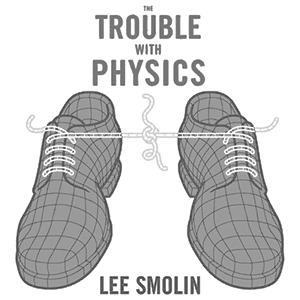
The phrase not even wrong is generally attributed to theoretical physicist Wolfgang Pauli, who was known for his colorful objections to incorrect or sloppy thinking. Rudolf Peierls writes that ‘a friend showed Pauli the paper of a young physicist which he suspected was not of great value but on which he wanted Pauli’s views. Pauli remarked sadly, ‘It is not even wrong.” Peierls remarks that quite a few apocryphal stories of this kind have been circulated and mentions that he listed only the ones personally vouched by him. He also quotes another example when Pauli replied to Lev Landau: ‘What you said was so confused that one could not tell whether it was nonsense or not.’
It has come to be used to describe any argument that purports to be scientific but fails at some fundamental level, usually in that it cannot be falsified (i.e., tested with the possibility of being rejected) by experiment or cannot be used to make predictions about the natural world. ‘Not even wrong’ has also been used by Peter Woit to mean proposed scientific theories that are well-meaning and based on current scientific knowledge, but can neither be used for prediction nor falsified. He has applied the phrase to aspects of string theory in physics on the grounds that, although mathematically elegant, it does not currently provide predictions or tests.
Posted in Humor, Language, Science |
Leave a Comment »



