April 22, 2013
In philosophy of science and philosophy of mind, cognitive closure is the proposition that human minds are constitutionally incapable of solving certain perennial philosophical problems.
Neurobiologist Owen Flanagan calls this position ‘anti-constructive naturalism’ or the ‘new mysterianism’ and the primary advocate of the hypothesis, Colin McGinn, calls it ‘transcendental naturalism’ because it acknowledges the possibility that solutions might fall within the grasp of an intelligent non-human of some kind. According to McGinn, such philosophical questions include the mind-body problem, identity of the self, foundations of meaning, free will, and knowledge, both a priori and empirical.
read more »
Posted in Philosophy, Science |
1 Comment »
April 22, 2013
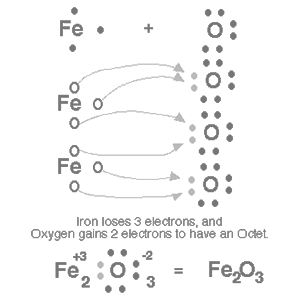
Rust is a type of corrosion (the breakdown of materials due to reactions with their surroundings). Normally, when a material corrodes it becomes weaker, however some forms of high temperature corrosion can lead to the formation of protective compacted oxide layer glazes. Iron corrosion is called rusting.
When exposed to air or water for a long time, iron slowly decomposes into other chemicals, because of a reaction with oxygen molecules (air and water contain oxygen). Many other metals undergo equivalent corrosion, but the resulting oxides are not commonly called rust.
read more »
Posted in Science |
Leave a Comment »
April 18, 2013
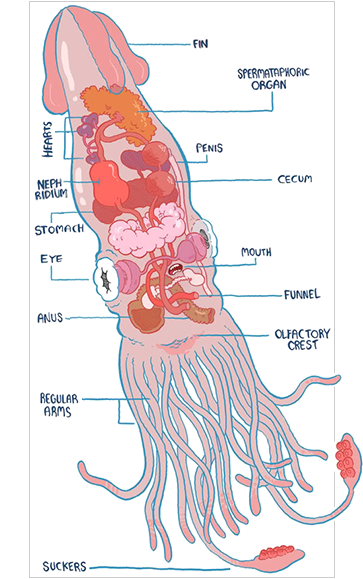
Cephalopod [sef-uh-luh-pod] intelligence has an important comparative aspect in the understanding of intelligence because it relies on a nervous system fundamentally different from that of vertebrates. The cephalopod class of molluscs, particularly the Coleoidea subclass (cuttlefish, squid and octopuses), are considered the most intelligent invertebrates and an important example of advanced cognitive evolution in animals.
The scope of cephalopod intelligence is controversial, complicated by the challenges of studying these elusive and fundamentally different creatures. Classical conditioning of cephalopods has been reported, and a study in 1992 concluded that octopuses practice observational learning. However, the latter idea is strongly disputed, and doubt has been shed on some other reported capabilities as well. In any case, impressive spatial learning capacity, navigational abilities, and predatory techniques remain beyond question.
read more »
Posted in Science |
Leave a Comment »
April 17, 2013
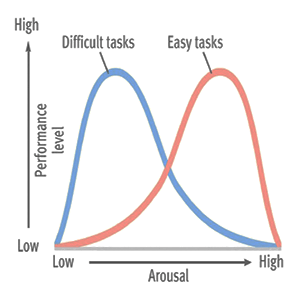
The Yerkes–Dodson law is an empirical relationship between arousal and performance, originally developed by psychologists Robert M. Yerkes and John Dillingham Dodson in 1908. The law dictates that performance increases with physiological or mental arousal, but only up to a point. When levels of arousal become too high, performance decreases. The process is often illustrated graphically as a curvilinear, inverted U-shaped curve which increases and then decreases with higher levels of arousal.
Research has found that different tasks require different levels of arousal for optimal performance. For example, difficult or intellectually demanding tasks may require a lower level of arousal (to facilitate concentration), whereas tasks demanding stamina or persistence may be performed better with higher levels of arousal (to increase motivation).
read more »
Posted in Health, Science |
4 Comments »
April 16, 2013

Failure is the state or condition of not meeting a desirable or intended objective, and may be viewed as the opposite of success. Product failure ranges from failure to sell the product to fracture of the product, in the worst cases leading to personal injury, the province of forensic engineering. Former IBM CEO Thomas J. Watson is attributed with saying ‘If you want to succeed, double your failure rate.’ ‘
Wired Magazine’ editor Kevin Kelly likewise explains that a great deal can be learned from things going unexpectedly, and that part of science’s success comes from keeping blunders ‘small, manageable, constant, and trackable.’ He uses the example of engineers and programmers who push systems to their limits, breaking them to learn about them. Kelly also warns against creating a culture (e.g. school system) that punishes failure harshly, because this inhibits a creative process, and risks teaching people not to communicate important failures with others (e.g. Null results).
read more »
Posted in Language, Money, Science |
Leave a Comment »
April 16, 2013

The biophilia [bahy-oh-fil-ee-uh] hypothesis suggests that there is an instinctive bond between human beings and other living systems. American biologist Edward O. Wilson introduced and popularized the hypothesis in his book, ‘Biophilia’ (1984). He defines ‘biophilia’ as ‘the urge to affiliate with other forms of life.’
The term literally means ‘love of life or living systems.’ It was first used by German sociologist Erich Fromm to describe a psychological orientation of being attracted to all that is alive and vital. Wilson uses the term in the same sense when he suggests that biophilia describes ‘the connections that human beings subconsciously seek with the rest of life.’ He proposed the possibility that the deep affiliations humans have with nature are rooted in our biology. Unlike phobias, which are the aversions and fears that people have of things in the natural world, philias are the attractions and positive feelings that people have toward certain habitats, activities, and objects in their natural surroundings.
read more »
Posted in Health, Science |
Leave a Comment »
April 16, 2013
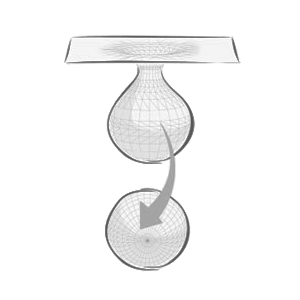
Fecund [fee-kuhnd] universes is a multiverse theory by American theoretical physicist Lee Smolin, also called cosmological natural selection theory, suggesting that a process analogous to biological natural selection applies at the grandest scales. Smolin summarized the idea in a book aimed at a lay audience called ‘The Life of the Cosmos.’ The theory surmises that a collapsing black hole causes the emergence of a new universe on the ‘other side,’ whose fundamental constant parameters (speed of light, Planck length, and so forth) may differ slightly from those of the universe where the black hole collapsed. Each universe therefore gives rise to as many new universes as it has black holes.
Thus the theory contains the evolutionary ideas of ‘reproduction’ and ‘mutation’ of universes, but has no direct analogue of natural selection. However, given any universe that can produce black holes that successfully spawn new universes, it is possible that some number of those universes will reach heat death with unsuccessful parameters. So, in a sense, fecundity cosmological natural selection is one where universes could die off before successfully reproducing, just as any biological being can die without having offspring.
read more »
Posted in Philosophy, Science |
2 Comments »
April 9, 2013
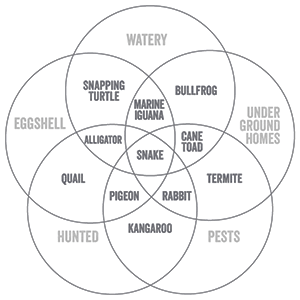
‘Tastes like chicken‘ is a common declaration used when trying to describe the flavor of a food. The expression has been used so often that it has become somewhat of a cliché. As a result, the phrase also sometimes gets used for incongruous humor by being deployed for foods or situations to which it has no real relevance. As an explanation of why unusual meats would taste more like chicken than common alternatives such as beef or pork, different possibilities have been offered.
One idea is that chicken has a bland taste because fat contributes more flavor than muscle (especially in the case of a lean cut such as a skinless chicken breast), making it a generic choice for comparison. Also, chicken reportedly has lower levels of glutamates that contribute to the ‘savory’ aspect of taste known as umami; processing or tenderizing other meats also lowers glutamate levels and makes them taste more like chicken.
read more »
Posted in Food, Humor, Science |
2 Comments »
April 3, 2013

Experimental archaeology puts archaeological source material, like ancient structures or artifacts, to real world tests. It should not be confused with primitive technology which is not concerned with any archaeological or historical evidence. Living history and historical reenactment, which are generally undertaken as a hobby, are the lay person’s version of this academic discipline.
One of the main forms of experimental archaeology is the creation of copies of historical structures using only historically accurate technologies. This is sometimes known as reconstruction archaeology or reconstructional archaeology; however, reconstruction implies an exact replica of the past, when it is in fact just a construction of one person’s idea of the past; the more archaeologically correct term is a ‘working construction of the past.’
read more »
Posted in Science, Technology, World |
Leave a Comment »
April 2, 2013

Garbology [gahr-bol-uh-jee] is the study of modern refuse and trash. As an academic discipline it was pioneered at the University of Arizona and long directed by archaeologist William Rathje.
The project started in 1973, originating from an idea of two students for a class project. It is a major source of information on the nature and changing patterns in modern refuse, and thereby, human society. Industries wishing to demonstrate that discards originating with their products are (or are not) important in the trash stream are avid followers of this research, as are municipalities wishing to learn whether some parts of the trash they collect has any salable value.
read more »
Posted in Science |
Leave a Comment »
March 19, 2013

The realization that dinosaurs are closely related to birds raised the obvious possibility of feathered dinosaurs. Fossils of Archaeopteryx (sometimes called ‘the first bird’) include well-preserved feathers, but it was not until the mid-1990s that clearly non-avialan dinosaur fossils were discovered with preserved feathers.
Since then, more than twenty genera of dinosaurs, mostly theropods (carnivorous bipeds), have been discovered to have been feathered. Most fossils are from the Yixian formation in China. The fossil feathers of one specimen, Shuvuuia deserti, have tested positive for beta-keratin, the main protein in bird feathers, in immunological tests.
read more »
Posted in Science |
1 Comment »
March 14, 2013
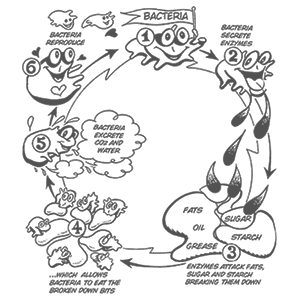
Bioremediation [bahy-oh-ri-mee-dee-ey-shuhn] is the use of micro-organism metabolism to remove pollutants. In situ bioremediation involves treating the contaminated material at the site, while ex situ involves the removal of the contaminated material to be treated elsewhere.
Some examples of bioremediation related technologies are phytoremediation (fixing environmental problems through the use of plants), bioventing (groundwater remediation), bioleaching (extracting metals from their ores through the use of living organisms), landfarming (soil remediation), bioreactors (wastewater and sewage treatment), composting, bioaugmentation (the introduction of microbial organisms to treat contaminated soil or water), rhizofiltration (filtering water through a mass of roots), and biostimulation (modification of the environment to stimulate existing bacteria capable of bioremediation).
read more »
Posted in Science |
Leave a Comment »



