April 16, 2013

Failure is the state or condition of not meeting a desirable or intended objective, and may be viewed as the opposite of success. Product failure ranges from failure to sell the product to fracture of the product, in the worst cases leading to personal injury, the province of forensic engineering. Former IBM CEO Thomas J. Watson is attributed with saying ‘If you want to succeed, double your failure rate.’ ‘
Wired Magazine’ editor Kevin Kelly likewise explains that a great deal can be learned from things going unexpectedly, and that part of science’s success comes from keeping blunders ‘small, manageable, constant, and trackable.’ He uses the example of engineers and programmers who push systems to their limits, breaking them to learn about them. Kelly also warns against creating a culture (e.g. school system) that punishes failure harshly, because this inhibits a creative process, and risks teaching people not to communicate important failures with others (e.g. Null results).
read more »
Posted in Language, Money, Science |
Leave a Comment »
April 16, 2013

The biophilia [bahy-oh-fil-ee-uh] hypothesis suggests that there is an instinctive bond between human beings and other living systems. American biologist Edward O. Wilson introduced and popularized the hypothesis in his book, ‘Biophilia’ (1984). He defines ‘biophilia’ as ‘the urge to affiliate with other forms of life.’
The term literally means ‘love of life or living systems.’ It was first used by German sociologist Erich Fromm to describe a psychological orientation of being attracted to all that is alive and vital. Wilson uses the term in the same sense when he suggests that biophilia describes ‘the connections that human beings subconsciously seek with the rest of life.’ He proposed the possibility that the deep affiliations humans have with nature are rooted in our biology. Unlike phobias, which are the aversions and fears that people have of things in the natural world, philias are the attractions and positive feelings that people have toward certain habitats, activities, and objects in their natural surroundings.
read more »
Posted in Health, Science |
Leave a Comment »
April 16, 2013
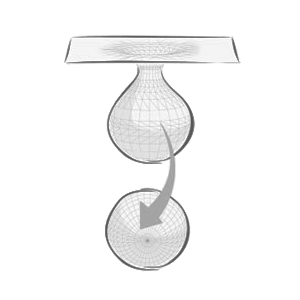
Fecund [fee-kuhnd] universes is a multiverse theory by American theoretical physicist Lee Smolin, also called cosmological natural selection theory, suggesting that a process analogous to biological natural selection applies at the grandest scales. Smolin summarized the idea in a book aimed at a lay audience called ‘The Life of the Cosmos.’ The theory surmises that a collapsing black hole causes the emergence of a new universe on the ‘other side,’ whose fundamental constant parameters (speed of light, Planck length, and so forth) may differ slightly from those of the universe where the black hole collapsed. Each universe therefore gives rise to as many new universes as it has black holes.
Thus the theory contains the evolutionary ideas of ‘reproduction’ and ‘mutation’ of universes, but has no direct analogue of natural selection. However, given any universe that can produce black holes that successfully spawn new universes, it is possible that some number of those universes will reach heat death with unsuccessful parameters. So, in a sense, fecundity cosmological natural selection is one where universes could die off before successfully reproducing, just as any biological being can die without having offspring.
read more »
Posted in Philosophy, Science |
1 Comment »
April 9, 2013
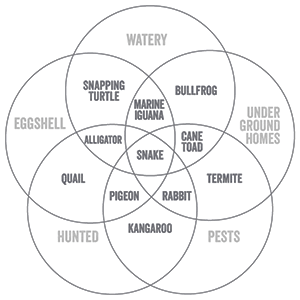
‘Tastes like chicken‘ is a common declaration used when trying to describe the flavor of a food. The expression has been used so often that it has become somewhat of a cliché. As a result, the phrase also sometimes gets used for incongruous humor by being deployed for foods or situations to which it has no real relevance. As an explanation of why unusual meats would taste more like chicken than common alternatives such as beef or pork, different possibilities have been offered.
One idea is that chicken has a bland taste because fat contributes more flavor than muscle (especially in the case of a lean cut such as a skinless chicken breast), making it a generic choice for comparison. Also, chicken reportedly has lower levels of glutamates that contribute to the ‘savory’ aspect of taste known as umami; processing or tenderizing other meats also lowers glutamate levels and makes them taste more like chicken.
read more »
Posted in Food, Humor, Science |
Leave a Comment »
April 3, 2013

Experimental archaeology puts archaeological source material, like ancient structures or artifacts, to real world tests. It should not be confused with primitive technology which is not concerned with any archaeological or historical evidence. Living history and historical reenactment, which are generally undertaken as a hobby, are the lay person’s version of this academic discipline.
One of the main forms of experimental archaeology is the creation of copies of historical structures using only historically accurate technologies. This is sometimes known as reconstruction archaeology or reconstructional archaeology; however, reconstruction implies an exact replica of the past, when it is in fact just a construction of one person’s idea of the past; the more archaeologically correct term is a ‘working construction of the past.’
read more »
Posted in Science, Technology, World |
Leave a Comment »
April 2, 2013

Garbology [gahr-bol-uh-jee] is the study of modern refuse and trash. As an academic discipline it was pioneered at the University of Arizona and long directed by archaeologist William Rathje.
The project started in 1973, originating from an idea of two students for a class project. It is a major source of information on the nature and changing patterns in modern refuse, and thereby, human society. Industries wishing to demonstrate that discards originating with their products are (or are not) important in the trash stream are avid followers of this research, as are municipalities wishing to learn whether some parts of the trash they collect has any salable value.
read more »
Posted in Science |
Leave a Comment »
March 19, 2013

The realization that dinosaurs are closely related to birds raised the obvious possibility of feathered dinosaurs. Fossils of Archaeopteryx (sometimes called ‘the first bird’) include well-preserved feathers, but it was not until the mid-1990s that clearly non-avialan dinosaur fossils were discovered with preserved feathers.
Since then, more than twenty genera of dinosaurs, mostly theropods (carnivorous bipeds), have been discovered to have been feathered. Most fossils are from the Yixian formation in China. The fossil feathers of one specimen, Shuvuuia deserti, have tested positive for beta-keratin, the main protein in bird feathers, in immunological tests.
read more »
Posted in Science |
1 Comment »
March 14, 2013
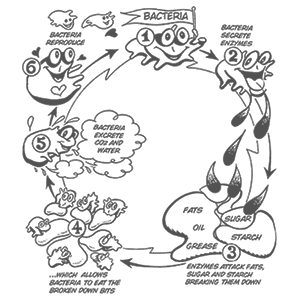
Bioremediation [bahy-oh-ri-mee-dee-ey-shuhn] is the use of micro-organism metabolism to remove pollutants. In situ bioremediation involves treating the contaminated material at the site, while ex situ involves the removal of the contaminated material to be treated elsewhere.
Some examples of bioremediation related technologies are phytoremediation (fixing environmental problems through the use of plants), bioventing (groundwater remediation), bioleaching (extracting metals from their ores through the use of living organisms), landfarming (soil remediation), bioreactors (wastewater and sewage treatment), composting, bioaugmentation (the introduction of microbial organisms to treat contaminated soil or water), rhizofiltration (filtering water through a mass of roots), and biostimulation (modification of the environment to stimulate existing bacteria capable of bioremediation).
read more »
Posted in Science |
Leave a Comment »
March 14, 2013

A green wall is a wall, either free-standing or part of a building, that is partially or completely covered with vegetation and, in some cases, soil or an inorganic growing medium. The concept of the green wall dates back to the Hanging Gardens of Babylon (600 BCE).
The modern green wall with integrated hydroponics was invented by Professor of Landscape Architecture Stanley Hart White at the University of Illinois Urbana-Champaign in 1931-38. White holds the first known patent for a green wall, or vertical garden, conceptualizing this new garden type as a solution to the problem of modern garden design.
read more »
Posted in Science, Technology |
Leave a Comment »
March 14, 2013
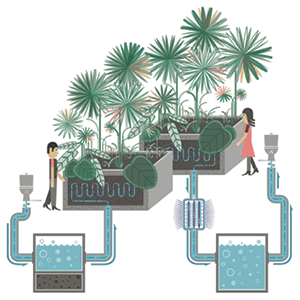
Living Machine is a trademark and brand name for a patented form of ecological wastewater treatment designed to mimic the cleansing functions of wetlands. Also known as Solar Aquatics Systems, the latest generation of the technology is based on fixed-film ecology and the ecological processes of a natural tidal wetland, one of nature’s most productive ecosystems.
The Living Machine is an intensive bioremediation system that can also produce beneficial byproducts, such as reuse-quality water, ornamental plants and plant products—for building material, energy biomass, animal feed.
read more »
Posted in Money, Science, Technology |
1 Comment »
March 13, 2013


Role suction is a term introduced in the USA by pyschologist Fritz Redl in the mid-twentieth century to describe the power of a social group to allocate roles willy-nilly to its members. British psychoanalyst W. R. Bion’s group dynamics further explored the ways whereby the group (unconsciously) allocates particular functions to particular individuals in order to have its covert emotional needs met; and the process has recently been highlighted anew within the ‘Systems Centered Therapy’ of Yvonne Agazarian (a form of group therapy).
Among regularly occurring group roles are those of the ‘scapegoat’ for the group’s troubles; the ‘joker’; the ‘peacemaker’; the ‘critic/spokesperson’ for group standards; the ‘idol,’ or upholder of the group ideal; and the ‘identified patient’ (the person in a dysfunctional group who has been subconsciously selected to act out the group’s inner conflicts as a diversion). In mixed gender groups, women may be disproportionately pressured by role suction into playing a nurturing/peacemaker role.
read more »
Posted in Health, Language, Science |
Leave a Comment »
March 13, 2013

A pocket universe is a concept in inflationary theory, proposed by theoretical physicist Alan Guth. It defines a realm like the one that contains the observable universe as only one of many inflationary zones. Astrophysicist Jean-Luc Lehners, of the Princeton Center for Theoretical Science, has argued that an inflationary universe produces pockets.
As he wrote in 2012, ‘Eternal inflation produces pocket universes with all physically allowed vacua and histories. Some of these pocket universes might contain a phase of slow-roll inflation, some might undergo cycles of cosmological evolution, and some might look like the Galilean genesis or other ’emergent’ universe scenarios. Which one of these types of universe we are most likely to inhabit depends on the measure we choose in order to regulate the infinities inherent in eternal inflation.’
read more »
Posted in Art, Language, Science |
Leave a Comment »


 The Daily Omnivore