March 14, 2013

A green wall is a wall, either free-standing or part of a building, that is partially or completely covered with vegetation and, in some cases, soil or an inorganic growing medium. The concept of the green wall dates back to the Hanging Gardens of Babylon (600 BCE).
The modern green wall with integrated hydroponics was invented by Professor of Landscape Architecture Stanley Hart White at the University of Illinois Urbana-Champaign in 1931-38. White holds the first known patent for a green wall, or vertical garden, conceptualizing this new garden type as a solution to the problem of modern garden design.
read more »
Posted in Science, Technology |
Leave a Comment »
March 14, 2013

Living Machine is a trademark and brand name for a patented form of ecological wastewater treatment designed to mimic the cleansing functions of wetlands. Also known as Solar Aquatics Systems, the latest generation of the technology is based on fixed-film ecology and the ecological processes of a natural tidal wetland, one of nature’s most productive ecosystems.
The Living Machine is an intensive bioremediation system that can also produce beneficial byproducts, such as reuse-quality water, ornamental plants and plant products—for building material, energy biomass, animal feed.
read more »
Posted in Money, Science, Technology |
1 Comment »
March 13, 2013


Role suction is a term introduced in the USA by pyschologist Fritz Redl in the mid-twentieth century to describe the power of a social group to allocate roles willy-nilly to its members. British psychoanalyst W. R. Bion’s group dynamics further explored the ways whereby the group (unconsciously) allocates particular functions to particular individuals in order to have its covert emotional needs met; and the process has recently been highlighted anew within the ‘Systems Centered Therapy’ of Yvonne Agazarian (a form of group therapy).
Among regularly occurring group roles are those of the ‘scapegoat’ for the group’s troubles; the ‘joker’; the ‘peacemaker’; the ‘critic/spokesperson’ for group standards; the ‘idol,’ or upholder of the group ideal; and the ‘identified patient’ (the person in a dysfunctional group who has been subconsciously selected to act out the group’s inner conflicts as a diversion). In mixed gender groups, women may be disproportionately pressured by role suction into playing a nurturing/peacemaker role.
read more »
Posted in Health, Language, Science |
Leave a Comment »
March 13, 2013

A pocket universe is a concept in inflationary theory, proposed by theoretical physicist Alan Guth. It defines a realm like the one that contains the observable universe as only one of many inflationary zones. Astrophysicist Jean-Luc Lehners, of the Princeton Center for Theoretical Science, has argued that an inflationary universe produces pockets.
As he wrote in 2012, ‘Eternal inflation produces pocket universes with all physically allowed vacua and histories. Some of these pocket universes might contain a phase of slow-roll inflation, some might undergo cycles of cosmological evolution, and some might look like the Galilean genesis or other ’emergent’ universe scenarios. Which one of these types of universe we are most likely to inhabit depends on the measure we choose in order to regulate the infinities inherent in eternal inflation.’
read more »
Posted in Art, Language, Science |
Leave a Comment »
March 10, 2013

Pharming is a portmanteau of farming and ‘pharmaceutical’ and refers to the use of genetic engineering to insert genes that code for useful pharmaceuticals into host animals or plants that would otherwise not express those genes, thus creating a genetically modified organism (GMO).
The products of pharming are typically recombinant proteins (or their metabolic products), which are proteins that result from the expression of recombinant DNA (molecular cloning in a laboratory brings together genetic material from multiple sources, creating sequences that would not otherwise be found in biological organisms). Recombinant proteins are most commonly produced using bacteria or yeast in a bioreactor.
read more »
Posted in Drugs, Health, Science |
Leave a Comment »
March 10, 2013


AquAdvantage salmon is the trade name for a genetically modified Atlantic salmon developed by AquaBounty Technologies. It has been modified by the addition of a growth hormone regulating gene from a Pacific Chinook salmon and a gene from an ocean pout (the Atlantic salmon has 40,000 genes). These additions enable it to grow year-round instead of only during spring and summer.
The purpose of the modifications is to increase the speed at which the fish grows, without affecting its ultimate size or other qualities, though conventional salmon growers have publicly challenged the purported fast growth rates of AquaBounty’s salmon. The fish grows to market size in 16 to 18 months rather than three years. The latter figure refers to varieties whose growth rate has already been improved by 2:1 as a result of traditional selective breeding.
read more »
Posted in Food, Politics, Science |
Leave a Comment »
March 10, 2013
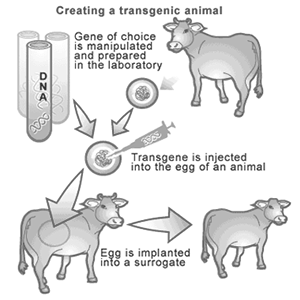
Enviropig is the trademark for a genetically modified line of Yorkshire pigs with the capability to digest plant phosphorus more efficiently than ordinary unmodified pigs that was developed at the University of Guelph.
The benefits of the Enviropig if commercialized include reduced feed cost and reduced phosphorus pollution as compared to the raising of ordinary pigs. Enviropigs produce the enzyme phytase in their salivary glands. When cereal grains are consumed, the phytase mixes with feed in the pig’s mouth, and once swallowed the phytase is active in the acidic environment of the stomach degrading indigestible phytic acid with the release of phosphate that is readily digested by the pig.
read more »
Posted in Food, Science |
Leave a Comment »
March 7, 2013
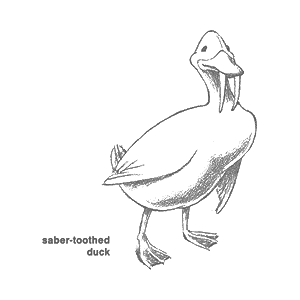
‘Science Made Stupid: How to Discomprehend the World Around Us’ is a book written and illustrated by Tom Weller in 1985. The winner of the 1986 Hugo Award for Best Non-Fiction Book, it is a parody of a junior high or high school-level science textbook. Though currently out-of-print, high-resolution scans are available online, as well as an abridged transcription, both of which have been endorsed by Weller.
Highlights of the book include a satirical account of the creationism vs. evolution debate and Weller’s drawings of fictional prehistoric animals (e.g., the duck-billed mastodon.) Weller released a companion volume, ‘Culture Made Stupid’ (also spelled ‘Cvltvre Made Stvpid’), which satirizes literature and the humanities.
Posted in Education, Humor, Science |
1 Comment »
March 5, 2013

Social proof, also known as informational social influence, is a psychological phenomenon where people assume the actions of others in an attempt to reflect correct behavior for a given situation. This effect is prominent in ambiguous social situations where people are unable to determine the appropriate mode of behavior, and is driven by the assumption that surrounding people possess more knowledge about the situation.
The effects of social influence can be seen in the tendency of large groups to conform to choices which may be either correct or mistaken, a phenomenon sometimes referred to as herd behavior. Although social proof reflects a rational motive to take into account the information possessed by others, formal analysis shows that it can cause people to converge too quickly upon a single choice, so that decisions of even large groups of individuals may be grounded in very little information (i.e. information cascades).
read more »
Posted in Health, Science |
Leave a Comment »
February 20, 2013
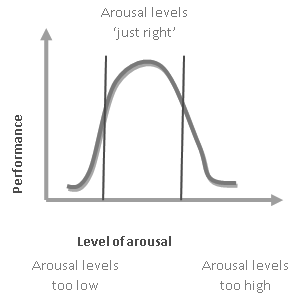
In economics, a bliss point is a quantity of consumption where any further increase would make the consumer less satisfied. It is a quantity of consumption which maximizes utility in the absence budget constraint.
In other words, it refers to the amount of consumption that would be chosen by a person so rich that money imposed no constraint on his or her decisions.
Posted in Food, Money, Science |
Leave a Comment »
February 14, 2013
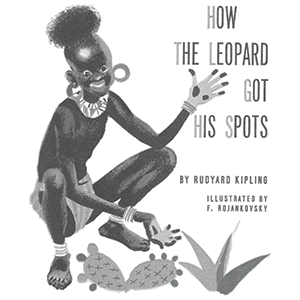
In science and philosophy, a just-so story, also called an ad hoc fallacy, is an unverifiable and unfalsifiable narrative explanation for a cultural practice, a biological trait, or behavior of humans or other animals. The pejorative nature of the expression is an implicit criticism that reminds the hearer of the essentially fictional and unprovable nature of such an explanation. Such tales are common in folklore and mythology (where they are known as ‘origin’ or ‘etiological’ myths).
Published in 1902, Rudyard Kipling’s ‘Just So Stories,’ is a collection of fictional and deliberately fanciful tales for children in which the stories pretend to explain animal characteristics, such as the origin of the spots on the leopard.
read more »
Posted in Philosophy, Science |
Leave a Comment »
February 12, 2013
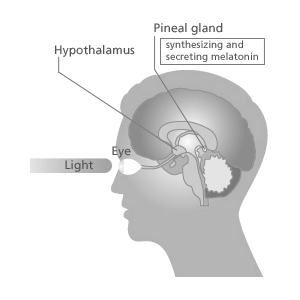
Melatonin [mel-uh-toh-nin] is a naturally occurring hormone found in animals, plants, and microbes. In animals, circulating levels of melatonin vary in a daily cycle, thereby allowing the entrainment of the circadian rhythms of several biological functions.
Many biological effects of melatonin are produced through activation of melatonin receptors, while others are due to its role as a pervasive and powerful antioxidant (a molecule that neutralizes free radicals), with a particular role in the protection of nuclear and mitochondrial DNA. Products containing melatonin have been available over-the-counter in the United States since the mid-1990s. In many other countries, the sale of this neurohormone is not permitted or requires a prescription.
read more »
Posted in Drugs, Health, Science |
3 Comments »



