December 4, 2012
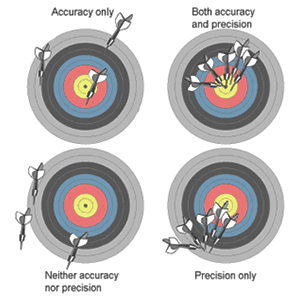
The accuracy of a measurement system is the degree of closeness of measurements of a quantity to that quantity’s actual value. The precision of a measurement system, also called reproducibility or repeatability, is the degree to which repeated measurements under unchanged conditions show the same results. Although the two words reproducibility and repeatability can be synonymous in colloquial use, they are deliberately contrasted in the context of the scientific method.
A measurement system can be accurate but not precise, precise but not accurate, neither, or both. For example, if an experiment contains a systematic error, then increasing the sample size generally increases precision but does not improve accuracy. The result would be a consistent yet inaccurate string of results from the flawed experiment. Eliminating the systematic error improves accuracy but does not change precision.
Posted in Language, Science |
Leave a Comment »
December 4, 2012

David Doubilet (b. 1946) is a well known underwater photographer published frequently in ‘National Geographic Magazine.’ He was born in New York and started taking photos underwater at the young age of 12. He started with a Brownie Hawkeye in a rubber anesthesiologist’s bag. During his summer holidays, he spent his time along the New Jersey coast. He later worked as a diver and photographer for the Sandy Hook Marine Laboratories in New Jersey. He also spent much time in the Caribbean. While a dive instructor in the Bahamas he found his motivation to capture the beauty of the sea and everything in it.
His goal as a photographer is to ‘redefine photographic boundaries’ every time he enters the water. The main obstacle in underwater photography is the impossibility of changing lenses or film underwater, thus Doubilet invented the split lens camera. This allowed him to take pictures above and below water simultaneously; there is a separate focus point on the top half and bottom half of the scene. When the picture is taken, it is recorded onto the same negative. He is well known for his reports on the sea and has written many books in recent years, one of which includes ‘Australia’s Great Barrier Reef’ by National Geographic.
Posted in Art, Science |
Leave a Comment »
November 15, 2012
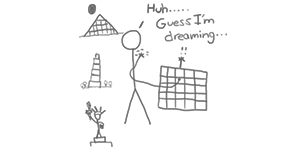
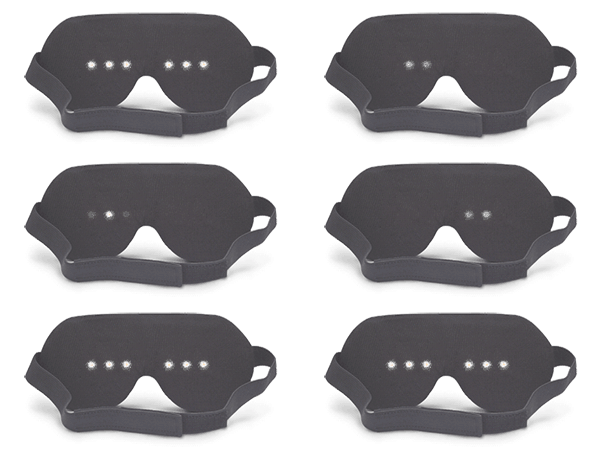
A lucid dream is any dream in which one is aware that one is dreaming. The term was coined by the Dutch psychiatrist and writer Frederik van Eeden (1860–1932). In a lucid dream, the dreamer may be able to exert some degree of control over their participation within the dream or be able to manipulate their imaginary experiences in the dream environment. Lucid dreams can be realistic and vivid.
It is shown that there are higher amounts of beta waves (normally associated with waking consciousness) experienced by lucid dreamers, hence there is an increased amount of activity in the parietal lobes making lucid dreaming a conscious process.
read more »
Posted in Philosophy, Science |
Leave a Comment »
November 14, 2012

Homeopathy [hoh-mee-op-uh-thee] is a system of alternative medicine originated in 1796 by German physicist Samuel Hahnemann, based on the doctrine of ‘similia similibus curentur’ (‘like cures like’), according to which a substance that causes the symptoms of a disease in healthy people will cure that disease in sick people.
Scientific research has found homeopathic remedies ineffective and their postulated mechanisms of action implausible.
read more »
Posted in Health, Science |
Leave a Comment »
November 14, 2012

Charles Fort (1874 – 1932) was an American writer and researcher into anomalous phenomena (e.g. UFOs, ghosts, telepathy).
Today, the terms Fortean and Forteana are used to characterize various such phenomena.
read more »
Posted in Humor, Philosophy, Science |
Leave a Comment »
November 13, 2012
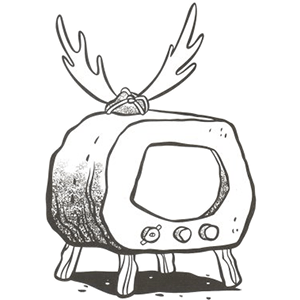
Out-of-place artifact (OOPArt) is a term coined by American naturalist and cryptozoologist Ivan T. Sanderson for an object of historical, archaeological, or paleontological interest found in a very unusual or seemingly impossible context that could challenge conventional historical chronology.
The term ‘out-of-place artifact’ is rarely used by mainstream historians or scientists. Its use is largely confined to cryptozoologists (who study big foot, the loch ness monster, and other cryptids), proponents of ancient astronaut theories, Young Earth creationists, and paranormal enthusiasts.
read more »
Posted in Philosophy, Science, Technology |
Leave a Comment »
November 13, 2012

According to ancient astronaut theories, intelligent extraterrestrial beings visited Earth during the origins or development of human cultures, technologies, and/or religions. Some of these theories propose that deities from most – if not all – religions are actually extraterrestrials, and their technologies were taken as evidence of their divine status. Ancient astronaut theories have been widely used as a plot device in science fiction (e.g. ‘2001: A Space Odyssey,’ ‘Stargate’).
Such theories have not received support within the scientific community, and have received little or no attention in peer reviewed studies from scientific journals.
read more »
Posted in Art, Philosophy, Science |
Leave a Comment »
November 13, 2012

Mechanitis is a genus of tigerwing (ithomiine) butterflies, named by Danish zoologist Johan Christian Fabricius in 1807.
They are in the brush-footed butterfly family, Nymphalidae. It has gained fame due to the metallic appearance of the cocoons of certain phenotypes.
Posted in Science |
Leave a Comment »
November 12, 2012
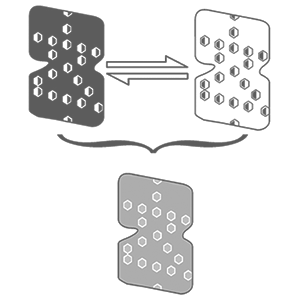
The quantum mind hypothesis proposes that classical mechanics cannot explain consciousness, while quantum mechanical phenomena, such as quantum entanglement (two particles acting in unison) and superposition (physical systems exist partly in all their particular, theoretically possible states, but, when measured, give a result corresponding to only one of the possible configurations [decoherence]), may play an important part in the brain’s function, and could form the basis of an explanation of consciousness.
However, physicist Victor Stenger characterized quantum consciousness as a ‘myth’ having ‘no scientific basis’ that ‘should take its place along with gods, unicorns and dragons.’ The main argument against the quantum mind proposition is that quantum states in the brain would decohere before they reached a spatial or temporal scale at which they could be useful for neural processing. This argument was elaborated by the physicist, Max Tegmark. Based on his calculations, Tegmark concluded that quantum systems in the brain decohere quickly and cannot control brain function.
read more »
Posted in Health, Philosophy, Science |
Leave a Comment »
November 12, 2012
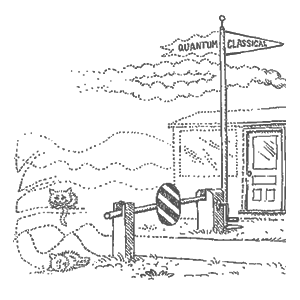
In quantum mechanics, quantum decoherence is the loss of coherence in a quantum superposition. Physical system—such as an electron—exists partly in all its particular, theoretically possible states (or, configuration of its properties) simultaneously; but, when measured, it gives a result corresponding to only one of the possible configurations. The act of observation collapses the multi-state wave function into a single-state particle from the perspective of the observer; and justifies the framework and intuition of classical physics as an acceptable approximation.
Decoherence is the mechanism by which the classical limit emerges out of a quantum starting point and it determines the location of the quantum-classical boundary. It occurs when a system interacts with its environment in a thermodynamically irreversible way. This prevents different elements in the quantum superposition of the system+environment’s wavefunction from interfering with each other. Decoherence has been a subject of active research since the 1980s.
read more »
Posted in Science, Technology |
Leave a Comment »
November 12, 2012
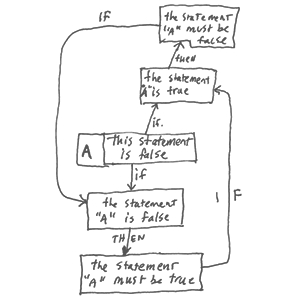
Gödel’s [ger-del] incompleteness theorems is the name given to two theorems, proved by Kurt Gödel in 1931. They are about limitations in all but the most trivial formal systems for arithmetic of mathematical interest. The theorems are very important for the philosophy of mathematics.
The idea behind the theorems is that some mathematical systems are not complete. Most people think they show that any attempt to find a complete and consistent set of axioms for all of mathematics (e.g. Hilbert’s program) is impossible.
read more »
Posted in Philosophy, Science |
1 Comment »
November 10, 2012
Teleology [tel-ee-ol-uh-jee] is a philosophical idea that things have goals or causes. It is the ‘view that developments are due to the purpose or design which is served by them.’ An example would be Aristotle’s view of nature, later adopted by the Catholic Church. The word ‘teleological’ comes from the Ancient Greek ‘telos,’ which means ‘end’ or ‘purpose.’ A simpler example would be a tool such as the clock, which is designed by man to tell the time. Whether or not an entity (man or god) is needed to cause teleology to happen is one of the most important questions.
All cultures we know of have creation stories in their religions. However, much of science operates on the principle that the natural world is self-organizing. This applies particularly to astronomy and biology, which were once explained as the action of a deity, and are now seen as natural and automatically self-organizing. Cybernetics is the basic science of self-organizing systems. The general issue of whether the original sense of teleology applies to the natural world is still a matter of controversy between religion and science.
read more »
Posted in Philosophy, Science |
1 Comment »


 The Daily Omnivore