December 19, 2010

Fibromyalgia [fahy-broh-mahy-al-juh] (latin for muscle and connective tissue pain) is a medical disorder characterized by chronic widespread pain and allodynia (pain in response to something that should not cause pain, like a light touch). It is estimated to affect 2–4% of the population, with a female to male incidence ratio of approximately 9:1, but is considered a controversial diagnosis, due to lacking scientific consensus to its cause. Not all members of the medical community consider it a disease because of a lack of abnormalities on physical examination and the absence of objective diagnostic tests.
read more »
Posted in Health, Science |
2 Comments »
December 17, 2010


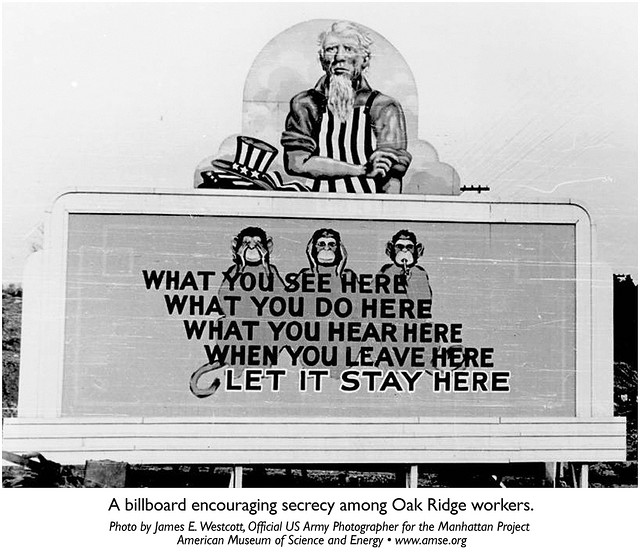
The Manhattan Project was the codename for a project conducted during World War II to develop the first atomic bomb, before the Germans or the Japanese. The project was led by the United States, and included participation from the United Kingdom and Canada. From 1942 to 1946 the project was under the command of Major General Leslie R. Groves, Jr. of the U.S. Army Corps of Engineers. Robert Oppenheimer was the scientific director.
read more »
Posted in Science, Technology, War |
Leave a Comment »
December 16, 2010
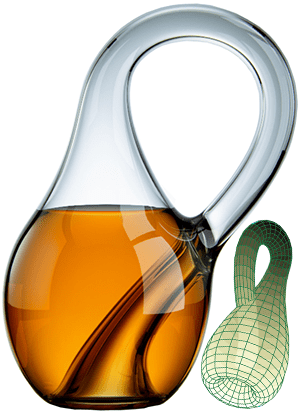
In mathematics, the Klein bottle is a geometrical object, named after the German mathematician Felix Klein. He described it in 1882, and named it Klein’sche Fläche (Klein surface). Like the Möbius strip, it only has one surface. Mathematicians call this a non-orientable surface. Klein bottles only exist in four-dimensional space, but a model of a Klein bottle can be made in 3D.
This model is different from the original because at some point the shape touches itself. In 3D, part of the shape is ‘inside’ the rest. Because the surface is non-orientable, there is no ‘inside’ or ‘outside.’ This means that if a liquid were filled ‘in the bottle,’ it would run down its surface. This may not be true for the 3D models of the bottle.
Posted in Art, Science, Technology |
Leave a Comment »
December 16, 2010

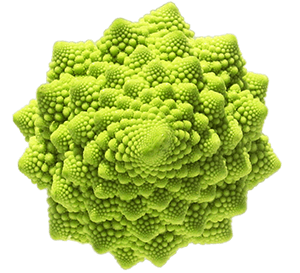
Many mathematicians derive aesthetic pleasure from their work, and from mathematics in general. They express this pleasure by describing mathematics as beautiful. Sometimes mathematicians describe mathematics as an art form or, at a minimum, as a creative activity. Hungarian mathematician Paul Erdős expressed his views on the ineffability of mathematics when he said, ‘Why are numbers beautiful? It’s like asking why is Beethoven’s Ninth Symphony beautiful. If you don’t see why, someone can’t tell you. I know numbers are beautiful. If they aren’t beautiful, nothing is.’
Comparisons are often made with music and poetry. British mathematician Bertrand Russell expressed his sense of mathematical beauty in these words: ‘Mathematics, rightly viewed, possesses not only truth, but supreme beauty — a beauty cold and austere, like that of sculpture, without appeal to any part of our weaker nature, without the gorgeous trappings of painting or music, yet sublimely pure, and capable of a stern perfection such as only the greatest art can show. The true spirit of delight, the exaltation, the sense of being more than Man, which is the touchstone of the highest excellence, is to be found in mathematics as surely as poetry.’
Posted in Art, Science |
Leave a Comment »
December 16, 2010

The Möbius strip [mo-bee-uhs] is a surface with only one side and only one edge. It can be made using a strip of paper by gluing the two ends together with a half-twist. The twisting is possible in two directions; so there are two different (mirror-image) Möbius strips.
The Möbius strip was discovered independently by the German mathematicians August Ferdinand Möbius and Johann Benedict Listing in 1858. The Mobius strip is known for its unusual properties. A bug crawling along the center line of the loop would go around twice before coming back to its starting point. Cutting along the center line of the loop creates one longer band, not two.
Posted in Art, Science |
Leave a Comment »
December 16, 2010

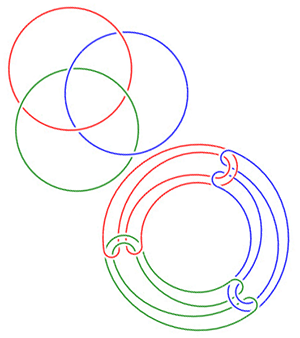
Topology [tuh-pol-uh-jee] is the study of how spaces are organized, how the objects are structured in terms of position. It also studies how spaces are connected. Topology has sometimes been called rubber-sheet geometry, because in topology there is no difference between a circle and a square (a circle made out of a rubber band can be stretched into a square) but there is a difference between a circle and a figure eight (you cannot stretch a figure eight into a circle without tearing).
The spaces studied in topology are called topological spaces. They vary from familiar manifolds to some very exotic constructions.
read more »
Posted in Science |
Leave a Comment »
December 15, 2010
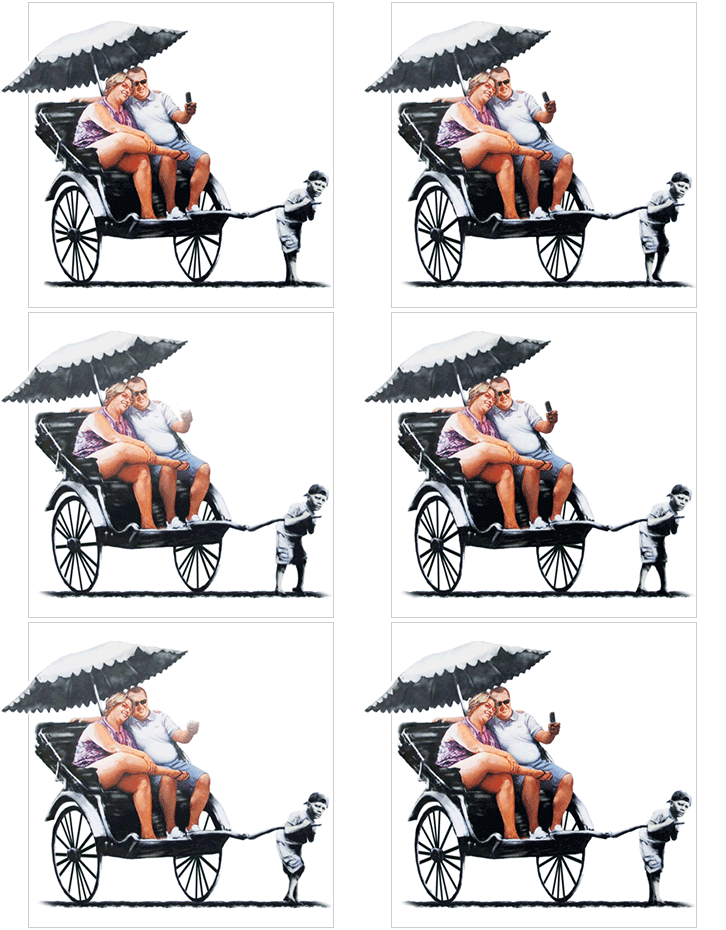
The Gini coefficient is a measure of statistical dispersion developed by the Italian statistician Corrado Gini in 1912. It has found application in the study of inequalities in disciplines as diverse as economics, health science, ecology, chemistry and engineering. It is commonly used as a measure of inequality of income or wealth. Worldwide, on a scale of 0 (total equality) to 1 (total inequality) Gini coefficients for income range from approximately 0.23 (Sweden) to 0.70 (Namibia) although not every country has been assessed.
Posted in Politics, Science, World |
Leave a Comment »
December 14, 2010

Kangaroo care is a technique shown to increase survivability rates in newborns wherein the infant is held, skin-to-skin, with an adult. Kangaroo care for pre-term infants may be restricted to a few hours per day, but if they are medically stable that time may be extended. Some parents may keep their babies in-arms for many hours per day. Kangaroo care, named for the similarity to how certain marsupials carry their young, was initially developed to care for preterm infants in areas where incubators are either unavailable or unreliable.
Posted in Health, Science |
Leave a Comment »
December 14, 2010
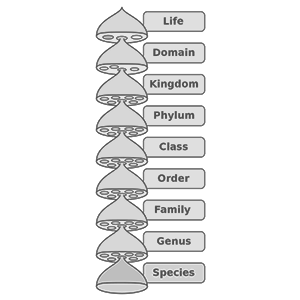
Taxonomy [tak-son-uh-mee] is the practice and science of classification. The word finds its roots in the Greek ‘taxis’ (meaning ‘order’ or ‘arrangement’) and ‘nomos’ (meaning ‘law’ or ‘science’).
Taxonomies are typically organized by generalization-specialization relationships, or less formally, parent-child relationships: the subtype has the same properties, behaviors, and constraints as the supertype plus one or more. For example: car is a subtype of vehicle, so any car is also a vehicle, but not every vehicle is a car.
Posted in Education, Language, Science |
Leave a Comment »
December 14, 2010

Getting Things Done (GTD) is an organizational method created by David Allen, described in a book of the same name. The Getting Things Done method rests on the principle that a person needs to move tasks out of the mind by recording them externally. That way, the mind is freed from the job of remembering everything that needs to be done, and can concentrate on actually performing those tasks.
read more »
Posted in Money, Science |
Leave a Comment »
December 14, 2010

Emerging adulthood is a phase of the life span between adolescence and full-fledged adulthood, proposed by Clark University professor, Jeffrey Arnett in a 2000 article in the American Psychologist. It primarily applies to young adults in developed countries who do not have children or begin a lifelong career in their early 20s. That emerging adulthood is a new demographic is contentious, as some believe that twenty-somethings have always struggled with ‘identity exploration, instability, self-focus, and feeling in-between.
read more »
Posted in Health, Science |
Leave a Comment »
December 14, 2010
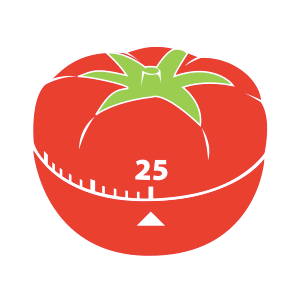
The Pomodoro Technique is a time management method developed in the late 1980s. The technique uses a timer to break down periods of work into 25-minute intervals called ‘pomodoros’ separated by breaks. The method is based on the idea that frequent breaks can improve mental agility, and seeks to provide an effective response to time as an anxiety-provoking state.
There are five basic steps to implementing the technique: 1) Decide on the task to be done; 2) Set the (timer) to 25 minutes; 3) Work on the task until the timer rings; record with an x; 4) Take a short break (5 minutes); and 5) Every four “pomodoros” take a longer break (15–20 minutes). The Pomodoro Technique is named after the tomato-shaped kitchen timer that was first used by technique creator Francesco Cirillo when he was a university student (Pomodoro is Italian for tomato).
Posted in Money, Science |
Leave a Comment »




 The Daily Omnivore