March 16, 2011
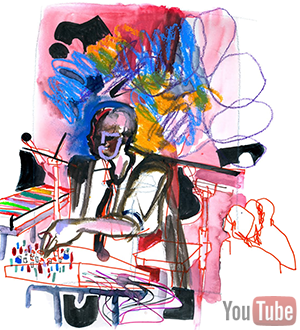
Matmos is an experimental electronic music duo originally from San Francisco but now residing in Baltimore signed to the Matador Records label. M. C. Schmidt and Drew Daniel are the core members, but they frequently include other artists on their records and in their performances, including J Lesser.
Much of their work could be classified as a pop version of the musique concrète genre (a forbearer of modern electronic music). The name Matmos refers to the seething lake of evil slime beneath the city Sogo in the 1968 film Barbarella.
Posted in Art, Money, Technology |
Leave a Comment »
March 16, 2011

4chan is an English-language imageboard website. Its users have been responsible for the formation or popularization of several Internet memes such as lolcats, Rickrolling, ‘Chocolate Rain,’ Pedobear, and many others. The site’s ‘Random’ board is by far its most popular and notorious feature. Known as ‘/b/,’ there are very minimal rules on posted content. The site’s Anonymous community and culture have often provoked media attention. The Guardian once summarized the 4chan community as ‘lunatic, juvenile… brilliant, ridiculous and alarming.’
4chan was started in the bedroom of a 15-year old student from New York City who posts as ‘moot.’ He intended the site to be a place to discuss Japanese comics and anime, an American counterpart to the popular Japanese Futaba Channel (‘2chan’) imageboard. The site has had at least one employee, a programmer whom moot met via on-line Tetris. All other moderators are volunteers. 4chan is one of the Internet’s most trafficked free imageboards and financing has often been problematic.
Posted in Art, Humor, Technology |
Leave a Comment »
March 16, 2011


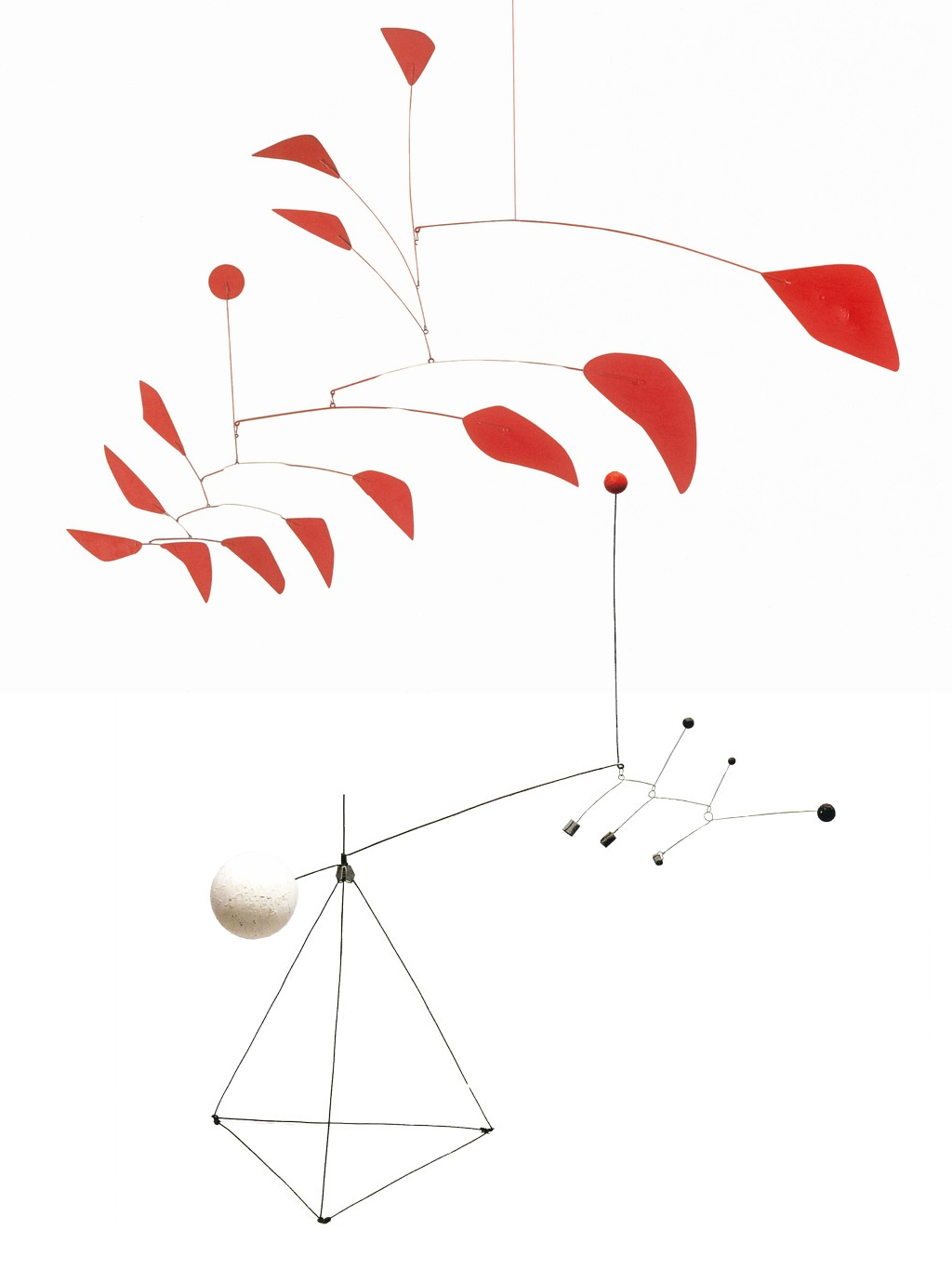
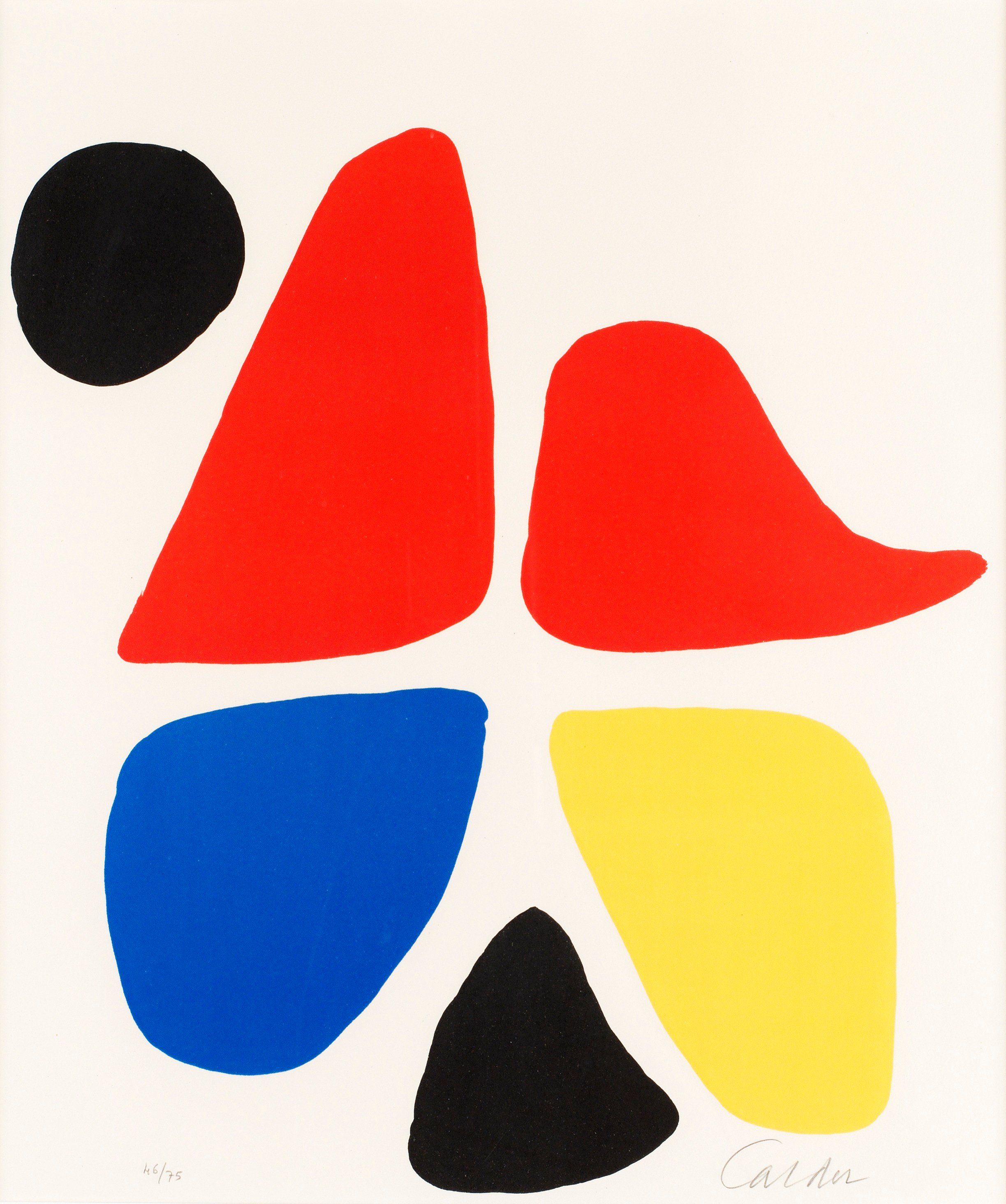
Alexander Calder [kawl-der] (1898 – 1976) was an American sculptor and artist most famous for inventing the mobile.
In addition to mobile and stabile sculpture, Alexander Calder also created paintings, lithographs, toys, tapestry, jewelry and household objects.
read more »
Posted in Art, Money, Technology |
Leave a Comment »
March 15, 2011

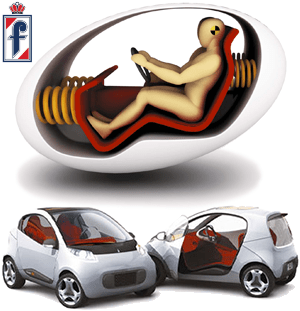
Pininfarina is an Italian car design firm and coachbuilder in Cambiano, Italy. Founded in 1930 by automobile designer and builder Battista ‘Pinin’ Farina, the company has been employed by a wide variety of high-end automobile manufacturers, including Ferrari, Maserati, Rolls-Royce, Cadillac, Jaguar, Volvo, Alfa Romeo, and Lancia. It also has designed trams in France, high-speed trains in Holland, and trolleys in the USA.
read more »
Posted in Art, Money, Technology |
Leave a Comment »
March 15, 2011

Cassini–Huygens is a joint NASA/ European Space Agency (ESA) spacecraft mission currently studying the planet Saturn and its many natural satellites. The spacecraft consists of two main elements: the NASA-designed and -constructed Cassini orbiter, named for the Italian-French astronomer Giovanni Domenico Cassini, and the ESA-developed Huygens probe, named for the Dutch astronomer, mathematician and physicist Christiaan Huygens. Cassini is the fourth space probe to visit Saturn and the first to enter orbit.
The complete spacecraft was launched in 1997 and entered into orbit around Saturn in 2004. Shortly after arrival, the Huygens probe separated from the orbiter and headed for Saturn’s moon Titan. In 2005, it descended into Titan’s atmosphere, and downward to the surface, radioing scientific information back to the Earth by telemetry. This was the first landing in the outer solar system.
Posted in Science, Technology |
Leave a Comment »
March 14, 2011
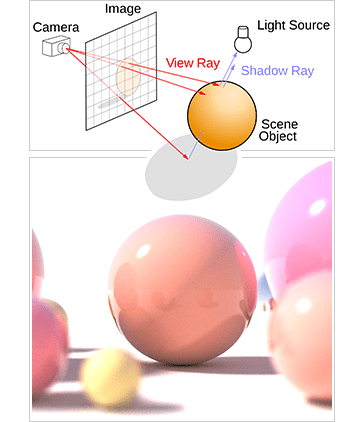
In computer graphics, ray tracing is a technique for generating an image by tracing the path of light through pixels in an image plane and simulating the effects of its encounters with virtual objects. The technique is capable of producing a very high degree of visual realism, usually higher than that of typical scanline rendering methods, but at a greater computational cost.
This makes ray tracing best suited for applications where the image can be rendered slowly ahead of time, such as in still images and film and television special effects, and more poorly suited for real-time applications like video games where speed is critical.Ray tracing is capable of simulating a wide variety of optical effects, such as reflection and refraction, scattering, and chromatic aberration.
Posted in Art, Technology |
Leave a Comment »
March 14, 2011
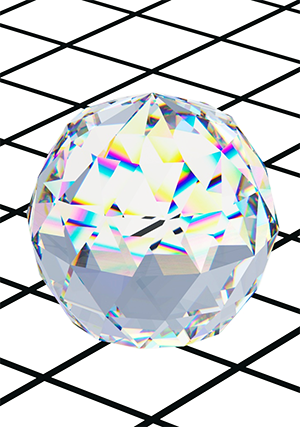
Rendering is the process of generating an image from a model by means of computer programs. Renders contain geometry, viewpoint, texture, lighting, and shading information as a description of a virtual scene. The term ‘rendering’ may be by analogy with an ‘artist’s rendering’ of a scene. Rendering is one of the major sub-topics of 3D computer graphics, and in practice always connected to the others. In the graphics pipeline, it is the last major step, giving the final appearance to the models and animation.
Rendering may be done slowly, as in pre-rendering, or in real time. Pre-rendering is a computationally intensive process that is typically used for movie creation, while real-time rendering is often done for 3D video games which rely on the use of graphics cards with 3D hardware accelerators.
Posted in Art, Language, Technology |
Leave a Comment »
March 14, 2011

The Blue Brain Project is an attempt to create a synthetic brain by reverse-engineering the mammalian brain down to the molecular level. The aim of the project, founded in 2005 by the Brain and Mind Institute of the École Polytechnique in Lausanne, Switzerland, is to study the brain’s architectural and functional principles, and is headed by the Institute’s director, Henry Markram. Using an IBM Blue Gene supercomputer running Michael Hines’s NEURON software, the simulation does not consist simply of an artificial neural network, but involves a biologically realistic model of neurons.
It is hoped that it will eventually shed light on the nature of consciousness. A longer term goal is to build a detailed, functional simulation of the physiological processes in the human brain: ‘It is not impossible to build a human brain and we can do it in 10 years,” Markram said at the 2009 TED conference in Oxford. In a BBC World Service interview he said: ‘If we build it correctly it should speak and have an intelligence and behave very much as a human does.’
Posted in Philosophy, Science, Technology |
Leave a Comment »
March 14, 2011
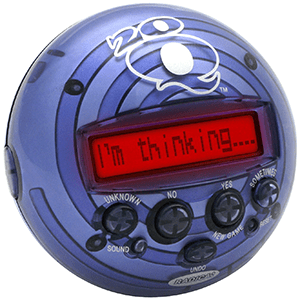
20Q is a computerized game of twenty questions that began as an experiment in artificial intelligence. It was invented by Robin Burgener. The game is based on the spoken parlor game known as twenty questions. 20Q asks the player to think of something and will then try to guess what they are thinking of with twenty yes-or-no questions.
If it fails to guess in 20 questions, it will ask an additional 5 questions. If it fails to guess even with 25 questions, the player is declared the winner.
read more »
Posted in Games, Technology |
Leave a Comment »
March 14, 2011
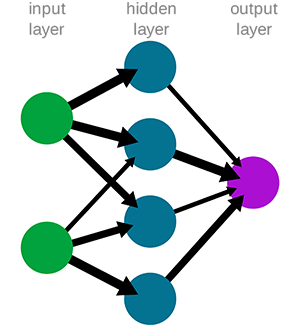
A neural network is an artificial brain (made of artificial neuron cells). It is modeled after the human brain. Several computing cells work in parallel to produce a result. Neural networks are able to learn by themselves, in comparison to normal computers, which cannot do anything for which they are not programmed.
Artificial neural networks are composed of interconnecting artificial neurons (programming constructs that mimic the properties of biological neurons). Artificial neural networks are used to gain an understanding of biological neural networks, and for solving artificial intelligence problems.
Posted in Technology |
Leave a Comment »
March 14, 2011


Computer poker players are computer programs designed to play the game of poker against human opponents or other computer opponents. They are commonly referred to as pokerbots or just simply bots.
These bots or computer programs are used often in online poker situations as either legitimate opponents for humans players or a form of cheating. Cardrooms forbid the use of bots although the level of enforcement from site operators varies considerably.
read more »
Posted in Games, Money, Technology |
Leave a Comment »
March 14, 2011

Polaris is a 2007 Texas hold ’em poker playing program developed by the computer poker research group at the University of Alberta. The program requires little computational power at match time, so it is run on an Apple MacBook Pro during competitions. It currently plays only heads-up (two player) Limit Texas hold’em. The University of Alberta has been developing ‘pokerbots’ since 1997.
read more »
Posted in Games, Money, Technology |
Leave a Comment »