March 17, 2011

The term foobar is used as a placeholder name in computer programming. It is used to name entities such as variables, functions, and commands whose purpose is unimportant and serve only to demonstrate a concept. The words themselves have no meaning in this usage. Foobar is sometimes used alone; ‘foo,’ ‘bar,’ and ‘baz’ are sometimes used in that order, when multiple entities are needed.
The origins of the terms are not known with certainty, and several anecdotal theories have been advanced to identify them. Foobar may have derived from the military acronym FUBAR (fucked up beyond all recognition) and gained popularity because it is pronounced the same. In this meaning it also can derive from the German word ‘furchtbar,’ which means awful and terrible and described the circumstances of the Second World War.
Posted in Language, Technology |
Leave a Comment »
March 17, 2011

Tuángòu [twangoo], which loosely translates as ‘team buying’ or ‘group buying’ (also known as store mobbing), is a recently developed shopping strategy originating in the People’s Republic of China.
Several people – sometimes friends, but possibly strangers connected over the internet – agree to approach a vendor of a specific product in order to haggle with the proprietor as a group in order to get discounts. The entire group agrees to purchase the same item. The shoppers benefit by paying less, and the business benefits by selling multiple items at once.
Posted in Money, Technology, World |
Leave a Comment »
March 17, 2011

Crowdsourcing is the act of outsourcing tasks, traditionally performed by an employee or contractor, to an undefined, large group of people or community (a ‘crowd’), through an open call. Jeff Howe, one of first authors to employ the term, established that the concept depends essentially on the fact that because it is an open call to an undefined group of people, it gathers those who are most fit to perform tasks, solve complex problems and contribute with the most relevant and fresh ideas.
For example, the public may be invited to develop a new technology, carry out a design task (community-based design and distributed participatory design), refine or carry out the steps of an algorithm (human-based computation), or help capture, systematize or analyze large amounts of data (citizen science). The term has become popular with businesses, authors, and journalists as shorthand for the trend of leveraging the mass collaboration enabled by Web 2.0 technologies to achieve business goals.
Posted in Language, Money, Technology |
Leave a Comment »
March 17, 2011

Kickstarter is an online threshold pledge system for funding creative projects, from indie film and music to journalism to consumer products, and food-related projects. One of a new set of fundraising platforms dubbed ‘crowdfunding,’ Kickstarter facilitates gathering monetary resources from the general public, a model which circumvents many traditional avenues of investment. It was founded in 2009 by Perry Chen, Yancey Strickler, and Charles Adler in Manhattan. Project owners choose a deadline and a target minimum of funds to raise. If the chosen target is not gathered by the deadline, no funds are collected (a provision point mechanism).
Money pledged by donors is collected using Amazon Payments, and initiating projects requires a US bank account. Kickstarter turns a profit by claiming 5% of the funds raised; Amazon takes an additional percentage (around two). Unlike many forums for fundraising or investment, Kickstarter claims no ownership over the projects and the work they produce. However, projects launched on the site are permanently archived and accessible to the public. After funding is completed, projects and uploaded media cannot be edited or removed from the site.
Posted in Art, Money, Technology |
Leave a Comment »
March 17, 2011

Freemium is a business model that works by offering a basic product or service free of charge (such as software, web services or other) while charging a premium for advanced features, functionality, or related products and services. The concept was articulated by venture capitalist Fred Wilson in 2006: ‘Give your service away for free, possibly ad supported but maybe not, acquire a lot of customers very efficiently through word of mouth, referral networks, organic search marketing, etc., then offer premium priced value added services or an enhanced version of your service to your customer base.’
After describing the business model, Wilson asked for suggestions as to what to call it. Within a matter of hours, more than 30 name suggestions were given by his blog readers. One such suggestion came from Jarid Lukin of Alacra, one of Wilson’s portfolio companies. Lukin coined the term ‘freemium,’ and Wilson and his audience adopted it for the business model.
Posted in Language, Money, Technology |
Leave a Comment »
March 17, 2011

A paywall blocks access to a webpage with a screen requiring payment. Web sites that use them include some owned by periodical publications. In 2002 the Financial Times started charging for Web access to published stories. The Wall Street Journal has almost one million paying online readers, which generates about $65 million a year.
Utilities to circumvent paywalls are available. RefSpoof for Mozilla Firefox spoofs the referrer to Google so that multiple ‘first click free’ links can be performed. BreakthePaywall adds an option to Internet Explorer’s context menu which uses various methods (referrer and user-agent spoofing, Cookie deletion, etc.).
Posted in Language, Money, Technology |
Leave a Comment »
March 17, 2011

Sukey is British organization formed to counteract the police tactics of kettling, by co-ordinating information electronically and transmitting it to the protesters, allowing them to avoid the police kettle. ‘Sukey,’ is British slang for the person who takes the kettle off the stove (which is itself derived from the nursery rhyme: ‘Polly Put the Kettle On.’
The organization was founded by the students Sam Carlisle and Sam Gaus during the occupation by students at University College London. The system was first used for a London demonstration against the proposed abolition of the Education Maintenance Allowance (EMA) on 29 January 2011.
Posted in Politics, Technology |
Leave a Comment »
March 16, 2011

Phase-change memory (PCM) is a type of computer memory which exploits the unique behavior of chalcogenide glass; with the application of heat produced by the passage of an electric current, this material can be ‘switched’ between two states, crystalline and amorphous.
Recent versions can achieve two additional distinct states, effectively doubling its storage capacity. PCM is one of a number of new memory technologies competing in the non-volatile role with the almost universal flash memory, but is faster and uses far less power than the latter. Samsung last year announced a 512Mbit PCM RAM chip for use in mobile handsets.
Posted in Money, Technology |
Leave a Comment »
March 16, 2011

The China Syndrome is a term coined by an American physicist in 1971 to describe the result of a severe nuclear meltdown in which molten reactor core components penetrate their containment vessel and building. The term is misleading, since molten material from such an event could not melt through the crust of the Earth and reach China.
Nuclear power plants ordered during the late 1960s raised safety questions and created fears that a severe reactor accident could release large quantities of radioactive material into the environment. In the early 1970s, a controversy arose regarding the ability of emergency cooling systems to prevent a core meltdown, which might lead to the so-called China Syndrome.
Posted in Politics, Technology |
Leave a Comment »
March 16, 2011

A nuclear meltdown is an informal term for a severe nuclear reactor accident that results in core damage from overheating. The term is not officially defined by the International Atomic Energy Agency. Meltdown conditions can be created when system failures lead to temperatures and heat generation that exceed cooling capacity to the extent that the nuclear fuel assemblies overheat and melt, either partially or completely.
A meltdown is considered very serious because of the potential that highly intense radioactive materials with long half-lives and lethal threat could be released into the environment. The effects of a nuclear meltdown depend on the safety features designed into a reactor. A modern reactor is designed both to make a meltdown unlikely, and to contain one should it occur.
read more »
Posted in Language, Money, Technology |
Leave a Comment »
March 16, 2011

Joel Thomas Zimmerman (b. 1981), better known by his stage name deadmau5 (pronounced ‘dead mouse’), is a Canadian progressive, electro, and house producer based in Toronto, Ontario. His debut album, ‘Get Scraped,’ was released in 2006. He is known for often performing in a titular costume head which he originally created while learning to use a 3D program, which resembles a mouse head.
Posted in Art, Money, Technology |
Leave a Comment »
March 16, 2011


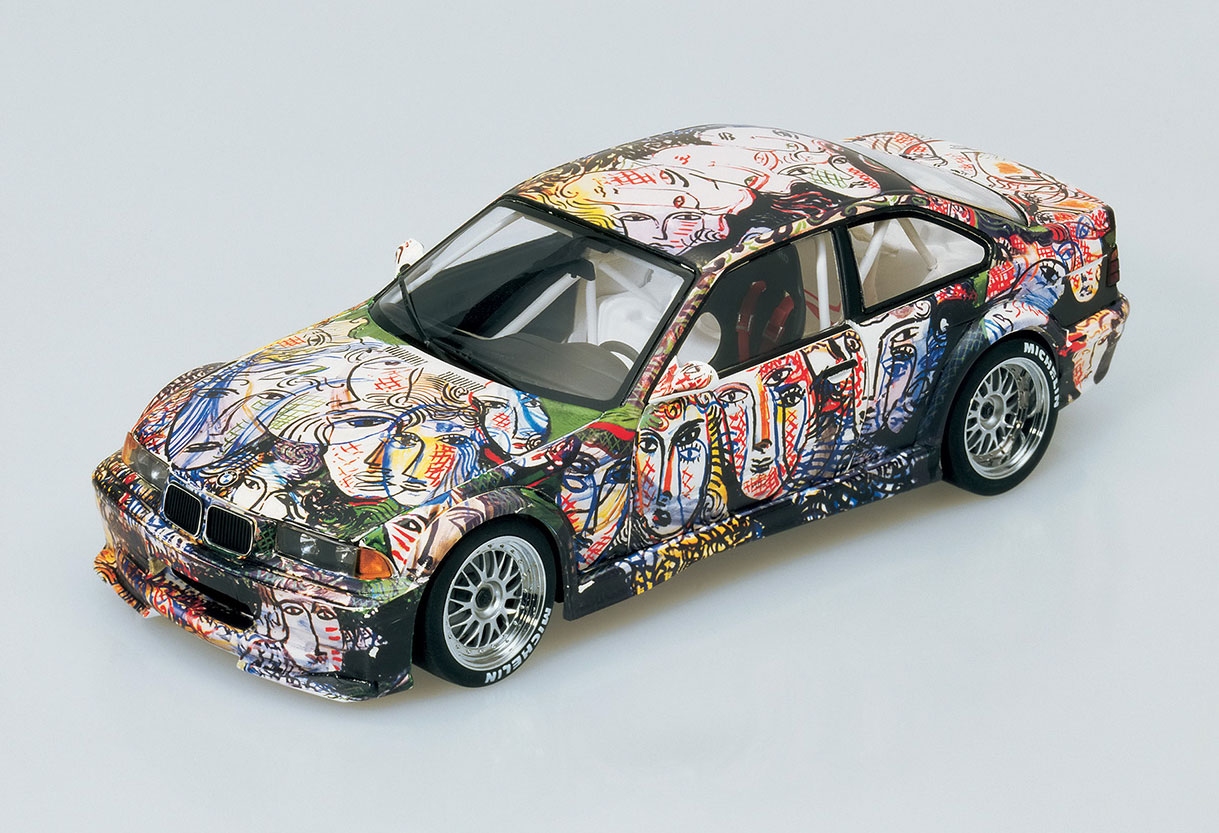
The BMW Art Car Project was introduced by the French racecar driver and auctioneer Hervé Poulain, who wanted to invite an artist to create a canvas on an automobile. It was in 1975, when Poulain commissioned American artist and friend Alexander Calder to paint the first BMW Art Car.
This first example would be a BMW 3.0 CSL which Poulain himself would race in the 1975 Le Mans endurance race. Since Calder’s work of art, many other renowned artists throughout the world have created BMW Art Cars, including Roy Lichtenstein, Andy Warhol, and Jeff Koons.
Posted in Art, Money, Technology |
1 Comment »