January 24, 2011
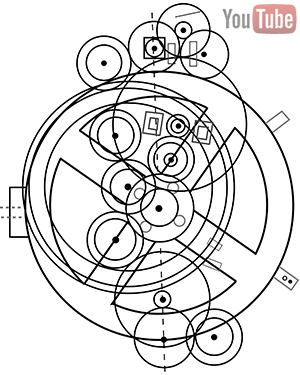
The Antikythera [an-ti-ki-theer-uh] mechanism is an incredibly old mechanical calculator, often described as the first mechanical computer. It was discovered in 1901 in a shipwreck off the coast of Antikythera, Greece. The device was used to figure out the positions of stars in the sky. It was probably made in about 150-100 BC, and is now on display in the Bronze Collection of the National Archaeological Museum of Athens.
Its significance and complexity were not understood until decades after its discovery. The degree of mechanical sophistication is comparable to a 19th century Swiss clock. Technological artifacts of similar complexity and workmanship did not reappear until the 14th century, when mechanical astronomical clocks were built in Europe.
Posted in Technology |
Leave a Comment »
January 21, 2011

A ekranoplan, or ground effect vehicle (GEV), is a craft that attains level flight near the surface of the Earth, made possible by a cushion of high-pressure air created by the aerodynamic interaction between the wings and the surface known as ground effect. Also known as a wing-in-ground-effect (WIG) vehicle, flarecraft, sea skimmer, SkimMachine, or wing-in-surface-effect ship, a GEV can be seen as a transition between a hovercraft and an aircraft. However, the International Maritime Organization has classified the GEV as a ship.
Posted in Technology |
Leave a Comment »
January 21, 2011

Pantone is a corporation headquartered in Carlstadt, New Jersey, best known for its Pantone Matching System (PMS), a proprietary color space used in a variety of industries, primarily printing, though sometimes in the manufacture of colored paint, fabric, and plastics. The idea behind the PMS is to allow designers to ‘color match’ specific colors when a design enters production stage—regardless of the equipment used to produce the color.
The company provides Pantone Guides, which consist of a large number of small (approximately 6×2 inches or 15×5 cm) thin cardboard sheets, printed on one side with a series of related color swatches and then bound into a small ‘fan deck.’ Pantone recommends that PMS Color Guides be purchased annually as their inks become more yellow over time. Color variance also occurs within editions based on the paper stock used (coated, matte or uncoated), while interedition color variance occurs when there are changes to the specific paper stock used.
Posted in Art, Money, Technology |
Leave a Comment »
January 21, 2011

The Technics SL-1200 are a series of turntables manufactured since October 1972 by Matsushita under the brand name of Technics. Originally released as a high fidelity consumer record player, it quickly became adopted among radio and club disc jockeys. Since its release in 1978, SL-1200MK2 and its successors have been the most common turntable for DJing and scratching.
The MK2 presented several improvements, including to the motor and casing. Since 1972, more than 3 million units have been sold. It is widely regarded as one of the most durable and reliable turntables ever produced. Many of the models manufactured in the 1970s are still in heavy use. In the autumn of 2010, Panasonic announced that the series was to be discontinued due to marketplace conditions.
read more »
Posted in Art, Technology |
Leave a Comment »
January 20, 2011


McIntosh Laboratory is a manufacturer of high-end audio equipment based in Binghamton, New York. Founded in 1949 by Frank McIntosh, the company is noted for its extremely high build quality and excellent technical specifications. The ‘classic’ vacuum tube components of the 1960s include the MC275 power amplifier, the C22 preamplifier, and the MR67 tuner. Later McIntosh solid state power amps are known for their distinctive blue colored meters. In 1946, McIntosh, a design consultant for broadcast and TV stations, hired Gordon Gow to help him design a high power, low distortion amplifier needed for his clients. This amplifier would become the 50W-1. It included McIntosh’s first patented circuit, the Unity Coupled Circuit, still used by current products.
McIntosh amplifiers were used at the Woodstock Music Festival in 1969, and the Grateful Dead’s ‘Wall of Sound’ reputedly utilized forty-eight 300-watt per channel McIntosh model MC 2300 solid state amplifiers for a total of 28,800 watts of continuous power. The company was purchased by Japanese car audio maker Clarion in 1990. In a speech shortly after the purchase, Clarion president Yutaka Oyamada told McIntosh employees, ‘…we like McIntosh as it is, and we have no intention of changing what has made it so successful.’ In 2003, McIntosh was sold by Clarion to D&M Holdings, also of Japan.
Posted in Art, Technology |
Leave a Comment »
January 19, 2011

Percussive maintenance, also known as percussion therapy or a technical tap, is a term used to describe the malediction of an ill-behaved device to make it work, that is to say, swear at it and hit it. The origins and practice of the term are unknown, although some suggest the act became commonplace with the introduction of vacuum tube electronics. The term is a play on ‘preventive maintenance.’
Posted in Humor, Language, Technology |
Leave a Comment »
January 19, 2011


Desert Bus a minigame found in the 1999 Sega CD title: ‘Penn & Teller’s Smoke and Mirrors.’ The objective of the game is to drive a bus from Tucson, Arizona to Las Vegas, Nevada in real time at a maximum speed of 45mph. The feat requires 8 hours of continuous play to complete, since the game cannot be paused. Penn Jillette commented in his radio show that the overly realistic nature of the game was in response to Janet Reno and the controversy surrounding violent video games at the time.
read more »
Posted in Games, Humor, Technology |
Leave a Comment »
January 19, 2011


Lithography is a method for printing using a stone or metal plate with a completely smooth surface. It was invented in 1796 by Bavarian author Alois Senefelder as a low-cost method of publishing theatrical works. His method used an image drawn in wax or other oily substance applied to a stone plate as the medium to transfer ink to the paper. In modern times, the image is often made of polymer applied to a flexible aluminum plate. The flat surface of the plate or stone is slightly roughened, or etched, and divided into hydrophilic (water-loving) regions that accept a film of water and repel the greasy ink, and hydrophobic regions which repel water and accept ink. This process is different from gravure or intaglio printing where a plate is engraved, etched or stippled to make cavities to contain the printing ink, or woodblock printing and letterpress where ink is applied to the raised surfaces of letters or images.
In the early days of lithography, a smooth piece of limestone was used. After the oil-based image was put on the surface, a solution of gum arabic in water was applied, the gum sticking only to the non-oily surface. During printing, water adhered to the gum arabic surfaces and avoided the oily parts, while the oily ink used for printing did the opposite. Chromolithography (color lithography) was invented in 1837; by using more than one stone, different colors can be added to the same picture. Each color needs a separate stone. The great posters of such artists as Alphonse Mucha and Toulouse-Lautrec are made like this. Complicated graphics may need twenty or more stones.
Posted in Art, Technology |
Leave a Comment »
January 18, 2011

The YikeBike mini-farthing is a folding electric bicycle. It weighs 9.8 kilograms (22 lb) and when folded, it is small enough to fit in a backpack. The YikeBike was invented by Grant Ryan and designed by a team in New Zealand over 5 years. It is the smallest and lightest electric folding bicycle in the world and retails for $3595 US.
The vehicle has no chain pedal, gear box, mechanical brake, cables or levers. These functions are provided by a 1.2 kW electric motor and controller. The YikeBike has electronic anti-skid brakes. There are also built-in lights, indicators and brake lights for safety. Top speed is 15 miles per hour, and the bike can travel about six miles per charge.
Posted in Money, Technology, World |
Leave a Comment »
January 18, 2011

Daiwa House is Japans largest homebuilder, specializing in prefabricated houses. It was founded in 1955 in Osaka. The Emergency Disaster Vehicle o1 (EDV-01) is a Daiwa concept habitat. It is an easily transported, self-contained shelter and amenities to be deployed during a disaster.
Once in place, the top portion of the EDV expands, doubling the space. This second level is a living area with beds and a desk. The first floor is contains the necessities: a water-free toilet, functional kitchen, refrigerator, and a bathroom with shower. The unit is completely self-sufficient, using roof-mounted solar panels, ambient water-vapor condensers, and fuel cells to provide a livable space. The EDV-01 also generates its own fuel, hydrogen, through electrolysis.
Posted in Money, Technology, World |
Leave a Comment »
January 18, 2011

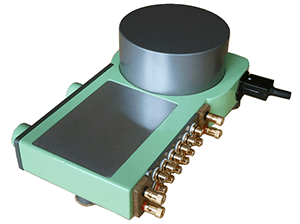
Gainclone or chipamp is a term commonly used to describe a type of audio amplifier made by do-it-yourselfers. The Gainclone is probably the most commonly built and well-known amplifier project amongst hobbyists. It is simple to build and involves only a few readily accessible, inexpensive parts.
In 1999, 47 Labs introduced the Gaincard amplifier, which had fewer parts, less capacitance and simpler construction than anything preceding it. The DIY community started building replicas or ‘clones’ of the Gaincard using integrated circuits from National Semiconductor and other manufacturers. Most designs are very effective and produce high quality sound, even though some audiophiles consider chip-based amplifiers to be inferior to their discrete counterparts.
Posted in Art, Money, Technology |
Leave a Comment »
January 18, 2011


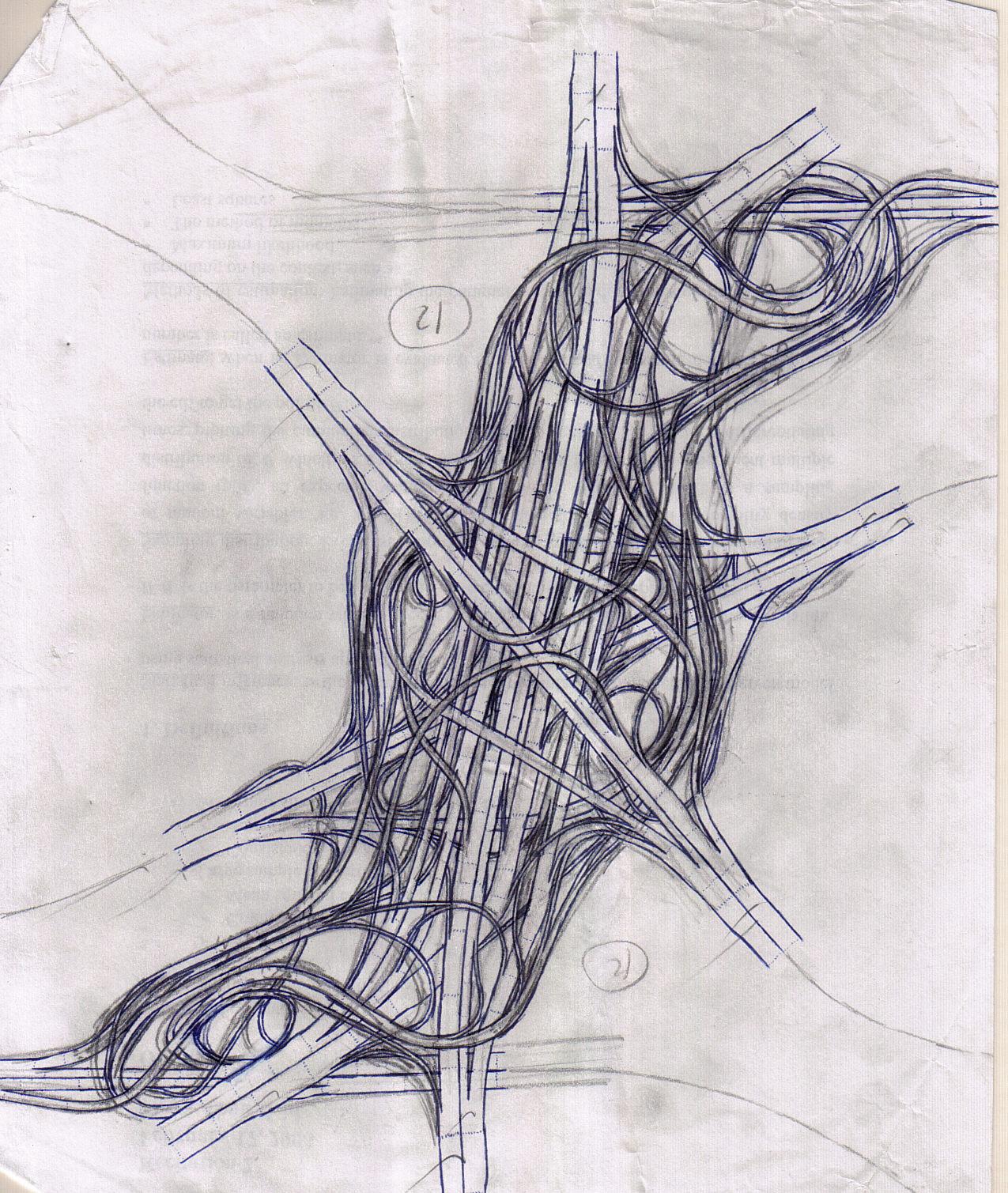
Spaghetti Junction is a nickname sometimes given to a complicated or massively intertwined road traffic interchange that resembles a plate of spaghetti. The term is believed to have been coined by a journalist at the Birmingham Evening Mail in the 1970s to refer to the Gravelly Hill Interchange on the M6 motorway in Birmingham, United Kingdom. Since then many complex interchanges around the world have acquired the nickname.
Posted in Humor, Language, Technology |
Leave a Comment »