January 11, 2011

Tux is a penguin character and the official mascot of the Linux operating system originally created as an entry to a Linux logo competition. The concept of the Linux mascot being a penguin came from Linus Torvalds, the creator of Linux. Tux was created by Larry Ewing in 1996 after an initial suggestion made by Alan Cox and further refined by Linus Torvalds on the Linux kernel mailing list.
Posted in Technology |
Leave a Comment »
January 11, 2011

Fear, uncertainty and doubt (FUD) refers to a tactic of rhetoric and fallacy used in sales, marketing, public relations, politics and propaganda. FUD is generally a strategic attempt to influence public perception by disseminating negative and dubious/false information designed to undermine the credibility of their beliefs. The term originated in the computer hardware industry where IBM and later Microsoft were accused of using FUD tactics against their competitors, particularly open source software like Linux.
An individual firm, for example, might use FUD to invite unfavorable opinions and speculation about a competitor’s product; to increase the general estimation of switching costs among current customers; or to maintain leverage over a current business partner who could potentially become a rival.
Posted in Money, Politics, Technology |
Leave a Comment »
January 11, 2011

The Iron Ring is a ring worn by many engineers in Canada as a symbol and reminder of the obligations and ethics associated with the profession. Obtaining the ring is an optional endeavour, as it is not a prerequisite to becoming a Professional Engineer. The ring is given in a ceremony known as The Ritual of the Calling of an Engineer, administered by a body called The Corporation of the Seven Wardens. The first set of rings were conferred at the University of Toronto in 1925.
read more »
Posted in Philosophy, Technology |
Leave a Comment »
January 10, 2011
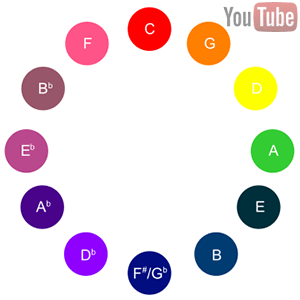
The clavier [kluh-veer] à [ah] lumières [ly-myer] keyboard with lights) was a musical instrument invented by Russian composer, Alexander Scriabin for use in his work Prometheus: Poem of Fire. However, only one version of this instrument was constructed, for the performance in New York in 1915. The instrument’s keyboard lights up as synesthetic system, specified in the score.
Scriabin was a friend of Nikolai Rimsky-Korsakov, who was a synesthete (someone with a neurologically-based condition in which stimulation of one sensory or cognitive pathway leads to automatic, involuntary experiences in a second sensory or cognitive pathway). Scriabin was also heavily influenced by Theosophy, which had its own different system of associating colors and pitches.
Posted in Art, Technology |
Leave a Comment »
January 10, 2011

Infrared grills work by igniting propane or natural gas to superheat a ceramic tile, causing it to emit infrared radiation. The thermal radiation is generated when heat from the movement of charged particles within atoms is converted to electromagnetic radiation in the infrared heat frequency range.
IR offers heat that is uniformly distributed across the cooking surface and temperatures reach over 900 °F. This technology was previously patented, but the patents expired in 2000 and more companies have started offering infrared grills at lower prices.
Posted in Food, Technology |
Leave a Comment »
January 10, 2011


Music visualization, a feature found in electronic music visualizers and media player software, generates animated imagery based on a piece of music. The imagery is usually generated and rendered in real time and synchronized with the music as it is played, but some visualizations are pre-rendered.
Visualization techniques range from simple ones (e.g., a simulation of an oscilloscope display) to elaborate ones, which often include a plurality of composited effects. The changes in the music’s loudness and frequency spectrum are among the properties used as input to the visualization.
Posted in Art, Technology |
Leave a Comment »
January 6, 2011

The TI-83 series of graphing calculators is manufactured by Texas Instruments. The original TI-83 is itself an upgraded version of the TI-82. Released in 1996, it is one of the most used graphing calculators for students. TI replaced the TI-83 with the TI-83 Plus calculator in 1999, which included flash memory, enabling the device’s operating system to be updated if needed, or for large new Flash Applications to be stored, accessible through a new Apps key.
The Flash memory can also be used to store user programs and data. In 2001 the TI-83 Plus Silver Edition was released, which featured approximately nine times the available Flash memory, and over twice the processing speed (15 MHz) of a standard TI-83 Plus.
Posted in Education, Money, Technology |
Leave a Comment »
January 6, 2011

The MGB is a sports car launched by MG Cars in 1962 to replace the MGA and manufactured until 1980. The MGB was a relatively modern design at the time of its introduction. It utilized a monocoque structure that reduced both weight and manufacturing costs as well as adding chassis strength. This was a considerable improvement on traditional body-on-frame construction. The MGB’s performance was brisk for the period, with a 0–60 mph time of just over 11 seconds, aided by the relatively light weight of the car. Handling was one of the MGB’s strong points. The 3-bearing 1798 cc B-Series engine produced 95 hp (71 kW) at 5,400 rpm.
In 1974, as US air pollution emission standards became more rigorous, US-market MGBs were de-tuned for compliance. As well as a marked reduction in performance, the MGB gained an inch in ride height and the distinctive rubber bumpers which came to replace the chrome for all markets. Nearly half million MGBs were produced and about a third of them remain today (on the roads and garages of their owners). With plenty of cars available and a large supply of reasonably priced parts, MGBs are very inexpensive cars. Prices fluctuate depending of year and condition, early chrome-bumper cars and MGB GTs carrying a premium.
Posted in Money, Technology |
1 Comment »
January 6, 2011

Hammacher Schlemmer is a retailer and mail order dealer founded in 1848. They claim to be the oldest continuously published catalog in the United States, with annual catalog circulation exceeding 30 million.
read more »
Posted in Money, Technology |
Leave a Comment »
January 5, 2011

Tower Optical is a small, Connecticut-based company which has manufactured a binocular tower viewer used at major tourist sites in the United States and Canada since 1932. The company’s large, silver-colored devices are used at Niagara Falls, the Empire State Building, the Golden Gate Bridge and other locations. Only about 35 of the viewers are manufactured each year, but several thousand are maintained by the company. Tower Optical has various arrangements with owners of the sites where the devices are located. Where the viewers are free, they are leased; at other locations, revenue is shared between the company and the site owner.
Each machine can hold up to 2,000 quarters, and earns somewhere between $1,200 and $10,000 per year. The company was founded by Towers S. Hamilton in 1933 in his Norwalk machine shop. His son, Towers W. Hamilton, later became the owner. His wife, Gladys (Kip) Hamilton, worked with him in the business for many years and on his death in 1989, she took over the company. She died in 2006, and at some point she passed the business on to her daughter, Bonnie Rising, who still owned the company as of 2010, when she had six employees, including her son, Gregory, and her husband, Douglas.
Posted in Money, Technology |
Leave a Comment »
January 4, 2011

Aerogel is a material with the lowest density of any known solid. It is derived from a gel in which the liquid component of the material has been replaced with a gas. It has notable effectiveness as a thermal insulator. It is nicknamed ‘frozen smoke’ due to its translucent nature and the way light scatters in the material; however, it feels like expanded polystyrene (styrofoam) to the touch. Aerogel was invented by Samuel Stephens Kistler in 1931, as a result of a bet with Charles Learned over who could replace the liquid in ‘jellies’ with gas without causing shrinkage. Kistler’s first aerogels were produced from silica gels (his later work was based on alumina, chromia and tin oxide).
Despite their name, aerogels are rigid, dry materials and do not resemble a gel in their physical properties. Pressing softly on an aerogel typically does not leave a mark; pressing more firmly will leave a permanent depression; further pressure will cause it to shatter. Due to its hygroscopic nature, aerogel feels dry and acts as a strong desiccant. Persons handling aerogel for extended periods should wear gloves to prevent the appearance of dry brittle spots on their skin.
Posted in Technology |
1 Comment »
January 3, 2011

Flexible glass is a legendary lost invention from the reign of Roman Emperor Tiberius Caesar (between 14 CE-37 CE). As recounted by Archbishop Isadore of Seville, the craftsman who invented the technique brought before Caesar a drinking bowl made of flexible glass, and Caesar threw it to the floor, whereupon the material dented, rather than shattering.
The inventor was able to simply repair the dent with a small hammer. After the inventor swore to the Emperor that he alone knew the technique of manufacture, Caesar had the man beheaded, fearing such material could undermine the value of gold and silver.
Posted in Humor, Technology |
Leave a Comment »




