May 21, 2014

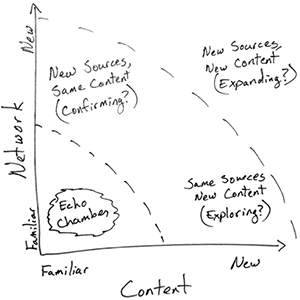
In source criticism, circular reporting or false confirmation is a situation where a piece of information appears to come from multiple independent sources, but in fact is coming from only one source. In most cases, the problem happens mistakenly through sloppy intelligence gathering practices, but in a few cases, the situation is intentionally caused by the original source. This problem occurs in variety of fields, including intelligence gathering, journalism, and scholarly research. It is of particular concern in military intelligence because the original source has a higher likelihood of wanting to pass on misinformation, and because the chain of reporting is more liable to being obscured.
Wikipedia is sometimes criticized for being used as a source of circular reporting, and thus advises all researchers and journalists to be wary of using it as a direct source, and to instead focus on verifiable information found in an article’s cited references. In 2008 an American student edited wikipedia in jest, writing that the coati (a small mammal in the raccoon family) was ‘also known as….the Brazilian aardvark,’ resulting in many subsequently citing and using that unsubstantiated nickname as part of the general consensus, including an article in ‘The Independent.’
Posted in Language, Technology |
Leave a Comment »
May 19, 2014

A cyanometer [sahy-uh-nom-i-ter] (from cyan and -meter) is an instrument for measuring ‘blueness,’ specifically the color intensity of blue sky. It is attributed to Swiss aristocrat, physicist, and mountaineer Horace-Bénédict de Saussure. It consists of squares of paper dyed in graduated shades of blue and arranged in a color circle or square that can be held up and compared to the color of the sky. The blueness of the atmosphere indicates transparency and the amount of water vapor.
De Saussure is credited with inventing a cyanometer in 1789 with 53 sections, ranging from white to varying shades of blue (dyed with Prussian blue) and then to black, arranged in a circle; he used the device to measure the color of the sky at Geneva, Chamonix and Mont Blanc. He concluded, correctly, that the color of the sky was dependent on the amount of suspended particles in the atmosphere.
Posted in Science, Technology, World |
Leave a Comment »
May 15, 2014


Roller skates are devices worn on the feet to enable the wearer to roll along on wheels. The first roller skates were converted ice skates, with two inline wheels instead of a blade. Later the ‘quad’ style of roller skate became more popular consisting of four wheels arranged in the same configuration as a typical car.
The first patented roller skate was introduced in 1760 by Belgian inventor John Joseph Merlin. His inline two wheelers were hard to steer and hard to stop because they didn’t have brakes, and as such were not very popular. In 1863, James Plimpton from Massachusetts invented the ‘rocking’ skate using a four wheel configuration for stability, and independent axles that turned by pressing to one side when the skater wanted to create an edge. It was a vast improvement on the Merlin design and was easier to use, driving the huge popularity roller skating through the 1930s. The Plimpton skate is still used today.
read more »
Posted in Games, Technology |
1 Comment »
May 14, 2014
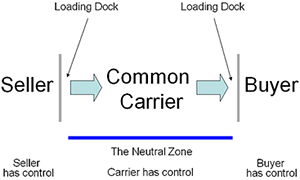

Common carrier is a legal term for a company that transports goods or people and is responsible for any loss in transit. Such services are offered to the general public under license or authority provided by a regulatory body, which may create, interpret, and enforce its regulations upon the common carrier (subject to judicial review) with independence and finality, as long as it acts within the bounds of the enabling legislation.
A common carrier is distinguished from a contract carrier, which transports goods for only a certain number of clients and that can refuse to transport goods for anyone else, and from a private carrier (a company that transports only their own goods). A common carrier holds itself out to provide service to the general public without discrimination (to meet the needs of the regulator’s quasi judicial role of impartiality toward the public’s interest) for the ‘public convenience and necessity.’
read more »
Posted in Money, Politics, Technology |
Leave a Comment »
May 4, 2014

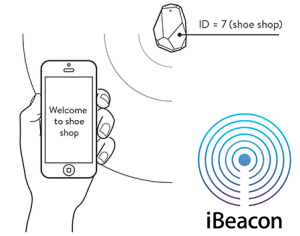
An indoor positioning system (IPS, or micromapping) is a network of devices that wirelessly locate objects or people inside a building. Instead of using satellites like GPS, it relies on nearby anchors (nodes with a known position), which either actively locate tags or provide ambient location or environmental context for devices. Systems use optical, radio, or even acoustic technologies. Integration of data from several navigation systems with different physical principles can increase the accuracy and robustness of the overall solution.
Wireless transmission indoors faces several obstacles including signal attenuation caused by construction materials, multiple reflections at surfaces causing transmission errors, and interference with devices that emit or receive electromagnetic waves (e.g. microwave ovens, cellular phones). Error correction systems that don’t rely on wireless signals are being used to compensate for these shortcomings, such as Inertial Measurement Units (reports velocity, orientation, and gravitational forces using accelerometers and gyroscopes), and Simultaneous Localization and Mapping (SLAM, a technique used by robots and autonomous vehicles to build up a map within an unknown environment).
Posted in Money, Technology |
Leave a Comment »
May 3, 2014
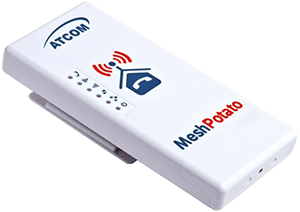

A wireless mesh network (WMN) is a communications network made up of radio nodes organized in a mesh topology; each node is connected to one or more other nodes, and information is passed from one node to the next, until it reaches its target destination. As in most cases, there is more than one path from one node to another, making such networks very reliable. When a node fails, the data will simply take another route. This type of infrastructure can be decentralized (with no central server) or centrally managed (with a central server).
The coverage area of the radio nodes working as a single network is sometimes called a mesh cloud. Mesh architecture sustains signal strength by breaking long distances into a series of shorter hops. Intermediate nodes not only boost the signal, but cooperatively make forwarding decisions based on their knowledge of the network, i.e. perform routing. Such an architecture may with careful design provide high bandwidth, spectral efficiency, and economic advantage over the coverage area.
read more »
Posted in Money, Technology |
Leave a Comment »
May 3, 2014


A cognitive radio is a transceiver that dynamically switches between optimal wireless channels in its vicinity. It automatically detects available channels, then accordingly changes its transmission or reception parameters to allow more concurrent wireless communications in a given spectrum band at one location. This process is a form of dynamic spectrum management.
The cognitive engine is capable of configuring waveform, protocol, operating frequency, and networking parameters. Units can exchange information about the environment with the networks it accesses and other cognitive radios (CRs). A CR ‘monitors its own performance continuously,’ in addition to ‘reading the radio’s outputs’; it then uses this information to ‘determine the RF environment, channel conditions, link performance, etc.’, and adjusts the ‘radio’s settings to deliver the required quality of service subject to an appropriate combination of user requirements, operational limitations, and regulatory constraints.’
read more »
Posted in Politics, Technology, World |
Leave a Comment »
April 7, 2014

A supercharger is an air compressor that increases the pressure or density of air supplied to an internal combustion engine. This gives each intake cycle of the engine more oxygen, letting it burn more fuel and do more work, thus increasing power. Power for the supercharger can be provided mechanically by means of a belt, gear, shaft, or chain connected to the engine’s crankshaft. When power is provided by a turbine powered by exhaust gas, a supercharger is known as a turbosupercharger – typically referred to simply as a turbocharger or just turbo.
Supercharging increases power, but turbocharging can improve power and efficiency. Turbochargers were known as turbosuperchargers when all forced induction devices were classified as superchargers. Currently, the term supercharger is only applied to mechanically driven forced induction devices.
read more »
Posted in Technology |
Leave a Comment »
April 1, 2014

The Robin Hood tax commonly refers to a package of financial transaction taxes (FTT) proposed by a campaigning group of civil society non-governmental organizations (NGOs). Campaigners have suggested the tax could be implemented globally, regionally or unilaterally by individual nations.
Conceptually similar to the Tobin tax (a small tax on spot currency conversions), it would affect a wider range of asset classes including the purchase and sale of stocks, bonds, commodities, unit trusts, mutual funds, and derivatives such as futures and options. The Tobin tax was proposed for foreign currency exchange only.
read more »
Posted in Money, Politics, Technology |
Leave a Comment »
April 1, 2014

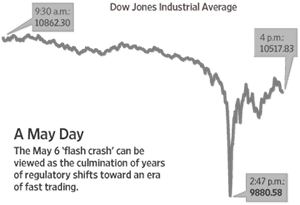
Flash trading, otherwise known as a flash order, is defined by industry trade publication ‘Traders Magazine’ as ‘a marketable order sent to a market center that is not quoting the industry’s best price or that cannot fill that order in its entirety. The order is then flashed to recipients of the venue’s proprietary data feed to see if any of those firms wants to take the other side of the order. This practice enables the market center to try to keep the trade.’ Under an exception to Rule 602 of Regulation NMS, flash orders are currently legal.
Bloomberg states: ‘Flash systems trace their roots as far back as 1978 to efforts by exchanges to electronically replicate how a trader might yell an order to floor brokers before entering it into the system that displays all bids and offers. Markets have evolved since the days of floor brokers’ dominance, with computer algorithms now buying and selling shares 1,000 times faster than the blink of an eye.’
read more »
Posted in Money, Politics, Technology |
Leave a Comment »
March 27, 2014

Out of hacker culture, and especially the artificial intelligence community at MIT, there have sprung a number of humorous short stories about computer science dubbed hacker koans [koh-ahns]; most of these are recorded in an appendix to the Jargon File (a glossary of computer programmer slang). Most do not fit the usual pattern of koans, but they do tend to follow the form of being short, enigmatic, and often revealing an epiphany.
One notable example, titled ‘Uncarved block,’ describes an exchange between professor Marvin Minsky and student Jerry Sussman: ‘In the days when Sussman was a novice, Minsky once came to him as he sat hacking at the PDP-6. ‘What are you doing?’, asked Minsky. ‘I am training a randomly wired neural net to play Tic-tac-toe,’ Sussman replied. ‘Why is the net wired randomly?’, asked Minsky. ‘I do not want it to have any preconceptions of how to play,’ Sussman said. Minsky then shut his eyes. ‘Why do you close your eyes?’ Sussman asked his teacher. ‘So that the room will be empty.’ At that moment, Sussman was enlightened.’
read more »
Posted in Humor, Philosophy, Technology |
Leave a Comment »
March 24, 2014

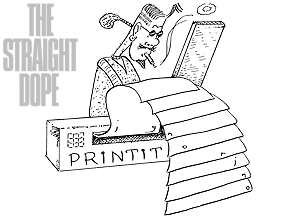
A paperless office is a work environment in which the use of paper is eliminated or greatly reduced by converting documents into digital form. Proponents claim that ‘going paperless’ can save money, boost productivity, save space, make documentation and information sharing easier, keep personal information more secure, and help the environment. The concept can be extended to communications outside the office as well.
Traditional offices have paper-based filing systems, which may include filing cabinets, folders, shelves, microfiche systems, and drawing cabinets, all of which require maintenance, equipment, considerable space, and are resource-intensive. In contrast, a paperless office could simply have a desk, chair, and computer (with a modest amount of local or network storage), and all of the information would be stored in digital form. Speech recognition and speech synthesis could also be used to facilitate the storage of information digitally.
read more »
Posted in Technology |
Leave a Comment »



