January 6, 2014


Tobii Technology is a Swedish high-technology company that develops and sells products for eye control and eye tracking. Founded in 2001, the company has products in several market segments such as people with communication disabilities who use Tobii’s technical devices and language tools (AAC devices) to communicate.
It also has products that are widely used for research in the academic community, and to conduct usability studies and market surveys of commercial products. Tobii also partners with others to integrate eye tracking and eye control in different industry applications and fields such as advanced driver assistance, consumer computing, and gaming.
Posted in Health, Money, Technology |
Leave a Comment »
January 5, 2014
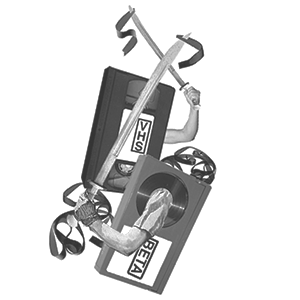
A format war describes competition between mutually incompatible proprietary formats that compete for the same market, typically for data storage devices and recording formats for electronic media.
It is often characterized by political and financial influence on content publishers by the developers of the technologies. Developing companies may be characterized as engaging in a format war if they actively oppose or avoid interoperable open industry technical standards in favor of their own.
read more »
Posted in Money, Politics, Technology |
Leave a Comment »
December 20, 2013

Scareware, nowadays included into the class of malware known as FraudTool, comprises several classes of ransomware or scam software with malicious payloads, usually of limited or no benefit, that are sold to consumers via certain unethical marketing practices. The selling approach uses social engineering to cause shock, anxiety, or the perception of a threat, generally directed at an unsuspecting user. Some forms of spyware and adware also use scareware tactics.
A tactic frequently used by criminals involves convincing users that a virus has infected their computer, then suggesting that they download (and pay for) fake antivirus software to remove it. Usually the virus is entirely fictional and the software is non-functional or malware itself. Another approach is to trick users into uninstalling legitimate antivirus software, or disabling their firewall.
read more »
Posted in Money, Politics, Technology |
1 Comment »
December 19, 2013

Ransomware comprises a class of malware which restricts access to the computer system that it infects, and demands a ransom paid to the creator of the malware in order for the restriction to be removed.
Some forms of ransomware encrypt files on the system’s hard drive (cryptoviral extortion), while some may simply lock the system and display messages intended to coax the user into paying. While initially popular in Russia, the use of ransomware scams has grown internationally.
read more »
Posted in Money, Politics, Technology |
Leave a Comment »
December 10, 2013

Rotating locomotion encompasses two distinct modes of locomotion: simple rolling, and spinning relative to a fixed axle or body in the manner of a wheel or propeller. Several organisms move by rolling.
However, despite the integral role that the wheel has played in locomotion of vehicles designed by humans, true wheels do not appear to play any role in the locomotion of biological systems.
read more »
Posted in Science, Technology |
Leave a Comment »
December 5, 2013

Personal genomics [jee‐noh-miks] (sequencing and analysis of the genome of an individual) employs several techniques, including single-nucleotide polymorphism (SNP) analysis chips (typically 0.02% of the genome), or partial or full genome sequencing. Once the genotypes are known, the individual’s genotype can be compared with the published literature to determine likelihood of trait expression and disease risk.
Automated sequencers have increased the speed and reduced the cost of sequencing, making it possible to offer genetic testing to consumers. 23andMe sells mail order kits for SNP genotyping. The information is stored in a user profile and used to estimate the genetic risk of the consumer for over 240 diseases and conditions, as well as ancestry analysis.
read more »
Posted in Health, Money, Technology |
Leave a Comment »
November 21, 2013

A cryptocurrency is a peer-to-peer, decentralized, digital currency whose implementation relies on the principles of cryptography to validate the transactions and generation of the currency itself. They often use a proof-of-work scheme to guard against digital counterfeiting. While over 30 different cryptocurrency specifications and protocols have been defined, most are similar to and derived from the first fully implemented cryptocurrency, Bitcoin, created in 2009 by pseudonymous developer Satoshi Nakamoto
Most cryptocurrencies are designed to gradually introduce new units of currency, placing an ultimate cap on the total amount of currency that will ever be in circulation. This is done both to mimic the scarcity (and value) of precious metals and to avoid hyperinflation. Cryptocurrencies are also less susceptible to seizure by law enforcement than traditional currencies. Early attempts to integrate cryptography with electronic money were made by David Chaum, via DigiCash and ecash, which used cryptography to anonymize electronic money transactions.
Posted in Money, Politics, Technology |
Leave a Comment »
November 18, 2013
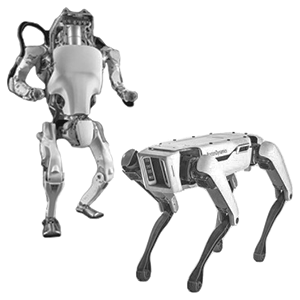
Boston Dynamics is an engineering and robotics company spun off from MIT in 1992 that is best known for the development of ‘BigDog,’ a quadruped robot designed for the US military with funding from Defense Advanced Research Projects Agency (DARPA), and ‘DI-Guy,’ software for realistic human simulation.
Early in the company’s history, it worked with the American Systems Corporation under a contract from the Naval Air Warfare Center Training Systems Division to replace naval training videos for aircraft launch operations with interactive 3D computer simulations.
read more »
Posted in Money, Technology, War |
Leave a Comment »
November 15, 2013

An olfactometer [ol-fak-tom-i-ter] is an instrument used to detect and measure ambient odors that is also called a ‘nose telescope.’
Posted in Technology |
Leave a Comment »
November 4, 2013

A hashtag is a word or a phrase prefixed with the hash symbol: #. It is a form of metadata tag, for example, short messages on microblogging and social networking services such as Twitter or Instagram may be tagged by putting ‘#’ before important words, either as they appear in a sentence, or appended to it.
Hashtags provide a means of grouping such messages, since one can search for the hashtag and get the set of messages that contain it.
read more »
Posted in Language, Money, Technology |
1 Comment »
October 31, 2013

Seawise Giant, later ‘Happy Giant,’ ‘Jahre Viking,’ ‘Knock Nevis,’ ‘Oppama,’ and finally ‘Mont,’ was an Ultra Large Crude Carrier (ULCC) supertanker and the longest ship ever built. She possessed the greatest deadweight tonnage ever recorded.
Fully laden, her displacement was 724,239 tons, the heaviest ship of any kind, and with a draft of 81 ft (the distance between the waterline and the bottom of the hull), she was incapable of navigating the English Channel, the Suez Canal or the Panama Canal. Overall, she was generally considered the largest ship ever built, as well as the largest self-propelled human-made object ever built.
read more »
Posted in Money, Technology, World |
Leave a Comment »
October 31, 2013

‘The Yule Log‘ is a TV program which is broadcast traditionally on Christmas Eve or Christmas morning, originally by NYC television station WPIX but now by many other Tribune Company-owned television stations, including WGN America. A radio simulcast of the musical portion was broadcast by associated station WPIX-FM (now WFAN-FM) until 1988. The program, which has been two to four hours in duration (without commercial interruption), is a film loop of a yule log burning in a fireplace, with a traditional soundtrack of classic Christmas music.
The concept was created in 1966 by Fred M. Thrower, President and CEO of WPIX, Inc. Inspired by an animated Coca-Cola commercial a year earlier that showed Santa Claus at a fireplace, he envisioned this program as a televised Christmas gift to New Yorkers who lived in apartments and homes without fireplaces. This also provided time for employees of the television station to stay home with their families, instead of working for the usual morning news program.
read more »
Posted in Humor, Philosophy, Technology |
Leave a Comment »



