October 28, 2013

Pharmacy automation is the automation of tasks performed in pharmacy:
measuring and mixing powders and liquids for compounding; tracking and updating customer information in databases (e.g. personally identifiable information, medical history, drug interaction risk detection); inventory management; and dispensing of medication.
read more »
Posted in Drugs, Health, Technology |
Leave a Comment »
October 26, 2013

The Kessler syndrome (proposed by the NASA scientist Donald J. Kessler in 1978) is a scenario in which the density of objects in low Earth orbit is high enough that collisions between objects could cause a cascade—each collision generating space debris which increases the likelihood of further collisions.
One implication is that the distribution of debris in orbit could render space exploration, and even the use of satellites, infeasible for many generations. Every satellite, space probe, and manned mission has the potential to create space debris. A cascading Kessler syndrome becomes more likely as satellites in orbit increase in number and old satellites become inoperative.
Posted in Technology, World |
Leave a Comment »
October 25, 2013

Wiki-PR is a public relations firm that markets its ability to edit Wikipedia. Its practices have contradicted Wikipedia practices, including those on sockpuppetry (using an online identity for purposes of deception) and conflict-of-interest editing, leading to hundreds of blocked accounts.
Wiki-PR was created in 2010 by Darius Fisher, its current COO, and Jordan French, its current CEO. Clients have included Viacom and Priceline. The firm claimed having administrator access enabling it to manage the Wikipedia presence of more than 12,000 clients. Wiki-PR uses aggressive email marketing to acquire new customers.
Posted in Money, Politics, Technology |
1 Comment »
October 24, 2013
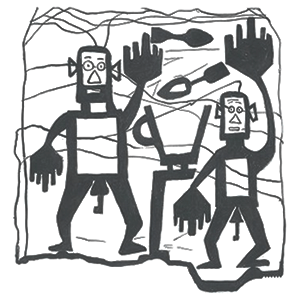
On the Origin of the “Influencing Machine” in Schizophrenia is a highly influential article written by German psychoanalyst Viktor Tausk in 1919. The paper describes Tausk’s observations and psychoanalytic interpretation of a type of paranoid delusion that occurs in patients diagnosed with schizophrenia. The delusion often involves their being influenced by a ‘diabolical machine,’ just outside the technical understanding of the victim, that influences them from afar.
It was typically believed to be operated by a group of people who were persecuting the individual, whom Tausk suggested were ‘to the best of my knowledge, almost exclusively of the male sex’ and the persecutors, ‘predominantly physicians by whom the patient has been treated.’ These delusions are known in contemporary psychiatry as ‘passivity delusions’ or ‘passivity phenomena’ and are listed among Kurt Schneider’s ‘first rank’ symptoms which are thought to be particularly diagnostic of schizophrenia, and still form some of the core diagnostic criteria.
read more »
Posted in Health, Technology |
1 Comment »
October 23, 2013

Colossus: The Forbin Project is a 1970 American science fiction thriller film based on a 1966 novel Colossus, by Dennis Feltham Jones, about a massive American defense computer, named Colossus, becoming sentient and deciding to assume control of the world. The machine was built in secret by Dr. Charles A. Forbin to control all of the United States and Allied nuclear weapons systems.
Colossus is built to be impervious to any attack, encased within a mountain and powered by its own nuclear reactor, filling the area with gamma radiation. When it is activated, the President of the United States announces its existence at a press conference with Forbin in Washington, proudly proclaiming it a perfect defense system that will ensure peace.
read more »
Posted in Art, Technology, War |
Leave a Comment »
October 18, 2013
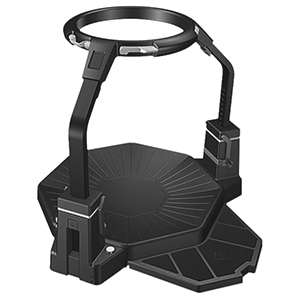
Virtuix Omni is an omnidirectional treadmill video game peripheral for virtual reality games currently in development by Virtuix. The Omni uses a slippery platform used to simulate the motion of walking. The platform requires special shoes that reduce friction when walking.
The player is fully enclosed within a ring that works with a safety harness to absorb the player’s weight. The Omni is designed to be used with a head-mounted virtual reality display, such as the Oculus Rift.
Posted in Games, Technology |
Leave a Comment »
October 9, 2013

Victor Papanek (1923 – 1998) was a designer and educator who became a strong advocate of the socially and ecologically responsible design of products, tools, and community infrastructures. He disapproved of manufactured products that were unsafe, showy, maladapted, or essentially useless. Papanek was a philosopher of design and as such he was an untiring, eloquent promoter of design aims and approaches that would be sensitive to social and ecological considerations.
He wrote that ‘design has become the most powerful tool with which man shapes his tools and environments (and, by extension, society and himself).’ With his interest in all aspects of design and how they affected people and the environment, Papanek felt that much of what was manufactured in the U.S. was inconvenient, often frivolous and even unsafe.
read more »
Posted in Money, Technology |
Leave a Comment »
October 7, 2013

‘Under a Killing Moon‘ is the third installment in the ‘Tex Murphy’ series of graphic adventure games produced by Access Software in 1994. It was one of the largest video games of its era, arriving on four CD-ROMs (although some material was duplicated among the four to reduce the amount of swapping).
The game combined full motion video (FMV) cutscenes with an advanced 3D virtual world to explore. After its creators reacquired the rights to the series, it was re-released on ‘Good Old Games’ in 2009.
read more »
Posted in Games, Technology |
Leave a Comment »
October 2, 2013

Feature creep (also known as ‘creeping featurism’ or ‘featuritis’) is the unchecked expansion or addition of new features in a product. Such features go beyond the basic function of the product and so can result in over-complication rather than simple design. The most common cause of feature creep is the desire to provide the consumer with a more useful or desirable product, in order to increase sales or distribution.
However, once the product reaches the point at which it does everything that it is designed to do, the manufacturer is left with the choice of adding unneeded functions, sometimes at the cost of efficiency, or sticking with the old version, at the cost of a perceived lack of improvement. Another major cause of feature creep might be a compromise from a committee which decides to implement multiple, different viewpoints in the same product. Then, as more features are added to support each viewpoint, it might be necessary to have cross-conversion features between the multiple viewpoints, further complicating the total features.
read more »
Posted in Money, Technology |
1 Comment »
October 1, 2013
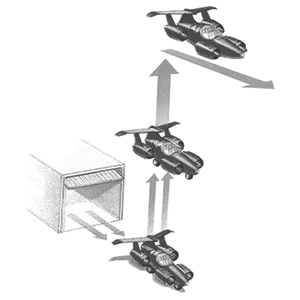
The Moller Skycar is a prototype personal VTOL (vertical take-off and landing) aircraft invented by Paul Moller who has been attempting to develop such vehicles for fifty years (with limited success).
The craft said to be currently under development, the M400, is purported to transport four people. It is described as a car since it is aimed at being a popular means of transport for anyone who can drive, incorporating automated flight controls, with the driver only inputting direction and speed required with a cruising speed of 305 mph.
read more »
Posted in Money, Technology |
1 Comment »
September 29, 2013

Kwangmyong (lit. ‘Bright’) is a North Korean ‘walled garden’ national intranet opened in 2000. It may be accessed by web browsers, incorporates email services, news groups, and an internal web search engine. In North Korea, only a small number of government-authorized persons are allowed to use the global Internet, so Kwangmyong is the only computer network available to common people. It is a free service for public use.
Given that there is no direct connection to the outside Internet, unwanted information cannot enter the network. Information is filtered and processed by government agencies before being hosted on the North Korean Intranet. Cuba and Myanmar also use a similar network system that is separated from the rest of the Internet, and Iran has been reported as having future plans to implement such a network.
Posted in Politics, Technology, World |
Leave a Comment »
September 29, 2013

Formula E is a class of auto racing sanctioned by the Fédération Internationale de l’Automobile (FIA). The ‘formula,’ designated in the name, refers to a set of rules with which all participants’ cars must comply. Formula E is intended to be the highest class of competition for one-make, single-seat, electrically-powered racing cars. The inaugural championship is planned for 2014. Forty-two cars were ordered in 2012, with Formula One team McLaren providing the motor, transmission and electronics that all cars will use.
Racing circuits will be held in cities, and will be approximately 2.5 km to 3 km long; Cars will accelerate from 0 km/h to 100 km/h in 3 seconds, with a maximum speed of 220 km/h; and Noise decibel levels will be approximately -80dB (ordinary car – 70dB; bus – 90dB; Formula One track – 130dB). Pit stops will involve a change of car: when the battery runs out, the driver will make a pit stop, then will run 100 meters to climb into a recharged car.
Posted in Games, Technology |
Leave a Comment »



