May 8, 2013

Borg is a collective proper noun for a fictional alien race that appears as recurring antagonists in various incarnations of the ‘Star Trek’ franchise. The Borg are a collection of species that have been turned into cybernetic organisms functioning as drones of the Collective, or the hive. A pseudo-race, dwelling in the Star Trek universe, the Borg force other species into their collective and connect them to ‘the hive mind’; the act is called assimilation and entails violence, abductions, and injections of cybernetic implants. The Borg’s ultimate goal is ‘achieving perfection.’
Aside from being the main threat in ‘Star Trek: First Contact,’ the Borg play major roles in ‘The Next Generation’ and ‘Voyager’ television series, primarily as an invasion threat to the United Federation of Planets, but also of some use to the Voyager. The Borg have become a symbol in popular culture for any juggernaut against which ‘resistance is futile.’
read more »
Posted in Art, Technology |
Leave a Comment »
May 6, 2013

An espresso machine is used to produce a traditional Italian espresso, a concentrated coffee drink served in small portions (shots). The first machine for making espresso was built and patented by Angelo Moriondo, who demonstrated a working example at the Turin General Exposition of 1884. He patented his invention that year as a: ‘New steam machinery for the economic and instantaneous confection of coffee beverage.’
In 1901, Luigi Bezzera of Milan patented improvements to the machine; four years later, the patent was bought by Desiderio Pavoni who founded the ‘La Pavoni’ company and began to produce the machine commercially (one a day) in a small Milanese workshop.
read more »
Posted in Food, Technology |
Leave a Comment »
April 22, 2013

Simplicity is the state or quality of being simple; it usually relates to the burden which a thing puts on someone trying to explain or understand it.
However, Herbert A. Simon (American political scientist, economist, sociologist, and psychologist) suggested, something is simple or complex depending on the way we choose to describe it. In some uses, simplicity can be used to imply beauty, purity, or clarity.
read more »
Posted in Language, Philosophy, Technology |
Leave a Comment »
April 22, 2013

A chain is a series of connected links which are typically made of metal. A chain may consist of two or more links.
According to the ‘Complete Guide to Chain,’ the metal link chain was invented in 225 BCE. The prevalent modern symbolism is oppression, due to the use for a mechanical restriction of the liberty of a human or animal. However, chains can also symbolize interconnectivity or interdependence.
read more »
Posted in Technology |
Leave a Comment »
April 21, 2013
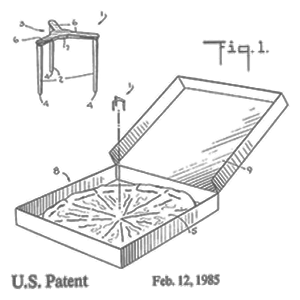
A pizza saver is a device used to prevent the top of a food container, such as a pizza box or cake box, from collapsing in at the center and touching the food inside. A pizza saver is made of plastic and has three (sometimes four) legs. They are often white, and the common practice is to place one pizza saver in the center of the pizza before the box lid is closed for delivery.
The pizza saver is not re-used and is thrown away or recycled by the patron, although some people have found secondary uses for them such as egg holders when turned upside down.
read more »
Posted in Food, Money, Technology |
Leave a Comment »
April 9, 2013

Earth sheltering is the architectural practice of using earth against building walls for external thermal mass, to reduce heat loss, and to easily maintain a steady indoor air temperature. Earth sheltering is popular in modern times among advocates of passive solar and sustainable architecture, but has been around for nearly as long as humans have been constructing their own shelter.
The expression ‘earth-sheltering’ is a generic term, with the general meaning: building design in which soil plays an integral part. More specifically, a building can be described as earth-sheltered if its external envelope is in contact with a thermally significant volume of soil or substrate (where ‘thermally significant’ means making a functional contribution to the thermal effectiveness of the building in question).
read more »
Posted in Technology, World |
Leave a Comment »
April 3, 2013
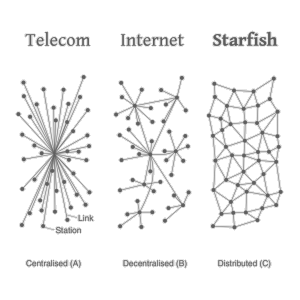
‘The Starfish and the Spider: The Unstoppable Power of Leaderless Organizations’ is a 2006 book by Ori Brafman (author of the 2010 book ‘Click: The Magic of Instant Connections’) and Rod Beckstrom (President of ICANN); it is an exploration of the implications of the recent rise of decentralized organizations such as Wikipedia, Grokster and YouTube.
The book contrasts them to centralized organizations, such as Encyclopædia Britannica. The spider and starfish analogy refers to the contrasting biological nature of the respective organisms, starfish have a decentralized neural structure permitting regeneration, whereas spiders have in a hierarchical nervous system.
read more »
Posted in Language, Money, Technology |
Leave a Comment »
April 3, 2013

Experimental archaeology puts archaeological source material, like ancient structures or artifacts, to real world tests. It should not be confused with primitive technology which is not concerned with any archaeological or historical evidence. Living history and historical reenactment, which are generally undertaken as a hobby, are the lay person’s version of this academic discipline.
One of the main forms of experimental archaeology is the creation of copies of historical structures using only historically accurate technologies. This is sometimes known as reconstruction archaeology or reconstructional archaeology; however, reconstruction implies an exact replica of the past, when it is in fact just a construction of one person’s idea of the past; the more archaeologically correct term is a ‘working construction of the past.’
read more »
Posted in Science, Technology, World |
Leave a Comment »
April 3, 2013
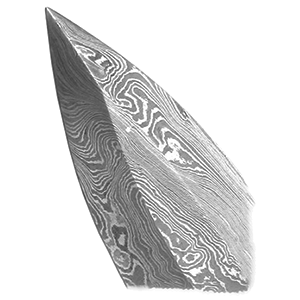
Damascus steel was a type of steel used in Middle Eastern swordmaking. Damascus steel was created from wootz steel, a steel developed in India around 300 BCE. These swords are characterized by distinctive patterns of banding and mottling reminiscent of flowing water.
Such blades were reputed to be tough, resistant to shattering and capable of being honed to a sharp, resilient edge. The original method of producing Damascus steel is not known. Recreating Damascus steel is a subfield of experimental archaeology. Many have attempted to discover or reverse-engineer the process by which it was made.
read more »
Posted in Technology, World |
Leave a Comment »
March 31, 2013

A one-man band is a musician who plays a number of musical instruments simultaneously using their hands, feet, limbs, and various mechanical contraptions. The simplest type of ‘one-man band’ — a singer accompanying themselves on acoustic guitar and harmonica mounted in a metal ‘harp rack’ below the mouth — is often used by buskers.
More complicated setups may include wind instruments strapped around the neck, a large bass drum mounted on the musician’s back with a beater which is connected to a foot pedal, cymbals strapped between the knees or triggered by a pedal mechanism, tambourines and maracas tied to the limbs, and a stringed instrument strapped over the shoulders (e.g., a banjo, ukulele or guitar). Since the development of Musical Instrument Digital Interface (MIDI) in the 1980s, musicians have also incorporated chest-mounted MIDI drum pads, foot-mounted electronic drum triggers, and electronic pedal keyboards into their set-ups.
read more »
Posted in Art, Humor, Technology |
1 Comment »
March 27, 2013

Genetic algorithms are a kind of algorithm used to find approximations in search problems. Genetic algorithms are a class of evolutionary algorithms (algorithms that simulate evolution: each generation of solution is subjected to some kind of fitness function; those that survive are then recombined in some way to make the next generation of solution).
The concept of genetic algorithms is a search technique often used in computer science to find complex, non-obvious solutions to algorithmic optimization and search problems. Genetic algorithms are categorized as global search heuristics, and have a wide variety of applications, particularly in generating useful Artificial Intelligence agents in computer games.
read more »
Posted in Games, Technology |
Leave a Comment »
March 27, 2013

In Computer Science, especially in artificial intelligence, evolutionary algorithms (EA) are a kind of algorithm that simulate evolution to optimize something.
Each generation of solution is subjected to some kind of fitness function; those that survive are then recombined in some way to make the next generation of solution. This is done until a certain level of fitness is reached, or a determined number of generations have been used.
read more »
Posted in Technology |
Leave a Comment »



 The Daily Omnivore