February 19, 2013


Phishing is the act of attempting to acquire information such as usernames, passwords, and credit card details by masquerading as a trustworthy entity in an electronic communication. Communications purporting to be from popular social web sites, auction sites, online payment processors, or IT administrators are commonly used to lure the unsuspecting public. Phishing emails may contain links to websites that are infected with malware.
Phishing is typically carried out by e-mail spoofing (altering the sender address) or instant messaging, and it often directs users to enter details at a fake website whose look and feel are almost identical to the legitimate one. Phishing is an example of social engineering (manipulating people into performing actions or divulging confidential information), and exploits the poor usability of current web security technologies. Attempts to deal with the growing number of reported phishing incidents include legislation, user training, public awareness, and technical security measures.
read more »
Posted in Money, Politics, Technology |
Leave a Comment »
February 19, 2013

PLA Unit 61398, referred to by the US as the ‘Comment Crew’ (owing to the collective’s past pattern of embedding HTML commands in the comments section of popular websites) is an alleged cyber-warfare unit of the Chinese military. As a hacker group the entity has been known to US intelligence agencies since 2002; they gave it the codename ‘Byzantine Candor.’
The unit is reported to operate out of a 12-story building in Shanghai and the surrounding neighborhood. The story was first broken by the ‘New York Times,’ based on information from a report by the computer security firm Mandiant, who were retained by the New York Times after a compromise of their own computer systems. Mandiant’s report states that PLA Unit 61398 is believed to be under the 2nd Bureau of the People’s Liberation Army General Staff’s Department (GSD) 3rd Department and that there is evidence that it contains an entity Mandiant calls APT1, part of the Advanced Persistent Threat attacking American corporations and government entities.
Posted in Money, Technology, War |
Leave a Comment »
February 19, 2013


The Chaos Computer Club (CCC) is one of the world’s biggest hackers organizations. The CCC is based in Germany and other German-speaking countries. The CCC describes itself as ‘a galactic community of life forms, independent of age, sex, race or societal orientation, which strives across borders for freedom of information….’ In general, the CCC advocates more transparency in government, freedom of information, and the human right to communication.
Supporting the principles of the hacker ethic, the club also fights for free universal access to computers and technological infrastructure. The CCC was founded in Berlin in 1981 at a table which had previously belonged to the Kommune 1 (the first politically motivated commune in Germany) in the rooms of the newspaper ‘Die Tageszeitung’ by Wau Holland and others in anticipation of the prominent role that information technology would play in the way people live and communicate.
read more »
Posted in Politics, Technology, World |
Leave a Comment »
February 19, 2013


2600: The Hacker Quarterly is an American publication that specializes in publishing technical information on a variety of subjects including telephone switching systems, Internet protocols and services, as well as general news concerning the computer ‘underground’ and left wing, and sometimes (but not recently), anarchist issues.
The magazine’s name comes from the phreaker discovery in the 1960s that the transmission of a 2600 hertz tone (which could be produced perfectly with a plastic toy whistle given away free with Cap’n Crunch cereal—discovered by friends of John Draper) over a long-distance trunk connection gained access to ‘operator mode’ and allowed the user to explore aspects of the telephone system that were not otherwise accessible.
read more »
Posted in Language, Politics, Technology |
Leave a Comment »
February 13, 2013

An anechoic [an-e-koh-ik] (echo-free) chamber is a room designed to completely absorb reflections of either sound or electromagnetic waves. They are also insulated from exterior sources of noise. The combination of both aspects means they simulate a quiet open-space of infinite dimension, which is useful when exterior influences would otherwise give false results.
Anechoic chambers, a term coined by American acoustics expert Leo Beranek, were originally used in the context of acoustics (sound waves) to minimize the reflections of a room. More recently, rooms designed to reduce reflection and external noise in radio frequencies have been used to test antennas, radars, or electromagnetic interference. Anechoic chambers range from small compartments the size of household microwave ovens to ones as large as aircraft hangars. The size of the chamber depends on the size of the objects to be tested and the frequency range of the signals used, although scale models can sometimes be used by testing at shorter wavelengths.
read more »
Posted in Technology |
Leave a Comment »
February 11, 2013
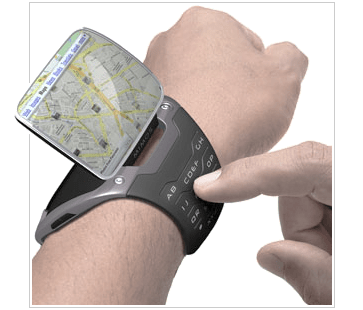
Wearable computers, also known as body-borne computers, are miniature electronic devices that are worn by the bearer under, with or on top of clothing. One of the main advantages of a wearable computer is consistency: there is a constant interaction between the computer and user, i.e. there is no need to turn the device on or off. Another useful feature is the ability to multi-task: it is not necessary to stop what you are doing to use the device; it is augmented into all other actions.
These devices can be incorporated by the user to act like a prosthetic. It can therefore be an extension of the user’s mind and/or body. Many issues are common to the wearables as with mobile computing, ambient intelligence (electronic environments that are sensitive and responsive to the presence of people), and ubiquitous computing research communities, including power management and heat dissipation, software architectures, wireless and personal area networks.
read more »
Posted in Technology |
Leave a Comment »
February 11, 2013

In computing, ambient intelligence (AmI) refers to electronic environments that are sensitive and responsive to the presence of people. Ambient intelligence is a vision on the future of consumer electronics, telecommunications and computing that was originally developed in the late 1990s for the time frame 2010–2020. In an ambient intelligence world, devices work in concert to support people in carrying out their everyday life activities, tasks and rituals in easy, natural way that uses information and intelligence that is hidden in the network connecting these devices (an Internet of Things).
As these devices grow smaller, more connected and more integrated into the world, the technology disappears into our surroundings until only the user interface remains perceivable by users. The ambient intelligence paradigm builds upon ubiquitous computing (ever-present, always on), profiling practices (the use of algorithms to discover patterns or correlations in large quantities of data, aggregated in databases), context awareness (complementary to location awareness), and user-centered design (in which the needs, wants, and limitations of end users of a product are given extensive attention at each stage of the design process).
read more »
Posted in Technology |
Leave a Comment »
February 11, 2013


The term Experience Economy was first described in an article published in 1998 by B. Joseph Pine II and James H. Gilmore. In it they described the experience economy as the next economy following the agrarian economy, the industrial economy, and the most recent service economy. This concept had been previously researched by many other authors.
Pine and Gilmore argue that businesses must orchestrate memorable events for their customers, and that memory itself becomes the product – the ‘experience.’ More advanced experience businesses can begin charging for the value of the ‘transformation’ that an experience offers, e.g., as education offerings might do if they were able to participate in the value that is created by the educated individual. This, they argue, is a natural progression in the value added by the business over and above its inputs.
read more »
Posted in Money, Technology |
Leave a Comment »
February 6, 2013

Gold sinks are economic processes by which a video game’s ingame currency (‘gold’), or any item that can be valued against it, is removed. Excess currency leads to inflation of player driven prices. Game designers must balance between scarcity of currency and ease of acquiring currency. This process is comparable to financial repression (measures that governments employ to channel funds to themselves, that, in a deregulated market, would go elsewhere). Most commonly the genres are role-playing game or massively multiplayer online game.
The term is comparable to timesink (an activity that consumes significant time), but usually used in reference to game design and balance, commonly to reduce inflation when commodities and wealth are continually fed to players through sources such as quests, looting monsters, or minigames. Gold sinks are commonly called drains or gold drains. They can also be associated with item drains. The intent of a sink is to remove added value from the overall economy. For example, in ‘Ultima Online,’ items that were placed on the ground would be gathered by the server. This form is referred to as decay or garbage collection.
read more »
Posted in Games, Money, Technology |
Leave a Comment »
February 3, 2013
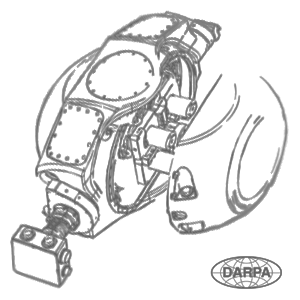
The ARGUS-IS, or the Autonomous Real-Time Ground Ubiquitous Surveillance Imaging System, is a Defense Advanced Research Projects Agency (DARPA) project contracted to BAE Systems.
According to DARPA: ‘The mission of the Autonomous Real-time Ground Ubiquitous Surveillance – Imaging System (ARGUS-IS) program is to provide military users a flexible and responsive capability to find, track and monitor events and activities of interest on a continuous basis in areas of interest.
read more »
Posted in Technology, War |
1 Comment »
February 3, 2013

In political theory and theology, to immanentize [im-uh-nuhnt-ize] the eschaton [ess-cah-ton] means trying to bring about the eschaton (the final, heaven-like stage of history) in the immanent world. It has been used by conservative critics as a pejorative reference to certain utopian projects, such as socialism, communism, and transhumanism. In all these contexts it means ‘trying to make that which belongs to the afterlife happen here and now (on Earth)’ or ‘trying to create heaven here on Earth.’
According to conservative columnist Jonah Goldberg, writing in ‘National Review Online’: ‘In modern parlance, the phrase was coined by Eric Voegelin in The New Science of Politics in 1952. In the 1950s and 1960s, thanks largely to William F. Buckley’s popularization of the phrase, Young Americans for Freedom turned it into a political slogan.’ Buckley was the most notable of many US conservative readers of Voegelin’s work. Voegelin, a German-born American political philosopher, identified a number of similarities between ancient Gnosticism and the beliefs held by a number of modernist political theories, particularly Communism and Nazism.
read more »
Posted in Philosophy, Politics, Technology |
Leave a Comment »
February 2, 2013

A jukebox is a partially automated music-playing device, usually a coin-operated machine, that will play a patron’s selection from self-contained media. The classic jukebox has buttons with letters and numbers on them that, when entered in combination, are used to play a specific selection. Coin-operated music boxes and player pianos were the first forms of automated coin-operated musical devices.
These instruments used paper rolls, metal disks, or metal cylinders to play a musical selection on the instrument, or instruments, enclosed within the device. In the 1890s these devices were joined by machines which used actual recordings instead of physical instruments. In 1890, Louis Glass and William S. Arnold invented the nickel-in-the-slot phonograph, the first of which was an Edison Class M Electric Phonograph retrofitted with a device patented under the name of Coin Actuated Attachment for Phonograph. The music was heard via one of four listening tubes.
read more »
Posted in Money, Technology |
Leave a Comment »


 The Daily Omnivore