March 15, 2013

Solve for X is a think tank project launched by Google to incite collaboration to solve global issues, ‘X’ representing a remedy. The project kicked off in 2012 at a three-day convention at CordeValle Resort in San Martin, California. ‘Solve for X’ talks were presented to 50 people, hosted by Google executives Eric Schmidt, Astro Teller, and Megan Smith.
Solve for X was initially believed to be linked to the Google X Lab working on new technology such as web-connected appliances, driverless cars, and space elevators, but ‘eWeek’ reported that Google X is wed to more realistic undertakings, not the ‘moonshot’ solutions ‘Solve for X’ was created to pursue.
Posted in Money, Technology |
Leave a Comment »
March 15, 2013

Saul Griffith is an Australian American inventor. He is best known for his inexpensive technique for making prescription eyeglasses. This method uses two flexible surfaces and a pourable resin. Saul Griffith was born into an academic family, and encouraged to question all around him, to experiment as a process of learning, and to communicate effectively.
He won a scholarship to study Material Science at the University of New South Wales where he graduated in 1997 with a Bachelor of Metallurgical Engineering. In 2000, Griffith graduated from the University of Sydney with a Master of Engineering degree. He won a scholarship to MIT Media Lab to study towards a PhD that he completed in 2004. The subject of his PhD Thesis was ‘self replicating machines.’ They were one of the first instances of artificial replication being demonstrated using real physics.
Posted in Technology |
1 Comment »
March 15, 2013

Bullet time is a special and visual effect that refers to a digitally enhanced simulation of variable-speed (i.e. slow motion, time-lapse). It is characterized both by its extreme transformation of time (slow enough to show normally imperceptible and unfilmable events, such as flying bullets) and space (by way of the ability of the camera angle—the audience’s point-of-view—to move around the scene at a normal speed while events are slowed).
This is almost impossible with conventional slow-motion, as the physical camera would have to move impossibly fast; the concept implies that only a ‘virtual camera,’ often illustrated within the confines of a computer-generated environment such as a virtual world or virtual reality, would be capable of ‘filming’ bullet-time types of moments. Technical and historical variations of this effect have been referred to as time slicing, view morphing, slow-mo, temps mort, and virtual cinematography.
read more »
Posted in Art, Games, Technology |
Leave a Comment »
March 15, 2013
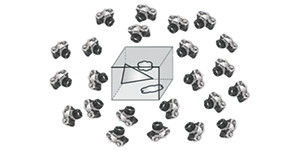

Slow motion (commonly abbreviated as slowmo) is an effect in film-making whereby time appears to be slowed down. It was invented by the Austrian priest August Musger. Typically this style is achieved when each film frame is captured at a rate much faster than it will be played back.
When replayed at normal speed, time appears to be moving more slowly. A term for creating slow motion film is ‘overcranking’ which refers to hand cranking an early camera at a faster rate than normal (i.e. faster than 24 frames per second). Slow motion can also be achieved by playing normally recorded footage at a slower speed. This technique is more often applied to video subjected to instant replay, than to film.
read more »
Posted in Art, Technology |
Leave a Comment »
March 14, 2013
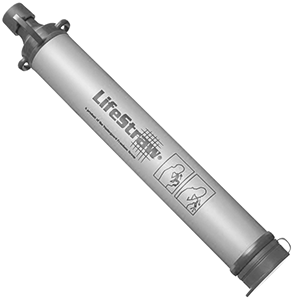
LifeStraw is a water filter that filters a maximum of 1000 liters of water, enough for one person for one year that was designed by the Swiss-based Vestergaard Frandsen for people living in developing nations and for distribution in humanitarian crisis. LifeStraw Family filters a maximum of 18,000 liters of water, providing safe drinking water for a family of five for up to three years. The LifeStraw is a plastic tube 310 millimeters long and 30 millimeters in diameter, Water that is drawn up through the straw first passes through hollow fibers that filter water particles down to 0.2 microns across, using only physical filtration methods and no chemicals.
LifeStraw has been generally praised for its effective and instant method of bacteria and protozoa removal and consumer acceptability. Paul Hetherington, of the charity WaterAid, has criticized the LifeStraw for being too expensive for the target market. He also points to other important problems linked with accessing the water in developing countries, which wait to be solved, but are not addressed by the device itself.
Posted in Food, Health, Technology |
Leave a Comment »
March 14, 2013

A green wall is a wall, either free-standing or part of a building, that is partially or completely covered with vegetation and, in some cases, soil or an inorganic growing medium. The concept of the green wall dates back to the Hanging Gardens of Babylon (600 BCE).
The modern green wall with integrated hydroponics was invented by Professor of Landscape Architecture Stanley Hart White at the University of Illinois Urbana-Champaign in 1931-38. White holds the first known patent for a green wall, or vertical garden, conceptualizing this new garden type as a solution to the problem of modern garden design.
read more »
Posted in Science, Technology |
Leave a Comment »
March 14, 2013

Living Machine is a trademark and brand name for a patented form of ecological wastewater treatment designed to mimic the cleansing functions of wetlands. Also known as Solar Aquatics Systems, the latest generation of the technology is based on fixed-film ecology and the ecological processes of a natural tidal wetland, one of nature’s most productive ecosystems.
The Living Machine is an intensive bioremediation system that can also produce beneficial byproducts, such as reuse-quality water, ornamental plants and plant products—for building material, energy biomass, animal feed.
read more »
Posted in Money, Science, Technology |
1 Comment »
March 14, 2013
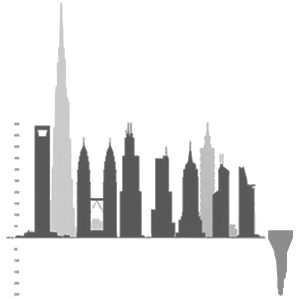
A seascraper, also known as a waterscraper, is a proposed large building which will function as a floating city. It would generate its own energy through wave, wind, current, and solar energy, and produce its own food through farming, aquaculture, and hydroponics. Architect Koen Othuis of the Netherlands specializes in ‘amphibious’ buildings, some floating and some using other systems to adapt to wet environments.
In 2010 Sarly Adre bin Sarkum of Malaysia proposed a building about the size of the Empire State Building which would float in the ocean with only the top few stories out of water. It would house thousands of people and be self-contained, growing its own food and generating its own energy. Another design concept for a mostly submerged structure is ‘The Gyre,’ which would stretch 400 meters deep and over a kilometer across. It is designed to house over 2000 people, and be completely self-sufficient, producing its own food and electricity. It was designed by the firm Zigloo, as a submission to eVolo’s Skyscraper Design Competition in 2009.
Posted in Technology |
Leave a Comment »
March 13, 2013

An Identicon is a visual representation of a hash value, usually of an IP address, that serves to identify a user of a computer system as a form of avatar while protecting the users’ privacy.
The original Identicon was a 9-block graphic, and the representation has been extended to other graphic forms by third parties.
read more »
Posted in Language, Technology |
Leave a Comment »
March 9, 2013


A smart mob is a group that, contrary to the usual connotations of a mob, behaves intelligently or efficiently because of its exponentially increasing network links, enabling people to connect to information and others, allowing a form of social coordination. Parallels are made to, for instance, slime molds.
The concept was introduced by author and cultural critic Howard Rheingold in his 2002 book ‘Smart Mobs: The Next Social Revolution.’ According to Rheingold, smart mobs are an indication of the evolving communication technologies that will empower the people. Smart mobs sometimes are manipulated by the dispatchers who control the ‘mobbing system’ (i.e., those who own the contact list and the means to forward instant messages to a group) and are induced to cause distress and aggravation to individuals who have been targeted or singled out for whatever reason. There is a tendency to keep the dynamics of smart mobbing ‘covert,’ and not to discuss such incidents on the internet.
read more »
Posted in Technology |
Leave a Comment »
March 9, 2013

An ideas bank is a website where people post, exchange, discuss, and polish new ideas. Some ideas banks are used for the purpose of developing new inventions or technologies. Many corporations have installed internal ideas banks to gather the input from their employees and improve their ideation process. Some ideas banks employ a voting system to estimate an idea’s value. In some cases, ideas banks can be more humor-oriented than their serious counterparts.
The underlying theory of an ideas bank is that if a large group of people collaborate on a project or the development of an idea that eventually said project or idea will reach perfection in the eyes of those who worked on it. Many ideas banks are provided as free of charge, or set around certain companies in general to work out new inventions. Although ideas are provided by a community of people, problems can arise when people take the ideas of the site and begin developing them. There is no possible way to prove that the idea on the ideas bank was original and not taken from something else.
read more »
Posted in Money, Technology |
Leave a Comment »
March 9, 2013

Neurowear is a gadget project organization in Japan founded on the concept of the ‘Augumented Human Body.’ The group’s first project, known as necomimi (‘cat ears’) is a headband with a brain wave sensor and motorized cat shaped ears programmed to turn up or down based on the wearer’s thoughts. It runs for 4 hours on 4 AAA batteries and has interchangeable Cat, Dog, and Devil Horn ears. ‘Brain Disco’ is a collaboration between neurowear and Qosmo that measures audience ‘attention.’ The DJ must hold the audience’s ‘attention’ or get ejected. The first Brain Disco experiment was held in July 2012 at Gallery KATA Ebisu.
neurowear demonstrated their new prototype Shippo (‘tail’) at the Tokyo Game Show in September 2012. Shippo was developed with Kiluck Inc. Kiluck failed to fund a similar tail ‘Tailly’ on Kickstarter but is trying again on Indiegogo. The tail wags like a dog based on the user’s mood communicated from the headset wirelessly via Bluetooth. neurowear also showed an iPhone app that uploads the user’s mood to social media complete with geotagging. neurowear presented ‘Neuro Turntable’ in late 2012.
Posted in Games, Humor, Technology |
Leave a Comment »



