November 29, 2012

The tragedy of the anticommons is a type of coordination breakdown, in which a single resource has numerous rightsholders who prevent others from using it, frustrating what would be a socially desirable outcome. It is a mirror-image of the older concept of tragedy of the commons, in which numerous rightsholders’ combined use exceeds the capacity of a resource and depletes or destroys it.
The concept covers a range of coordination failures including patent thickets, submarine patents, and nail houses. Overcoming these breakdowns can be difficult, but there are assorted means, including eminent domain, laches, patent pools, or other licensing organizations.
read more »
Posted in Money, Politics, Technology |
Leave a Comment »
November 29, 2012
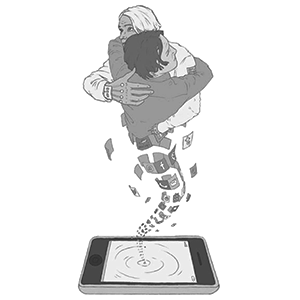
Cyborg anthropology is the discipline that studies the interaction between humanity and technology from an anthropological perspective. The topic originated as a sub-focus group within the American Anthropological Association’s annual meeting in 1993. The sub-group was very closely related to two other academic disciplines, STS (Science, technology and society) and the Society for the Social Studies of Science.
Historian and feminist Donna Haraway’s 1985 ‘Cyborg Manifesto’ could be considered the founding document of cyborg anthropology by first exploring the philosophical and sociological ramifications of the term. More recently, Amber Case has been responsible for setting up the Cyborg Anthropology Wiki.
read more »
Posted in Philosophy, Technology, World |
1 Comment »
November 29, 2012
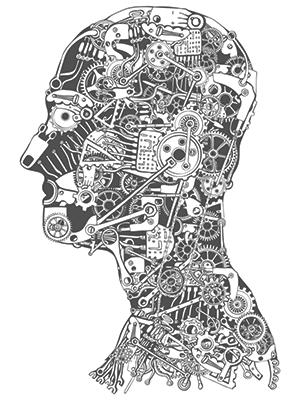
‘The Singularity Is Near: When Humans Transcend Biology’ is a 2005 update of Raymond Kurzweil’s 1999 book ‘The Age of Spiritual Machines’ and his 1990 book ‘The Age of Intelligent Machines.’ In it, as in the two previous versions, Kurzweil attempts to give a glimpse of what awaits us in the near future.
He proposes a coming technological singularity (a period of rapid change), and how we would thus be able to augment our bodies and minds with technology. He describes the singularity as resulting from a combination of three important technologies of the 21st century: genetics, nanotechnology, and robotics (including artificial intelligence).
read more »
Posted in Language, Technology |
Leave a Comment »
November 28, 2012

Game Boy Micro is a handheld game console developed and manufactured by Nintendo. It was first released in 2005. The system is the last console of the Game Boy line. The Game Boy Micro is the size of a typical Nintendo Entertainment System controller and a typical Famicom controller. The console retains some of the functionality of the Game Boy Advance SP, but with an updated form factor. It is unable to play original Game Boy and Game Boy Color games due to design changes. Even though it still has the required Z80 processor and graphics hardware necessary to run the old games, it is missing other circuitry necessary to be compatible with the old Game Boy cartridges.
It is officially incompatible with the Nintendo e-Reader and some other peripherals due to design issues. Additionally, it features a backlit screen with the ability to adjust the brightness so as to adapt to lighting. The Game Boy Micro features a removable face plate that allows consumers to purchase alternative designs. This device can play MP3 and digital video files from SD cards. The system retailed for US$99, compared to US$79 for the Game Boy Advance SP. Generally, the Game Boy Micro did not sell well, and failed to reach the company’s aim of units sold.
Posted in Games, Money, Technology |
Leave a Comment »
November 28, 2012

Plex is a partially open-source freeware media player software with a 10-foot user interface (optimized for use with a TV), with a matching closed source media server (Plex Media Server) software, which is available for Windows, Mac, and Linux. Its media player source code was initially forked from XBMC, a free media player, in 2008. Plex’s front end media player, Plex Media Center, allows the user to manage and playback video, photos, music, and podcasts from a local or remote computer running Plex Media Server.
In addition, the integrated Plex Online service provides the user with a growing list of community-driven plugins for online content including Hulu, Netflix, and CNN video. Plex began as a freeware hobby project but since 2010 has evolved into a commercial software business that is owned and developed by a single for-profit startup company, (Plex, Inc.).
read more »
Posted in Money, Technology |
Leave a Comment »
November 28, 2012

SIGGRAPH (short for Special Interest Group on GRAPHics and Interactive Techniques) is the name of the annual conference on computer graphics started in 1974. The conference is attended by tens of thousands of computer professionals. Some highlights of the conference are its Animation Theater and Electronic Theater presentations, where recently created CG films are played. There is a large exhibition floor, where several hundred companies set up elaborate booths and compete for attention and recruits. Most of the companies are in the engineering, graphics, motion picture, or video game industries.
There are also many booths for schools which specialize in computer graphics or interactivity. Dozens of research papers are presented each year, and SIGGRAPH is widely considered the most prestigious forum for the publication of computer graphics research. In 1984, under LucasFilm Computer Group, John Lasseter’s first computer animated short, ‘The Adventures of André & Wally B.,’ premiered at SIGGRAPH. Pixar’s first computer animated short, ‘Luxo, Jr.’ debuted in 1986, and Pixar has debuted numerous shorts at the conference since. Since 2008, a second yearly SIGGRAPH conference has been held in Asia. The first SIGGRAPH Asia conference was held in Singapore; the second one in Yokohama, Japan in the period in 2009; and the third in Seoul, Korea in 2010.
Posted in Art, Money, Technology |
Leave a Comment »
November 26, 2012
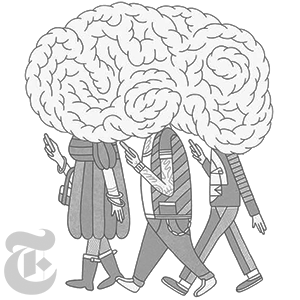
Collective intelligence is a shared or group intelligence that emerges from the collaboration and competition of many individuals and appears in consensus decision making in organisms (including some bacteria) and computer networks. The term appears in sociobiology, political science, and in context of mass peer review and crowdsourcing web applications (e.g. Wikipedia). This broader definition involves consensus, social capital, and formalism such as voting systems, social media and other means of quantifying mass activity.
Everything from a political party to a public wiki can reasonably be described as this loose form of collective intelligence. The notion of collective intelligence has also been called ‘Symbiotic intelligence.’ A precursor of the concept is found in entomologist William Morton Wheeler’s observation that seemingly independent individuals can cooperate so closely as to become indistinguishable from a single organism. Wheeler saw this collaborative process at work in ants that acted like the cells of a single beast he called a ‘superorganism.’
read more »
Posted in Education, Technology, World |
Leave a Comment »
November 26, 2012

The Knowledge Graph is a knowledge base used by Google to enhance its search engine’s search results with semantic-search information gathered from a wide variety of sources. Knowledge Graph display was added to Google’s search engine in 2012, starting in the United States. It provides structured and detailed information about the topic in addition to a list of links to other sites. The goal is that users would be able to use this information to resolve their query without having to navigate to other sites and assemble the information themselves.
According to Google, this information is derived from many sources, including the CIA World Factbook, Freebase, and Wikipedia. The feature is similar in intent to answer engines such as Ask Jeeves and Wolfram Alpha. As of 2012, its semantic network contained over 500 million objects and more than 3.5 billion facts about and relationships between these different objects which are used to understand the meaning of the keywords entered for the search.
Posted in Education, Language, Technology |
Leave a Comment »
November 26, 2012

Natural language processing (NLP) is a field of computer science, artificial intelligence, and linguistics concerned with the interactions between computers and human (natural) languages.
As such, NLP is related to the area of human–computer interaction. Many challenges in NLP involve natural language understanding — that is, enabling computers to derive meaning from human or natural language input. An automated online assistant providing customer service on a web page, an example of an application where natural language processing is a major component.
read more »
Posted in Language, Technology, World |
Leave a Comment »
November 26, 2012

Deep learning refers to a sub-field of machine learning (systems that examine data, from sensors or databases, and identify complex relationships) that is based on learning several levels of representations, corresponding to a hierarchy of features or factors or concepts, where higher-level concepts are defined from lower-level ones, and the same lower-level concepts can help to define many higher-level concepts.
Deep learning is part of a broader family of machine learning methods based on learning representations. An observation (e.g., an image) can be represented in many ways (e.g., a vector of pixels), but some representations make it easier to learn tasks of interest (e.g., is this the image of a human face?) from examples, and research in this area attempts to define what makes better representations and how to learn them.
read more »
Posted in Education, Technology |
Leave a Comment »
November 25, 2012

Machine learning, a branch of artificial intelligence, is a scientific discipline concerned with the development of algorithms that take as input empirical data (from sensors or databases), identify complex relationships, and employ these identified patterns to make predictions. The algorithm studies a portion of the observed data (called ‘training data’) to capture characteristics of interest. Optical character recognition, in which printed characters are recognized automatically based on previous examples, is a classic engineering example of machine learning.
In 1959, AI pioneer Arthur Samuel defined machine learning as a ‘Field of study that gives computers the ability to learn without being explicitly programmed.’ Computer scientist Tom M. Mitchell provided a widely quoted, more formal definition: ‘A computer program is said to learn from experience E with respect to some class of tasks T and performance measure P, if its performance at tasks in T, as measured by P, improves with experience E.’
read more »
Posted in Education, Technology |
Leave a Comment »
November 21, 2012
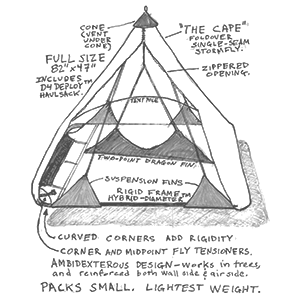
A portaledge is a deployable hanging tent system designed for rock climbers who spend multiple days and nights on a big wall climb. An assembled portaledge is a fabric-covered platform surrounded by a metal frame that hangs from a single point and has adjustable suspension straps. A separate cover, called a ‘stormfly,’ covers the entire system in the event of bad weather.
The first portaledges used in Yosemite were non-collapsible cots purloined from Housekeeping Camp, a Yosemite Valley campground that featured primitive metal framed bunks for the campers. These heavy cots were used on multi-day climbs on granite monoliths like El Capitan, and then sometimes tossed off the summit for later retrieval.
read more »
Posted in Games, Money, Technology |
Leave a Comment »



