April 26, 2012

Vocaloid is a singing synthesizer. Its signal processing part was developed through a joint research project led by Kenmochi Hideki at the Pompeu Fabra University in Spain in 2000. Backed by the Yamaha Corporation it was developed into a commercial product, which was first released in 2004. The software enables users to synthesize singing by typing in lyrics and melody. It uses synthesizing technology with specially recorded vocals of voice actors or singers. A piano roll type interface is used to input the melody and the lyrics can be entered on each note. The software can change the stress of the pronunciations, add effects such as vibrato, or change the dynamics and tone of the voice.
Each Vocaloid is sold as ‘a singer in a box’ designed to act as a replacement for an actual singer. The software was originally only available in English and Japanese, but as of Vocaloid 3, Spanish, Chinese, and Korean have been added. The software is intended for professional musicians as well as light computer music users and has so far sold on the idea that the only limits are the users’ own skills. Japanese musical groups Livetune and Supercell have released their songs featuring Vocaloid as vocals. Japanese record label Exit Tunes of Quake Inc. also have released compilation albums featuring Vocaloids. Artists such as Mike Oldfield have also used Vocaloids within their work for back up singer vocals and sound samples.
read more »
Posted in Language, Money, Technology |
Leave a Comment »
April 26, 2012

Clay Shirky (b. 1964) is an American writer, consultant, and teacher on the social and economic effects of Internet technologies. He has a joint appointment at NYU as a Distinguished Writer in Residence at the Arthur L. Carter Journalism Institute and Assistant Arts Professor in the New Media focused graduate Interactive Telecommunications Program (ITP). His courses address, among other things, the interrelated effects of the topology of social networks and technological networks, how our networks shape culture and vice-versa.
Shirky divides his time between consulting, teaching, and writing on the social and economic effects of Internet technologies. His consulting practice is focused on the rise of decentralized technologies such as peer-to-peer, web services, and wireless networks that provide alternatives to the wired client–server infrastructure that characterizes the World Wide Web. He is a member of the Wikimedia Foundation’s Advisory Board. In 2010, Kevin Kelly (founding executive editor of ‘Wired’ magazine) cited the phrase ‘Institutions will try to preserve the problem to which they are the solution,’ and called it the ‘Shirky Principle,’ as the phrasing reminded him of the clarity of the Peter Principle.
read more »
Posted in Language, Politics, Technology |
Leave a Comment »
April 26, 2012

Orbital are a British electronic dance music duo from England consisting of brothers Phil and Paul Hartnoll. Their career initially ran from 1989 until 2004, but in 2009 they announced that they would be reforming and headlining The Big Chill, (an annual festival of alternative, dance, and chill-out music, and comedy, held in the grounds of Eastnor Castle during early August) in addition to a number of other live shows in 2009.
The band’s name was taken from Greater London’s orbital motorway, the M25, which was central to the early rave scene and party network in the South East during the early days of acid house. One of the biggest names in British electronica during the 1990s, Orbital were both critically and commercially successful, and known particularly for their element of live improvisation during shows, a rarity among techno acts. They were initially influenced by early electro and punk rock.
read more »
Posted in Art, Technology, World |
Leave a Comment »
April 26, 2012
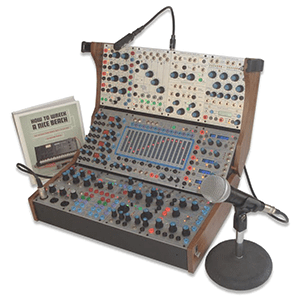
Don Buchla (b. 1937) is a pioneer in the field of sound synthesizers, releasing his first units months after Robert Moog’s first synthesizers. Buchla formed his electronic music equipment company, Buchla and Associates, in 1962 in Berkeley, California. Buchla was commissioned by avant garde music composers Morton Subotnick and Ramon Sender, both of the San Francisco Tape Music Center (which studies the incorporation of electric sound production into compositional practice), to create an electronic instrument for live performance. Under a grant from the Rockefeller Foundation Buchla completed his first modular synthesizer in 1963. The result was the Buchla Series 100, which he began selling in 1966. Buchla’s synthesizers experimented in control interfaces, such as touch-sensitive plates. In 1969 the Series 100 was sold to CBS, who soon after dropped the line, not seeing the synthesizer market as a profitable area.
In 1970 the Buchla 200 series Electric Music Box was released and was manufactured until 1985. Buchla created the Buchla Series 500, the first digitally controlled analog synthesizer, in 1971. Shortly after, the Buchla Series 300 was released, which combined the Series 200 with microprocessors. The Music Easel, a small, portable, all-in-one synthesizer was released in 1972. The Buchla 400 was released in 1982, which featured a video display. In 1987 the fully MIDI enabled Buchla 700 was released. Beginning in the 1990s, Buchla began designing alternative MIDI controllers, such as the Thunder, Lightning, and Marimba Lumina. With the recent resurgence of interest in analog synthesizers Buchla has released a revamped 200 series called the 200e.
Posted in Art, Money, Technology |
Leave a Comment »
April 26, 2012
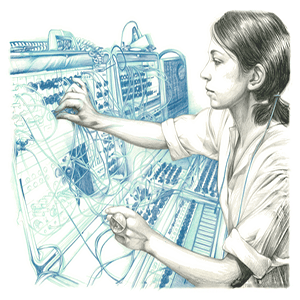
Suzanne Ciani [cha-nee] (b. 1946) is an Italian American pianist and music composer who found early success with innovative electronic music. She received classical music training at Wellesley College and obtained her M.A. in music composition in 1970 at University of California, Berkeley where she met and was influenced by the synthesizer designer, Don Buchla. She studied computer generated music with John Chowning and Max Mathews at Stanford’s Artificial Intelligence Labs in the early 1970s.
In 1974 she formed her own company, Ciani/Musica, and, using a Buchla Analog Modular Synthesizer, composed scores for television commercials for corporations such as Coca-Cola, Merrill Lynch, AT&T, and General Electric. Besides music, her specialty was reproducing sound effects on the synthesizer that recording engineers had found difficult to record properly; the sound of a bottle of Coca-Cola being opened and poured was one of Ciani’s most widely recognized works, and was used in a series of radio and television commercials in the late 1970s.
read more »
Posted in Art, Money, Technology |
1 Comment »
April 24, 2012

Automated essay scoring (AES) is the use of specialized computer programs to assign grades to essays written in an educational setting. It is a method of educational assessment and an application of natural language processing. Its objective is to classify a large set of textual entities into a small number of discrete categories, corresponding to the possible grades—for example, the numbers 1 to 6. Therefore, it can be considered a problem of statistical classification.
Several factors have contributed to a growing interest in AES. Among them are cost, accountability, standards, and technology. Rising education costs have led to pressure to hold the educational system accountable for results by imposing standards. The advance of information technology promises to measure educational achievement at reduced cost.
read more »
Posted in Education, Language, Technology |
Leave a Comment »
April 24, 2012

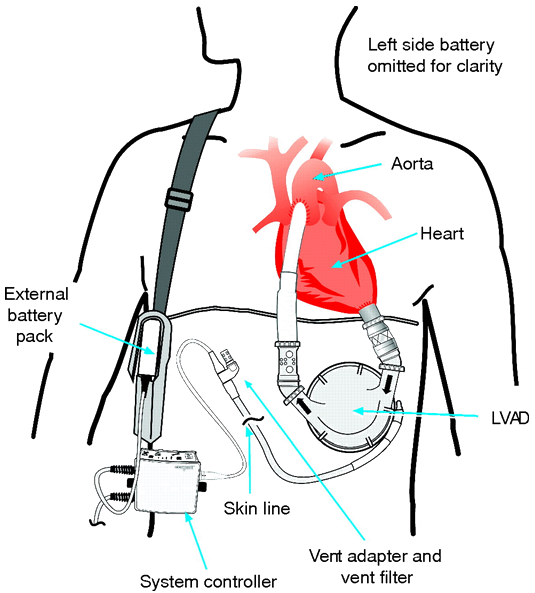
A Ventricular assist device [ven-trik-yuh-ler] (VAD) is a mechanical circulatory device that is used to partially or completely replace the function of a failing heart. Some VADs are intended for short term use, typically for patients recovering from heart attacks or heart surgery, while others are intended for long term use (months to years and in some cases for life), typically for patients suffering from congestive heart failure. VADs are designed to assist either the right (RVAD) or left (LVAD) ventricle, or both at once (BiVAD).
Which of these types is used depends primarily on the underlying heart disease and the pulmonary arterial resistance that determines the load on the right ventricle. LVADs are most commonly used, but when pulmonary arterial resistance is high, right ventricular assistance becomes necessary. Long term VADs are normally used to keep patients alive with a good quality of life while they wait for a heart transplantation (known as a ‘bridge to transplantation’). However, LVADs are sometimes used as ‘destination therapy’ (therapy when a heart transplant is not an option) and sometimes as a ‘bridge to recovery.’
read more »
Posted in Health, Technology |
Leave a Comment »
April 23, 2012

In William Gibson’s fiction, the Sprawl is a colloquial name for the Boston-Atlanta Metropolitan Axis (BAMA), an urban sprawl environment on a massive scale, and a fictional extension of the real Northeast Megalopolis. The novels ‘Neuromancer’ (1984), ‘Count Zero’ (1986), and ‘Mona Lisa Overdrive’ (1988) (collectively known as the Sprawl trilogy) take place in this environment, as do the short stories ‘Johnny Mnemonic,’ ‘New Rose Hotel,’ ‘Burning Chrome,’ and ‘Fragments of a Hologram Rose.’
The Sprawl is a visualization of a future where virtually the entire East Coast of the United States, from Boston to Atlanta, has melded into a single mass of urban sprawl. It has been enclosed in several geodesic domes and merged into one megacity. The city has become a separate world with its own climate, no real night/day cycle, and an artificial sky that is always grey. It is said of the Sprawl that ‘the actors change but the play remains the same.’
Posted in Art, Language, Technology |
Leave a Comment »
April 23, 2012

Ecumenopolis [ek-yoo-meh-nop-oh-lys] (Greek: ‘world city’) is a word invented in 1967 by the Greek city planner Constantinos Doxiadis to represent the idea that in the future urban areas and megalopolises would eventually fuse and there would be a single continuous worldwide city as a progression from the current urbanization and population growth trends.
Before the word was coined, the American religious leader Thomas Lake Harris (1823–1906) mentioned city-planets in his verses, and science fiction author Isaac Asimov uses the city-planet Trantor as the setting of some of his novels.
read more »
Posted in Politics, Technology, World |
Leave a Comment »
April 22, 2012

The Pebble E-Paper Watch, known now as the Pebble Classic, is an American smartwatch developed by Pebble Technology Corporation, and is the first generation of the Pebble watch lineup. The smartwatch was pledged from a Kickstarter campaign, proving massively successful, collecting around $10 million for development of the smartwatch.
Pebble connects to both Android and iOS phones, so they can display notifications from the phone, control music, view calendar events, and create reminders. An online app store makes the Pebble compatible with apps tailored for them from many third party sellers, for many purposes especially sports. In 2015, Pebble Technology released its second-generation Time, with a color e-paper display, microphone, and updated design.
Posted in Money, Technology |
Leave a Comment »
April 20, 2012


A demo (demonstration) is a non-interactive multimedia presentation made within the computer subculture known as the demoscene. Demogroups create demos to demonstrate their abilities in programming, music, drawing, and 3D modeling.
The key difference between a classical animation and a demo is that the display of a demo is computed in real time, making computing power considerations the biggest challenge. Demos are mostly composed of 3D animations mixed with 2D effects and full screen effects.
read more »
Posted in Art, Games, Technology |
Leave a Comment »
April 19, 2012
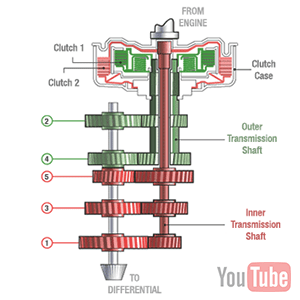
A double clutch is a driving procedure primarily used for vehicles with an unsynchronized manual transmission. The double clutching technique involves the following steps:
1) The throttle (accelerator) is released, the clutch pedal is pressed, and the gearbox is shifted into neutral. 2) The clutch pedal is then released, the driver matches the engine RPM to the gear RPM either using the throttle (accelerator) (when changing down) or waiting for RPM to decrease (when changing up) until they are at a level suitable for shifting into the next gear. 3) At the moment when the revs between engine and gear are closely matched, the driver then instantly presses the clutch again to shift into the next gear. The whole maneuver can, with practice, take no more than a fraction of a second, and the result is a very smooth gear change.
read more »
Posted in Games, Technology |
Leave a Comment »