August 17, 2011
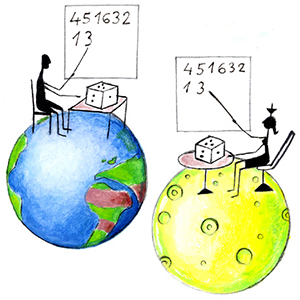
An ansible [an-si-bull] is a hypothetical machine capable of instantaneous or superluminal (faster-than-light) communication. They are used as science fiction plot devices and in thought experiments of theoretical physics. The word was coined by American author Ursula K. Le Guin in her 1966 novel, ‘Rocannon’s World.’
She derived the name from ‘answerable,’ as the device would allow its users to receive answers to their messages in a reasonable amount of time, even over interstellar distances. The name of the device has since been borrowed by authors such as Orson Scott Card and Vernor Vinge; similar devices are present in the works of numerous others, such as Frank Herbert. One ansible-like device which predates Le Guin’s is the ‘Dirac communicator’ in James Blish’s 1954 short story ‘Beep.’ The device received the sum of all transmitted messages in universal space-time, in a single pulse, so that demultiplexing yielded information about the past, present, and future.
read more »
Posted in Language, Science, Technology |
Leave a Comment »
August 16, 2011

Raymond Loewy [loh-ee] (1893 – 1986) was an industrial designer. Born in France, he spent most of his professional career in the United States. Among his work were the Shell and former BP logos, the Greyhound bus, the Coca-Cola bottle, the Pennsylvania Railroad GG1 and S-1 locomotives, the Lucky Strike package, Coldspot refrigerators, the Studebaker Avanti and Champion, and the Air Force One livery. His career spanned seven decades.
Loewy was born in Paris in 1893, the son of a Jewish Viennese journalist and French woman. He served in the French army during World War I, attaining the rank of captain. He boarded a ship to America in 1919 with only his French officer’s uniform and $50 in his pocket. He lived in New York and found work as a window designer for department stores, including Macy’s, Wanamaker’s and Saks in addition to working as a fashion illustrator for Vogue and Harper’s Bazaar.
read more »
Posted in Art, Money, Technology |
Leave a Comment »
August 16, 2011
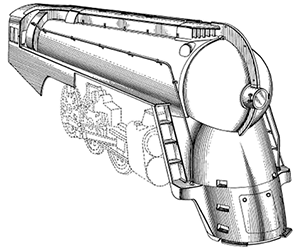

Henry Dreyfuss (1904 – 1972) was an American industrial designer. Dreyfuss was a native of Brooklyn, New York. As one of the celebrity industrial designers of the 1930s and 1940s, Dreyfuss dramatically improved the look, feel, and usability of dozens of consumer products.
As opposed to Raymond Loewy and other contemporaries, Dreyfuss was not a stylist: he applied common sense and a scientific approach to design problems. His work both popularized the field for public consumption, and made significant contributions to the underlying fields of ergonomics, anthropometrics, and human factors.
Posted in Art, Money, Technology |
Leave a Comment »
August 15, 2011
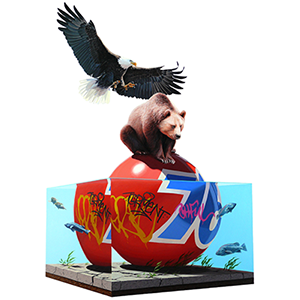
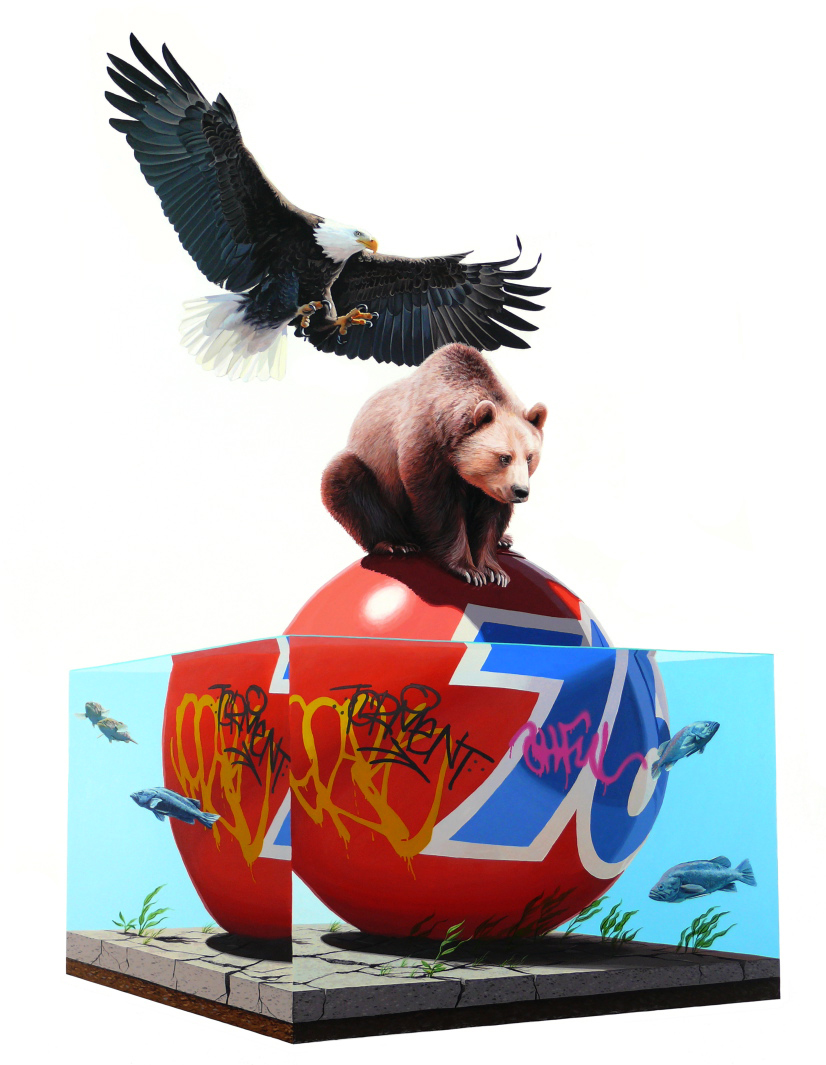
Josh Keyes (b. 1969) is an American contemporary artist who works with painting, drawing, and installation art. He currently works out of Portland, Oregon. His work has been described as ‘a satirical look at the impact urban sprawl has on the environment and surmises, with the aid of scientific slices and core samples, what could happen if we continue to infiltrate and encroach on our rural surroundings.’
Josh’s work brings to mind the detail and complexity of natural history dioramas, and the color and diagrammatic complexity one might find in cross section illustrations from a vintage science textbook. His work has developed over the past years into a complex personal vocabulary of imagery that creates a mysterious and sometimes unsettling juxtaposition between the natural world and the man made landscape.
read more »
Posted in Art, Politics, Technology |
Leave a Comment »
August 15, 2011
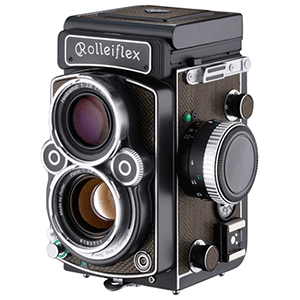
A twin-lens reflex camera (TLR) is a type of camera with two objective lenses of the same focal length. One of the lenses is the photographic objective or ‘taking lens,’ while the other is used for the viewfinder system, which is usually viewed from above at waist level. In addition to the objective, the viewfinder consists of a 45-degree mirror (the reason for the word reflex in the name), a matte focusing screen at the top of the camera, and a pop-up hood surrounding it. The two objectives are connected, so that the focus shown on the focusing screen will be exactly the same as on the film.
However, many inexpensive TLRs are fixed-focus models. Most TLRs use leaf shutters with shutter speeds up to 1/500th sec with a B setting. For practical purposes, all TLRs are film cameras, most often using 120 film, although there are many examples which used other formats. No general-purpose digital TLRs exist, since their heyday ended long prior to the digital era. The main exception is the collector-oriented Rollei Mini-Digi, introduced as a rather expensive ‘toy’ in 2004.
read more »
Posted in Art, Money, Technology |
Leave a Comment »
August 15, 2011
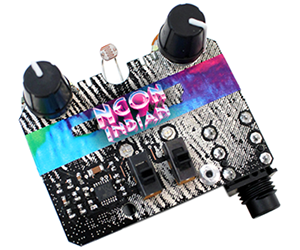

Chillwave, sometimes also referred to as Glo-Fi, is a genre of music where artists are often characterized by their heavy use of effects processing, synthesizers, looping, sampling, and heavily filtered vocals with simple melodic lines.
The genre combines the larger 2000s trends towards 80s retro music and (in indie music) use of ambient sound, with modern pop. The term is said to have been originated on the Hipster Runoff blog.
read more »
Posted in Art, Language, Technology |
Leave a Comment »
August 14, 2011

Sousveillance [soo-vay-lance] refers to the recording of an activity by a participant in the activity typically by way of small wearable or portable personal technologies. Sousveillance has also been described as ‘inverse surveillance’ because the term stems from the contrasting French words ‘sur,’ meaning ‘above,’ and ‘sous,’ meaning ‘below,’ i.e. ‘surveillance’ denotes the ‘eye-in-the-sky’ watching from above, whereas ‘sousveillance’ denotes bringing the camera or other means of observation down to human level, either physically (mounting cameras on people rather than on buildings), or hierarchically (ordinary people doing the watching, rather than higher authorities or architectures doing the watching).
While surveillance and sousveillance both generally refer to visual monitoring (i.e. ‘veiller’ being ‘to watch’), the terms also denote other forms of monitoring such as audio surveillance or sousveillance. In the audio sense (e.g. recording of phone conversations) sousveillance is referred to as ‘one party consent.’
read more »
Posted in Language, Politics, Technology |
Leave a Comment »
August 12, 2011

A Mouli grater is a hand-operated cooking tool designed for grating or pureeing small quantities of food. The device consists of a small metal drum with holes that grate the food and a handle for turning the drum. Mouli is a French brand name that later changed into Moulinex. A grating cylinder similar to the one used in this design later turned up in food processors from that company.
The hand-held unit consists of two sections with hinged handles. The end of one handle contains a food hopper with a grating cylinder and a crank for rotating the cylinder. The other section has a rounded surface that acts as a clamp, pressing the food to be grated into the grating cylinder. The hinged handles are held in one hand and squeezed so that the food presses against the grating cylinder. Meanwhile, the other hand turns the crank, causing the cylinder to rotate and the food to be grated.
Posted in Food, Technology |
Leave a Comment »
August 10, 2011

Since its premiere in 1968, 2001: A Space Odyssey has been analyzed and interpreted by multitudes of people ranging from professional movie critics to amateur writers and science fiction fans. The director of the film, Stanley Kubrick, wanted to leave the film open to philosophical and allegorical interpretation, purposely presenting the final sequences of the film without the underlying thread being apparent; a concept illustrated by the final frame of the film, which contains the image of the embryonic ‘Starchild.’
Kubrick encouraged people to explore their own interpretations of the film, and refused to offer an explanation of ‘what really happened’ in the movie, preferring instead to let audiences embrace their own ideas and theories. In a 1968 interview with Playboy magazine, Kubrick stated: ‘You’re free to speculate as you wish about the philosophical and allegorical meaning of the film—and such speculation is one indication that it has succeeded in gripping the audience at a deep level—but I don’t want to spell out a verbal road map for ‘2001’ that every viewer will feel obligated to pursue or else fear he’s missed the point.’
read more »
Posted in Art, Philosophy, Technology |
Leave a Comment »
August 9, 2011

Moombahton is a genre of electronic dance music that was created by American dj/producer Dave Nada (aka Dave Villegas) at a high school homecoming ‘skipping party’ for his younger cousin in Washington, D.C., in the fall of 2009.
The specific event that stimulated NADA’s development of the Moombahton genre was his slowing the Afrojack remix of the Silvio Ecomo and DJ Chuckie song ‘Moombah’ to 108 beats per minute. Because that tempo nears that of the reggaeton, Nada created the neologism ‘Moombahton.’
Posted in Art, Technology |
Leave a Comment »
August 2, 2011

Sky lanterns, also known as Kongming Lantern are airborne paper lanterns found in some Asian cultures. They are constructed from oiled rice paper on a bamboo frame, and contain a small candle or fuel cell composed of a waxy flammable material. When lit, the flame heats the air inside the lantern, thus lowering its density causing the lantern to rise into the air. The sky lantern is only airborne for as long as the flame stays alight, after which the lantern floats back to the ground.
According to popular lore, the Kongming Lantern was the first hot air balloon, said to be invented by the Chinese sage and military strategist Zhuge Liang, whose reverent term of address (i.e. Chinese style name) was Kongming. They were first deployed at the turn of the 3rd century as a type of signaling balloon or, it is claimed, as a type of spy blimp in warfare. Alternatively the name may come from the lantern’s resemblance to the hat Kongming is traditionally shown to be wearing.
read more »
Posted in Games, Technology, World |
Leave a Comment »
July 31, 2011
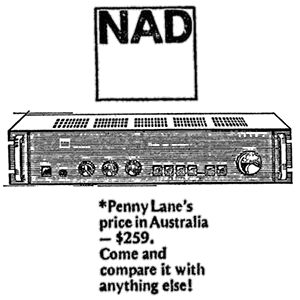
NAD is an electronics firm whose products include low-cost home audiophile amplifiers and related components. NAD was an acronym for New Acoustic Dimension. The company was founded in London, England in 1972 by Dr. Martin L. Borish, an electrical engineer with a Ph.D. in Physics. Its most famous product is the late-1970s NAD 3020 amplifier, designed by Bjørn Erik Edvardsen, which became a staple of low-budget Hi-Fi in Britain. NAD’s philosophy is to include only genuinely useful features for aesthetically understated designs. The company focuses on ‘effective power’ and its amplifiers have been known for delivering generous headroom, meaning that they can deliver dynamic power bursts far in excess of their rated power. The key to this feature is a flexible power supply which stores significant reserve current for quick release at moments of high musical load. The various incarnations of this design have been associated with different names over the years including Power Envelope and recently PowerDrive.
Additional benefits of this approach include the fact that amplifiers using this technology can handle complex, real-life, lower-impedance loudspeaker loads as compared with the simple 8-ohm resistor typically used to calculate advertised power ratings and the fact that the circuitry in this approach requires less cooling, while maintaining ability to handle complex impedance loads as low as 2 ohms. An amplifier that is overdriven, or pushed beyond its designed power capabilities, produces audible distortion known as clipping by cutting off extremes of the music waveform, resulting in harshly unpleasant sound and threatening damage to speakers, particularly tweeters. NAD amplifiers incorporate a user-defeatable ‘Soft-Clipping’ circuit to address this issue. It gently transforms the music waveform as the point of clipping approaches, the goal being clearer reproduction and simultaneous protection of speakers.
Posted in Money, Technology |
Leave a Comment »


 The Daily Omnivore