
A Millwall brick is an improvised weapon made of a manipulated newspaper. It was named for supporters of Millwall F.C., who had a stereotyped reputation for football hooliganism.
The Millwall brick was allegedly used as a stealth weapon at football matches in England during the 1960s and 1970s.
read more »
September 14, 2012
Millwall Brick
September 14, 2012
Asian Blepharoplasty
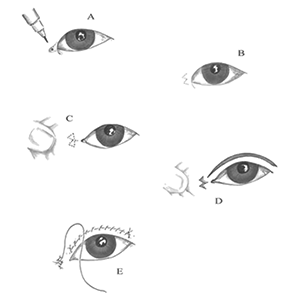
Asian blepharoplasty [blef-er-uh-plas-tee], also known as ‘double eyelid surgery,’ is a type of cosmetic surgery where the skin around the eye is reshaped. The purpose of the procedure is to create an upper eyelid with a crease (‘double eyelid’) from an eyelid that is naturally without a crease. The procedure has been a subject of controversy, and was described by opponents, such as author David Mura, as being ‘indoctrinated by white standards of beauty.’ New York based cosmetic surgeon Dr. Edward Kwak states that many patients who get the procedure done are ‘not trying to look white,’ but look like the many north and eastern Asians who naturally have an eyelid fold.
While there are some Asians with a double eyelid and some without, there is also a large variation in the crease position (double eyelid size) of the East Asian upper eyelid. The upper lid fold can range from 1 mm above the eyelash line to about 10 mm. Asian blepharoplasties have been reported to be the most common aesthetic procedure in Taiwan, South Korea, and other parts of East Asia. The procedure has been reported to have some risk of complications, but is generally quite safe if done by an expert plastic surgeon. A procedure to remove the epicanthal fold (near the tear duct) (i.e. an epicanthoplasty) is often performed in conjunction.
September 13, 2012
@earth

@earth is a 2011 book made by London born (and based) photomontage artist Peter Kennard with Lebanese artist Tarek Salhany. It is a photo-essay told through photomontage with seven chapters exposing the current state of the earth, the conditions of life on it and the need to resist injustice. Apart from the title (which is also in different languages on its back cover) the pocket book contains no words and its story is told in sequences of constructed images. ‘@earth’ combines images created digitally over the past two years by Kennard with Salhany especially for the project, with Kennard’s earlier darkroom based photomontages (spanning over 40 years of work) some of which are part of the Tate Permanent Collection. They have been recontextualised for the book. The authors met whilst Kennard taught Salhany at the Byam Shaw School of Art in London.
‘@earth’ has received recognition from, amongst others, Naomi Klein (author of ‘No Logo’ and ‘The Shock Doctrine’) who has said: ‘This book perfectly captures the brutal asymmetries of our age: heavy weaponry trained on broken people, all-seeing technologies and disappearing identities, perpetually exhaling industry and an asphyxiating planet. If there’s a word that’s worth a thousand pictures, it’s ‘@earth.”
September 12, 2012
Luaka Bop

Luaka Bop is a world music-oriented record label established by David Byrne, former guitarist, singer-songwriter and producer of the art rock-new wave band Talking Heads. It has been a wholly independent label since leaving Universal Music Group’s V2 in 2006. Luaka Bop has been responsible for compilations representing sounds from around the world as well as the release of full length albums, EPs, and singles from individual artists and bands.
‘Brazil Classics’ kicked off the label and a set of seven albums surveying eras and artists ranging from Samba to Tropicália. Ventures into Afro-Peruvian and AfroPean musics unearthed the talents of Susana Baca and Zap Mama, respectively. ‘World Psychedelic Classics’ is made up of three albums and includes artists such as Shuggie Otis, Os Mutantes, as well as West African artists of the late 1960s. Additionally, the label has released ‘Cuba’ and ‘Asia Classics.’
read more »
September 10, 2012
Korean Wave

The Korean wave refers to the significant increase in the popularity of South Korean entertainment and culture starting in the 1990s, in Asia, and more recently in other parts of the world. It represents a surge in the international visibility of Korean culture.
The term was coined in mid 1999 by Beijing journalists surprised at the fast growing popularity of Korean entertainment and culture in China. The wave has had considerable impact on the South Korean economy, as well as on the political and cultural influence of South Korea. For example, in 2011 based on international activity the Korean wave added approximately USD$3.8 billion dollars of revenue to the South Korean economy.
read more »
September 10, 2012
Gangnam Style

‘Gangnam Style‘ is a 2012 K-pop single by the South Korean rapper PSY. ‘Gangnam Style’ is widely praised for its humor, catchy rhythm as well as Psy’s unusual dance moves that have introduced many people to K-pop (South Korean pop music). ‘Gangnam Style’ is a Korean language colloquialism that refers to a luxurious lifestyle associated with the Gangnam district, an affluent and trendy area of Seoul. The music video depicts Psy dancing at various locations in Gangnam.
The song is about ‘the perfect girlfriend who knows when to be refined and when to get wild.’ The music video shows PSY dancing a comical horse-riding dance and appearing in unexpected locations around Gangnam such as an outdoor yoga session and a hot tub. The ‘skewering [of] the Gangnam image’ by the ‘non-Gangnam PSY’ is recognizable to Korean viewers, but those less familiar with the cultural context have found the video ‘fresh’ amidst the teen pop idol groups increasingly popular with overseas viewers.
September 10, 2012
I would rather cry in a BMW

‘I would rather cry in a BMW‘ is a quotation that became an online sensation in China in 2010. It originated from Ma Nuo, a 20-year-old female contestant on the television show ‘Fei Cheng Wu Rao’ (also known in English as ‘If you are the One’).
The line was in response to a question by an unemployed suitor who asked if Ma would ‘ride a bicycle with him’ on a date. The series of events have been summed up in the media with the quip ‘I would rather cry in a BMW than laugh on a bicycle.’
read more »
September 8, 2012
Hot Sauce
Hot sauce refers to any spicy sauce made from chili peppers and other ingredients. A group of chemicals called capsaicinoids are responsible for the heat in chili peppers. The peppers are infused in anything from vinegar, oil, water, beer and alcohol to fruits and vegetable pulp. Additional ingredients are often used, including those used to add extra heat, such as pure capsaicin extract and mustards.
Mexican hot sauce typically focuses more on flavor than on intense heat. The sauces are hot, but the individual flavors of the peppers are pronounced. Vinegar is used sparingly or not at all. Chipotles (smoked chili peppers) are a very popular ingredient of Mexican hot sauce.
read more »
September 8, 2012
Poka-yoke
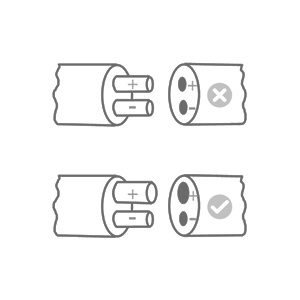
Poka-yoke is a Japanese term that means ‘fail-safing’ or ‘mistake-proofing.’ A poka-yoke is any mechanism in a lean manufacturing process that helps an equipment operator avoid (‘yokeru’) mistakes (‘poka’).
Its purpose is to eliminate product defects by preventing, correcting, or drawing attention to human errors as they occur. The concept was formalized, and the term adopted, by Shigeo Shingo as part of the Toyota Production System. It was originally described as ‘baka-yoke,’ but as this means ‘fool-proofing’ (or ‘idiot-proofing’) the name was changed to the milder poka-yoke. More broadly, the term can refer to any behavior-shaping constraint designed into a process to prevent incorrect operation by the user.
read more »
September 4, 2012
Daggering

Daggering is a form of dance originating from the Caribbean. The dance incorporates sexual and other forms of frantic movement. The activity of ‘daggering’ has been present in Jamaica’s dancehalls for many years, but only recently has the name of daggering become acceptable. Some argue that it’s roughly the equivalent of the Caribbean’s ‘cabin stabbing,’ another style of music and dance.
‘Mojo’ magazine journalist and reggae historian David Katz attributes the recently gained popularity of daggering to a series of dancehall music videos and artists that promoted the style. Later on, controversial YouTube videos of people performing daggering would spread the trend worldwide. Daggering is performed on Dancehall-music, although some artists have specifically created ‘daggering’ music, such as Mr. Vegas, Aidonia, and Major Lazer.
read more »
September 3, 2012
International Linear Collider
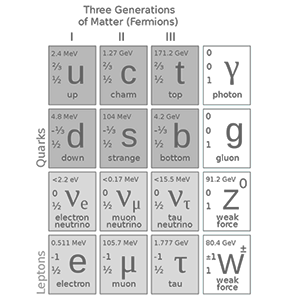
The International Linear Collider (ILC) is a proposed linear particle accelerator to succeed the Large Hadron Collider (LHC), the world’s largest and highest-energy particle accelerator. The ILC is planned to have a collision energy of 500 GeV initially, with the possibility for a later upgrade to 1,000 GeV (1 TeV).
The host country for the accelerator has not yet been chosen and proposed locations are Japan, Europe (CERN), and the USA (Fermilab). Japan is considered the most likely candidate, as the Japanese government is willing to contribute half of the costs, according to a representative for the European Commission on Future Accelerators.
read more »
September 1, 2012
Kaikai Kiki
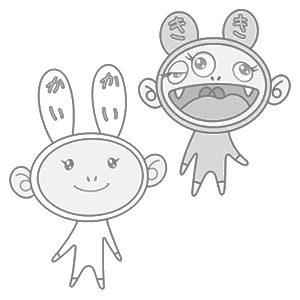
Kaikai Kiki Co. is an artists’ collective founded by the artist Takashi Murakami of Japan. It was originally founded to manage the many assistants employed to create Murakami’s work. It gradually evolved into a collaborative vehicle for other like-minded artists. Many of the artists were of a younger generation and have benefited greatly by the help in the production, distribution and sale of their own work, and also participating in international exhibitions with Murakami serving as artist or curator.
Kaikai and Kiki are characters that represent Murakami’s spiritual guardians. One is white with big ears and a smiling mouth (Kaikai), the other is pink with small ears, three eyes and some shark-like teeth (Kiki). The word kaikaikiki is used to describe the work of Kano Eitoku, a 16th century Japanese painter who is known as a genius of the Kano style. Murakami uses Japanese lettering to write the term on the ears of his characters, and their origins derive from descriptions of Kano’s work as kaikaikiki ‘bizarre, yet refined,’ ‘delicate yet bold.’


 The Daily Omnivore