June 14, 2011

Ben Wilson is a London-based artist who creates tiny works of art by painting onto chewing gum stuck to the pavement. Wilson started experimenting with occasional chewing-gum paintings in 1998, and in 2004 began working on them full time.
He has created more than 10,000 of these works on pavements all over the UK and parts of Europe. Wilson heats the gum with a small blow torch and then adds lacquer to harden it. He then uses special acrylic paints to create his designs. The paintings can take up to ten hours to produce. In 2005, he was arrested in Trafalgar Square, and in 2009 he was arrested by the City of London Police on suspicion of criminal damage, although the case was dropped a few months later.
Posted in Art, Humor, World |
1 Comment »
June 13, 2011

Rudolf Hess (1894 – 1987) was a prominent Nazi politician and official acting as Adolf Hitler’s Deputy in the Nazi Party during the 1930s and early 1940s. On the eve of war with the Soviet Union, he flew solo to Scotland in an attempt to negotiate peace with the United Kingdom, but instead was arrested and held in captivity for the rest of the war. Hess was tried at Nuremberg and sentenced to life in prison at Spandau Prison, Berlin, where he died in 1987.
Hess’ 1941 attempt to negotiate peace and subsequent lifelong imprisonment have given rise to many theories about his motivation for flying to Scotland, and conspiracy theories about why he remained imprisoned alone at Spandau, long after all other convicts had been released. Precise and detailed information on many aspects of Hess’ situation either has been withheld in confidential archives in several nations, or has disappeared outright; this has made accurate historical conclusions very problematic.
read more »
Posted in Politics, War, World |
Leave a Comment »
June 7, 2011

Tecnocumbia [tek-noh-koom-bee-uh] is a style of Cumbia (Latin American folk music) were there is a fusion between electronic sounds generated by electronic musical instruments and traditional instruments. The term ‘tecnocumbia’ was coined in Mexico to describe this type of music, but the style of music was developed throughout South America with different names given to it. In Mexico, it developed as a variant of the Mexican cumbia that started in the early 80s. The style added electronic instruments along with samplers to the Mexican cumbia music. One of the first musical groups with electrical 80’s sounds was Super Show de los Vazkez from Veracruz, formed in 1981. In the early 90s Selena the ‘Tex-mex queen’ had hits in U.S. and Mexico in the tecnocumbia style.
In South America, where the Colombian Cumbia most easily expanded in popularity, different ‘modern’ styles of the original Colombian rhythm were started mainly in the countries of Peru, Ecuador and Bolivia. The Peruvian cumbia, developed in the early 60s, used electric guitars and synthesizers along with the other classical instruments of the Colombian cumbia in order to create a kind of tropical sound. Variations within the Peruvian cumbia added more tropical rhythms along with a more Andean flavor, which eventually resulted in the creation of the Andean cumbia (Commonly called ‘Chicha music’ in Peru).
Posted in Art, Technology, World |
Leave a Comment »
June 7, 2011


Cumbia [koom-bee-uh] is a Latin American music style that originated in Colombia’s Caribbean coastal region. Traditional cumbia and its associated dance is considered to be representative of Colombia, along with Vallenato, Bambuco and Pasillo. Cumbia originated in the Caribbean coast of eastern Colombia, but there are also folkloric variants in Panama.
During the mid-20th century, Colombian band leaders such as Pacho Galan and Lucho Bermudez orchestrated this Caribbean folklore and brought it to different parts of Latin America, where it gained particular popularity in Mexico, Argentina, and the Andean region. Cumbia began as a courtship dance practiced among the African slave population that was later mixed with European instruments and musical characteristics. Cumbia is very popular in the Andean region and the Southern Cone and was until the early 1980’s more popular in these regions than the salsa.
Posted in Art, Sex, World |
Leave a Comment »
June 6, 2011

Chiclets is a brand of candy coated chewing gum made by Cadbury Adams. The colors of chiclets are: yellow, green, orange, red, white, and pink. The product’s name is derived from Nahuatl word tziktli, in English chicle, the substance from which chewing gum was traditionally made. The original flavor was peppermint but many flavors have been added and discontinued over the decades since the introduction in 1906.
In some countries the term ‘Chiclet’, ‘Chic’ or ‘Chicla’ is often used to refer to any brand and/or type of chewing gum. In Spain, Peru, and many other Spanish or Portuguese speaking countries, as a result of the brand’s popularity the term ‘Chicle’ is used in every-day language to refer to chewing gum, this ias particular in Mexico as the Nahuatl term derives from there. Furthermore, in Iran any type of chewing gum is referred to as ‘Adams’. The gum is the biggest gum brand in the Middle East, especially in Egypt where it has a huge market share. In South America, and Thailand, Chiclets is also produced, but the brand has been extended to include various formats like bubble gum and stick gum.
Posted in Food, Money, World |
Leave a Comment »
June 6, 2011

Topfreedom is a cultural and political movement seeking to advance gender equality by the recognition of the right of women and girls to be topless in public on the same basis that men and boys are permitted to be barechested. In addition, topfreedom advocates seek recognition of the right of nursing mothers to openly breastfeed in public, and of women to sun bathe topless.
The Topfree Equal Rights Association (TERA) also assists women in Canada who have been charged for being topless, while GoTopless organizes demonstrations in the United States to protest against the legal and public attitude to the inequality. In Sweden, Bara Bröst is active in advancing topfreedom, as is Topless Front in Denmark.
read more »
Posted in Politics, Sex, World |
Leave a Comment »
June 3, 2011

Dagen H (H day), today mostly called ‘Högertrafikomläggningen’ (‘The right-hand traffic diversion’), was the day in 1967 on which traffic in Sweden switched from driving on the left-hand side of the road to the right. There were more major arguments for the change: All Sweden’s immediate neighbors drove on the right (including Norway, with which Sweden has a long land border). Most Swedes drove left-hand drive (LHD) vehicles. This led to many head-on collisions when passing on two-lane highways, which were common in Sweden because of its low population density and traffic levels.
Nonetheless, the change was widely unpopular, and had repeatedly been voted down over the previous forty years. In a 1955 referendum, 83 percent voted to keep driving on the left. In 1963, the Riksdag (the Swedish parliament) approved the change. It also began implementing a four-year education program, with the advice of psychologists. The campaign included displaying the Dagen H logo on various commemorative items, including milk cartons, men’s shorts, and women’s underwear.
read more »
Posted in Politics, Technology, World |
Leave a Comment »
June 1, 2011

The Ethiopians is a ska, rocksteady, and reggae vocal group, founded by Leonard Dillon, Stephen Taylor and Aston Morris. The group started out recording for Clement ‘Coxsone’ Dodd in 1966. Dillon had previously released some mento songs under the name Jack Sparrow. Around late 1966, Morris left the Ethiopians.
Having left Dodd, the Ethiopians started recording at Dynamic Studios for the W.I.R.L. label, releasing the rocksteady classic ‘Train to Skaville,’ which was their first success. In 1968 they recorded the song ‘Everything Crash,’ their first big hit. The song criticised the political situation in Jamaica at the time, such as water rationing and power cuts that led to unrest; such as an incident in which 31 people were shot by police.
Posted in Art, Politics, World |
Leave a Comment »
June 1, 2011


Toots and the Maytals are a Jamaican ska and reggae vocal group. The Maytals were key figures in reggae music. Formed in the early 1960s when ska was hot, the Maytals had a reputation for having strong, well-blended voices and a seldom-rivaled passion for their music. Frederick ‘Toots’ Hibbert (b. 1945) is the group’s frontman.
He met Henry ‘Raleigh’ Gordon and Nathaniel ‘Jerry’ Mathias, forming in 1961 a group whose early recordings were incorrectly attributed to ‘The Flames’ and ‘The Vikings’ in the UK by Island Records. The Maytals first had chart success recording for producer Clement ‘Coxsone’ Dodd at Studio One. With musical backing from Dodd’s house band, The Skatalites, the Maytals’ close-harmony gospel singing overshadowed Dodd’s other up-and-coming vocal group, The Wailers.
read more »
Posted in Art, World |
Leave a Comment »
May 31, 2011

Jellyfish Lake is located on Eil Malk island in Palau. Eil Malk is part of the Rock Islands, a group of small, rocky, mostly uninhabited islands in Palau’s Southern Lagoon. Jellyfish Lake is one of Palau’s most famous dive (snorkeling only) sites. It is notable for the millions of golden jellyfish which migrate horizontally across the lake daily.
The jellyfish found in the lake have stinging cells, but are not in general powerful enough to cause harm to humans. It has been reported that it is possible to notice the stings on sensitive areas like the area around the mouth.
read more »
Posted in Science, World |
Leave a Comment »
May 24, 2011

Daqin [da-chin] is the ancient Chinese name for the Roman Empire and, depending on context, the Near East, especially Syria. It literally means ‘Great Qin,’ Qin being the name of the founding dynasty of the Chinese Empire. Following the opening of the Silk Road in the 2nd century BCE, the Chinese thought of the Roman Empire as a civilized pendant to their own empire. The Romans occupied one extreme position on the trade route, with the Chinese located on the other. China never managed to reach the Roman Empire directly in antiquity, although general Ban Chao sent an envoy, Gan Ying, who left a detailed account of the Romans, but it is generally considered to have been based on second hand information:
‘Their kings are not permanent. They select and appoint the most worthy man. If there are unexpected calamities in the kingdom, such as frequent extraordinary winds or rains, he is unceremoniously rejected and replaced. The one who has been dismissed quietly accepts his demotion, and is not angry. The people of this country are all tall and honest. They resemble the people of the Middle Kingdom and that is why this kingdom is called Da Qin [literally, ‘Great China’]. This country produces plenty of gold [and] silver, [and of] rare and precious [things] they have luminous jade, ‘bright moon pearls,’ Haiji rhinoceroses, coral, yellow amber, opaque glass, whitish chalcedony, red cinnabar, green gemstones, gold-thread embroideries, woven gold-threaded net, delicate polychrome silks painted with gold, and asbestos cloth.’
Posted in Language, World |
Leave a Comment »
May 24, 2011
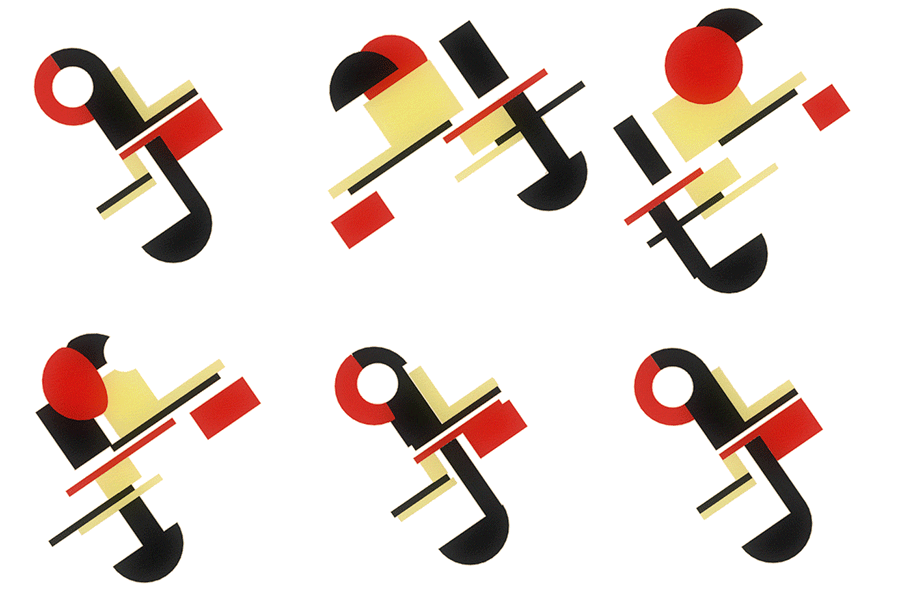

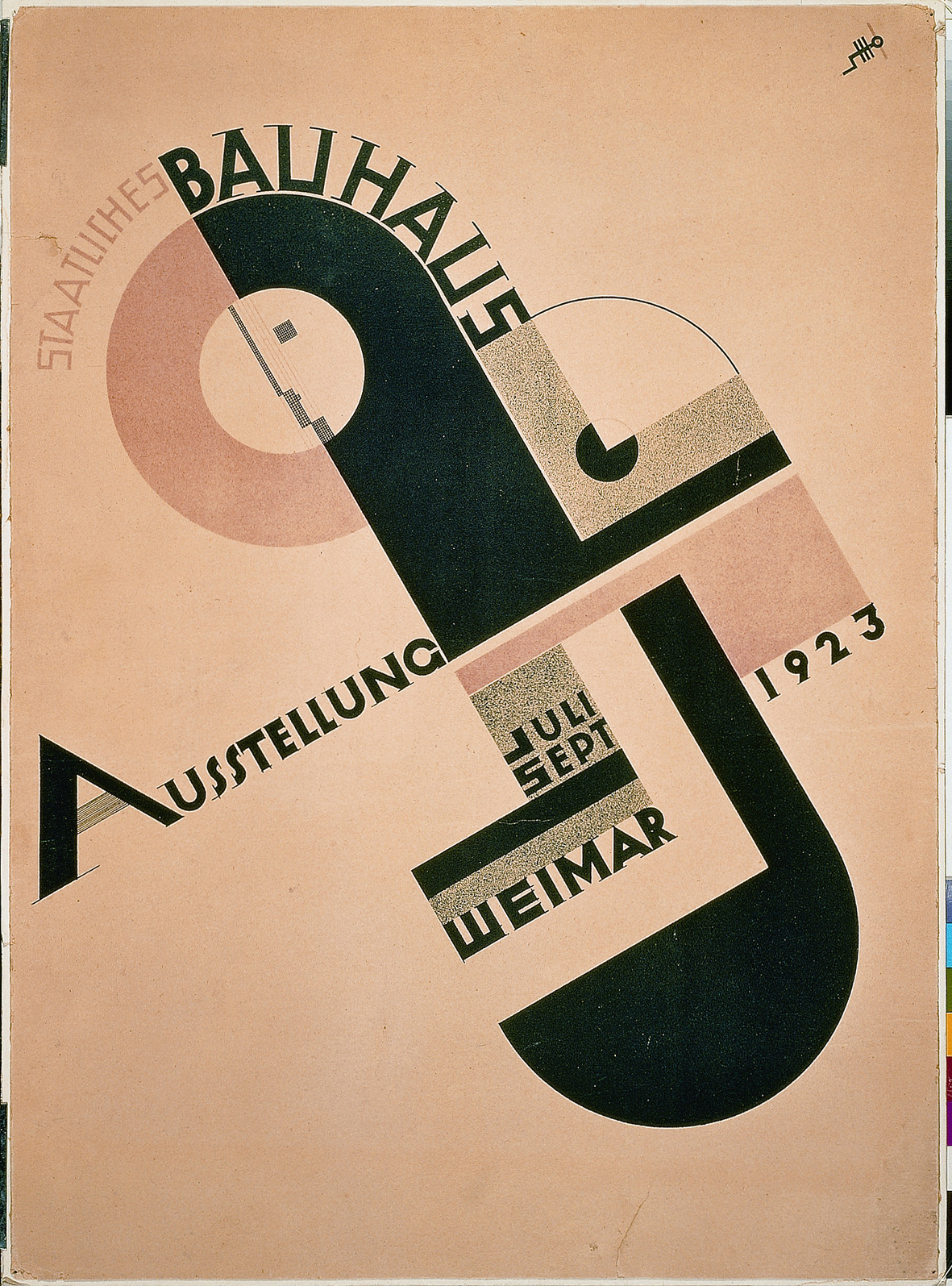
Bauhaus [bou-hous] is the common term for the Staatliches Bauhaus, an art and architecture school in Germany that operated from 1919 to 1933 in Germany and in the United States from 1937-1938. The most natural meaning for its name (related to the German verb for ‘build’) is Architecture House.
The Bauhaus school was founded by Walter Gropius in Weimar. In spite of its name, and the fact that its founder was an architect, the Bauhaus did not have an architecture department during the first years of its existence. Nonetheless it was founded with the idea of creating a ‘total’ work of art in which all arts, including architecture would eventually be brought together.
read more »
Posted in Art, World |
Leave a Comment »




 The Daily Omnivore