September 13, 2010

Washlet is a registered trademark of Japanese toilet industry giant TOTO, referring to electric toilets with bidet functions. The first toilet with an integrated bidet was produced in the United States in 1964. The age of the high-tech toilet in Japan started in 1980 with the introduction of the Washlet G Series by Toto, and since then the product name washlet has been used to refer to all types of Japanese high-tech toilets. As of 2002, almost half of all private homes in Japan have such a toilet, exceeding the number of households with a personal computer.
While the toilet looks like a Western-style toilet at first glance, there are numerous additional features—such as blow dryer, seat heating, massage options, water jet adjustments, automatic lid opening, automatic flushing, wireless control panel, room heating and air conditioning for the room—included either as part of the toilet or in the seat. Recently, researchers have added medical sensors into these toilets, which can measure the blood sugar based on the urine, and also measure the pulse, blood pressure, and the body fat content of the user.
Posted in Health, Technology, World |
2 Comments »
September 12, 2010


Domo Kun is the official mascot of NHK television station, appearing in several 30 second stop-motion interstitial sketches shown as station identification during shows. NHK is Japan’s national public broadcasting organization. The name ‘Domo’ was acquired during the second episode of his show in which a TV announcer said, ‘dōmo, konnichiwa,’ which is a greeting meaning something along the lines of, ‘Well, hello there!” but which can also be interpreted as ‘Hello, Domo!’ The suffix ‘kun’ is a Japanese honorific often used with young males.
Posted in Art, Humor, World |
Leave a Comment »
September 12, 2010
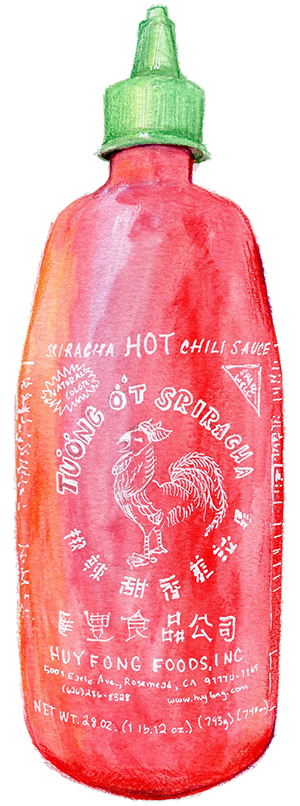
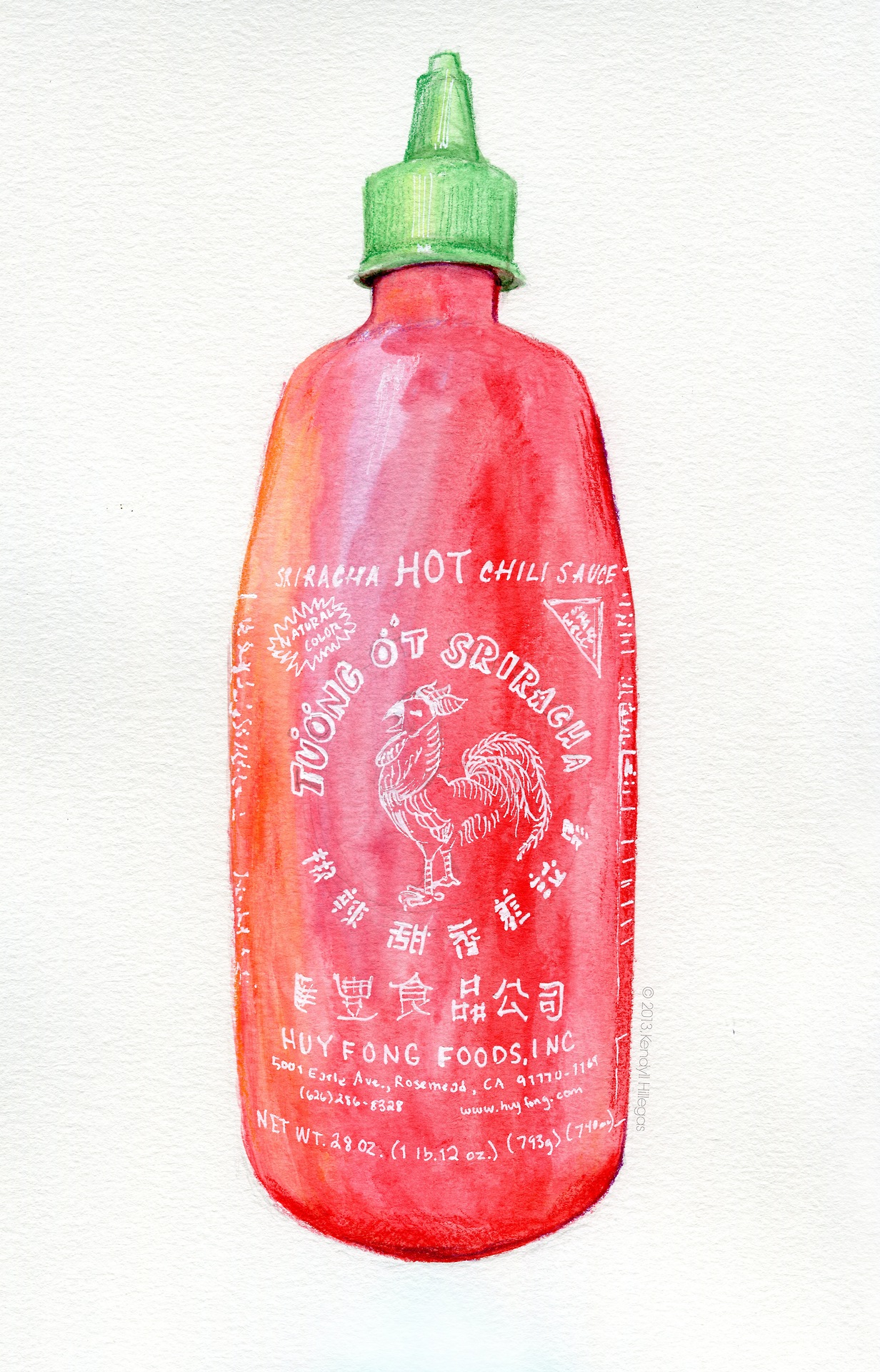
Sriracha [sir-rotch-ah] is a Thai hot sauce named after the seaside city of Si Racha, in the Chonburi Province of central Thailand, where it was first produced for dishes served at local seafood restaurants. It is a paste of chili peppers, vinegar, garlic, sugar and salt. Sriracha was popularized in America by Huy Fong Foods, and is known as rooster sauce or cock sauce, due to the rooster featured on its label.
Posted in Food, Money, World |
Leave a Comment »
September 11, 2010

Strawberry Generation is a Chinese language neologism for Taiwanese people born between 1981 and 1991 who ‘bruise easily’ like strawberries — meaning they can’t withstand social pressure or work hard like their parents’ generation; the term refers to people who are insubordinate, spoiled, selfish, arrogant, and sluggish in work. Persons from this generation have grown up being overprotected by their parents and in an environment of economic prosperity, in a similar manner to how strawberries are grown in protected greenhouses and command a higher price compared to other fruits.
Posted in Philosophy, Politics, World |
Leave a Comment »
September 11, 2010

The 386 Generation is a generation of South Koreans born in the 1960s who were very active politically as young adults, and instrumental in the democracy movement of the 1980s. The term refers to the Intel i386 CPU, released in 1985, and used in Korean universities in that era. This was the first generation of South Koreans to grow up free from the poverty that had marked Korea in the recent past.
The broad political mood of the generation was far more left-leaning than that of their parents, or their eventual children. They played a pivotal role in the democratic protests which forced President Chun Doo-hwan to call democratic elections in 1987, marking the transition from military rule to democracy. Members of the 386 Generation now comprise much of the elite of Korean society, including Nobel laureate and former president Kim Dae-jung (1925 – 2009).
Posted in Politics, Technology, World |
Leave a Comment »
September 10, 2010

Areva is a French public multinational industrial conglomerate formed in September of 2001, and is the world’s largest supplier of nuclear energy. It is the only company with a presence in each industrial activity linked to nuclear energy: mining, chemistry, enrichment, combustibles, services, engineering, nuclear propulsion and reactors, treatment, recycling, stabilization, and dismantling. The corporate name Areva is inspired by the Trappist Santa Maria de la Real monastery in Arevalo in Spain.
Posted in Money, Technology, World |
Leave a Comment »
September 10, 2010

A rōnin [roh-nin] was a samurai with no lord or master during the feudal period (1185–1868) of Japan. A samurai became masterless from the death or fall of his master, or after the loss of his master’s favor or privilege. The word rōnin literally means ‘wave man.’ The term originally referred to a serf who had fled or deserted his master’s land, and later came to be used for a samurai who had lost his master. According to the Bushido Shoshinshu (the Code of the Samurai), a samurai was supposed to commit oibara seppuku (also ‘hara kiri’ – ritual suicide) upon the loss of his master. One who chose not to honor the code was ‘on his own’ and was meant to suffer great shame.
The term rōnin is also used in modern Japan for students who fail the entrance examination for the high school or university of their choice, and then decide to spend the next year studying to retake the exam.
Posted in Language, World |
Leave a Comment »
September 2, 2010
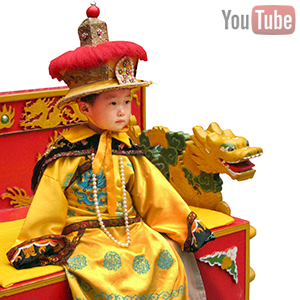
‘Little Emperors‘ is a name that refers to only children in the People’s Republic of China after the one-child policy was implemented. Attributed most frequently to increased spending power within the family unit and the parents’ desire for their child to experience the benefits they were denied, the syndrome results from the children’s sole command of the attention of their parents and grandparents. The Little Emperor effect is primarily an urban phenomenon. The one-child policy is not as rigorously enforced in the countryside as in the urban communities.
Posted in Politics, World |
1 Comment »
August 25, 2010
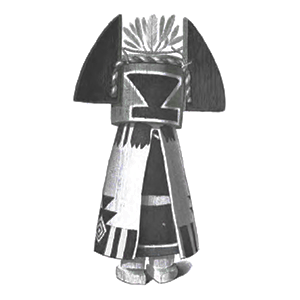
A kachina [kuh-chee-nuh] is a spirit being in the cosmology and religious practices of the Pueblo people of the southwestern U.S.. The term also refers to the kachina dancers, masked members of the tribe who dress up as kachinas for religious ceremonies, and kachina dolls, wooden dolls representing kachinas which are given as gifts to children.
A kachina can represent anything in the natural world or cosmos, from a revered ancestor to an element, a location, a quality, a natural phenomenon, or a concept.
read more »
Posted in Philosophy, World |
Leave a Comment »
August 24, 2010
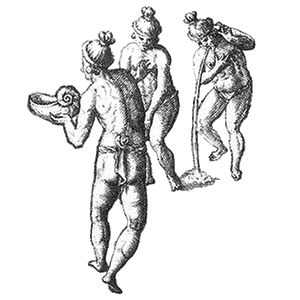
Black drink was the name given by colonists to a ritual beverage called Asi, brewed by Native Americans in the Southeastern United States. It was prepared from the roasted leaves and stems of the Yaupon Holly, native to the Atlantic and Gulf Coasts. The active ingredient in the drink was caffeine. The beverage was often used as a substitute for coffee and tea by colonists under the name cassine or cassina.
Prior to the 19th century, the black drink was consumed during the daily deliberations of the village councils and at all other important council meetings. Caddo, Creeks, Cherokees, Choctaws, and others believed it purified the drinker and purged him of anger and falsehoods. Black drink was prepared by special village officials and served in large communal cups, frequently made of whelk shell. The men in council were served in order of precedence, starting with important visitors. They consumed large quantities at a sitting. Afterward, they purged themselves by vomiting.
Posted in Drugs, Food, World |
Leave a Comment »
August 24, 2010
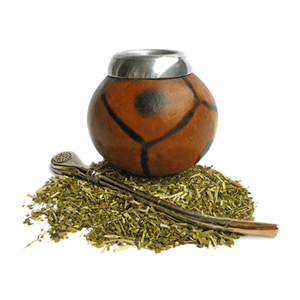
Mate [mah-tey], also known as chimarrão or cimarrón, is a traditional South American infused drink particularly popular in Argentina. It is prepared by steeping dried leaves of the yerba mate plant in hot water. Mate is served with a metal straw, called a bombilla, from a hollow calabash gourd, called a mate.
As with other brewed herbs, yerba mate leaves are dried, chopped, and ground into a powdery mixture called yerba. The bombilla acts as both a straw and a sieve. The submerged end is flared, with small holes or slots that allow the brewed liquid in, but block the chunky matter that makes up much of the mixture.
read more »
Posted in Drugs, Food, World |
Leave a Comment »
August 24, 2010

Skijoring [skee-jawr-ing] is a winter sport where a person on skis is pulled by a horse, a dog (or dogs) or a motor vehicle.
It is derived from the Norwegian word skikjøring meaning ski driving. Since many leashed dogs naturally tend to pull a skier with no training, the sport cannot claim a single country of origin. It was invented and continues to be reinvented all over the world. As a competitive sport, however, it is believed that the first races were held in Scandinavia as an offshoot of the older sport of Pulka.
Posted in Games, World |
3 Comments »


 The Daily Omnivore