May 23, 2013
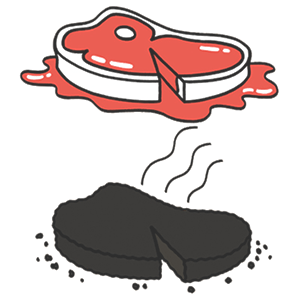
A false dilemma (also called the fallacy of the false alternative, false dichotomy, the either-or fallacy, fallacy of the excluded middle, fallacy of false choice, black-and/or-white thinking, or the fallacy of exhaustive hypotheses) is a type of informal fallacy that involves a situation in which limited alternatives are considered, when in fact there is at least one additional option. The options may be a position that is between two extremes (such as when there are shades of grey) or may be completely different alternatives. The opposite of this fallacy is ‘argument to moderation.’
False dilemma can arise intentionally, when fallacy is used in an attempt to force a choice (such as, in some contexts, the assertion that ‘if you are not with us, you are against us’). But the fallacy can also arise simply by accidental omission of additional options rather than by deliberate deception.
Continue reading →
Posted in Language, Philosophy |
1 Comment »
May 23, 2013

The nirvana fallacy is the informal fallacy of comparing actual things with unrealistic, idealized alternatives. It can also refer to the tendency to assume that there is a perfect solution to a particular problem. A closely related concept is the perfect solution fallacy.
By creating a false dichotomy that presents one option which is obviously advantageous—while at the same time being completely implausible—a person using the nirvana fallacy can attack any opposing idea because it is imperfect. The choice is not between real world solutions and utopia; it is, rather, a choice between one realistic possibility and another which is merely better.
Continue reading →
Posted in Language, Philosophy |
Leave a Comment »
May 22, 2013
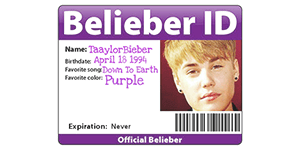
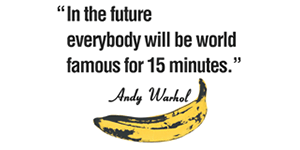
Celebrity worship syndrome is an obsessive-addictive disorder in which a person becomes overly involved with the details of a celebrity’s personal life. Psychologists have indicated that though many people obsess over glamorous film, television, sport and pop stars, the only common factor between them is that they are all figures in the public eye. The term Celebrity Worship Syndrome (CWS) is in fact a misnomer. The supposed condition first appeared in an article ‘Do you worship the celebs?’ by James Chapman in a British tabloid newspaper in 2003.
Chapman was basing his article on the journal paper, Maltby et al. (2003). Chapman refers to CWS, but in fact this is a misunderstanding of a term used in the academic article (CWS which stood for Celebrity Worship Scale). Nonetheless Chapman may be generally correct. A syndrome refers to a set of abnormal or unusual set of symptoms indicating the existence of an undesirable condition or quality. Indeed many attitudes and behaviors covered in this research indicate such states.
Continue reading →
Posted in Health, Money |
Leave a Comment »
May 22, 2013
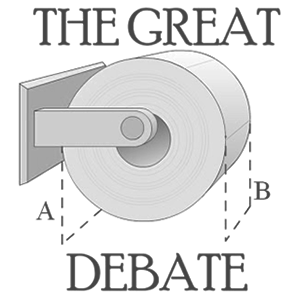
The concept of irreconcilable differences (sometimes called irremediable breakdown, irretrievable breakdown, or incompatibility) provides possible grounds for divorce in a number of jurisdictions. Australian family law uses a no-fault divorce approach, and irreconcilable differences is the sole grounds for divorce, with adequate proof being that the estranged couple have been separated for more than 12 months. In the United States, this is one of several possible grounds.
Often, it is used as justification for a no-fault divorce. In many cases, irreconcilable differences were the original and only grounds for no-fault divorce, such as in California, which enacted America’s first purely no-fault divorce law in 1969. California now lists one other possible basis, ‘incurable insanity,’ on its divorce petition form.
Posted in Humor, Language, Politics |
Leave a Comment »
May 22, 2013
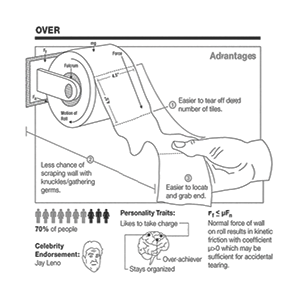
Toilet paper when used with a toilet roll holder with a horizontal axle parallel to the wall has two possible orientations: the toilet paper may hang over (in front of) or under (behind) the roll. The choice is largely a matter of personal preference, dictated by habit. In surveys of American consumers and of bath and kitchen specialists, 60–70% of respondents prefer over.
Despite its being an apparently trivial topic, some people hold strong opinions on the matter. Advice columnist Ann Landers said that the subject was the most controversial issue in her column’s history. Defenders of either position cite advantages ranging from aesthetics, hospitality, and cleanliness to paper conservation, the ease of detaching individual squares, and compatibility with a recreational vehicle or a cat. Celebrities and experts are found on both sides. Some writers have proposed connections to age, sex, or political philosophy; and survey evidence has shown a correlation with socioeconomic status.
Continue reading →
Posted in Humor, Science |
Leave a Comment »
May 22, 2013
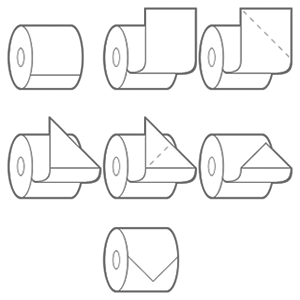
Hotel toilet paper folding is a common practice performed by hotels worldwide as a way of assuring guests that the bathroom has been cleaned. Elaborate folding is sometimes used to impress or delight guests with the management’s creativity and attention to detail.
The common fold normally involves creating a triangle or ‘V’ shape out of the first sheet or square on a toilet paper roll. Commonly, the two corners of the final sheet are tucked behind the paper symmetrically, forming a point at the end of the roll. More elaborate folding results in shapes like fans, sailboats, and even flowers.
Continue reading →
Posted in Humor, Money |
Leave a Comment »
May 22, 2013

Transcreation is a term used chiefly by advertising and marketing professionals to refer to the process of adapting a message from one language to another, while maintaining its intent, style, tone and context. A successfully transcreated message evokes the same emotions and carries the same implications in the target language as it does in the source language.
Increasingly, transcreation is used in global marketing and advertising campaigns as advertisers seek to transcend the boundaries of culture and language. It also takes account of images which are used within a creative message, ensuring that they are suitable for the target local market.
Continue reading →
Posted in Language, Money, World |
Leave a Comment »
May 21, 2013

In the classic 1956 science fiction film, ‘Forbidden Planet,’ the extinct race of advanced beings of the planet Altair IV are known as the ‘Krell.’
The Krell had reached a stage of technological and scientific development so advanced that they were able to construct a machine with virtually unlimited power, a machine that turned their thoughts into reality.
Continue reading →
Posted in Art, Technology |
Leave a Comment »
May 21, 2013

From 1955 through 1962, the TWA Moonliner was part of the first futuristic exhibit located in Disneyland’s ‘Tomorrowland.’ It was also an early example of modern product placement advertising by TWA’s Howard Hughes teaming up with Walt Disney.
At 76 feet (23 m) tall, it was the tallest structure in the theme park, 8 feet (2.4 m) taller than the Sleeping Beauty Castle. Adjoining the rocket was the ‘Flight to the Moon’ attraction, which later became ‘Mission To Mars’ in 1975. Continue reading →
Posted in Money, Technology |
Leave a Comment »
May 21, 2013

‘Praise the Lord and Pass the Ammunition‘ is an American patriotic song written by Frank Loesser and published as sheet music in 1942 by Famous Music Corp. The song was a response to the attack on Pearl Harbor that marked United States involvement in World War II.
The song describes a chaplain (‘sky pilot’) being with some fighting men who are under attack from an enemy. He is asked to say a prayer for the men who were engaged in firing at the oncoming planes. The chaplain puts down his Bible, mans one of the ship’s gun turrets and begins firing back, saying, ‘Praise the Lord and pass the ammunition.’
Continue reading →
Posted in Philosophy, War |
Leave a Comment »
May 21, 2013
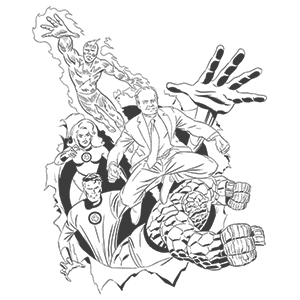
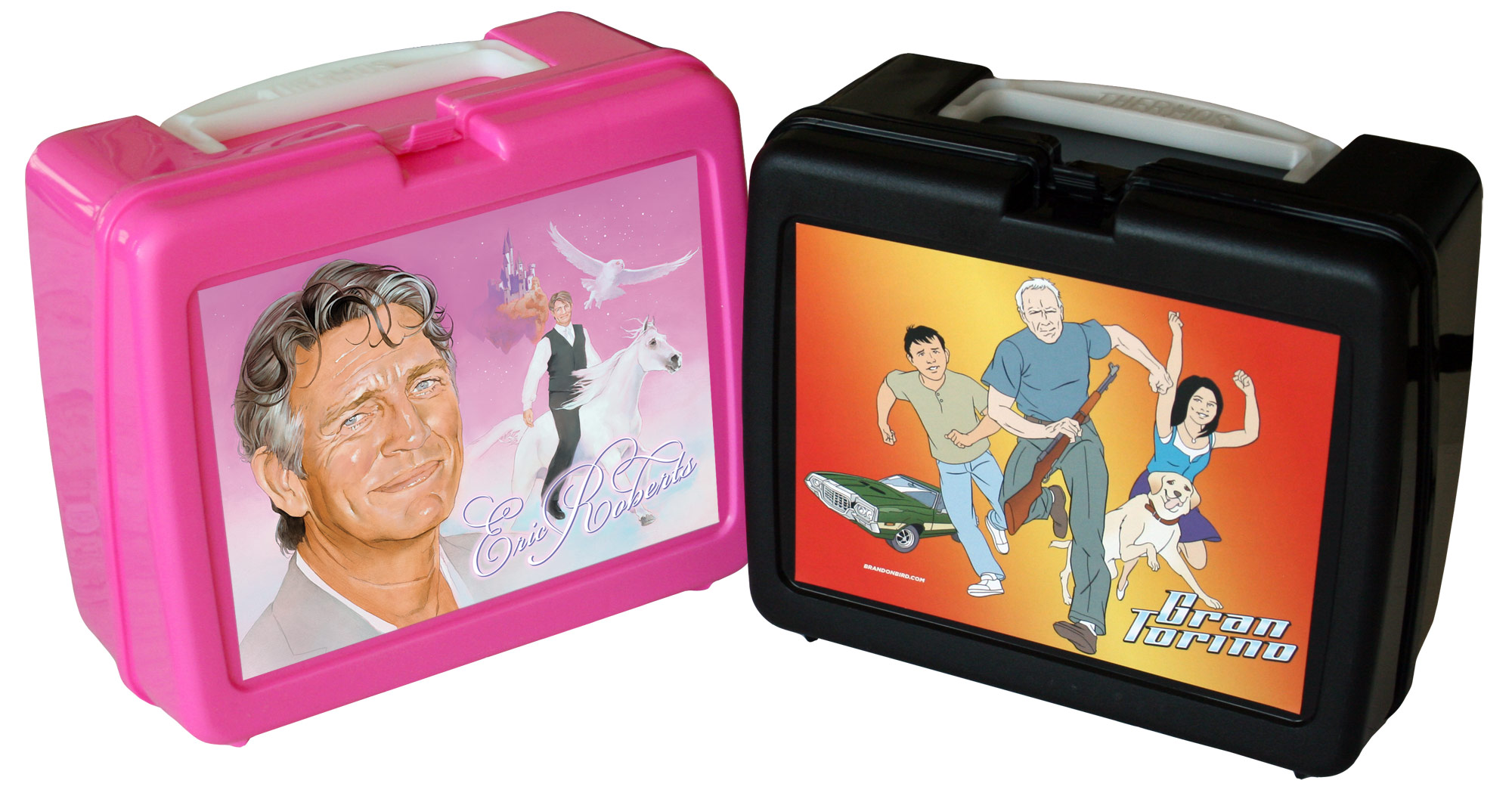
Brandon Bird (b. 1980) is an artist. He attended University of California, Santa Cruz and was an artist-in-residence from 2004-2006 at Risley Residential College at Cornell University.
His most common medium is oil paints on canvas, but works in a number of genres, including pen and ink and digital mediums. He has a significant cult following for his tendency to paint figures from history and popular culture such as Christopher Walken, Chuck Norris, and Abraham Lincoln, in absurd situations. He is a regular contributor to ‘The Believer’ (an American literary magazine that also covers other arts and general culture). He has also done work for ‘Las Vegas Weekly’ and rock band, The Aquabats.
Posted in Art, Humor |
Leave a Comment »
May 21, 2013
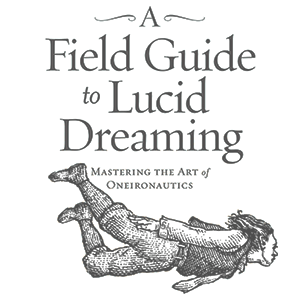
Oneironautics [oh-nahy-ruh-naw-tiks] refers to the ability to travel within a dream, usually on a conscious basis. A traveler in a dream may be called an oneironaut.
The idea of one person being able to consciously travel or interact within the dream of another person, known variously as ‘dream telepathy,’ ‘telepathic lucid dreaming,’ or ‘telepathic dreaming,’ has been explored in the realms of science and fantasy fiction; in recent works, such an interaction is often depicted as a computer-mediated psychotherapeutic action, as is the case in ‘The Cell,’ and ‘Paprika,’ as well as through the direct intervention of another sleeping person, as in ‘Inception,’ or ‘Dreamscape.’ The concept is also included in the fantasy series ‘The Wheel of Time’ as an ability ‘dreamwalkers’ are able to use. Continue reading →
Posted in Health, Philosophy |
1 Comment »