April 29, 2013
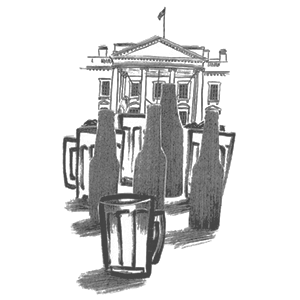
Reverse racism is a term which refers to racial prejudice or discrimination directed against members of one’s own race. The term came into use as the struggle for African-American rights divided the white community.
In 1966, Hosea Williams of the Southern Christian Leadership Conference (SCLC), publicly accused members of the Student Nonviolent Coordinating Committee (SNCC) of reverse racism in their efforts to exclude or expel whites from local government in Alabama to make room for blacks. Williams argued that SNCC’s (unsuccessful) ‘all-black’ campaign in Alabama would drive white moderates out of the civil rights movement. ‘Black racism’ was a more common term in this era, used to describe SNCC and groups like the Black Panthers. Continue reading →
Posted in Language, Politics, World |
2 Comments »
April 29, 2013

Whiteness studies is an interdisciplinary arena of academic inquiry focused on the cultural, historical and sociological aspects of people identified as ‘white,’ and the social construction of ‘whiteness’ as an ideology tied to social status. By the mid-1990s, numerous works across many disciplines analyzed whiteness, and it has since become a topic for academic courses, research and anthologies.
Pioneers in the field include W. E. B. Du Bois (‘Jefferson Davis as a Representative of Civilization,’ 1890), James Baldwin (‘The Fire Next Time,’ 1963), Ruth Frankenberg (‘White Women, Race Matters: The Social Construction of Whiteness,’ 1993), author and literary critic Toni Morrison (‘Playing in the Dark: Whiteness and the Literary Imagination,’ 1992) and historian David Roediger (‘The Wages of Whiteness,’ 1991).
Continue reading →
Posted in Education, Politics, World |
Leave a Comment »
April 29, 2013

White guilt is the individual or collective guilt felt by white people for the racist treatment of people of color by whites both historically and presently. The term is generally used in a pejorative way (and in a partisan fashion within American political circles).
White guilt has been cited by some conservatives and libertarians as a way for liberals and others to induce white Americans to support the policies of affirmative action and redistribution of wealth. White guilt has been described as one of several psychosocial costs of racism for white individuals along with the ability to have empathic reactions towards racism, and fear of non-whites. Continue reading →
Posted in Politics, World |
Leave a Comment »
April 26, 2013
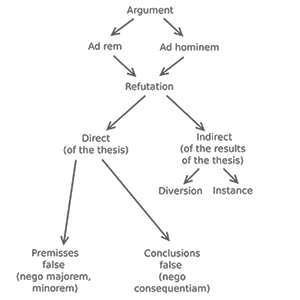
‘The Art of Being Right: 38 Ways to Win an Argument’ (1831) is an acidulous (biting) treatise written by the German philosopher Arthur Schopenhauer in sarcastic deadpan. He examines a total of thirty-eight methods of showing up one’s opponent in a debate. Schopenhauer introduces his essay with the idea that philosophers have concentrated in ample measure on the rules of logic, but have not (especially since the time of Immanuel Kant) engaged with the darker art of the dialectic, of controversy.
Whereas the purpose of logic is classically said to be a method of arriving at the truth, dialectic, says Schopenhauer, ‘…on the other hand, would treat of the intercourse between two rational beings who, because they are rational, ought to think in common, but who, as soon as they cease to agree like two clocks keeping exactly the same time, create a disputation, or intellectual contest.’
Continue reading →
Posted in Humor, Language, Politics |
1 Comment »
April 26, 2013

An argument from ignorance, also known as ‘argumentum ad ignorantiam’ or ‘appeal to ignorance’ (where ‘ignorance’ stands for: ‘lack of evidence to the contrary’), is an inference that a proposition is false based on the absence of evidence.
For example, a man sitting in a warehouse with a tin roof can assume that it is not raining if he doesn’t hear rain drops without looking outside for any evidence of rain. Here ignorance about a particular form of evidence for rain (the noise) is used to assume a lack of rain; but the conclusion may fail if it is raining so softly that no noise is heard by the man, or if his hearing is impaired, etc. Continue reading →
Posted in Language, Philosophy, Politics |
Leave a Comment »
April 25, 2013
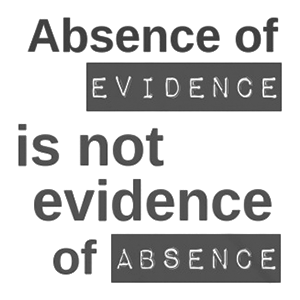
Evidence of absence is evidence of any kind that suggests something is missing or that it does not exist. For example, suppose a baker never fails to put newly finished pies on her windowsill; therefore, if there is no pie on the windowsill, no newly finished pies exist.
Per the traditional aphorism, ‘absence of evidence is not evidence of absence,’ positive evidence of this kind is distinct from a lack of evidence or ignorance of that which should have been found already, had it existed. In this regard American philosopher Irving Copi writes: ‘In some circumstances it can be safely assumed that if a certain event had occurred, evidence of it could be discovered by qualified investigators. In such circumstances it is perfectly reasonable to take the absence of proof of its occurrence as positive proof of its non-occurrence.
Continue reading →
Posted in Language, Philosophy, Science |
Leave a Comment »
April 25, 2013
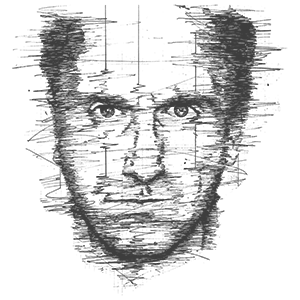
The Wizards Project was a research project at the University of California, San Francisco led by psychologists Paul Ekman and Maureen O’Sullivan that studied the ability of people to detect lies. O’Sullivan spent more than 20 years studying the science of lying and deceit.
The project was originally named the ‘Diogenes Project,’ after the Diogenes, the Greek philosopher who would look into people’s faces using a lamp, claiming to be looking for an honest man. The project defined a ‘Truth Wizard’ as a person identified who can identify deception with accuracy of at least 80%, whereas the average person rates around 50%. No Truth Wizard was 100% accurate.
Continue reading →
Posted in Language, Science |
Leave a Comment »
April 24, 2013

American science writer Michael Shermer has described as ‘wronger than wrong‘ the mistake addressed in what he calls ‘Asimov’s axiom,’ after the noted author Isaac Asimov, who discussed the issue in his book of essays, ‘The Relativity of Wrong.’
A statement that equates two errors is wronger than wrong when one of the errors is clearly more wrong than the other. As Asimov put it: ‘When people thought the earth was flat, they were wrong. When people thought the earth was spherical, they were wrong. But if you think that thinking the earth is spherical is just as wrong as thinking the earth is flat, then your view is wronger than both of them put together.’
Continue reading →
Posted in Humor, Language |
Leave a Comment »
April 24, 2013

The Relativity of Wrong is a 1988 essay collection by Isaac Asimov, which takes its title from the most ambitious essay it contains. Like most of the essays Asimov wrote for ‘F&SF Magazine,’ each one in ‘The Relativity of Wrong’ begins with an autobiographical anecdote which serves to set the tone.
Several of the essays form a sequence explaining the discovery and uses of isotopes; the introductory passages in these essays recount Asimov’s not particularly pleasant personal relationship with physical chemist Harold C. Urey, whom he met at Columbia University.
Continue reading →
Posted in Humor, Language, Science |
Leave a Comment »
April 24, 2013
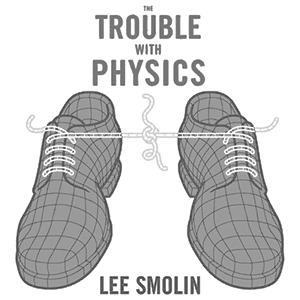
The phrase not even wrong is generally attributed to theoretical physicist Wolfgang Pauli, who was known for his colorful objections to incorrect or sloppy thinking. Rudolf Peierls writes that ‘a friend showed Pauli the paper of a young physicist which he suspected was not of great value but on which he wanted Pauli’s views. Pauli remarked sadly, ‘It is not even wrong.” Peierls remarks that quite a few apocryphal stories of this kind have been circulated and mentions that he listed only the ones personally vouched by him. He also quotes another example when Pauli replied to Lev Landau: ‘What you said was so confused that one could not tell whether it was nonsense or not.’
It has come to be used to describe any argument that purports to be scientific but fails at some fundamental level, usually in that it cannot be falsified (i.e., tested with the possibility of being rejected) by experiment or cannot be used to make predictions about the natural world. ‘Not even wrong’ has also been used by Peter Woit to mean proposed scientific theories that are well-meaning and based on current scientific knowledge, but can neither be used for prediction nor falsified. He has applied the phrase to aspects of string theory in physics on the grounds that, although mathematically elegant, it does not currently provide predictions or tests.
Posted in Humor, Language, Science |
Leave a Comment »
April 24, 2013

Bullshit (also bullcrap) is a common English expletive which may be shortened to the euphemism bull or the initialism BS. In British English, ‘bollocks’ is a comparable expletive, although bullshit is commonly used in British English. It is a slang profanity term meaning either (literally) bovine excrement or, more commonly, ‘nonsense,’ especially in a rebuking response to communication or actions viewed as deceiving, misleading, disingenuous, or false. As with many expletives, the term can be used as an interjection or as many other parts of speech, and can carry a wide variety of meanings.
It can be used either as a noun or as a verb. While the word is generally used in a deprecating sense, it may imply a measure of respect for language skills, or frivolity, among various other benign usages. In philosophy, Harry Frankfurt, among others, analyzed the concept of bullshit as related to but distinct from lying. Outside of the philosophical and discursive studies, the everyday phrase bullshit conveys a measure of dissatisfaction with something or someone, but does not generally describe any role of truth in the matter.
Continue reading →
Posted in Humor, Language, Philosophy |
Leave a Comment »
April 24, 2013

The Big Lie is a propaganda technique. The expression was coined by Adolf Hitler, when he dictated his 1925 book ‘Mein Kampf,’ about the use of a lie so ‘colossal’ that no one would believe that someone ‘could have the impudence to distort the truth so infamously.’
Hitler asserted the technique was used by Jews to unfairly blame Germany’s loss in World War I on German Army officer Erich Ludendorff.
Continue reading →
Posted in Language, Politics, War |
Leave a Comment »



