April 24, 2013
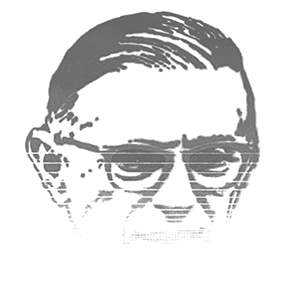
‘Being and Nothingness: An Essay on Phenomenological Ontology’ is a 1943 book by philosopher Jean-Paul Sartre. Its main purpose is to assert the individual’s existence as prior to the individual’s essence. Sartre’s overriding concern was to demonstrate that free will exists.
While a prisoner of war in 1940 and 1941, Sartre read Martin Heidegger’s ‘Being and Time,’ an ontological investigation through the lens and method of Husserlian phenomenology (Husserl was Heidegger’s teacher). Reading ‘Being and Time’ initiated Sartre’s own inquiry leading to the publication in 1943 of ‘Being and Nothingnes’s whose subtitle is ‘A Phenomenological Essay on Ontology.’ Continue reading →
Posted in Language, Philosophy |
1 Comment »
April 24, 2013

Bad faith is a philosophical concept used by existentialists Jean-Paul Sartre and Simone de Beauvoir to describe the phenomenon where a human being under pressure from societal forces adopts false values and disowns his/her innate freedom to act authentically. It is closely related to the concepts of self-deception and ressentiment (an assignment of blame for one’s frustration).
A critical claim in existentialist thought is that individuals are always free to make choices and guide their lives towards their own chosen goal or ‘project.’ The claim holds that individuals cannot escape this freedom, even in overwhelming circumstances. For instance, even an empire’s colonized victims possess choices: to submit to rule, to negotiate, to act in complicity, to commit suicide, to resist nonviolently, or to counter-attack.
Continue reading →
Posted in Health, Philosophy |
Leave a Comment »
April 22, 2013
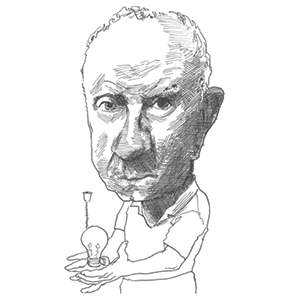
In philosophy of science and philosophy of mind, cognitive closure is the proposition that human minds are constitutionally incapable of solving certain perennial philosophical problems.
Neurobiologist Owen Flanagan calls this position ‘anti-constructive naturalism’ or the ‘new mysterianism’ and the primary advocate of the hypothesis, Colin McGinn, calls it ‘transcendental naturalism’ because it acknowledges the possibility that solutions might fall within the grasp of an intelligent non-human of some kind. According to McGinn, such philosophical questions include the mind-body problem, identity of the self, foundations of meaning, free will, and knowledge, both a priori and empirical.
Continue reading →
Posted in Philosophy, Science |
1 Comment »
April 22, 2013


New mysterianism is a philosophical position proposing that the hard problem of consciousness (explaining how and why we have qualia or phenomenal experiences — how sensations acquire characteristics, such as colors and tastes) cannot be resolved by humans. Neurobiologist Owen Flanagan noted in his 1991 book ‘Science of the Mind’ that some modern thinkers have suggested that consciousness may never be completely explained. Flanagan called them ‘the new mysterians’ after the rock group Question Mark and the Mysterians.
But the new mysterianism is a postmodern position designed to drive a railroad spike through the heart of scientism. The term has been extended by some writers to encompass the wider philosophical position that humans do not have the intellectual ability to solve (or comprehend the answers to) many hard problems, not just the problem of consciousness, at a scientific level. This position is also known as anti-constructive naturalism.
Continue reading →
Posted in Philosophy |
1 Comment »
April 22, 2013
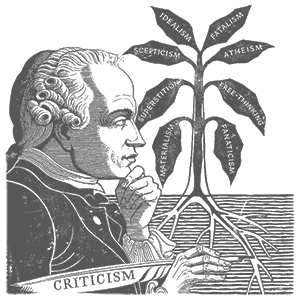
Hypokeimenon [hahy-puh-kay-muh-non], later called ‘material substratum,’ is a term in metaphysics which literally means the ‘underlying thing’ (‘subiectum’ in Latin). To search for the hypokeimenon is to search for that substance which persists in a thing going through change— its basic essence.
According to Aristotle’s definition (in ‘Categories’), hypokeimenon is something which can be predicated by other things, but cannot be a predicate of others. The existence of a material substratum was posited by English philosopher John Locke, with conceptual similarities to Jewish-Dutch rationalist Baruch Spinoza’s ‘substance,’ and German philosopher Immanuel Kant’s concept of the ‘noumenon’ (a purely mental entity).
Continue reading →
Posted in Philosophy |
Leave a Comment »
April 22, 2013

Simplicity is the state or quality of being simple; it usually relates to the burden which a thing puts on someone trying to explain or understand it.
However, Herbert A. Simon (American political scientist, economist, sociologist, and psychologist) suggested, something is simple or complex depending on the way we choose to describe it. In some uses, simplicity can be used to imply beauty, purity, or clarity. Continue reading →
Posted in Language, Philosophy, Technology |
Leave a Comment »
April 22, 2013
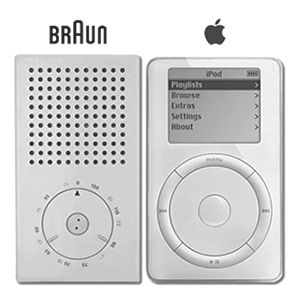
Elegance is the attribute of being unusually effective and simple. It is frequently used as a standard of tastefulness, particularly in the areas of fashion and decoration. Some associate elegance with simplicity of design. Others understand the word in an opulent light as in tasteful richness of design or ornamentation. Visual stimuli are frequently considered elegant if a small number of colors and stimuli are used, emphasizing the remainder. The color white is often associated with elegance, usually along with blue or black.
Elegance is a synonym for beauty that has come to acquire the additional connotations of unusual effectiveness and simplicity. It is frequently used as a standard of tastefulness particularly in the areas of visual design, decoration, the sciences, and the esthetics of mathematics. Elegant things exhibit refined grace and dignified propriety.
Continue reading →
Posted in Art, Language, Philosophy |
Leave a Comment »
April 22, 2013

A chain is a series of connected links which are typically made of metal. A chain may consist of two or more links.
According to the ‘Complete Guide to Chain,’ the metal link chain was invented in 225 BCE. The prevalent modern symbolism is oppression, due to the use for a mechanical restriction of the liberty of a human or animal. However, chains can also symbolize interconnectivity or interdependence. Continue reading →
Posted in Technology |
Leave a Comment »
April 22, 2013
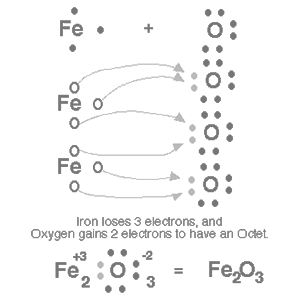
Rust is a type of corrosion (the breakdown of materials due to reactions with their surroundings). Normally, when a material corrodes it becomes weaker, however some forms of high temperature corrosion can lead to the formation of protective compacted oxide layer glazes. Iron corrosion is called rusting.
When exposed to air or water for a long time, iron slowly decomposes into other chemicals, because of a reaction with oxygen molecules (air and water contain oxygen). Many other metals undergo equivalent corrosion, but the resulting oxides are not commonly called rust. Continue reading →
Posted in Science |
Leave a Comment »
April 21, 2013
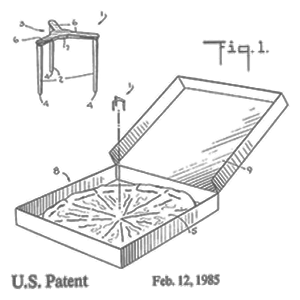
A pizza saver is a device used to prevent the top of a food container, such as a pizza box or cake box, from collapsing in at the center and touching the food inside. A pizza saver is made of plastic and has three (sometimes four) legs. They are often white, and the common practice is to place one pizza saver in the center of the pizza before the box lid is closed for delivery.
The pizza saver is not re-used and is thrown away or recycled by the patron, although some people have found secondary uses for them such as egg holders when turned upside down. Continue reading →
Posted in Food, Money, Technology |
Leave a Comment »
April 20, 2013

Random Access Memories is the fourth studio album by French electronic music duo Daft Punk, which features collaborations with artists including Nile Rodgers, Paul Williams, Giorgio Moroder, Pharrell Williams, Todd Edwards, DJ Falcon, Chilly Gonzales, Panda Bear, and Julian Casablancas.
Daft Punk began experimenting with material for a fourth studio album in 2008, whilst working on the ‘Tron: Legacy score.’ Continue reading →
Posted in Art |
Leave a Comment »
April 19, 2013
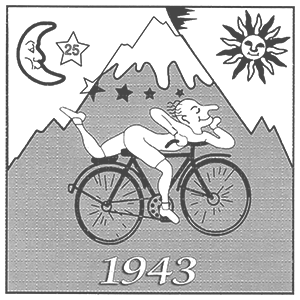
Bicycle Day is April 19, 1943; Swiss chemist Albert Hofmann performed a self-experiment to determine the true effects of LSD, intentionally ingesting 250 micrograms of the substance, an amount he predicted to be a threshold dose (an actual threshold dose is 20 micrograms). Less than an hour later, Hofmann experienced sudden and intense changes in perception.
He asked his laboratory assistant to escort him home and, as use of motor vehicles was prohibited because of wartime restrictions, they had to make the journey on a bicycle. Continue reading →
Posted in Drugs |
Leave a Comment »



