April 19, 2013

A hater is a person who expresses hatred in public forums, especially those found on the Internet such as YouTube. Haters are distinguished from trolls who seek to attract attention by making provocative comments.
Haters may become organized into groups and the seven stage model of hate crime developed by Schafer and Navarro for the FBI may explain their behavior: 1) the hater finds other with similar views to form a group; 2) the group develops symbols and rituals to identify itself; 3) the group shares its views to bond; 4) the target is taunted; 5) the target is attacked; 6) the target is attacked with weapons; and 7) the target is destroyed.
Posted in Language, Politics |
Leave a Comment »
April 18, 2013
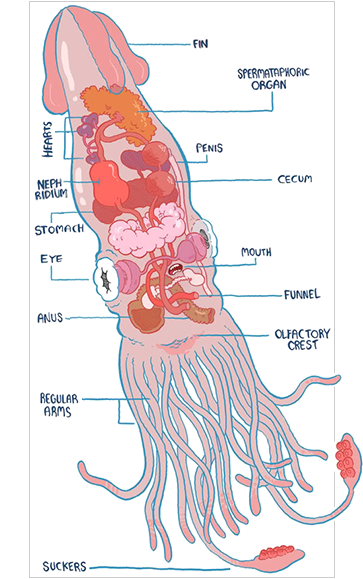
Cephalopod [sef-uh-luh-pod] intelligence has an important comparative aspect in the understanding of intelligence because it relies on a nervous system fundamentally different from that of vertebrates. The cephalopod class of molluscs, particularly the Coleoidea subclass (cuttlefish, squid and octopuses), are considered the most intelligent invertebrates and an important example of advanced cognitive evolution in animals.
The scope of cephalopod intelligence is controversial, complicated by the challenges of studying these elusive and fundamentally different creatures. Classical conditioning of cephalopods has been reported, and a study in 1992 concluded that octopuses practice observational learning. However, the latter idea is strongly disputed, and doubt has been shed on some other reported capabilities as well. In any case, impressive spatial learning capacity, navigational abilities, and predatory techniques remain beyond question.
Continue reading →
Posted in Science |
Leave a Comment »
April 18, 2013
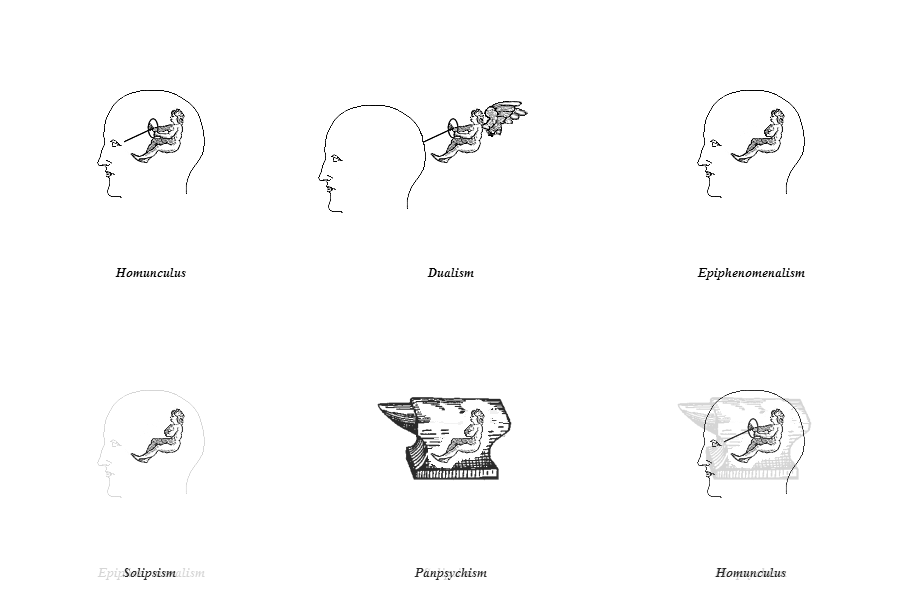
Panpsychism [pan-sahy-kiz-uhm] is the theory that everything in the universe is somehow sentient or conscious and connected parts of a whole. Panpsychists believe that all matter in the universe has some degree of consciousness.
In other words the substance of the universe is composed entirely of mind or consciousness. This is not to say that rocks have a mind but that the individual atoms and other particles in the rock have some sort of awareness and are aware of each other. Panpsychism is opposed to materialism or any doctrine that argues that the reality of the universe is composed solely of matter. Continue reading →
Posted in Philosophy |
Leave a Comment »
April 18, 2013

Perennialism [puh-ren-ee-uhl-iz-uhm] is a perspective within the philosophy of religion which views each of the world’s religious traditions as sharing a single, universal truth on which foundation all religious knowledge and doctrine has grown.
The idea of a perennial philosophy has great antiquity. It can be found in many of the world’s religions and philosophies. The term ‘philosophia perennis’ was first used during the Renaissance by Italian humanist Agostino Steuco, drawing on an already existing philosophical tradition, the most direct predecessors of which were Marsilio Ficino and Giovanni Pico della Mirandola. Continue reading →
Posted in Philosophy, World |
Leave a Comment »
April 18, 2013
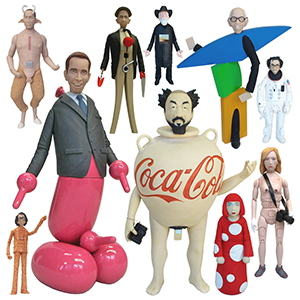
Michael Leavitt (b. 1977) is a visual artist based in Seattle, described as “the best caricature sculptor in the city.’ The ‘über-allround-cool-creator’ is most widely known for his ‘Art Army’ series of handmade action figures depicting visual artists, musicians, and entertainers. Through his company, Intuition Kitchen Productions, Leavitt is a ‘jack-of-all-trades’ responsible for a wide variety of conceptual art projects and performance artworks.
From a disinterest in convention, Leavitt proclaims, ‘I’d be afraid not to try other mediums.’ Growing up in the Pacific Northwest, Leavitt was influenced by the wood-craft and engineering of Native American, Scandinavian, and industrial manufacturing in the region. His parents practiced education, graphic design, and environmentalism by trade, formulating Leavitt’s early interests in both art and sociology.
Continue reading →
Posted in Art, Humor, Money |
Leave a Comment »
April 18, 2013

Barry McGee (b. 1966) is a painter and graffiti artist. He is also known by monikers such as Ray Fong, Lydia Fong, Bernon Vernon, P.Kin, Ray Virgil, Twist and further variations of Twist, such as Twister, Twisty, Twisto and others. McGee graduated from El Camino High School in South San Francisco, California. He later graduated from the San Francisco Art Institute in 1991 with a concentration in painting and printmaking.
McGee rose out of the Mission School art movement (‘New Folk’ or “Urban Rustic’) and graffiti boom in the San Francisco Bay Area during the early nineties. His work draws heavily from a pessimistic view of the urban experience, which he describes as, ‘urban ills, overstimulations, frustrations, addictions & trying to maintain a level head under the constant bombardment of advertising.’ Continue reading →
Posted in Art |
Leave a Comment »
April 18, 2013

Margaret Kilgallen (1967 – 2001) was a San Francisco Bay Area artist. Though a contemporary artist, her work showed a strong influence from folk art. She was considered a central figure in the Bay Area Mission School art movement (sometimes called ‘New Folk’ or ‘Urban Rustic’). Kilgallen was born in Washington, D.C. and grew up nearby in Kensington, Maryland.
She received a BFA in printmaking from Colorado College in 1989 and an MFA from Stanford University in 2001. Though diagnosed with breast cancer, Kilgallen opted to forgo chemotherapy so that she might carry a pregnancy to term. She died in 2001, at age 33, three weeks after the birth of Asha, her daughter with her husband and collaborator Barry McGee. Continue reading →
Posted in Art |
Leave a Comment »
April 18, 2013
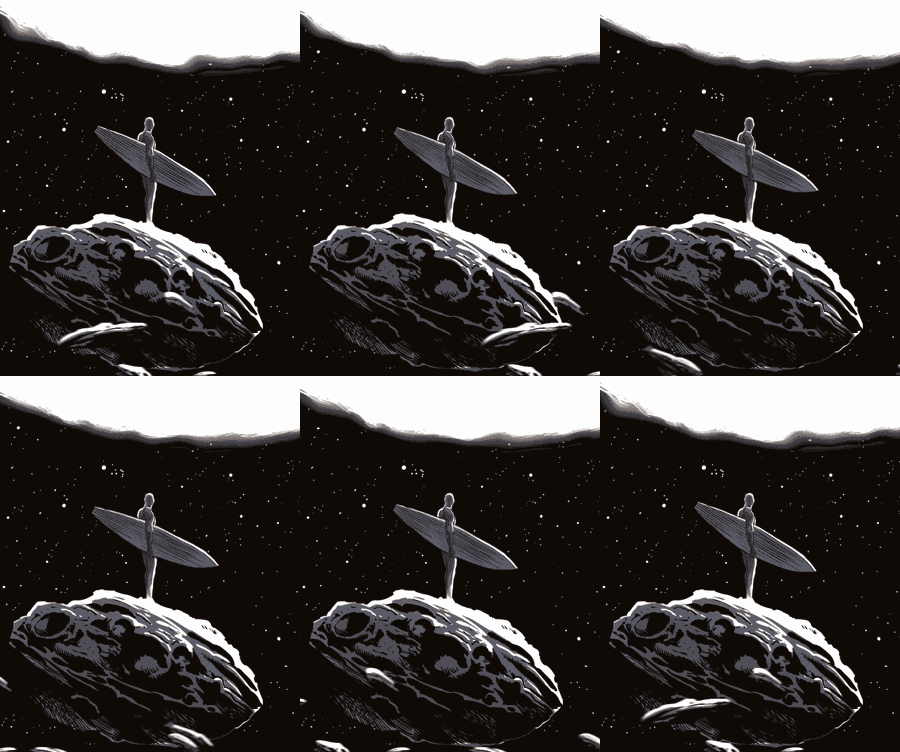
The Silver Surfer is a fictional character, a superhero appearing in comic books and other publications by Marvel Comics. Originally a young astronomer named Norrin Radd on the planet Zenn-La, he saved his homeworld from the planet devourer, Galactus, by serving as his herald. Imbued in return with a tiny portion of Galactus’s Power Cosmic, Radd acquired vast power, a new body and a surfboard-like craft on which he could travel faster than light.
As the Silver Surfer, Radd roamed the cosmos searching for planets for Galactus to consume. When his travels took him to Earth, he met the Fantastic Four, a team of powerful superheroes who helped him rediscover his humanity and nobility of spirit. Betraying Galactus, the Surfer saved Earth but was exiled there as punishment.
Continue reading →
Posted in Art |
Leave a Comment »
April 17, 2013
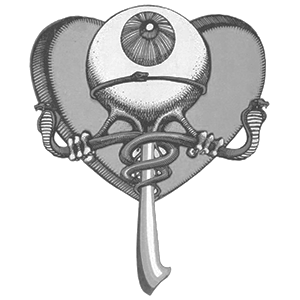
Rick Griffin (1944 – 1991) was an American artist and one of the leading designers of psychedelic posters in the 1960s. As a contributor to the underground comix movement, his work appeared regularly in ‘Zap Comix.’
Griffin was closely identified with the Grateful Dead, designing some of their best known posters and record jackets. His work within the surfing subculture included both film posters and his comic strip, ‘Murphy.’ Griffin was born near Palos Verdes amidst the surfing culture of southern California.
Continue reading →
Posted in Art |
Leave a Comment »
April 17, 2013

Zap Comix is an underground comics which was part of the youth counterculture of the late 1960s. ‘Zap’ #1 was published in San Francisco in late 1968. It featured the work of satirical cartoonist Robert Crumb. Some 3,500 copies were printed by Beat writer Charles Plymell. ‘Zap’ #1 was the first title put out by publisher Don Donahue under the ‘Apex Novelties’ imprint.
Philadelphia publisher Brian Zahn (who had published earlier works of R. Crumb in his tabloid called ‘Yarrowstalks’) had intended to publish an earlier version of the comic, but reportedly left the country with the artwork. Shortly before ‘Zap’ #3 was to be published, Crumb found photocopies of that earlier issue, drew new covers, and published it as ‘Zap’ #0. The first issue was sold on the streets of Haight-Ashbury out of a baby stroller pushed by Crumb’s wife, Dana. In years to come, the comic’s sales would be most closely linked with alternative venues such as head shops.
Continue reading →
Posted in Art, Humor |
Leave a Comment »
April 17, 2013
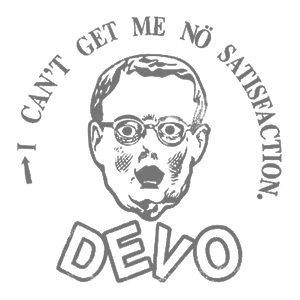
Booji Boy is a character created in the early 1970s by American New Wave band Devo. The name is pronounced ‘Boogie Boy’—the strange spelling resulted when the band was using Letraset to produce captions for a film, and ran out of the letter ‘g.’ When the ‘i’ was added but before the ‘e,’ Devo lead singer Mark Mothersbaugh reportedly remarked that the odd spelling ‘looked right.’
Booji Boy has traits of a simian child and typically wears an orange nuclear protection suit. He is portrayed by Mothersbaugh in a mask and is the son of another fictitious Devo character, General Boy. The intent of the figure is to satirize infantile regression in Western culture, a quality Devo enjoyed elucidating. This character was officially introduced in the 1976 short film ‘The Truth About De-Evolution.’ Continue reading →
Posted in Art, Games, Humor |
Leave a Comment »
April 17, 2013

KRK Ryden (b.1953) is an American visual artist. His surrealistic art style is reflective of his taste in cartoons and pulp art and his work is described as ‘colorful and visually appealing reflections on discarded icons.’ In 1977 Ryden changed his name from Keith to Keyth for ‘numberoligical [sic] reasons’ and to differentiate himself from his father’s first name.
Ryden took up the theremin in 2003 and created a band called Ken the Magic Corner God. With his theremin, and Josh Mcleod on keyboards, they recorded one studio album. Their most famous performance was with Mark Mothersbaugh as Booji Boy (a character DEVO created) singing the song ‘U Got Me Bugged.’ Continue reading →
Posted in Art |
Leave a Comment »



