March 12, 2013

A comfort object, transitional object, or security blanket is an item used to provide psychological comfort, especially in unusual or unique situations, or at bedtime for small children. Among toddlers, comfort objects may take the form of a blanket, a stuffed animal, or a favorite toy, and may be referred to by English-speaking toddlers as ‘blankey’ or ‘lovey.’ Stuffed toys are sometimes equipped in emergency vehicles and police patrol cars, to be given to victims involved in an accident or traumatic shock, to provide them comfort.
Paramedics are trained to treat physical shock with a wide array of blankets designed to preserve heat, blood, and wounds for life threatening traumas. Often charities will provide comfort objects such as blankets and quilts to survivors of disasters. Psychologists are experimenting with the use of heavy thick fleece blankets to replace restraints such as straitjackets. They have noted through experiments with autistic children that weighted blankets have a desirable soothing effect to help calm agitated patients.
Continue reading →
Posted in Health, Language |
Leave a Comment »
March 11, 2013

The Kiss Kasket is an item of merchandise licensed by the rock band Kiss. It is an actual casket, decorated with a Kiss logo and pictures of the band members. In introducing the Kiss Kasket, Simmons quipped, ‘I love livin’, but this makes the alternative look pretty damn good.’ The Kiss Kasket went on sale in 2001. Pantera guitarist Dimebag Darrell was buried in a Kiss Kasket.
In 2010, Kissonline.com announced a new licensing agreement between Kiss and Eternal Image Inc. (a public company engaged in the design, manufacturing, and marketing of officially licensed memorial products) to design, manufacture, and market a limited edition line of official KISS branded memorial products. The line will reportedly include caskets, cremation urns, bronze memorials, memorial prayer cards, registry books, memorial candles, and pet cremation urns—all designed after the famous rock band’s iconic images.
Posted in Death, Humor, Money |
Leave a Comment »
March 11, 2013

Darrell Lance Abbott, also known as Diamond Darrell and Dimebag Darrell (1966 – 2004), was an American guitarist and founding member of the groove metal band Pantera, as well as Damageplan. Abbott also contributed to the record Rebel Meets Rebel, a collaboration between Pantera and outlaw country music singer David Allan Coe.
Darrell is considered to be one of the driving forces behind groove metal (a subgenre of heavy metal characterized by a slightly slower tempo than most metal). Abbott was shot and killed while on stage during a Damageplan performance on December 8, 2004, at the Alrosa Villa in Columbus, Ohio. Continue reading →
Posted in Art |
Leave a Comment »
March 11, 2013

Lock On is a style of street art, where artists create installations by attaching sculptures to public furniture using lengths of chain and old bike locks. The sculptures are often arranged to give the impression that they are interacting with surroundings.
The Lock On style is a ‘non destructive’ form of underground art. Artist Tejn is considered the ‘founder’ of the style. Taking scrap metal from urban areas, he welds the material to create sculptures which he ‘returns to the street’ as art. The genre was introduced when he started placing his welded iron sculptures, chained and locked, throughout Copenhagen and Berlin.
Posted in Art, Humor |
Leave a Comment »
March 11, 2013

Owsley Stanley (1935 – 2011) was a figure of the San Francisco Bay Area counter-culture, playing a pivotal role in the counterculture of the 1960s. As a crafts-person, he became best known simply as ‘Owsley’ – the LSD ‘cook’ (underground chemist). Stanley was the first private individual to manufacture mass quantities of LSD. Between 1965 and 1967, Stanley produced more than 1.25 million doses of LSD.
Under the professional name of ‘Bear,’ he worked with the psychedelic rock band the Grateful Dead’s international fan ‘family.’ Bear was an early soundman for The Grateful Dead, a band he met when Ken Kesey invited them to an Owsley Acid test party. As their sound engineer, Bear frequently recorded live tapes behind his mixing board and helped The Dead become the first performers since Les Paul to custom-develop high-fidelity audio components and sound systems.
Continue reading →
Posted in Drugs, Politics |
1 Comment »
March 10, 2013

Pseudoarchaeology refers to pseudoscientific theories about the past. Some of these revolve around the idea that prehistoric and ancient human societies were aided in their development by intelligent extraterrestrial life, an idea propagated by Swiss author Erich von Däniken in books such as ‘Chariots of the Gods?’ (1968) and Italian author Peter Kolosimo. Others instead hold that there were human societies in the ancient period that were significantly technologically advanced, such as Atlantis, and this idea has been propagated by figures like Graham Hancock in his ‘Fingerprints of the Gods’ (1995).
Many alternative archaeologies have been adopted by religious groups. Academic archaeologists have heavily criticized pseudoarchaeology, with one of the most vocal critics, John R. Cole, characterizing it as relying on ‘sensationalism, misuse of logic and evidence, misunderstanding of scientific method, and internal contradictions in their arguments.’
Continue reading →
Posted in Philosophy |
Leave a Comment »
March 10, 2013

Graham Hancock (b. 1950) is a British writer and journalist specializing in unconventional theories involving ancient civilizations, stone monuments or megaliths, altered states of consciousness, ancient myths and astronomical/astrological data from the past.
One of the main themes running through many of his books is the possible global connection with a ‘mother culture’ from which he believes all ancient historical civilizations sprang. Although his books have sold more than five million copies worldwide and have been translated into twenty-seven languages, his methods and conclusions have found little support among academics, his work being labelled ‘pseudoarchaeology.’ Continue reading →
Posted in Drugs, Philosophy |
Leave a Comment »
March 10, 2013

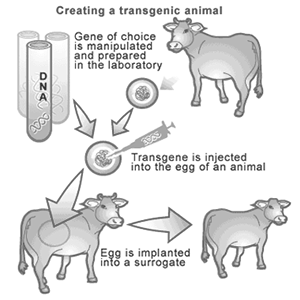
Pharming is a portmanteau of farming and ‘pharmaceutical’ and refers to the use of genetic engineering to insert genes that code for useful pharmaceuticals into host animals or plants that would otherwise not express those genes, thus creating a genetically modified organism (GMO).
The products of pharming are typically recombinant proteins (or their metabolic products), which are proteins that result from the expression of recombinant DNA (molecular cloning in a laboratory brings together genetic material from multiple sources, creating sequences that would not otherwise be found in biological organisms). Recombinant proteins are most commonly produced using bacteria or yeast in a bioreactor. Continue reading →
Posted in Drugs, Health, Science |
Leave a Comment »
March 10, 2013


AquAdvantage salmon is the trade name for a genetically modified Atlantic salmon developed by AquaBounty Technologies. It has been modified by the addition of a growth hormone regulating gene from a Pacific Chinook salmon and a gene from an ocean pout (the Atlantic salmon has 40,000 genes). These additions enable it to grow year-round instead of only during spring and summer.
The purpose of the modifications is to increase the speed at which the fish grows, without affecting its ultimate size or other qualities, though conventional salmon growers have publicly challenged the purported fast growth rates of AquaBounty’s salmon. The fish grows to market size in 16 to 18 months rather than three years. The latter figure refers to varieties whose growth rate has already been improved by 2:1 as a result of traditional selective breeding. Continue reading →
Posted in Food, Politics, Science |
Leave a Comment »
March 10, 2013
Enviropig is the trademark for a genetically modified line of Yorkshire pigs with the capability to digest plant phosphorus more efficiently than ordinary unmodified pigs that was developed at the University of Guelph.
The benefits of the Enviropig if commercialized include reduced feed cost and reduced phosphorus pollution as compared to the raising of ordinary pigs. Enviropigs produce the enzyme phytase in their salivary glands. When cereal grains are consumed, the phytase mixes with feed in the pig’s mouth, and once swallowed the phytase is active in the acidic environment of the stomach degrading indigestible phytic acid with the release of phosphate that is readily digested by the pig. Continue reading →
Posted in Food, Science |
Leave a Comment »
March 9, 2013


A smart mob is a group that, contrary to the usual connotations of a mob, behaves intelligently or efficiently because of its exponentially increasing network links, enabling people to connect to information and others, allowing a form of social coordination. Parallels are made to, for instance, slime molds.
The concept was introduced by author and cultural critic Howard Rheingold in his 2002 book ‘Smart Mobs: The Next Social Revolution.’ According to Rheingold, smart mobs are an indication of the evolving communication technologies that will empower the people. Smart mobs sometimes are manipulated by the dispatchers who control the ‘mobbing system’ (i.e., those who own the contact list and the means to forward instant messages to a group) and are induced to cause distress and aggravation to individuals who have been targeted or singled out for whatever reason. There is a tendency to keep the dynamics of smart mobbing ‘covert,’ and not to discuss such incidents on the internet. Continue reading →
Posted in Technology |
Leave a Comment »
March 9, 2013

An ideas bank is a website where people post, exchange, discuss, and polish new ideas. Some ideas banks are used for the purpose of developing new inventions or technologies. Many corporations have installed internal ideas banks to gather the input from their employees and improve their ideation process. Some ideas banks employ a voting system to estimate an idea’s value. In some cases, ideas banks can be more humor-oriented than their serious counterparts.
The underlying theory of an ideas bank is that if a large group of people collaborate on a project or the development of an idea that eventually said project or idea will reach perfection in the eyes of those who worked on it. Many ideas banks are provided as free of charge, or set around certain companies in general to work out new inventions. Although ideas are provided by a community of people, problems can arise when people take the ideas of the site and begin developing them. There is no possible way to prove that the idea on the ideas bank was original and not taken from something else.
Continue reading →
Posted in Money, Technology |
Leave a Comment »



