January 23, 2013

Soramimi (‘mishearing’; [feigned] ‘deafness’) and Soramimi kashi (‘misheard lyrics’) are Japanese terms for homophonic translation of song lyrics, that is, interpreting lyrics in one language as similar-sounding lyrics in another language. A bilingual soramimi word play contrasts with a monolingual mondegreen (mishearing a phrase as a result of near-homophony, in a way that gives it a new meaning).
And example of Soramimi kashi is the Moldovan band O-Zone’s song ‘Dragostea din tei’ (named from the words in the opening of the song), known on the web as the ‘Numa Numa’ song. The refrain of the original song (in Romanian) is: ‘Vrei să pleci dar nu mă, nu mă iei…’ (‘You want to leave but you don’t want, don’t want to take me…’) A soramimi version, from the Japanese flash animation ‘Maiyahi,’ translates these words as: ‘Bei sa, beishu ka, nomanoma-yei!’ (‘Rice, is it, rice wine, drink it drink it yeah!’) Continue reading →
Posted in Humor, Language, World |
Leave a Comment »
January 23, 2013

A mondegreen [mon-di-green] is the mishearing or misinterpretation of a phrase as a result of near-homophony, in a way that gives it a new meaning. It most commonly is applied to a line in a poem or a lyric in a song. American writer Sylvia Wright coined the term in her essay ‘The Death of Lady Mondegreen,’ published in ‘Harper’s Magazine’ in 1954. The phenomenon is not limited to English, with examples cited by Fyodor Dostoyevsky, in the Hebrew song ‘Háva Nagíla’ (‘Let’s Be Happy’), and in Bollywood movies.
A closely related category is ‘soramimi’—songs that produce unintended meanings when homophonically translated to another language. The unintentionally incorrect use of similar-sounding words or phrases in speaking is a malapropism. If there is a connection in meaning, it can be called an ‘eggcorn.’ If a person stubbornly sticks to a mispronunciation after being corrected, that can be described as ‘mumpsimus.’ Continue reading →
Posted in Humor, Language |
Leave a Comment »
January 23, 2013
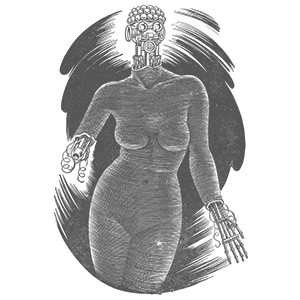
Second Variety is an influential short story by Philip K. Dick first published in ‘Space Science Fiction’ magazine in 1953. A nuclear war between the Soviet Union and the West has reduced much of the world to a barren wasteland.
The war continues however among the scattered remains of humanity. The Western forces have recently developed ‘claws,’ which are autonomous self-replicating robots to fight on their side. It is one of Dick’s many stories in which nuclear war has rendered the Earth’s surface uninhabitable. The story was adapted to the movie ‘Screamers’ in 1995.
Posted in Art, Language, Technology |
Leave a Comment »
January 23, 2013
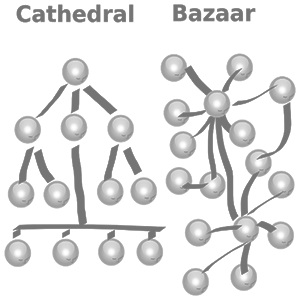
‘The Cathedral and the Bazaar: Musings on Linux and Open Source by an Accidental Revolutionary’ is an essay by Eric S. Raymond on software engineering methods, based on his observations of the Linux kernel development process and his experiences managing an open source project, fetchmail. It examines the struggle between top-down and bottom-up design. It was first presented by the author at the Linux Kongress in 1997 in Germany and was published as part of a book of the same name in 1999.
The essay contrasts two different free software development models: the Cathedral model, in which source code is available with each software release, but code developed between releases is restricted to an exclusive group of software developers. And, the Bazaar model, in which the code is developed over the Internet in view of the public. Raymond credits Linus Torvalds, leader of the Linux kernel project, as the inventor of this process. Raymond also provides anecdotal accounts of his own implementation of this model for the Fetchmail project. Continue reading →
Posted in Language, Technology |
Leave a Comment »
January 23, 2013

Neat and scruffy are labels for two different types of artificial intelligence research. ‘Neats’ consider that solutions should be elegant, clear and provably correct. ‘Scruffies’ believe that intelligence is too complicated (or computationally intractable) to be solved with the sorts of homogeneous system such neat requirements usually mandate. Much success in AI came from combining neat and scruffy approaches. For example, there are many cognitive models matching human psychological data built in cognitive architectures Soar and ACT-R.
Both of these systems have formal representations and execution systems, but the rules put into the systems to create the models are generated ad hoc. The distinction was originally made by AI theorist Roger Schank in the mid-1970s to characterize the difference between his work on natural language processing (which represented commonsense knowledge in the form of large amorphous semantic networks) from the work of John McCarthy, Allen Newell, Herbert A. Simon, Robert Kowalski and others whose work was based on logic and formal extensions of logic. Continue reading →
Posted in Philosophy, Technology |
2 Comments »
January 23, 2013
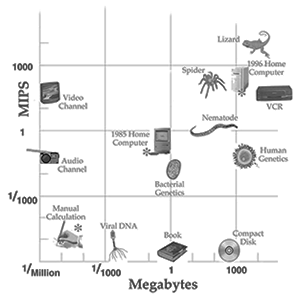
Moravec’s paradox is the discovery by artificial intelligence and robotics researchers that, contrary to traditional assumptions, high-level reasoning requires very little computation, but low-level sensorimotor skills require enormous computational resources.
The principle was articulated by Hans Moravec, Rodney Brooks, Marvin Minsky and others in the 1980s. As Moravec writes, ‘it is comparatively easy to make computers exhibit adult level performance on intelligence tests or playing checkers, and difficult or impossible to give them the skills of a one-year-old when it comes to perception and mobility.’ Continue reading →
Posted in Technology |
Leave a Comment »
January 23, 2013

The AI effect occurs when onlookers discount the behavior of an artificial intelligence program by arguing that it is not real intelligence. Technology journalist Pamela McCorduck writes: ‘It’s part of the history of the field of artificial intelligence that every time somebody figured out how to make a computer do something—play good checkers, solve simple but relatively informal problems—there was chorus of critics to say, ‘that’s not thinking.”
AI researcher Rodney Brooks complains: ‘Every time we figure out a piece of it, it stops being magical; we say, Oh, that’s just a computation.’ As soon as AI successfully solves a problem, the problem is no longer a part of AI. McCorduck calls it an ‘odd paradox,’ that ‘practical AI successes, computational programs that actually achieved intelligent behavior, were soon assimilated into whatever application domain they were found to be useful in, and became silent partners alongside other problem-solving approaches, which left AI researchers to deal only with the ‘failures,’ the tough nuts that couldn’t yet be cracked.’ Continue reading →
Posted in Technology |
Leave a Comment »
January 22, 2013
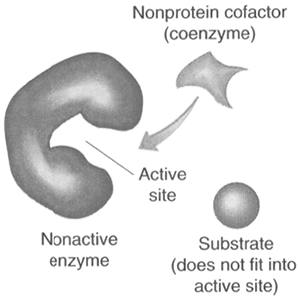
Coenzyme Q10 is an oil-soluble, vitamin-like substance present in most eukaryotic cells, primarily in the mitochondria. Enzymes are protein molecules which work as catalysts (accelerating chemical reactions); coenzymes are are non-protein compounds bound to an enzyme.
They are sometimes referred to as ‘helper molecules.’ CoQ10 aids in cellular respiration (the conversion of sugar into usable energy). It is a component of the electron transport chain and participates in aerobic respiration, generating energy in the form of ATP. Ninety-five percent of the human body’s energy is generated this way. Therefore, those organs with the highest energy requirements—such as the heart, liver and kidney—have the highest CoQ10 concentrations. Continue reading →
Posted in Drugs, Food, Health |
Leave a Comment »
January 22, 2013

An antioxidant [an-tee-ok-si-duhnt] is a molecule that can slow or stop the oxidation, or loss of electrons, of other molecules. Oxidation reactions are necessary for many bodily functions but can produce free radicals (molecules with an unpaired electron). In turn, these radicals can start chain reactions. When the chain reaction occurs in a cell, it can cause damage or death to the cell. Antioxidants terminate these chain reactions by removing free radical intermediates. They do this by being oxidized themselves (donating an electron to the free radical).
Vitamins and enzymes can have antioxidant properties that neutralize the damaging effects of free radicals. Although oxidation reactions are crucial for life, they can also be damaging; plants and animals maintain complex systems of multiple types of antioxidants. Insufficient levels of antioxidants, or inhibition of the antioxidant enzymes, cause oxidative stress and may damage or kill cells. As oxidative stress appears to be an important part of many human diseases, the use of antioxidants in pharmacology is intensively studied, particularly as treatments for stroke and neurodegenerative diseases. Moreover, oxidative stress is both the cause and the consequence of disease. Continue reading →
Posted in Food, Health, Science |
Leave a Comment »
January 22, 2013
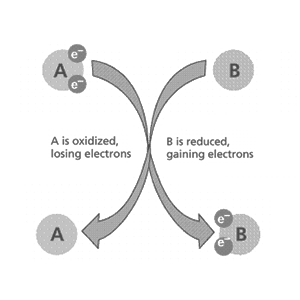
Oxidation [ok-si-dey-shuhn] is any chemical reaction that involves a loss of electrons. For example, when iron reacts with oxygen it forms a chemical called rust: the iron is oxidized (loses electrons) and the oxygen is reduced (gains electrons).
A reduction reaction always comes together with its opposite, the oxidation reaction, and together are called ‘redox’ (reduction and oxidation). Although oxidation reactions are commonly associated with the formation of oxides from oxygen molecules, these are only specific examples of a more general concept of reactions involving electron transfer. Continue reading →
Posted in Health, Science |
Leave a Comment »
January 22, 2013

A microexpression is a brief, involuntary facial expression made in reaction to an emotion. They usually occur in high-stakes situations, where people have something to lose or gain. Microexpressions occur when a person is consciously trying to conceal all signs of how he or she is feeling, or when a person does not consciously know how he or she is feeling. Unlike regular facial expressions, it is difficult to hide microexpression reactions. Microexpressions express the seven universal emotions: disgust, anger, fear, sadness, happiness, surprise, and contempt.
Nevertheless, in the 1990s, pyschologist Paul Ekman expanded his list of basic emotions, including a range of positive and negative emotions not all of which are encoded in facial muscles. These emotions are amusement, contempt, embarrassment, excitement, guilt, pride, relief, satisfaction, pleasure, and shame. They are very brief in duration, lasting only 1/25 to 1/15 of a second. Continue reading →
Posted in Health, Politics, Science |
1 Comment »
January 21, 2013

JSTOR (short for Journal Storage) is a digital library founded in 1995. Originally containing digitized back issues of academic journals, it now also includes books and primary sources, and current issues of journals. It provides full-text searches of more than a thousand journals. More than 7,000 institutions in more than 150 countries have access to JSTOR. Most access is by subscription, but some old public domain content is freely available to anyone, and in 2012 JSTOR launched a program providing limited no-cost access to old articles for individual scholars and researchers who register.
JSTOR’s founder was William G. Bowen the president of Princeton University from 1972 to 1988. JSTOR was originally conceived as a solution to one of the problems faced by libraries, especially research and university libraries, due to the increasing number of academic journals in existence. Most libraries found it prohibitively expensive in terms of cost and space to maintain a comprehensive collection of journals. By digitizing many journal titles, JSTOR allowed libraries to outsource the storage of these journals with the confidence that they would remain available for the long term. Online access and full-text search ability improved access dramatically.
Continue reading →
Posted in Education, Language, Technology |
Leave a Comment »



