June 28, 2021

To be extremely online (often capitalized) means to be closely engaged with Internet culture. People said to be extremely online often believe that online posts are very important.
Events and phenomena can themselves be extremely online; while often used as a descriptive term, extreme onlineness has been described as ‘both a reformation of the delivery of ideas – shared through words and videos and memes and GIFs and copypasta – and the ideas themselves.’ It has been said that ”online’ can be thought of as a way of doing things, not the place they are done.’ Continue reading →
Posted in Language, Politics, Technology |
Leave a Comment »
June 28, 2021
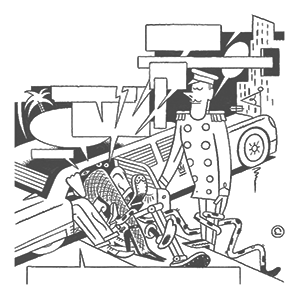
Ever Meulen [myoo-lin] (born Eddy Vermeulen in 1946) is a Belgian illustrator, cartoonist, caricaturist and comic strip artist. His pseudonym is based on his name E. Vermeulen.
Vermeulen studied graphic arts at the Sint-Lucas School of Architecture in Ghent and Brussels. He debuted in 1970, working for the magazine ‘Humo,’ where he drew both comics (‘Balthazar de Groene Steenvreter’ (‘Balthasar the Green Stone Eater’) and ‘Piet Peuk’ (‘Pete Stub’)), as well as cover illustrations, caricatures and illustrations to articles. When ‘Humo’ published books or CDs, Meulen often provided the cover illustration. Continue reading →
Posted in Art |
Leave a Comment »
June 26, 2021
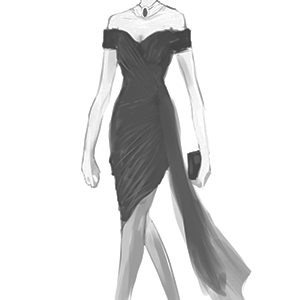
The Revenge dress is an off the shoulder black silk evening gown worn by Princess Diana to a 1994 dinner not long after the televised admission of adultery by her husband, Charles, Prince of Wales.
The event to which the dress was worn was a June 29, 1994 fundraising dinner hosted by ‘Vanity Fair’ magazine for the Serpentine Gallery in Kensington Gardens. Diana had originally declined the invitation to the dinner. However, two days prior to the dinner, following several days’ publicity of Charles’ infidelity revelations, she accepted the invitation. Continue reading →
Posted in Politics, Sex, World |
1 Comment »
June 21, 2021
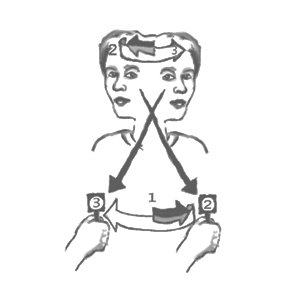
Vestibular [ve-stib-yuh-ler] rehabilitation (VR), also known as vestibular rehabilitation therapy (VRT), is a specialized form of physical therapy used to treat vestibular disorders or symptoms, characterized by dizziness, vertigo, and trouble with balance, posture, and vision. These primary symptoms can result in secondary symptoms such as nausea, fatigue, and lack of concentration.
The term ‘vestibular’ refers to the inner ear system with its fluid-filled canals that allow for balance and spatial orientation. Some common vestibular disorders include vestibular neuritis, Ménière’s disease, and nerve compression. The most common vestibular disorder is Benign Paroxysmal Positional Vertigo (BPPV). Vestibular dysfunction can exist unilaterally, affecting only one side of the body, or bilaterally, affecting both sides. Continue reading →
Posted in Health |
1 Comment »
June 19, 2021
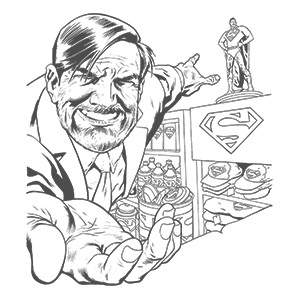
Funky Flashman is a fictional character, an entrepreneur in the DC Universe. Created by Jack Kirby, the character first appeared in the pages of ‘Mister Miracle’ during the early 1970s. He has no superhuman powers, but is very charismatic, charming, and a cunning businessman.
The character is popularly considered a satiric caricature of Stan Lee, Kirby’s former artistic collaborator at Marvel Comics with whom he had a falling-out, but this claim has no substantial evidence to back it up. Flashman’s attempts to rip off ‘Mister Miracle’ potentially reflect Kirby’s view that Lee exploited his work at Marvel in the 1960s. Continue reading →
Posted in Art, Humor, Money |
Leave a Comment »
June 14, 2021

Marathon course-cutting occurs when runners complete less than an entire course of a marathon before going over the finish line. The standard length of a marathon course is 42.195 kilometers, about 26.2 miles. Course-cutting may be intentional or unintentional and can be achieved by various means.
When done intentionally, course-cutting constitutes cheating. In 1904, Frederick Lorz rode a car during the Olympic marathon in St. Louis. Many marathon runners consider course-cutting to be worse than doping, considering that dopers are at least trying to run the entire race. Continue reading →
Posted in Games, Politics |
3 Comments »
June 8, 2021

A nutcracker is a type of alcoholic drink consisting of a mixture of hard liquor and sugary beverages such as fruit juice that originated and are made and sold in New York City. Originally sold via word-of-mouth by street vendors, nutcrackers have also been offered as ‘to-go cocktails’ by bars and restaurants.
Nutcrackers frequently consist of liquors such as vodka, rum, tequila and cognac, mixed with fruit juice, Kool-Aid or candy. They are sold mainly during the summer on the streets and on the beaches, and come in cups or small plastic bottles. The sale of nutcrackers without a license violates New York law, and the police have on occasion attempted to sanction it. Continue reading →
Posted in Drugs, Food, Money |
Leave a Comment »
June 1, 2021
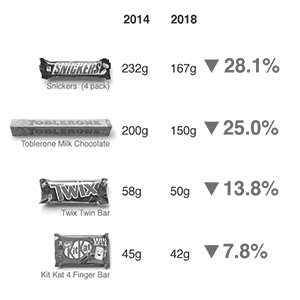
In economics, shrinkflation is the process of items shrinking in size or quantity, or even sometimes reformulating or reducing quality while their prices remain the same or increase. The word is a portmanteau of the words shrink and inflation.
Shrinkflation allows companies to increase their operating margin and profitability by reducing costs whilst maintaining sales volume, and is often used as an alternative to raising prices in line with inflation. Consumer protection groups are critical of the practice because it has the effect of reducing product value by ‘stealth.’ The reduction in pack size is sufficiently small as not to be immediately obvious to regular consumers. Continue reading →
Posted in Money |
Leave a Comment »
May 26, 2021
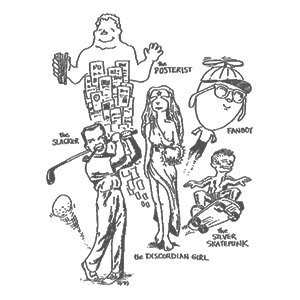
A zine [zeen] (short for magazine or fanzine) is a small-circulation self-published work of original or appropriated texts and images, usually reproduced via a copy machine. A fanzine (blend of fan and magazine) is a non-professional and non-official publication produced by enthusiasts of a particular cultural phenomenon (such as a literary or musical genre) for the pleasure of others who share their interest.
The term ‘zine’ was coined in an 1940 science fiction fanzine by Russ Chauvenet and popularized within science fiction fandom, entering the Oxford English Dictionary in 1949. Zines have served as a medium for various subcultures, and frequently draw inspiration from a DIY ethos that disregards traditional publishing conventions. Continue reading →
Posted in Art, Language |
Leave a Comment »
May 16, 2021
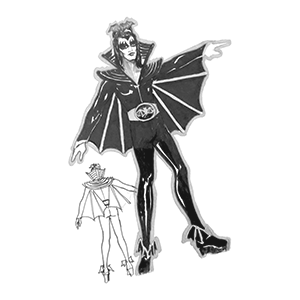
Larry LeGaspi (1950 – 2001) was an American fashion designer best known for creating signature designs worn by Labelle, Kiss, Grace Jones, George Clinton and Funkadelic, Divine, and other notables in the 1970s and 1980s.
Legaspi was born in Lakewood Township, New Jersey, and attended the Fashion Institute of Technology in New York City. He subsequently opened his own studio and boutique, Moonstone, where he sold his Art Deco-inspired futuristic styles in a space decorated with a moon and stars motif. Continue reading →
Posted in Art |
1 Comment »
May 12, 2021
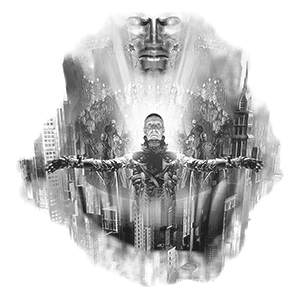
The Omphalos [om-fuh-luhs] hypothesis is one attempt to reconcile the scientific evidence that the universe is billions of years old with a literal interpretation of the Genesis creation narrative, which implies that the Earth is only a few thousand years old.
It is based on the religious belief that the universe was created by a divine being, within the past six to ten thousand years (in keeping with flood geology), and that the presence of objective, verifiable evidence that the universe is older than approximately ten millennia is due to the creator introducing false evidence that makes the universe appear significantly older. Continue reading →
Posted in Philosophy, Science |
1 Comment »
May 3, 2021

A synaptic transistor is an electrical device that can learn in ways similar to a neural synapse (the site of transmission of electric nerve impulses between two nerve cells). It optimizes its own properties for the functions it has carried out in the past.
The device mimics the behavior of the property of neurons called spike-timing-dependent plasticity, or STDP. The process adjusts the connection strengths based on the relative timing of a particular neuron’s output and input action potentials (or spikes). Continue reading →
Posted in Technology |
Leave a Comment »


 The Daily Omnivore