September 9, 2021
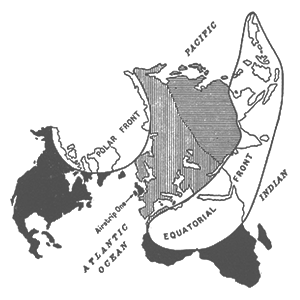
In the dystopian novel ‘Nineteen Eighty-Four’ (1949), by George Orwell, the Two Minutes Hate is the daily, public period during which members of the Outer Party of Oceania must watch a film depicting the enemies of the state, specifically Emmanuel Goldstein and his followers, to openly and loudly express hatred for them.
The political purpose of the Two Minutes Hate is to allow the citizens of Oceania to vent their existential anguish and personal hatreds towards politically expedient enemies: Goldstein and the rival superstate of the moment. In re-directing the members’ subconscious feelings away from the Party’s government of Oceania, and towards non-existent external enemies, the Party minimizes thoughtcrime (politically unorthodox thoughts). Continue reading →
Posted in Language, Politics |
Leave a Comment »
August 22, 2021
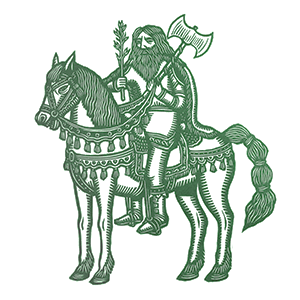
The Green Knight is a character from Arthurian literature. He is a formidable judge and tester of knights, and as such the other characters consider him as friendly but terrifying and somewhat mysterious.
In ‘Sir Gawain, the Green Knight,’ a 14th century alliterative poem by an anonymous poet, he is so called because his skin and clothes are green. The meaning of his greenness has puzzled scholars since the discovery of the poem, who identify him variously as the ‘Green Man,’ a vegetation being of medieval art; a recollection of a figure from Celtic mythology; a pagan Christian symbol — the personified Devil. Continue reading →
Posted in Art, Language |
1 Comment »
August 20, 2021
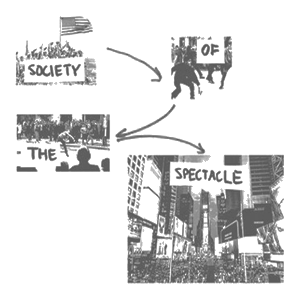
The avant-garde (French: ‘advance guard’ or ‘vanguard’) are people or works that are experimental, radical, or unorthodox with respect to art, culture, or society. It is frequently characterized by aesthetic innovation and initial unacceptability.
The avant-garde pushes the boundaries of what is accepted as the norm or the status quo, primarily in the cultural realm. The avant-garde is considered by some to be a hallmark of modernism, as distinct from postmodernism. Many artists have aligned themselves with the avant-garde movement, and still continue to do so, tracing their history from Dada through the Situationists and to postmodern artists such as the Language poets of the 1980s. Continue reading →
Posted in Art, Language, Politics |
Leave a Comment »
August 17, 2021

Graveyard of Empires is a sobriquet associated with Afghanistan. It originates from the alleged historical tendency for foreign powers to fail in their invasions of the country. It is unclear who coined the phrase, and its historical accuracy has been disputed.
Several superpowers have attempted to invade Afghanistan without maintaining a stable, permanent rule. Modern examples included the British Empire during the first and Third Anglo-Afghan Wars (1839-1842, 1919), the Soviet Union in the Soviet–Afghan War (1979-1989) and the United States in the War in Afghanistan (2001-2021). Continue reading →
Posted in Politics, War, World |
Leave a Comment »
August 16, 2021
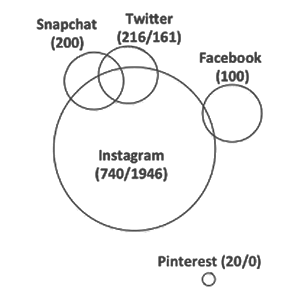
Context collapse or ‘the flattening of multiple audiences into a single context’ is a term arising out of the study of human interaction on the internet, especially within social media.
It ‘generally occurs when a surfeit of different audiences occupy the same space, and a piece of information intended for one audience finds its way to another’ with that new audience or audiences’ understanding being all the stronger for failing to understand the original context. Continue reading →
Posted in Science, Technology |
2 Comments »
August 15, 2021


A submarine sandwich, commonly known as a sub, or a hoagie (Mid-Atlantic and Western Pennsylvania), hero (New York City), Italian sandwich (Maine), or grinder (New England), is a type of cold or hot sandwich made from a cylindrical bread roll split lengthwise and filled with meats, cheeses, vegetables, and condiments.
The Italian sandwich originated in several different Italian American communities in the Northeast from the late 19th to mid-20th centuries. The popularity of this Italian-American cuisine has grown from its origins in Connecticut, Pennsylvania, Delaware, Maryland, New York, New Jersey, Massachusetts, and Rhode Island to most parts of the U.S. and Canada, and with the advent of chain restaurants, is now available in many parts of the world. Continue reading →
Posted in Food, Language |
2 Comments »
August 12, 2021

A gopnik is a member of a slavic subculture stereotyped as prone to hooliganism. Gopota are often seen squatting in groups ‘in court’ or ‘doing the crab’ with their heels on the ground, a behavior attributed to Soviet prison culture and avoidance of sitting on the cold ground.
The subculture of gopota has its roots in the late Russian Empire and evolved during the 20th century in many cities in the Soviet Union. By the late 2010s, it had faded for the most part, although youth gangs (such as the A.U.E.) that resemble gopota still exist in Russia and in other Slavic and Baltic countries. Continue reading →
Posted in Language, World |
Leave a Comment »
August 2, 2021
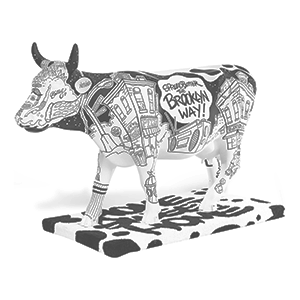
CowParade is an international public art exhibit where fiberglass sculptures of cows are decorated by local artists and distributed in public places. After the exhibition in a city, which may last many months, the statues are auctioned off and the proceeds donated to charity.
They often feature artwork and designs specific to local culture, as well as city life and other relevant themes. There are a few variations of shape, but the three most common shapes of cow were created by Pascal Knapp, a Swiss-born sculptor who was commissioned to create the cows specifically for the CowParade. He owns the copyrights to the standing, lying, and grazing cow shapes used. Continue reading →
Posted in Art, World |
Leave a Comment »
August 1, 2021
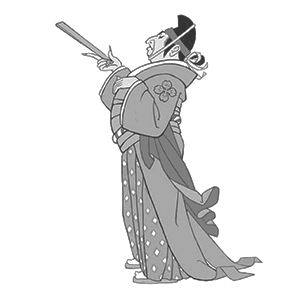
Grand Poobah is a satirical term derived from the name of the haughty character Pooh-Bah in Gilbert and Sullivan’s ‘The Mikado’ (1885). In this comic opera, Pooh-Bah holds numerous exalted offices, including ‘First Lord of the Treasury, Lord Chief Justice, Commander-in-Chief, Lord High Admiral … Archbishop … Lord Mayor’ and ‘Lord High Everything Else.’
The name has come to be used as a mocking title for someone self-important or locally high-ranking and who either exhibits an inflated self-regard or who has limited authority while taking impressive titles. American writer William Safire wrote that ‘everyone assumes [the name] Pooh-Bah merely comes from [W. S. Gilbert] combining the two negative exclamations Pooh! plus Bah!, typical put-downs from a typical bureaucrat.’ Continue reading →
Posted in Art, Humor, Language |
Leave a Comment »
July 31, 2021

Generative Pre-trained Transformer 3 (GPT-3) is an autoregressive language model that uses deep learning to produce human-like text. It is the third-generation language prediction model in the GPT-n series (and the successor to GPT-2) created by OpenAI, a San Francisco-based artificial intelligence research laboratory.
Before the release of GPT-3, the largest language model was Microsoft’s Turing NLG, introduced several months earlier with a capacity of 17 billion parameters—less than a tenth of GPT-3’s. Continue reading →
Posted in Language, Technology |
Leave a Comment »
July 29, 2021
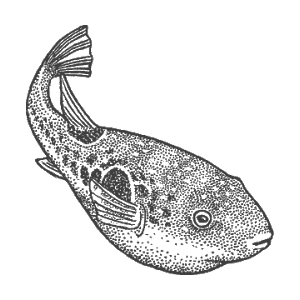
Fugu [foo-goo] is a pufferfish or porcupinefish dish originating in Japan. Fugu can be lethally poisonous to humans due to its tetrodotoxin, meaning it must be carefully prepared to remove toxic parts and to avoid contaminating the meat.
The restaurant preparation of fugu is strictly controlled by law in Japan and several other countries, and only chefs who have qualified after three or more years of rigorous training are allowed to prepare the fish. Domestic preparation occasionally leads to accidental death. Continue reading →
Posted in Food, Health, World |
Leave a Comment »
July 25, 2021
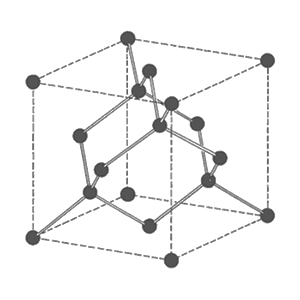
‘The Diamond Age: Or, A Young Lady’s Illustrated Primer’ is a 1995 science fiction novel by American writer Neal Stephenson. It is to some extent a Bildungsroman or coming-of-age story, focused on a young girl named Nell, set in a future world in which nanotechnology affects all aspects of life. The novel deals with themes of education, social class, ethnicity, and the nature of artificial intelligence.
The book contains descriptions of various exotic technologies, such as the chevaline (a mechanical horse that can fold up and is light enough to be carried one-handed), and forecasts the use of technologies that are in development today, such as smart paper that can show personalized news headlines. Major cities have immune systems made up of aerostatic defensive micromachines, and public matter compilers provide basic food, blankets, and water for free to anyone who requests them. Continue reading →
Posted in Art, Language, Technology |
Leave a Comment »



