October 28, 2012

Alt porn tends to involve members of such subcultures as goths, punks, or ravers and is often produced by small and independent websites or filmmakers. It often features models with body modifications such as tattoos, piercings, or scarifications, or temporary modifications such as dyed hair.
The term indie porn is also sometimes used, though this term is more generally used as a synonym for independent pornography, regardless of affinity with any kind of alternative subculture. While pornography specifically oriented toward alternative culture did not arise until the 1990s, the work of Gregory Dark, David Aaron Clark, Michael Ninn, and Stephen Sayadian are seen by some as predecessors of alt porn. ‘The Cinema of Transgression’ of Richard Kern and Nick Zedd (as well as Kern’s later photographic work) can also be viewed as early examples of alt porn. Continue reading →
Posted in Language, Sex |
2 Comments »
October 28, 2012


Psychedelia [sahy-ki-deel-yuh] is a name given to the subculture of people who use psychedelic drugs, and a style of psychedelic artwork and psychedelic music derived from the experience of altered consciousness that uses highly distorted and surreal visuals, sound effects and reverberation, and bright colors and full spectrums and animation (including cartoons) to evoke and convey to a viewer or listener the artist’s experience while using such drugs.
A psychedelic experience is characterized by the striking perception of aspects of one’s mind previously unknown, or by the creative exuberance of the mind liberated from its ostensibly ordinary fetters.
Continue reading →
Posted in Art, Drugs, Language |
Leave a Comment »
October 27, 2012
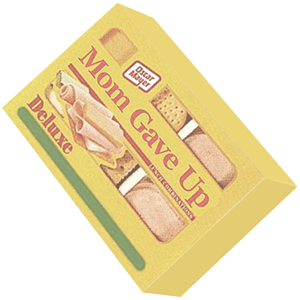
Lunchables is a line of lunch combinations manufactured by Kraft Foods, Inc, beginning in 1988. They are marketed under the Oscar Mayer brand in the United States and Dairylea in the United Kingdom. Many Lunchables products are produced at Kraft Foods, Inc.’s Fullerton factory in Fullerton, California, and are then distributed across the nation.
A typical Lunchables meal combination includes crackers, small slices of meat, and an equal number of slices of cheese. Other varieties include pizza, small hot dogs, small burgers, nachos, subs, and wraps. Overall there are 25 different kinds of Lunchables meals. ‘Deluxe’ versions, which were originally developed for adults, included two types of meats and two types of cheeses. Deluxe versions usually also contained a sauce and a mint. Continue reading →
Posted in Food, Health, Money |
Leave a Comment »
October 27, 2012

Lower-back tattoos (often referred to as tramp stamps) are a form of body art that became popular among women in the 2000s and gained a reputation as a feminine type of tattoo. Although historically men comprised the majority of tattoo recipients, in the early 1990s, the practice gained popularity among women. In the early to mid-20th century, women with tattoos were heavily stigmatized, and were rarely found in middle-class society. Lower-back tattoos were popularized in the early 2000s, in part owing to the influence of celebrities, including Britney Spears, Christina Ricci, and Pamela Anderson. The popularity of low-rise jeans and crop tops may have also spurred the increase in lower-back tattoos.
Another appeal of tattooing the lower back is that there is little fat there, lessening the chance that images will become misshapen over time. Also, the lower back is often concealed, providing women the choice of when to reveal their tattoo. Medical practitioners who administer anesthesia have questioned whether epidural analgesia should be provided to women with lower-back tattoos. Concerns have emerged that epidural catheters may cause tattoo pigment to enter interspinous ligaments and other areas, potentially leading to health problems. There is general consensus that epidural catheters should not be placed through irritated or infected tattoos. However, harm has not been clearly documented when placing epidural catheters through healthy tattooed skin.
Posted in Art, Health, Sex |
Leave a Comment »
October 27, 2012

The cocktail party effect is the phenomenon of being able to focus one’s auditory attention on a particular stimulus while filtering out a range of other stimuli, much the same way that a party-goer can focus on a single conversation in a noisy room. This effect is what allows most people to ‘tune in’ to a single voice and ‘tune out’ all others. It may also describe a similar phenomenon that occurs when one may immediately detect words of importance originating from unattended stimuli, for instance hearing one’s name in another conversation.
The cocktail party effect works best as a binaural effect, which requires hearing with both ears. People with only one functional ear seems much more disturbed by interfering noise. However, even without binaural location information, individuals can selectively attend to one particular speaker if the pitch of their voice or the topic of their speech is sufficiently distinctive (albeit with greater difficulty). This phenomenon is still very much a subject of research, in humans as well as in computer implementations (where it is typically referred to as source separation or blind source separation).
Continue reading →
Posted in Health, Science, Technology |
Leave a Comment »
October 26, 2012
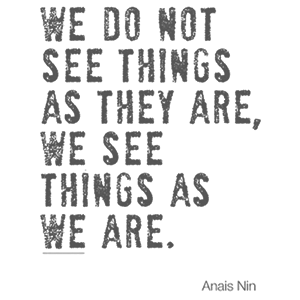
Reality tunnel is a term coined by Timothy Leary and popularized by Robert Anton Wilson, akin to the idea of representative realism (equivalent to the accepted view of ‘perception’ in natural science that states that we do not and cannot perceive the external world as it really is but know only our ideas and interpretations of the way the world is). The theory states that, with a subconscious set of mental ‘filters’ formed from their beliefs and experiences, every individual interprets the same world differently, hence ‘Truth is in the eye of the beholder.’ According to Wilson, ‘Every kind of ignorance in the world all results from not realizing that our perceptions are gambles.
We believe what we see and then we believe our interpretation of it, we don’t even know we are making an interpretation most of the time. We think this is reality.’ The idea does not necessarily imply that there is no objective truth; rather that our access to it is mediated through our senses, experience, conditioning, prior beliefs, and other non-objective factors. The implied individual world each person occupies is said to be their reality tunnel. The term can also apply to groups of people united by beliefs: we can speak of the fundamentalist Christian reality tunnel or the ontological naturalism reality tunnel. Continue reading →
Posted in Philosophy, Science |
Leave a Comment »
October 25, 2012

Consensus reality is that which is generally agreed to be reality, based on a consensus view. However, human beings do not fully understand or agree upon the nature of knowledge or knowing, and therefore (it is often argued) it is not possible to be certain beyond doubt what is real. Accordingly, this line of logic concludes, we cannot in fact be sure beyond doubt about the nature of reality. We can, however, seek to obtain some form of consensus, with others, of what is real.
We can use this consensus as a pragmatic guide, either on the assumption that it seems to approximate some kind of valid reality, or simply because it is more ‘practical’ than perceived alternatives. Consensus reality therefore refers to the agreed-upon concepts of reality which people in the world, or a culture or group, believe are real (or treat as real), usually based upon their common experiences as they believe them to be; anyone who does not agree with these is sometimes stated to be ‘in effect… living in a different world.’ Continue reading →
Posted in Philosophy, Science |
Leave a Comment »
October 25, 2012
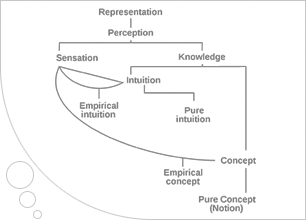

The noumenon [noo-muh-non] is a posited object or event that is known (if at all) without the use of the senses. The term is generally used in contrast with, or in relation to ‘phenomenon,’ which refers to anything that appears to, or is an object of, the senses. In Ancient philosophy, the noumenal realm was equated with the world of ideas known to the philosophical mind, in contrast to the phenomenal realm, which was equated with the world of sensory reality, known to the uneducated mind.
Modern philosophy has generally denied the possibility of knowledge independent of the senses, and Immanuel Kant gave this point of view its classical version, saying that the noumenal world may exist, but it is completely unknowable to humans. In Kantian philosophy the unknowable noumenon is often linked to the unknowable ‘thing per se’ (‘Ding an sich’), although how to characterize the nature of the relationship is a question yet open to some controversy. Continue reading →
Posted in Language, Philosophy |
Leave a Comment »
October 25, 2012

Generation Z (also known as iGeneration) is a common name for the group of people born from a currently undefined point, defined variously as between 1989 and 2010, through to recent years, as distinct from the preceding ‘Generation Y’ (also referred to as ‘Millennials’). Generation Z is also known as the ‘Pluralist Generation.’ If Generation Z is considered to begin in 1989, it would make Gen Y a very brief generation born from 1977-1988. This flies in the face of the traditional definition of Generation Y beginning at some point in the 1980s and ending in the late 1990s or early 2000s.
However, due to recent cultural developments such as the rise of social networking and the differences in attitudes created by the Great Recession a divide has appeared which suggests an earlier cutoff date between 1989 and 1994 might be warranted. For example, as of 2012 half the users of Facebook are 22 years old or younger, compared to 2008 when the median age peaked at 26 years old. If the traditional definition of Generation Z beginning in the early 2000s is used, Generation Y is a group larger than the baby boomers and spanning a full 20 years.
Continue reading →
Posted in Technology, World |
1 Comment »
October 25, 2012

High speed photography is the science of taking pictures of very fast phenomena. In 1948, the Society of Motion Picture and Television Engineers defined high-speed photography as any set of photographs captured by a camera capable of 128 frames per second or greater, and of at least three consecutive frames. High speed photography can be considered to be the opposite of time-lapse photography (extremely long exposures).
In common usage, high speed photography may refer photographs taken in a way as to appear to freeze the motion, especially to reduce motion blur, or to a series of photographs taken at a high sampling frequency or frame rate. The former requires a sensor with good sensitivity and either a very good shuttering system or a very fast strobe light. The latter requires some means of capturing successive frames, either with a mechanical device or by moving data off electronic sensors very quickly. Continue reading →
Posted in Art, Technology |
1 Comment »
October 25, 2012

A freeze frame shot is used when one shot is printed in a single frame several times, in order to make an interesting illusion of a still photograph.
‘Freeze frame’ is also a drama medium term used in which, during a live performance, the actors/actresses will freeze at a particular, pre-meditated time, to enhance a particular scene, or to show an important moment in the play/production like a celebration. The image can then be further enhanced by spoken word, in which each character tells their personal thoughts regarding the situation, giving the audience further insight into the meaning, plot or hidden story of the play/production/scene. This is known as ‘thought tracking,’ another Drama Medium (e.g. costumes). Continue reading →
Posted in Art, Technology |
Leave a Comment »
October 24, 2012

Harm reduction refers to a range of public health policies designed to reduce the harmful consequences associated with human behaviors, even if those behaviors are risky or illegal. Examples of behaviors targeted for harm reduction policies include recreational drug use and prostitution. Criticism of harm reduction typically centers on concerns that tolerating risky or illegal behavior sends a message to the community that these behaviors are acceptable.
In the case of recreational drug use, harm reduction is put forward as a useful perspective alongside the more conventional approaches of demand and supply reduction. Many advocates argue that prohibitionist laws criminalize people for suffering from a disease and cause harm, for example by obliging drug addicts to obtain drugs of unknown purity from unreliable criminal sources at high prices, increasing the risk of overdose and death. Continue reading →
Posted in Drugs, Politics, Sex |
Leave a Comment »



