October 23, 2012

Mind at Large is a concept from ‘The Doors of Perception’ and ‘Heaven and Hell’ by Aldous Huxley. This philosophy was influenced by the ideas of philosopher and historian C. D. Broad. Psychedelic drugs are thought to disable filters which block or suppress signals related to mundane functions from reaching the conscious mind.
In this book, Huxley explores the idea that the human mind filters reality, partly because handling the details of all of the impressions and images coming in would be unbearable, partly because it has been taught to do so. He believes that psychotropic drugs can partly remove this filter, which leaves the drug user exposed to ‘Mind at Large.’ Continue reading →
Posted in Drugs, Philosophy |
1 Comment »
October 23, 2012

Hallucinogens [huh-loo-suh-nuh-juhns] are drugs which can cause hallucinations (seeing, hearing, or otherwise perceiving things that are not real). They are a general group of pharmacological agents that can be divided into three broad categories: psychedelics (drugs with perception-altering effects), dissociatives (drugs that produce feelings of detachment – dissociation – from the environment and self), and deliriants (drugs that induce a state of delirium in the user).
These classes of psychoactive drugs have in common that they can cause subjective changes in perception, thought, emotion and consciousness. Unlike other psychoactive drugs, such as stimulants and opioids, these drugs do not merely amplify familiar states of mind, but rather induce experiences that are qualitatively different from those of ordinary consciousness. These experiences are often compared to non-ordinary forms of consciousness such as trance, meditation, dreams, or insanity. Continue reading →
Posted in Drugs, Health, Philosophy |
Leave a Comment »
October 23, 2012


Psychedelic therapy refers to therapeutic practices involving the use of psychedelic drugs, particularly serotonergic psychedelics such as LSD, psilocybin, DMT, and 2C-B. As an alternative to synonyms such as ‘hallucinogen,’ ‘entheogen,’ ‘psychotomimetic’ and other functionally constructed names, the use of the term ‘psychedelic’ (‘mind-manifesting’) emphasizes that those who use these drugs as part of a therapeutic practice believe these drugs can facilitate beneficial exploration of the psyche.
Proponents of psychedelic therapy also believe psychedelics enhance or unlock key psychoanalytic abilities, and so make it easier for conventional psychotherapy to take place. Psychedelic therapy, in the broadest possible sense of the term, undoubtedly dates from prehistoric knowledge of hallucinogenic plants. Though usually viewed as predominantly spiritual in nature, elements of psychotherapeutic practice can be recognized in the entheogenic or shamanic rituals of many cultures. Shamans have historically been well known throughout the world to mix two or more substances to produce synergistic effects.
Continue reading →
Posted in Drugs, Health, Politics |
Leave a Comment »
October 22, 2012

The Thule Society (originally the ‘Study Group for Germanic Antiquity’) was a German occultist and völkisch (popularist) group in Munich, named after a mythical northern country from Greek legend. The Society is notable chiefly as the organization that sponsored the Deutsche Arbeiterpartei (DAP), which was later reorganized by Adolf Hitler into the National Socialist German Workers’ Party (Nazi).
According to Hitler biographer Ian Kershaw, the organization’s ‘membership list…reads like a ‘Who’s Who’ of early Nazi sympathizers and leading figures in Munich,’ including Rudolf Hess, Alfred Rosenberg, Hans Frank, Julius Lehmann, Gottfried Feder, Dietrich Eckart, and Karl Harrer. However, Nicholas Goodrick-Clarke, an expert on the Thule Society, finds that while Hans Frank and Rudolf Hess had been Thule members, other leading Nazis had only been guests of the Thule or entirely unconnected with it. There is no evidence that Hitler ever attended the Thule Society. It is quite clear that Hitler himself had little interest in, and made little time for, ‘esoteric matters.’ Continue reading →
Posted in Philosophy, War |
Leave a Comment »
October 22, 2012

In photography and cinematography, a multiple exposure is the superimposition of two or more exposures to create a single image, and double exposure has a corresponding meaning in respect of two images. The exposure values may or may not be identical to each other. Ordinarily, cameras have a sensitivity to light that is a function of time. For example, a one second exposure is an exposure in which the camera image is equally responsive to light over the exposure time of one second. The criterion for determining that something is a double exposure is that the sensitivity goes up and then back down.
The simplest example of a multiple exposure is a double exposure without flash, i.e. two partial exposures are made and then combined into one complete exposure. Some single exposures, such as ‘flash and blur’ use a combination of electronic flash and ambient exposure. Multiple exposures are sometimes used as an artistic visual effect or to create ghostly images (it is frequently used in photographic hoaxes).
Posted in Art, Technology |
2 Comments »
October 22, 2012
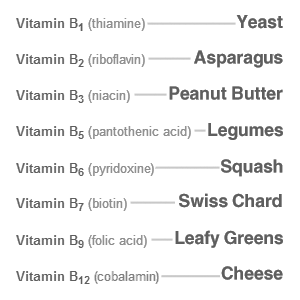
The B vitamin complex are a group of 8 water-soluble vitamins that play important roles in cell metabolism. Originally, it was thought they were just different forms of one vitamin (like with Vitamin D, for example).
Later it turned out that they are separate vitamins that often can be found together: Vitamin B1 (Thiamine), Vitamin B2 (Riboflavin), Vitamin B3 (Niacin) Vitamin B5 (pantothenic acid), Vitamin B6 (Pyridoxine), Vitamin B7 (Biotin), Vitamin B9 (Folic acid), and Vitamin B12 (Cyanocobalamin). Continue reading →
Posted in Food, Health |
Leave a Comment »
October 22, 2012

The Spice trade refers to the trade between historic civilizations in Asia, Northeast Africa, and Europe; spices such as cinnamon, cassia, cardamom, ginger, and turmeric were known, and used for commerce, in the Eastern World well into antiquity.
These spices found their way into the Middle East before the beginning of the Christian Era, where the true sources of these spices was withheld by the traders, and associated with fantastic tales. Continue reading →
Posted in Food, Money, World |
Leave a Comment »
October 22, 2012
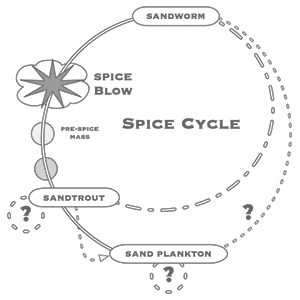
Melange [mey-lahnj] from French ‘mélange’ (‘set of diverse elements’) – also called the ‘spice’ – is the name of the fictional drug central to the ‘Dune’ series of science fiction novels by Frank Herbert, and derivative works.
In the series, the most essential and valuable commodity in the universe is melange, a geriatric drug that gives the user a longer life span, greater vitality, and heightened awareness; it can also unlock prescience (foreknowledge of events) in some humans, depending upon the dosage and the consumer’s physiology. This prescience-enhancing property makes safe and accurate interstellar travel possible. Melange comes with a steep price, however: it is addictive, and withdrawal is fatal. Continue reading →
Posted in Drugs, Food, Language |
Leave a Comment »
October 22, 2012

A spice is a dried seed, fruit, root, bark, or vegetative substance primarily used for flavoring coloring or preserving food. Sometimes a spice is used to hide other flavors. Spices are distinguished from herbs, which are parts of leafy green plants also used for flavoring or as garnish.
Many spices have antimicrobial properties. This may explain why spices are more commonly used in warmer climates, which have more infectious disease, and why use of spices is especially prominent in meat, which is particularly susceptible to spoiling. A spice may have an extra use, usually medicinal, religious ritual, cosmetics or perfume production, or as a vegetable. For example, turmeric roots are consumed as a vegetable and garlic as an antibiotic. Continue reading →
Posted in Food, Money, World |
Leave a Comment »
October 22, 2012

The Gin Craze was a period in the first half of the 18th century when the consumption of gin increased rapidly in Great Britain, especially in London. Many people overconsumed and the city had a virtual epidemic of extreme drunkenness; this provoked moral outrage and a legislative backlash that some compare to the modern drug wars.
Parliament passed five major Acts, in 1729, 1736, 1743, 1747 and 1751, designed to control the consumption of gin. Though many similar drinks were available, and alcohol consumption was considerable at all levels of society, it was gin (otherwise known as ‘Mother’s Ruin’ or ‘Madam Geneva,’ a misspelling of the original drink called ‘jenever’) which caused the greatest public concern. Continue reading →
Posted in Drugs, Money, Politics |
Leave a Comment »
October 21, 2012
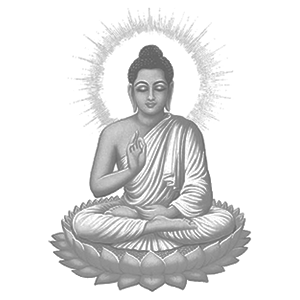
Luminous mind (‘brightly shining citta’) is a term attributed to the Buddha in the ‘Nikayas’ (Bhuddist scripture); the mind is said to be ‘luminous’ whether or not it is tainted by mental defilements.
The statement is given no direct doctrinal explanation in the discourses, but later Buddhist schools explained it using various concepts developed by them. There are two major sects in Buddhism, the older and more conservative Theravada and the larger, more modern Mahyana. Continue reading →
Posted in Philosophy |
Leave a Comment »
October 21, 2012

The Unified Extensible Firmware Interface (UEFI) is a specification that defines a software interface between an operating system and platform firmware. UEFI is meant as a replacement for the Basic Input/Output System (BIOS) firmware interface, present in all IBM PC-compatible personal computers. In practice, most UEFI images have legacy support for BIOS services.
It can be used to allow remote diagnostics and repair of computers, even without another operating system. The original EFI (Extensible Firmware Interface) specification was developed by Intel. Some of its practices and data formats mirror ones from Windows. The BIOS is limited to a 16-bit processor mode and 1 MB of addressable space due to the design being based on the IBM 5150 which used the 16-bit Intel 8088. In comparison, the UEFI processor mode can be either 32-bit (x86-32, ARM) or 64-bit (x86-64 and Itanium).
Continue reading →
Posted in Money, Politics, Technology |
Leave a Comment »



