October 4, 2012
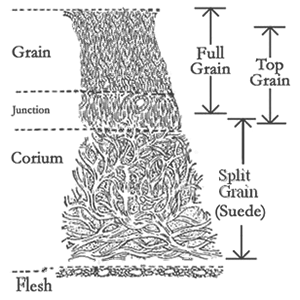
Leather is a durable and flexible material created by tanning animal rawhide and skin, often cattle hide. Traditionally, tanning used tannin, an acidic chemical compound from which the process draws its name (tannin is in turn named for an old German word for oak or fir trees, which supplied it).
Rawhide is made by removing the flesh and fat and then the hair (leather with the hair still attached is called ‘hair-on’) by use of an aqueous solution (this process is called ‘liming’ when using lime or ‘bucking’ when using lye), then scraping over a beam with a somewhat dull knife, and then drying (often while stretched). Liming or bucking also cleans the fiber network of the skin to encourage penetration of the tanning agent. Continue reading →
Posted in Art, Money, Technology |
Leave a Comment »
October 3, 2012

Feminist science fiction is a sub-genre of science fiction which tends to deal with women’s roles in society. Feminist science fiction poses questions about social issues such as how society constructs gender roles, the role reproduction plays in defining gender and the unequal political and personal power of men and women.
Some of the most notable feminist science fiction works have illustrated these themes using utopias to explore a society in which gender differences or gender power imbalances do not exist, or dystopias to explore worlds in which gender inequalities are intensified, thus asserting a need for feminist work to continue. According to professor Elyce Rae Helford: ‘Science fiction and fantasy serve as important vehicles for feminist thought, particularly as bridges between theory and practice. No other genres so actively invite representations of the ultimate goals of feminism: worlds free of sexism, worlds in which women’s contributions (to science) are recognized and valued, worlds in which the diversity of women’s desire and sexuality, and worlds that move beyond gender.’ Continue reading →
Posted in Art, Sex, Technology |
1 Comment »
October 3, 2012
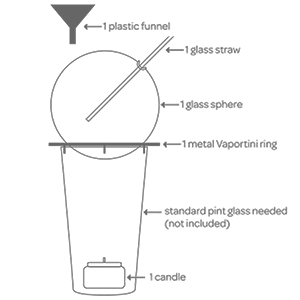
Alcohol Without Liquid is a process introduced first in Asia and Europe that allows people to take in liquor (distilled spirits) without actually consuming liquid. The machine vaporizes alcohol and mixes it with oxygen, allowing the consumer to breathe in the mixture.
The machine has been dubbed AWOL, a play on the military term AWOL (Absent Without Leave). The AWOL machine produces a very fine alcoholic mist. The continual intake of this mist over a twenty-minute period is the equivalent of taking one shot of distilled spirits. The machine was introduced to the United States in 2004. Continue reading →
Posted in Drugs, Health, Technology |
1 Comment »
October 3, 2012


In Broadcast programming, counterprogramming is the practice of offering television programs to attract an audience from another television station airing a major event. The Super Bowl is among the most-viewed programs on American television. Thus, counterprogramming focuses on the pre-game period and the halftime show.
However, it is a common gentlemen’s agreement that the broadcast networks who carry the league’s game coverage (and in turn, other cable networks owned by the broadcasters) never counterprogram the Super Bowl, yielding to the game and airing either low profile reruns of their series or a middling film in the timeslot instead. Continue reading →
Posted in Games, Money |
Leave a Comment »
October 3, 2012

The term box office bomb or flop generally refers to a film that is viewed as highly unsuccessful or unprofitable during its theatrical run, sometimes preceding hype regarding its production, cost, or marketing efforts.
Not all films that fail to earn back their estimated costs during their theatrical runs are bombs, and the label is generally applied to films that miss earnings projections by a wide margin, particularly when they are very expensive to produce, and sometimes in conjunction with middling or poor reviews (though critical reception has nothing to do with box office performance). A film can be box office bomb, even though international distribution, sales to television syndication, and home video releases often mean some films that are considered flops in North America eventually make a profit for their studios. Continue reading →
Posted in Art, Money |
Leave a Comment »
October 2, 2012

Old Bay Seasoning is a blend of herbs and spices that is currently marketed in the United States by McCormick & Company, and produced in Maryland.
It is produced in the Chesapeake Bay area where it was developed by German immigrant Gustav Brunn in the 1940s, and where the seasoning is very popular to this day. At that time, crabs were so plentiful that bars in Baltimore offered them free and seasonings like Old Bay were created to encourage patrons to purchase more beverages. Continue reading →
Posted in Food |
1 Comment »
October 2, 2012

‘The End of Work: The Decline of the Global Labor Force and the Dawn of the Post-Market Era’ is a non-fiction book by American economist Jeremy Rifkin, published in 1995.
Rifkin contended that worldwide unemployment would increase as information technology eliminated tens of millions of jobs in the manufacturing, agricultural, and service sectors. He predicted devastating impact of automation on blue-collar, retail and wholesale employees. Continue reading →
Posted in Language, Money, Technology |
Leave a Comment »
October 2, 2012
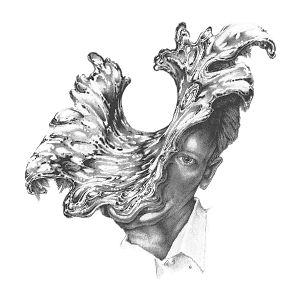
An infomorph is a virtual body of information that can possess emergent features such as personality. The term was first described in Charles Platt’s 1991 novel ‘The Silicon Man,’ where it refers to a single biological consciousness transferred into a computer through a process of mind transfer. In the book, a character refers to an infomorph as ‘intelligence held in a computer memory,’ and an ‘information entity.’
Russian artificial intelligence theorist Alexander Chislenko uses the same word in his 1996 essay ‘Networking in the Mind Age,’ to refer to a software agent that possesses distributed intelligence. Whether the vision shared in Platt’s novel will ever be more than a theory is uncertain, but computing power is still increasing exponentially, and the ‘Future of Humanity Institute’ at Oxford University have considered the philosophical and technical feasibility of this theory at some point in the future. Continue reading →
Posted in Philosophy, Technology |
1 Comment »
October 2, 2012


Whole brain emulation or mind uploading (sometimes called mind transfer) is the hypothetical process of transferring or copying a conscious mind from a brain to a non-biological substrate by scanning and mapping a biological brain in detail and copying its state into a computer system or another computational device.
The computer would have to run a simulation model so faithful to the original that it would behave in essentially the same way as the original brain, or for all practical purposes, indistinguishably. The simulated mind is assumed to be part of a virtual reality simulated world, supported by an anatomic 3D body simulation model. Alternatively, the simulated mind could be assumed to reside in a computer inside (or connected to) a humanoid robot or a biological body, replacing its brain.
Continue reading →
Posted in Health, Philosophy, Technology |
6 Comments »
October 2, 2012

A posthuman is a concept originating notably in the fields of science fiction, futurology, contemporary art, and philosophy.
These multiple and interactive origins have contributed to profound confusion over the similarities and differences between the posthuman of ‘posthumanism’ (a line of philosophical reasoning) and the posthuman of ‘transhumanism’ (an intermediary form between the human and the hypothetical posthuman).
Continue reading →
Posted in Health, Philosophy, Technology |
1 Comment »
October 2, 2012
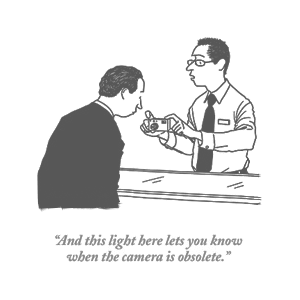
Obsolescence [ob-suh-les-uhns] is the state of being which occurs when an object, service or practice is no longer wanted even though it may still be in good working order. Obsolescence frequently occurs because a replacement has become available that has advantages which outweigh the inconveniences related to purchasing the replacement. Obsolete refers to something that is already disused or discarded, or antiquated. Typically, obsolescence is preceded by a gradual decline in popularity.
Driven by rapid technological changes, new components are developed and launched on the market with increasing speed. The result is a dramatic change in production methods of all components and their market availability. A growing industry sector is facing issues where life cycles of products no longer fit together with life cycles of required components. Continue reading →
Posted in Money, Technology |
1 Comment »
October 1, 2012

A technology evangelist is a person who attempts to build a critical mass of support for a given technology in order to establish it as a technical standard in a market that is subject to network effects (when such effects are present, the value of a product or service is dependent on the number of others using it).
Professional technology evangelists are often employed by firms which seek to establish their proprietary technologies as de facto standards or to participate in setting non-proprietary open standards. Non-professional technology evangelists may act out of altruism or self-interest (e.g., to gain the benefits of early adoption or the network effect). Continue reading →
Posted in Language, Money, Technology |
2 Comments »



