September 29, 2012

In social psychology, propinquity [proh-ping-kwi-tee] (from Latin: ‘nearness’) is one of the main factors leading to interpersonal attraction. It refers to the physical or psychological proximity between people. Propinquity can mean physical proximity, a kinship between people, or a similarity in nature between things (‘like-attracts-like’).
Two people living on the same floor of a building, for example, have a higher propinquity than those living on different floors, just as two people with similar political beliefs possess a higher propinquity than those whose beliefs strongly differ. Propinquity is also one of the factors, set out by Jeremy Bentham, used to measure the amount of (utilitarian) pleasure in a method known as felicific calculus (which is used to calculate the degree or amount of pleasure that a specific action is likely to cause). Continue reading →
Posted in Love, Science, Sex |
Leave a Comment »
September 29, 2012

Hysterical realism, also called ‘recherché postmodernism,’ is a term coined in 2000 by the English critic James Wood in an essay for ‘The New Republic’ on Zadie Smith’s novel ‘White Teeth’ to describe what he sees as a literary genre typified by a strong contrast between elaborately absurd prose, plotting, or characterization and careful, detailed investigations of real specific social phenomena.
Wood uses the term to denote the contemporary conception of the ‘big, ambitious novel’ that pursues ‘vitality at all costs’ and consequently ‘knows a thousand things but does not know a single human being.’ He decried the genre as an attempt to ‘turn fiction into social theory,’ and an attempt to tell us ‘how the world works rather than how somebody felt about something.’ Wood points to Don DeLillo and Thomas Pynchon as the forefathers of the genre, which continues in writers like David Foster Wallace and Salman Rushdie.
Continue reading →
Posted in Art, Language |
Leave a Comment »
September 29, 2012
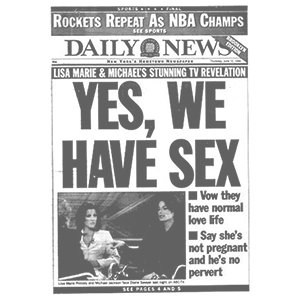
A marriage of convenience (plural marriages of convenience) is a marriage contracted for reasons other than the reasons of relationship, family, or love. Instead, such a marriage is orchestrated for personal gain or some other sort of strategic purpose, such as political marriage.
In the cases when it represents a fraud, it is called ‘sham marriage.’ Marriages of convenience are often contracted to exploit legal loopholes of various sorts. A couple may wed for reasons of citizenship or right of abode, for example, as many countries around the world will grant such rights to any wedded resident. Continue reading →
Posted in Money, Politics, Sex |
Leave a Comment »
September 29, 2012

Hypergamy [hahy-pur-guh-mee] (colloquially referred to as ‘marrying up’) is the act or practice of seeking a spouse of higher looks, socioeconomic, caste or status than oneself. The term is often used more specifically in reference to a perceived tendency among human cultures for females to seek or be encouraged to pursue male suitors that are higher status than themselves, which often manifests itself as being attracted to men who are comparatively older, wealthier, or otherwise more privileged than themselves.
According to evolutionary psychologists, females have evolved a preference for higher status males because they offer their prospective children both ‘better’ genes and greater resources, e.g. food and security. Men, who invest less in their children, have less reason to prefer mates with high social status. Some have even argued that men ‘marry-down’ to ensure that their mates have a higher incentive to remain faithful. Continue reading →
Posted in Language, Money, Sex |
Leave a Comment »
September 29, 2012

‘Going Dutch‘ is a term that indicates that each person participating in a group activity pays for himself, rather than any person paying for anyone else, particularly in a restaurant bill. There are two possible senses—each person paying his own expenses, or the entire bill being split (divided evenly) between all participants. In strict usage, ‘Going Dutch’ refers to the former, paying one’s own expenses, and the latter is referred to as ‘splitting the bill,’ but in casual usage these may both be referred to as ‘going Dutch.’ Splitting the bill is generally easier to compute, as it does not require checking what each individual ordered, but has the downside that people who ordered more expensive items are subsidized by others.
One suggestion is that the phrase ‘going Dutch’ originates from the concept of a Dutch door. Previously on farmhouses this consisted of two equal parts. Another school of thought is that it may be related to Dutch etiquette. In the Netherlands, it was not unusual to pay separately when going out as a group. When dating in a one-on-one situation, however, the man will most commonly pay for meals and drinks. The ‘Oxford English Dictionary’ connects ‘go Dutch’ with ‘Dutch treat’ and other phrases many of which have ‘an opprobrious or derisive application, largely due to the rivalry and enmity between the English and Dutch in the 17th c[entury],’ the period of the Anglo-Dutch Wars. Another example is ‘Dutch courage.’
Continue reading →
Posted in Money, Sex, World |
Leave a Comment »
September 27, 2012

High context culture and the contrasting ‘low context culture’ are terms presented by the anthropologist Edward T. Hall in his 1976 book ‘Beyond Culture.’ It refers to a culture’s tendency to use high context messages over low context messages in routine communication. This choice of communication styles translates into a culture that will cater to in-groups, an in-group being a group that has similar experiences and expectations, from which inferences are drawn.
In a high context culture, many things are left unsaid, letting the culture explain. Words and word choice become very important in higher context communication, since a few words can communicate a complex message very effectively to an in-group (but less effectively outside that group), while in a lower context culture, the communicator needs to be much more explicit and the value of a single word is less important.
Continue reading →
Posted in Language, World |
Leave a Comment »
September 27, 2012

Henny Penny, also known as ‘Chicken Licken’ or ‘Chicken Little,’ is a folk tale with a moral in the form of a cumulative tale about a chicken who believes the world is coming to an end. The phrase ‘The sky is falling!’ features prominently in the story, and has passed into the English language as a common idiom indicating a hysterical or mistaken belief that disaster is imminent.
The story is listed in the Aarne–Thompson tale type index (a listing designed to help folklorists identify recurring plot patterns in the narrative structures of traditional folktales) as type 20C, which includes international examples of folktales that make light of paranoia and mass hysteria. Continue reading →
Posted in Art, Language, Philosophy |
Leave a Comment »
September 27, 2012

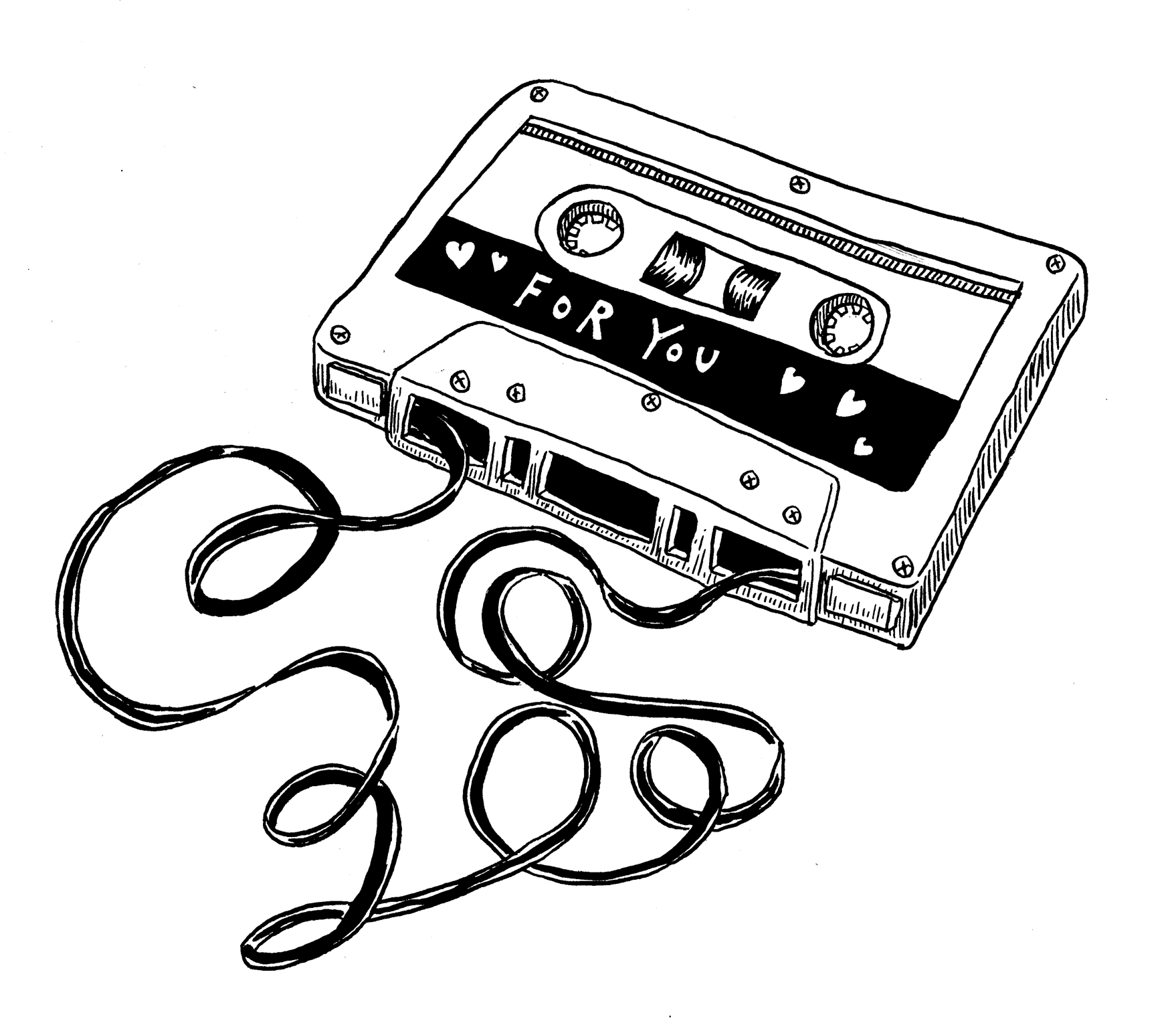
A mixtape is the generic name given to any compilation of songs recorded onto a Compact Cassette, Compact Disc, music file, or any other audio format. A mixtape, which usually reflects the musical tastes of its compiler, can range from a casually selected list of favorite songs, to a conceptual mix of songs linked by a theme or mood, to a highly personal statement tailored to the tape’s intended recipient.
Essayist Geoffrey O’Brien has called the personal mix tape ‘the most widely practiced American art form.’ Mixtape enthusiasts believe that by carefully selecting and ordering the tracks in a mix, an artistic statement can be created that is greater than the sum of its individual songs. With the advent of affordable, consumer-level digital audio, creating and distributing mixes in the form of compact disc or MP3 playlists has become the contemporary method of choice, but the term mix tape is still commonly used, even for mixes in different media.Video mixtapes have emerged as well.
Continue reading →
Posted in Art, Money |
2 Comments »
September 27, 2012

Yojimbo (Japanese: ‘bodyguard’) is a 1961 period drama directed by Akira Kurosawa. It tells the story of a ronin (a samurai without a master), portrayed by Toshirō Mifune (star of several of Kurosawa’s films), who arrives in a small town where competing crime lords vie for supremacy. The two bosses each try to hire the deadly newcomer for protection. The film’s look and themes were in part inspired by the western film genre, in particular the films of John Ford (e.g. ‘The Searchers’).
The characters—the taciturn loner and the helpless townsfolk needing a protector—are western archetypes and are reminiscent of Kurosawa’s own ‘Seven Samurai’ (1954). The cinematography also mimics conventional shots in western films, such as that of the lone hero in a wide shot, facing an enemy or enemies from a distance while the wind kicks up dust between the two.
Continue reading →
Posted in Art, World |
Leave a Comment »
September 27, 2012

The man with no name (Italian: ‘Uomo senza nome’) is a stock character in Western films, but the term usually applies specifically to the character played by Clint Eastwood in Sergio Leone’s ‘Dollars Trilogy’ (‘A Fistful of Dollars,’ ‘For a Few Dollars More,’ and ‘The Good, the Bad and the Ugly.’ A ‘Fistful of Dollars’ was directly adapted from Akira Kurosawa’s ‘Yojimbo.’ It was the subject of a successful lawsuit by Yojimbo’s producers.
The film’s protagonist, an unconventional ronin played by Toshirō Mifune, bears a striking resemblance to Eastwood’s character: both are quiet, gruff, eccentric strangers with a strong but unorthodox sense of justice and extraordinary proficiency with a particular weapon (in Mifune’s case, a katana; for Eastwood, a revolver). Like Eastwood’s character, Mifune’s ronin is nameless. When pressed, he gives the pseudonym ‘Sanjuro Kuwabatake’ (meaning ‘thirty-year-old mulberry field’), a reference to his age and something he sees through a window (although, regarding the age he jokes ‘Closer to forty actually’). Continue reading →
Posted in Art, World |
Leave a Comment »
September 27, 2012

Most heated clothing is designed for cold-weather sports and activities, such as motorcycle riding, downhill skiing, winter biking, and snowmobiling, trekking and for outdoor workers such as construction workers and carpenters. Normal insulation works by trapping body heat, so if it gets wet from sweat or rain, or if a person stops exercising, the insulation may not keep them warm.
With heated garments, a person can keep warm even if they are resting and not producing heat, or if their coat is damp from sweat. The most widely-available types of heated clothing are products for the extremities- the hands and feet. These body parts are the most likely to suffer frostbite or frostnip in severe cold. As such, many manufacturers make heated gloves, mittens, socks, and boot liners, and they can be purchased at workers’ supply stores (serving construction workers) and motor sports stores. Heated torso coverings (vests or jackets) or leggings are available from specialty retailers that cater to motorcyclists and downhill skiers.
Continue reading →
Posted in Games, Money, Technology |
Leave a Comment »
September 27, 2012

Home automation (also called domotics) is the residential extension of ‘building automation’ (electronic which monitor and control the mechanical, electronics, and lighting systems in a building). ‘Building Automation Systems’ (BAS) keep the building climate within a specified range, provides lighting based on an occupancy schedule, and monitors system performance and device failures and provides email and/or text notifications to building staff.
Home automation may include centralized control of lighting, HVAC (heating, ventilation and air conditioning), appliances, and other systems, to provide improved convenience, comfort, energy efficiency, and security. Home automation for the elderly and disabled can provide increased quality of life for persons who might otherwise require caregivers or institutional care. Continue reading →
Posted in Money, Technology |
Leave a Comment »


 The Daily Omnivore