August 24, 2012

The chewing gum ban in Singapore was enacted in 1992 and revised in 2004 and 2010. It bans the import and sale of chewing gum in Singapore. Since 2004, only chewing gum of therapeutic value is allowed into Singapore following the Singapore–United States Free Trade Agreement. This law was created because people disposed of gum incorrectly by sticking it under places like chairs or tables.
A common misconception among citizens is that personal use of chewing gum is allowed in Singapore. However, according to the set of Regulations, ‘importing’ means to ‘bring or cause to be brought into Singapore by land, water or air from any place which is outside Singapore …’ any goods, even if they are not for purposes of trade. The set of Regulations also does not make any provisions for personal use of quantities to be brought into Singapore. Therefore, bringing chewing gum into Singapore, even small quantities for whatever purpose, is prohibited.
Continue reading →
Posted in Food, Politics, World |
Leave a Comment »
August 24, 2012
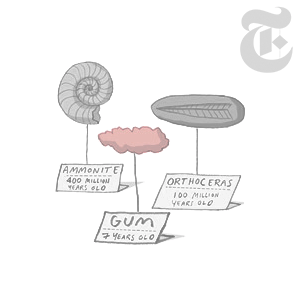
One old wives’ tale says that swallowed gum will remain in a human’s stomach for up to 7 years. According to several medical opinions, there seems to be little truth behind the tale. In most cases, swallowed gum will pass through the system as fast as any other food.
There have been a few cases where swallowing gum has required medical attention, but these cases are more or less related to chronic gum swallowers. One young boy swallowed several pieces each day and had to be hospitalized, and a young girl required medical attention when she swallowed her gum and four coins, which got stuck together in her esophagus. A bezoar (a mass trapped in the gastrointestinal system) is formed in the stomach when food or other foreign objects stick to gum and build up, causing intestinal blockage.
Posted in Food, Health |
Leave a Comment »
August 24, 2012

Evgeny Morozov (b. 1984) is a Belarusian writer and researcher who studies political and social implications of technology. In 2009 he was chosen as a TED fellow where he spoke about how the Web influences civic engagement and regime stability in authoritarian, closed societies or in countries ‘in transition.’
Morozov expresses skepticism about the popular view that the Internet is helping to democratize authoritarian regimes, arguing that it could also be a powerful tool for engaging in mass surveillance, political repression, and spreading nationalist and extremist propaganda. He has also criticized what he calls ‘The Internet Freedom Agenda’ of the US government, finding it naive and even counterproductive to the very goal of promoting democracy through the Web.
Continue reading →
Posted in Politics, Technology, World |
Leave a Comment »
August 24, 2012
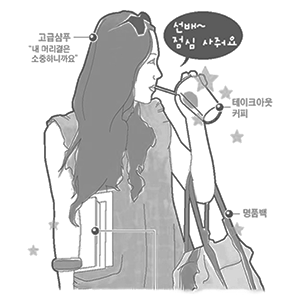
Doenjang girl is a satirical Korean expression for girls and young women who are addicted to luxury and vanity. Doenjang is a fermented soybean paste used to make sour of bean soup.
Instead of visiting an expensive foreign restaurant they will eat a three dollar bowl of soup and then go to Starbucks to purchase a six dollar latte, because carrying a Starbucks cup is considered posh. Likewise, doejang girls carry around shopping bags from Chanel and other high end stores to look as if they were shopping there.
Posted in Money, World |
Leave a Comment »
August 24, 2012

Voina (literally ‘War’) is a Russian street-art group known for their provocative and politically charged works of performance art. The group has had more than sixty members, including former and current students of the Rodchenko Moscow School of Photography, Moscow State University, and Tartu University. However, the group does not cooperate with state or private institutions, and is not supported by any Russian curators or gallerists.
The activities of Voina have ranged from street protests, symbolic pranks in public places, and performance-art happenings, to vandalism and destruction of public property. More than a dozen criminal cases have been brought against the group. According to its members, Voina has no formal leadership, and all members are considered equal. Conceptions are worked out by Oleg Vorotnikov (a.k.a. ‘Vor,’ ‘Thief ‘– the chief ideologist), Natalia Sokol (a.k.a. ‘Kozlyonok,’ ‘Goatling’ – the chief coordinator), Leonid Nikolayev (a.k.a. ‘Crazy Lenya’) and Alexei Plutser-Sarno (the chief media artist, the author of the group’s media art and texts).
Continue reading →
Posted in Art, Politics, World |
Leave a Comment »
August 23, 2012

A blooming onion is a dish consisting of one large onion which is cut to resemble a flower, battered and deep-fried. It is served as an appetizer at some restaurants. The dish was created by chef Jeff Glowski in New Orleans and first appeared on the menu of Russell’s Marina Grill in that city as ‘Onion Mumm.’ The owners of Scotty’s Steak House in Springfield, New Jersey also claim to have invented this dish in the 1970s.
It was popularized nationally when it appeared as ‘Bloomin’ Onion,’ a charter feature of the Outback Steakhouse when that national chain opened in 1988. The dish remains prominent on its menu. Its popularity has led to its adoption as an appetizer at various other restaurant chains, most notably Lone Star Steakhouse & Saloon, where it is known as the ‘Texas Rose.’ A single blooming onion with dressing contains approximately 3,000 calories and 134 grams of fat, including 44 grams of saturated. When it existed, the similar style ‘Awesome Blossom’ at Chili’s was ranked ‘Worst Appetizer in America’ by ‘Men’s Health’ magazine in 2008.
Posted in Food, Health |
1 Comment »
August 23, 2012

The phrase, ‘proud member of the reality-based community‘ was first used in 2014 to suggest the commentator’s opinions are based more on observation than on faith, assumption, or ideology. Some commentators have gone as far as to suggest that there is an overarching conflict in society between the reality-based community and the ‘faith-based community’ as a whole. It can be seen as an example of political framing.
The source of the term is a quotation in ‘The New York Times Magazine’ by Ron Suskind, quoting an unnamed aide to George W. Bush (later attributed to Karl Rove): ‘The aide said that guys like me were ‘in what we call the reality-based community,’ which he defined as people who ‘believe that solutions emerge from your judicious study of discernible reality.’ ‘…That’s not the way the world really works anymore,’ he continued. ‘We’re an empire now, and when we act, we create our own reality. And while you’re studying that reality—judiciously, as you will—we’ll act again, creating other new realities, which you can study too, and that’s how things will sort out. We’re history’s actors…and you, all of you, will be left to just study what we do.”
Posted in Humor, Language, Politics |
Leave a Comment »
August 23, 2012

Waze is a free GPS application featuring turn-by-turn navigation, developed by the Israeli start-up Waze Mobile for mobile phones. Waze differs from traditional GPS navigation software as it is a community-driven application and learns from users’ driving times to provide routing and real-time traffic updates.
Additionally, people can report accidents, traffic jams, speed traps, police and can update roads, landmarks, house numbers, etc. Waze also helps users find the cheapest, closest gas station around them or along their route. Waze is available for download and use anywhere in the world, but some countries have a full basemap, whereas other countries still require users to record the roads and edit the maps.
Posted in Games, Technology, World |
Leave a Comment »
August 23, 2012

The Point! is a fable and the sixth album by American songwriter and musician Harry Nilsson about a boy named Oblio, the only round-headed person in the Pointed Village, where by law everyone and everything had to have a point. According to Nilsson:
‘I was on acid and I looked at the trees and I realized that they all came to points, and the little branches came to points, and the houses came to point. I thought, ‘Oh! Everything has a point, and if it doesn’t, then there’s a point to it.” There have been, so far, at least three different renditions of The Point!, each featuring songs written by Nilsson to accompany the story, including an animated film, an album, and a stage musical.
Posted in Art, Drugs |
Leave a Comment »
August 23, 2012

The Moth is a non-profit group based in New York City dedicated to the art and craft of storytelling. It was founded in 1997 by poet and novelist George Dawes Green, who wanted to recreate the feeling of sultry summer evenings in his native Georgia, when moths were attracted to the light on the porch where he and his friends would gather to spin spellbinding tales. George and his original group of storytellers called themselves ‘The Moths,’ and George took the name with him to New York. The organization now runs a number of different storytelling events in New York City, Los Angeles, Chicago, Detroit, and other American cities, often featuring prominent literary and cultural personalities. Previous notable storytellers have included Margaret Cho, Ethan Hawke, Malcolm Gladwell, Darryl ‘DMC’ McDaniels, George Plimpton, Al Sharpton, Moby, Lili Taylor, and Sam Shepard.
The organization also holds ‘StorySLAM’ events, storytelling competitions open to everyone. The Moth also runs a community program that offers storytelling workshops free of charge to high school students and underprivileged New Yorkers. The Moth offers a weekly podcast, which provides free audio of stories from all types of Moth events. In 2009, the organization also launched a national public radio show, ‘The Moth Radio Hour.’ Andy Borowitz became the Moth’s primary host in 1999. The organization’s annual fundraising event is called the Moth Ball, where the annual Moth award is presented. The 2008 Moth Award was presented to Salman Rushdie.
Posted in Art, Games, Language |
Leave a Comment »
August 23, 2012

Pocket dialing (also known as butt dialing) refers to the accidental placement of a phone call while a person’s mobile phone or cordless phone is in the owner’s pocket or handbag. If the caller remains unaware, the recipient will sometimes overhear whatever is happening in the caller’s vicinity. Typically, the call is caused by objects in a person’s pocket or bag poking buttons on the phone. Because of typical sequences of button presses, the accidentally dialed number is often one that has been recently called from that phone, or one near the beginning or end of the phone’s contact list; a consequence of this is that people whose names begin with letters near the beginning or the end of the alphabet sometimes receive more accidental calls.
The keypad lock feature found on most mobile phones is intended to help prevent accidental dialing. However, it is still possible to forget to activate this lock (if the phone does not automatically activate it after a timeout), or to deactivate it accidentally. Many phones allow the emergency number to be called even when the keylock is active. In addition to the inconvenience and embarrassment that may result from an erroneously dialed number, the phenomenon can have other consequences including using up a phone user’s airtime minutes. Apps to prevent pocket dialing exist for smartphones. Several are available for Android based phones such as Call Confirm.
Posted in Humor, Language, Technology |
1 Comment »
August 23, 2012

Sprites are large scale electrical discharges above the earth that are still not totally understood. They occur high above thunderstorm clouds (cumulonimbus), giving rise to a quite varied range of visual shapes flickering in the night sky. They are triggered by the discharges of positive lightning between an underlying thundercloud and the ground. Sprites appear as luminous reddish-orange flashes.
Sporadic visual reports of sprites go back at least to 1886, but they were first photographed in 1989 by scientists from the University of Minnesota. Sprites are sometimes inaccurately called upper-atmospheric lightning. However, sprites are cold plasma phenomena that lack the hot channel temperatures of tropospheric (lower-atmospheric) lightning, so they are more akin to fluorescent tube discharges than to lightning discharges. Several years after their discovery they were named sprites (air spirits) after their elusive nature.
Continue reading →
Posted in Science, World |
Leave a Comment »



