August 26, 2012

Molecular Mixology is the term applied to the process of creating cocktails using the scientific equipment and techniques of molecular gastronomy. These methods enable the creation of greater intensities and varieties of flavor, flavor combinations, and different ways of presenting drinks, for example using gels, powders, foams, atomized sprays, etc., as well as affecting the aesthetic qualities of the cocktail.
‘The Art of Drink’ website suggests that the earliest example of what we now call molecular mixology is the long-established bartending practice of layering ingredients in cocktails. This experimentation with the density and viscosity of fluids uses the principles of scientific investigation that are fundamental to molecular mixology. Continue reading →
Posted in Drugs, Food, Technology |
Leave a Comment »
August 26, 2012

In the United States, open container laws regulate or prohibit the existence of open containers of alcohol in certain areas. Typically these laws concern public places, such as parks and vehicles. The purpose of these laws is to restrict public intoxication, especially the dangerous act of operating a vehicle while intoxicated. Open container laws are state laws, rather than federal laws; thus they vary from state to state.
The vast majority of U.S. states and localities prohibit possessing and/or consuming an open container of alcohol in public places, such as on the street. However, the definition of ‘public place’ is not always clear. California is unique in that it does have a state law on the books, but similar to states that have no law, the state law only applies to areas that the ‘city, county, or city and county have enacted an ordinance’ in. Open container restrictions are not always rigorously enforced, and open containers may in fact be legally permitted in nominally private events which are open to the public. This is especially true in downtown districts and during holidays and sporting events and tailgate parties. Continue reading →
Posted in Drugs, Politics |
1 Comment »
August 26, 2012

Botellón [boh-tay-yone] (Spanish for ‘big bottle’), called ‘litros’ in Cantabria, is ‘mass meeting of young people between 13 and 24 years, mainly in open areas of free access, to consume drinks previously purchased in shops, listen to music, and talk.’ It emerged as an alternative to bars, discos or clubs, but normally is a previous step before going to such locations.
Although the origins of botellón started in Andalucia during the 1980s as a way for Andalucian workers to be able to enjoy a cheap drink outdoors instead of conforming to the prices that were offered in the bars, young people and especially students adopted it in the 90s, appearing for the first time formally in the city of Cáceres, in connection with the riots caused by the advance of the closing time for the nightclubs. Today it is a standard practice among the nightlife youth and even regulated in many cities. Continue reading →
Posted in Drugs, Games, World |
Leave a Comment »
August 26, 2012

Social customs and laws on drinking alcohol in public vary significantly around the world. In some countries, such as the United States and the Muslim world, public drinking is almost universally condemned or outlawed, while in other countries, such as New Zealand and Japan, public drinking and public intoxication are legal (although local often authorities have power to pass bylaws declaring liquor-free zones).
Opponents of drinking in public argue that it encourages overconsumption of alcohol and binge drinking, rowdiness and violence, and propose that people should instead drink at private businesses such as public houses, bars or clubs, where a bartender may prevent overconsumption and where rowdiness can be better controlled by the fact that one is sitting down and security or bouncers may be present. Alternatively, one may drink at home. Continue reading →
Posted in Drugs, Politics, World |
Leave a Comment »
August 25, 2012
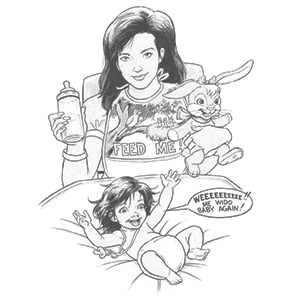
Ageplay or age play is a form of roleplaying in which an individual acts or treats another as if they were a different age. The practice can be regressive, in which the goal is to re-experience childhood, or sexual, recreating a sexual relationship with people of the pretend or true ages.
Sexual variations may include among other things such as incest play, in which individuals recreate and sexualize roles within a family, and ‘Daddy’s girl’ fetishism in which real or imagined age differences are the basis of the roleplaying and the female is portrayed as the younger partner. Ageplay is also commonly done by children when they play games such as ‘house’ and take on roles of a nuclear family, which typically consists of a father, mother, a child or children, and/or a baby.
Posted in Games, Health, Sex |
Leave a Comment »
August 25, 2012
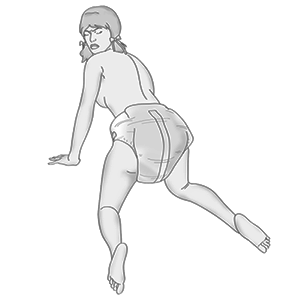
Erotic target location error (ETLE) is a term coined in 1993 by sexologist Ray Blanchard, referring to having a sexual preference (or very strong sexual interest) in features that are somewhere other than on one’s sexual partner(s). When one’s sexual arousal is based on imagining one’s self in another physical form (such as an animal, an infant, or an amputee) the erotic target is said to be one’s self, or erotic target identity inversion.
The best known examples of erotic target identity inversions are biological males who experience sexual arousal in response to imaging themselves as women (called autogynephilia), but there has also been at least one reported case of anatomic autoandrophilia (a woman’s tendency to be sexually aroused by the thought or image of herself as a man). Autogynephilia can be associated with gender dysphoria and Gender Identity Disorder, discontent with one’s biological sex and the desire to under surgery for sex reassignment and permanently take on a role and life of the other sex. A male with sexual arousal based on temporarily taking on the appearance or role of a woman is called ‘transvestic’ fetishism.
Continue reading →
Posted in Health, Sex |
Leave a Comment »
August 25, 2012

Fursuits are animal costumes made from various materials. They range from simple tails and ears to full costumes cooled by battery-powered fans. Fursuits can be worn for personal enjoyment, work, or charity. The term ‘fursuit’ is believed to have been coined in 1993 by Robert King and can also refer to animal mascot costumes in general, as opposed to human or inanimate object mascots. Fursuits have also been featured in visual mediums as backdrops or as part of a central theme.
Fursuits are associated with furry fandom, a subculture devoted to anthropomorphic animal characters. More advanced fursuit features include jaws which move when the user speaks, and moving tails. Often, the suits depict a personal character and are used in a form of role play, or for expressing their owners’ ‘true’ personality. Some fursuiters do not talk while in costume to ‘preserve the magic.’ A few members of the furry fandom consider the fursuit a sexual item. Fursuits can be sold with or modified to contain provisions for sexual activity, such as openings, removable panels, and anatomically correct artificial genitalia. Sexual arousal that depends on portraying one’s fursuit identity has been called ‘fursuitism’ and sexuality in furry fandom is refered to as ‘yiff’ or ‘yiffing.’
Posted in Games, Sex |
2 Comments »
August 25, 2012

Plushophilia is a sexual fetish involving stuffed animals. Plushophiles are sometimes called ‘plushies,’ although this term can also refer to non-sexual stuffed animal enthusiasts, and to stuffed animals in general. Plushophilia is sometimes assumed to be a practice common within furry fandom (a subculture revolving around animal anthropomorphism), due in part to a 2001 ‘Vanity Fair’ article that linked various members of the furry community with plushophilia.
Pornography and sexual activity involving animal anthropomorphism is known in the furry fandom community as ‘yiff’ (and sexual acts as ‘yiffing’). Sexual arousal that depends upon imagining one’s self as plush or anthropomorphized animal is ‘autoplushophilia.’ Paraphilic interests that involve being in another form have been referred to as Erotic target location errors, a term coined in 1993 by sexologist Ray Blanchard, referring to having a sexual preference in features that are somewhere other than on one’s sexual partner.
Posted in Health, Sex |
Leave a Comment »
August 25, 2012
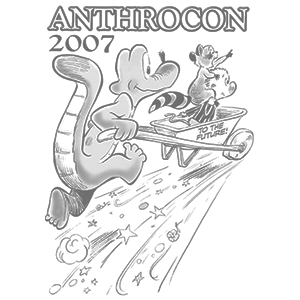
The furry fandom is a subculture interested in anthropomorphic animal characters. According to fandom historian Fred Patten, the concept of furry originated at a science fiction convention in 1980, when a character drawing from Steve Gallacci’s ‘Albedo Anthropomorphics’ started a discussion of anthropomorphic characters in science fiction novels. This led to the formation of a discussion group that met at science fiction and comics conventions.
The specific term ‘furry fandom’ was being used in fanzines as early as 1983, however, fans consider the origins of the subculture to be much earlier, with fictional works such as ‘Kimba, The White Lion’ released in 1965, Richard Adams’ novel ‘Watership Down,’ published in 1972 (and its 1978 film adaptation), as well as Disney’s ‘Robin Hood’ as oft-cited examples. To distinguish these personae from seriously depicted animal characters, such as Lassie or Old Yeller, cartoon animals are referred to as ‘funny animals,’ a term that came into use in the 1910s.
Continue reading →
Posted in Games, Language, Sex |
2 Comments »
August 25, 2012

Pegging is a sexual practice in which a woman penetrates a man’s anus with a strap-on dildo. The neologism ‘pegging’ was popularized when it became the winning entry in a contest in advice columnist Dan Savage’s ‘Savage Love’ sex advice column, held after an observation was made that there was no common name for the act. In terms of physical pleasure, a woman’s genitals may get direct stimulation from the base of the dildo, or in the case of a double-ended dildo, from vaginal (or internal) penetration. A woman can use a secondary vibrator, between the dildo and her genitals, to get pleasure from pegging.
Men may find stimulation of the anus, rectum, and adjacent organs enjoyable. During anal sex, pleasure can be particularly derived from the prostate, which can lead to an orgasm. Some men enjoy masturbating (or being manually stimulated) during pegging. Savage wrote that he believes all men should try pegging at least once, as it may introduce them to a new enjoyable sexual activity and illuminate them to the receiver’s perspective in sex.
Continue reading →
Posted in Sex |
Leave a Comment »
August 25, 2012

In 2003, the columnist and gay rights activist Dan Savage held a contest among his readers to create a definition for the word ‘santorum‘ as a response to comments by then-U.S. Senator Rick Santorum that had been criticized as anti-gay. Savage announced the winning entry, which defined ‘santorum’ as ‘the frothy mixture of lube and fecal matter that is sometimes the byproduct of anal sex.’
He created a web site, spreadingsantorum.com (and santorum.com), to promote the definition, which became a prominent search result for Santorum’s name on several web search engines. In 2010 Savage offered to take the site down if Santorum donated US$5 million to Freedom to Marry, a group advocating legal recognition of same-sex marriages. In 2011 Santorum asked Google to remove the definition from its search engine index. Google refused, responding that the company does not remove content from search results except in very limited circumstances.
Continue reading →
Posted in Language, Politics, Sex |
1 Comment »
August 25, 2012

The Livestrong wristband (stylized as LIVESTRONG) is a yellow silicone gel bracelet launched in 2004 as a fund-raising item for the Lance Armstrong Foundation, founded by cyclist and cancer survivor Lance Armstrong. The bracelet itself was developed by Nike and their ad agency Wieden+Kennedy. The bracelet is part of the ‘Wear Yellow Live Strong’ educational program. The program is intended to raise money for cancer research, raise cancer awareness, and encourage people to live life to the fullest.
The bracelet sells individually, as well as in packs of 10, 100, and 1,200 as part of an effort to raise $25.1 million for the Lance Armstrong Foundation in cooperation with Nike who manufactures the bracelets in manufacturing plants both domestic and foreign and sells the bracelets through their Nike outlets worldwide. This target was achieved within 6 months, and there have now been 80 million Livestrong bracelets sold to date. Yellow was chosen for its importance in professional cycling, as it is the color of the yellow jersey worn by the leader of the Tour de France, which Armstrong won seven consecutive times.
Posted in Games, Health, Money |
1 Comment »



